
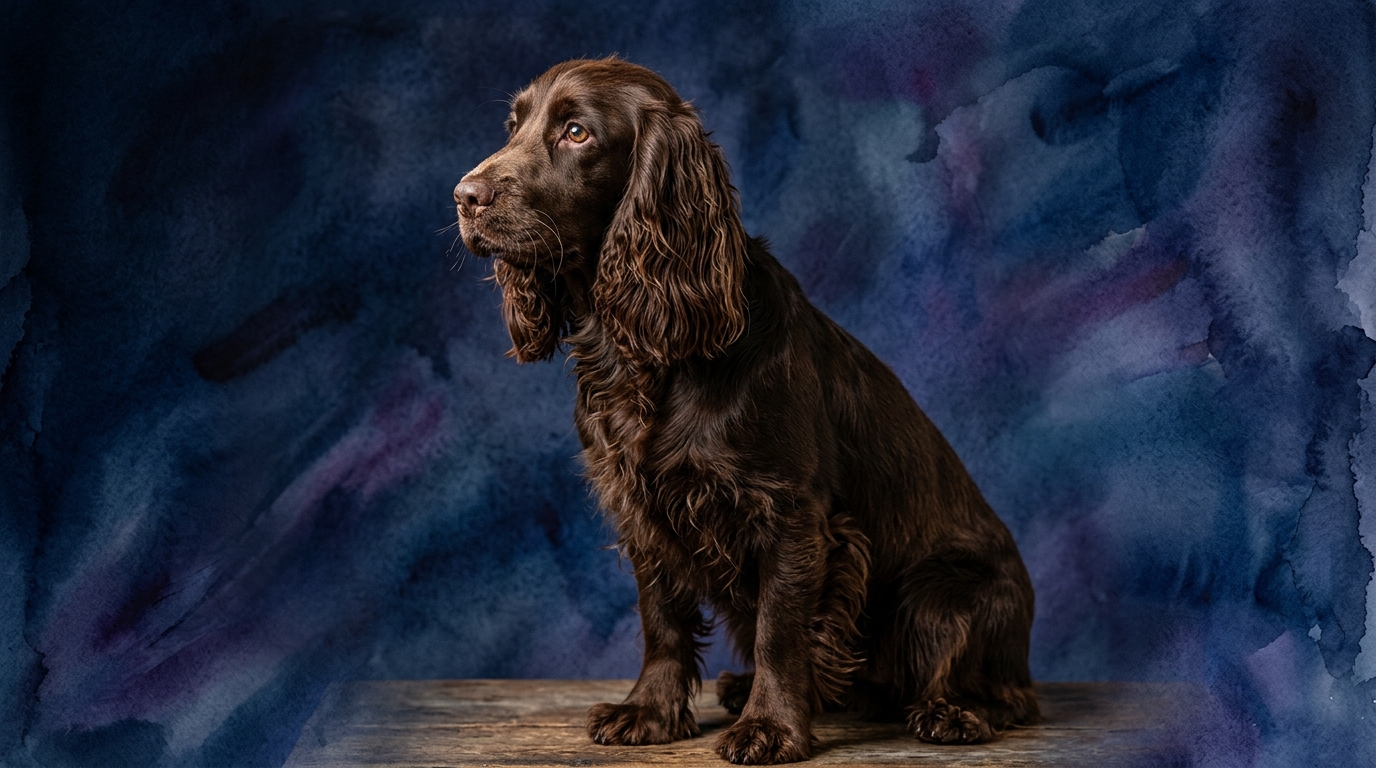
Side-by-Side IQ Profile: Doberman Pinscher vs. Field Spaniel
The Doberman Pinscher, a distinguished member of the Working group and ranked #5 by Coren, presents a formidable cognitive profile. Our Pet IQ Lab assessment indicates a near-perfect score across several crucial dimensions: Problem Solving (5/5), Training Speed (5/5), Instinctive Drive (5/5), and Memory (5/5). Their Social Intelligence is also robust at 4/5. This collection of traits speaks to a breed meticulously developed for demanding roles, requiring a sharp mind, rapid learning, and an unwavering focus on purpose.
In contrast, the Field Spaniel, a charming representative of the Sporting group and currently not Coren-ranked, exhibits a more balanced and moderately paced cognitive blueprint. Their IQ scores are consistently rated at 3/5 for Problem Solving, Training Speed, Social Intelligence, Instinctive Drive, and Memory. These scores reflect a breed whose cognitive strengths are geared towards cooperative hunting tasks, demanding persistence, sensory acuity, and a harmonious working relationship rather than the intense, decisive problem-solving or guarding instincts of a Doberman.
The stark numerical difference between these two breeds’ profiles isn't a measure of inherent superiority, but rather a reflection of their divergent historical roles and the specific mental tools each was bred to employ. One excels in structured, complex tasks demanding immediate comprehension and execution, while the other thrives in environments requiring sustained focus on natural instincts and amiable cooperation.
Where the Doberman Pinscher Excels Cognitively
The Doberman Pinscher’s cognitive prowess is undeniable, particularly in areas demanding rapid assimilation and application of information. Their 5/5 Problem Solving capability means they are exceptionally adept at assessing novel situations, learning complex sequences of actions, and adapting their strategies quickly to achieve desired outcomes. This manifests in their ability to excel in advanced obedience, protection work, and intricate competitive dog sports where nuanced understanding and quick decisions are paramount.
The dual 5/5 scores for Training Speed and Memory underscore their capacity for absorbing and retaining a vast repertoire of commands and routines with remarkable efficiency. This allows for the rapid development of sophisticated skill sets, making them highly responsive partners for handlers seeking precision and reliability. Furthermore, their 5/5 Instinctive Drive is not merely raw energy; it represents a powerful cognitive framework for vigilance, purpose, and a profound desire to engage in meaningful tasks, which can be channeled into focused work or dedicated companionship. Even their 4/5 Social Intelligence, while not a perfect score, enables them to form deep, loyal bonds and understand human cues, albeit with a certain discernment that aligns with their protective instincts.
Cognitive Strengths of the Field Spaniel
While the Field Spaniel’s IQ scores are uniformly 3/5, these numbers signify a distinct set of cognitive strengths perfectly aligned with their sporting heritage. Their Problem Solving ability (3/5) is less about intricate logic puzzles and more about navigating varied terrain, interpreting complex scent trails, and flushing game with persistent focus. This involves a sophisticated level of sensory processing and environmental understanding, crucial for their role as a cooperative gundog.
The Field Spaniel’s Instinctive Drive (3/5) is geared towards steady, persistent tracking and retrieving, a stark contrast to the Doberman’s intense, decisive drive for protection. This makes them wonderfully suited for owners who appreciate a dog with a dedicated, yet less assertive, focus on outdoor exploration and interactive play. Their Social Intelligence (3/5) often translates to a gentle, adaptable nature, allowing them to integrate smoothly into family life without demanding constant, intense interaction or exhibiting the focused vigilance that a Doberman might. They typically offer a more easygoing, amiable form of companionship. Finally, their 3/5 scores in Training Speed and Memory, while not indicating lightning-fast learning, point to a willing and eager-to-please temperament. They respond very well to consistent, positive reinforcement, fostering a strong, patient bond with their handler, even if the learning curve is more gradual.
Which is Easier to Train and Why?
When considering ease of training, the Doberman Pinscher's profile gives them a distinct advantage in terms of sheer speed and retention. Their 5/5 Training Speed and Memory mean they grasp new commands and complex sequences with remarkable quickness, often requiring fewer repetitions than many other breeds. Their strong 5/5 Instinctive Drive, coupled with a 4/5 Social Intelligence, means they are inherently motivated by purpose and structure, actively seeking direction from a confident and consistent handler. This makes them exceptionally responsive to structured training programs, capable of excelling in advanced obedience and specialized tasks. However, this mental horsepower requires a handler who can provide clear, consistent leadership; mismanagement can lead to frustration for a dog so eager to learn and work.
The Field Spaniel, with consistent 3/5 scores, offers a different training experience. They are perfectly trainable, but their learning process typically requires more patience, repetition, and a consistent, positive reinforcement approach. Their sporting drive means they can sometimes be easily distracted by compelling scents or sounds in their environment, necessitating engaging training methods to maintain focus. However, their cooperative nature and amiable social intelligence (3/5) mean they are generally compliant and eager to please once focused. While training might progress at a more moderate pace compared to a Doberman, the consistent effort builds a robust foundation of understanding and a strong, patient bond between dog and owner. They thrive on encouragement and positive interaction rather than intense, demanding instruction.
Cognitive Profiles for Active vs. Relaxed Owners
For owners with an active, structured lifestyle, the Doberman Pinscher is an ideal match. Their demanding cognitive profile, marked by high problem-solving, training speed, and instinctive drive, requires significant mental engagement alongside rigorous physical exercise. These dogs thrive when given a 'job,' whether it's competitive obedience, agility, protection work, or advanced trick training. A Doberman truly flourishes with an owner who can channel their considerable mental prowess into productive outlets, preventing boredom and potential behavioral challenges that can arise from under-stimulation. A sedentary or inconsistent lifestyle would be a poor match for their cognitive needs.
The Field Spaniel, in contrast, suits moderately active owners who appreciate outdoor activities and a more relaxed home environment. While they certainly enjoy and benefit from long walks, exploring new scents, and engaging in retrieval games that tap into their sporting instincts, their cognitive demands are less intense and constant than a Doberman's. Their 3/5 scores across the board indicate a steady, adaptable mind that appreciates routine but doesn't constantly demand complex problem-solving tasks. They are content with regular, varied stimulation and ample opportunity to explore their environment, making them adaptable companions for families who enjoy a balanced lifestyle with regular outdoor adventures.
The Verdict
Choose a Doberman Pinscher if you are an experienced owner seeking a highly responsive, task-oriented companion for protection, advanced obedience, or competitive dog sports, and can provide rigorous mental and physical structure.
Opt for a Field Spaniel if you desire an amiable, adaptable companion for outdoor adventures and family life, appreciating a more moderately paced learner and a less intensely driven, yet still engaging, disposition.
🧠 Find Your Pet's IQ Score
Our Pet IQ Lab assessment covers 25+ tests across 5 cognitive dimensions — personalized to your breed.
Take the Full IQ Test →Frequently Asked Questions
Do Field Spaniels need a lot of mental exercise despite their 3/5 IQ scores?
Yes, Field Spaniels still benefit significantly from mental stimulation, even with their moderate scores. Their problem-solving and instinctive drive, while not as intense as a Doberman's, are geared towards scent work and cooperative tasks, so engaging them with scent games, puzzle toys, and consistent training helps keep their minds sharp and prevents boredom.
How does a Doberman's 4/5 social intelligence compare to a breed with 5/5?
A Doberman's 4/5 social intelligence indicates strong understanding and responsiveness to human cues, often forming very deep, focused bonds with their primary family. While a 5/5 might imply broader adaptability to various new people or situations, the Doberman's score reflects a discerning loyalty and vigilance that aligns with their protective heritage, making them excellent family guardians and devoted companions.
Can a Field Spaniel be trained for advanced obedience or competitive sports?
Absolutely. While their training speed is 3/5, Field Spaniels are willing and eager to please, responding well to consistent, positive reinforcement. They can certainly achieve high levels in obedience, agility, and other dog sports; it may simply take more patience and repetition than with a breed like the Doberman, but their cooperative spirit makes them enjoyable partners in such endeavors.