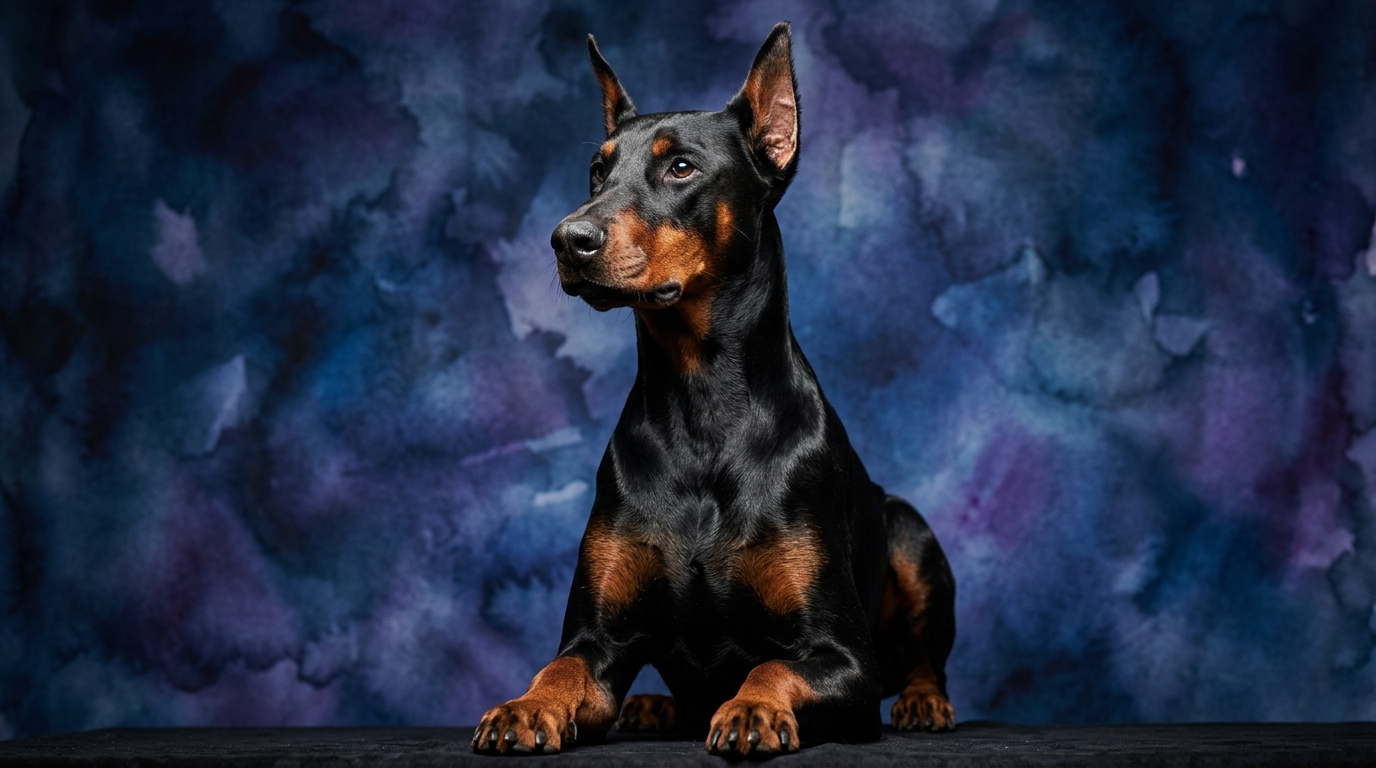
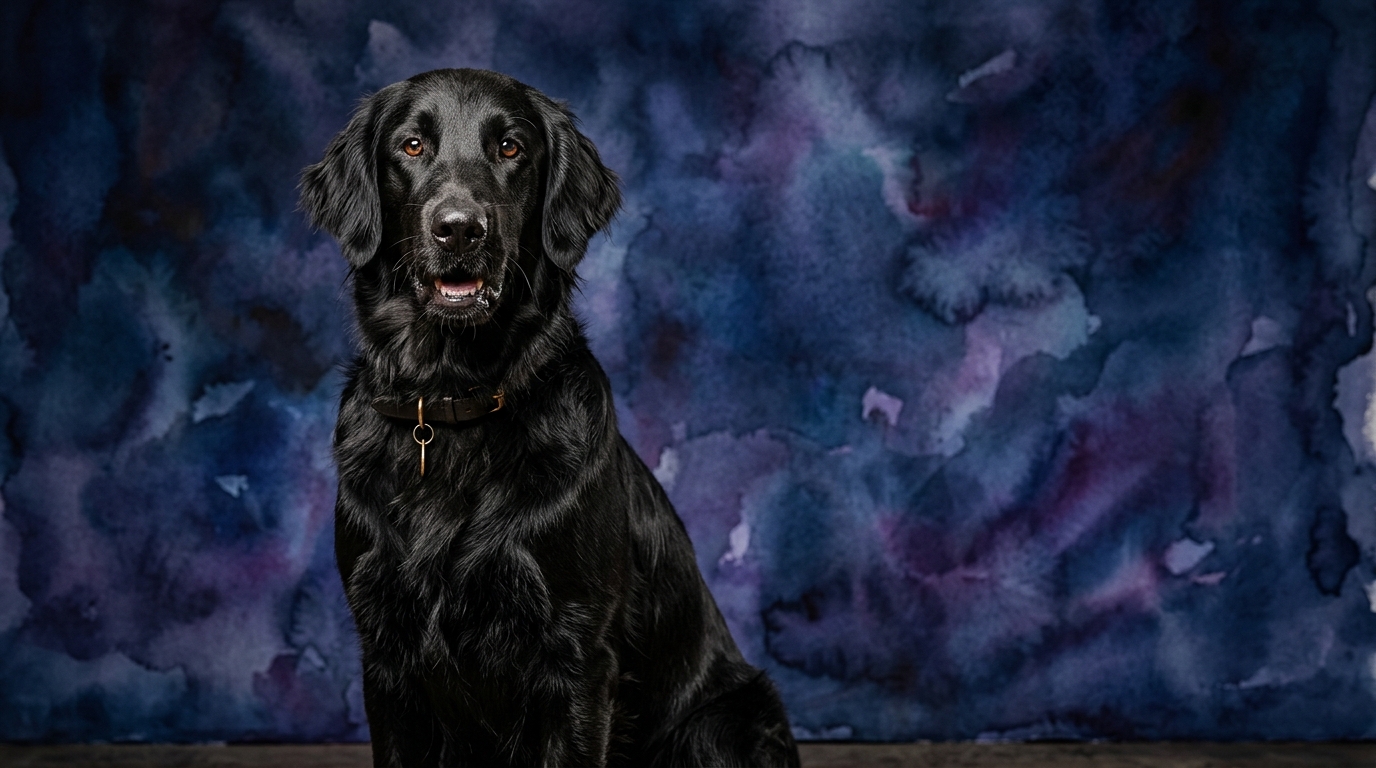
Side-by-Side IQ Profile: Doberman Pinscher vs. Flat-Coated Retriever
The Cosmic Pet Pet IQ Lab meticulously assesses five key dimensions of canine intelligence, offering a nuanced view beyond simple rankings. For the Doberman Pinscher, a Working breed with a Coren rank of #5, their cognitive profile indicates a formidable mental athlete. Their Problem Solving is rated 5/5, reflecting an exceptional capacity for analytical thought and strategic action, often seen in their ability to learn complex sequences and adapt quickly to novel situations. Training Speed is also 5/5, meaning they acquire new commands and behaviors with remarkable efficiency, often requiring minimal repetition. Social Intelligence stands at 4/5, showcasing their strong ability to interpret human cues and adapt their behavior, particularly in relation to their primary handler. An Instinctive Drive of 5/5 highlights their intense motivation for purposeful tasks and their inherent desire to work. Finally, their Memory is 5/5, ensuring outstanding retention of learned behaviors and experiences.
In contrast, the Flat-Coated Retriever, a Sporting breed ranked #17 by Coren, presents a different, yet equally capable, cognitive landscape. Their Problem Solving is rated 4/5, indicating a strong ability to navigate practical challenges, especially those related to retrieving or navigating varied environments, though perhaps less abstractly than a Doberman. Training Speed is 4/5, meaning they learn efficiently and respond well to consistent instruction, picking up commands effectively. Their Social Intelligence is 3/5, suggesting a generally affable and responsive nature to human interaction, though their boundless enthusiasm might sometimes overshadow subtle social cues. An Instinctive Drive of 3/5 points to a moderate motivation primarily focused on retrieving, play, and positive engagement, rather than intense, sustained tasks. Like the Doberman, the Flat-Coated Retriever boasts a Memory score of 5/5, demonstrating excellent recall of places, people, and learned tasks, crucial for their roles in the field.
Where the Doberman Pinscher Wins Cognitively
The Doberman Pinscher exhibits clear cognitive strengths in areas demanding precision, focus, and rapid assimilation of information. Their perfect 5/5 score in Problem Solving signifies an unparalleled capacity for analytical thinking and strategic planning. This isn't merely about following commands; it's about understanding the 'why' and independently navigating complex scenarios, making them exceptional candidates for roles requiring quick, logical decision-making under pressure. Whether it's figuring out how to bypass an obstacle or understanding multi-step commands, their mental agility allows them to excel where intricate thought processes are paramount.
Complementing their problem-solving prowess is their 5/5 Training Speed. Dobermans absorb new information at an astounding rate, often mastering complex sequences with only a few repetitions. This cognitive efficiency makes them incredibly rewarding for experienced handlers who enjoy pushing the boundaries of canine learning in disciplines like competitive obedience, Schutzhund, or advanced protection work. Their 5/5 Instinctive Drive further amplifies these strengths, providing an unwavering motivation to perform tasks and achieve goals. This intense inner drive means they are not easily deterred and will dedicate themselves completely to a given objective, making them highly reliable and consistent performers in demanding environments.
Where the Flat-Coated Retriever Wins Cognitively
While the Doberman excels in focused, intense cognitive tasks, the Flat-Coated Retriever brings a different, yet equally valuable, set of mental advantages to the table. Both breeds share an exceptional 5/5 Memory score, but the Flat-Coat's memory is particularly adept at spatial recall and retaining sequences relevant to their retrieving heritage. They excel at remembering multiple fall points in a field, navigating complex cover to retrieve, and recalling specific locations where objects were left. This specialized memory makes them outstanding partners for hunting, field trials, or even complex scent games where precise location recall is critical.
The Flat-Coat's 3/5 Social Intelligence, while numerically lower than the Doberman's, translates into a distinct cognitive advantage in terms of general amiability and approachability. Their boundless enthusiasm and generally forgiving nature allow them to foster broader, often more universally positive, social interactions. They are less discerning or reserved with strangers and tend to be more overtly joyful, making them natural icebreakers in social settings. Their cognitive 'win' here lies in their ability to consistently uplift moods and integrate seamlessly into diverse social dynamics, radiating a contagious cheerfulness. Furthermore, their 3/5 Instinctive Drive, while less intense than the Doberman's, is perfectly tailored for joyful collaboration and sustained play. This means they are less likely to be overwhelmed by the pressure of high-stakes work and more inclined to approach tasks with an infectious, lighthearted enthusiasm, making 'work' feel like an enjoyable game.
Which is Easier to Train and Why
Determining which breed is 'easier' to train depends significantly on the handler's experience and training philosophy. The Doberman Pinscher, with its 5/5 Training Speed, is undeniably quick to grasp new concepts and commands. They are eager to learn and possess a powerful drive to please their handler, making them capable of mastering complex tasks with remarkable efficiency. However, this same intensity and high instinctive drive (5/5) mean they require a handler who is equally consistent, clear, and confident in their leadership. A Doberman thrives on structure and precision; any ambiguity or inconsistency can lead to frustration or the development of unwanted behaviors. They learn both good and bad habits with equal speed, demanding an experienced hand to channel their formidable cognitive abilities positively.
The Flat-Coated Retriever, with a 4/5 Training Speed, also learns well, but their training journey often requires more patience and creativity. Their playful nature and lower instinctive drive (3/5) mean they might be more easily distracted by environmental stimuli or their own exuberance. While they respond wonderfully to positive reinforcement and game-based training, handlers must work to maintain their engagement and focus. They are generally more forgiving of handler mistakes due to their sunny disposition, but their 'bounce' and desire for fun can sometimes override their attention to detail. For a first-time owner, the Flat-Coat's generally more adaptable and less intense approach to training might feel 'easier' to manage, even if the Doberman technically learns faster.
Which Suits Active Owners vs. Relaxed Owners
It's crucial to understand that neither the Doberman Pinscher nor the Flat-Coated Retriever are suitable for truly 'relaxed' or sedentary owners. Both are active breeds that require significant physical and mental engagement to thrive. The Doberman Pinscher is ideally suited for active owners who can provide highly structured, mentally demanding activities. Their high instinctive drive (5/5) and problem-solving abilities (5/5) mean they require a 'job' – whether it's advanced obedience, protection sports, tracking, agility, or competitive dock diving. Owners must be prepared for daily, purposeful exercise and consistent mental challenges to prevent boredom and destructive behaviors. They thrive with an owner who enjoys pushing cognitive boundaries and engaging in disciplined, goal-oriented activities.
The Flat-Coated Retriever, while also requiring an active lifestyle, suits owners whose activity preferences lean more towards joyful outdoor adventures and collaborative play. Their moderate instinctive drive (3/5) is perfectly channeled into activities like hiking, swimming, long retrieving sessions in open fields, or less intense, fun-oriented dog sports. They thrive on being an integral part of family excursions, enjoying the journey as much as the destination. Owners who appreciate a perpetually cheerful companion for regular, vigorous exercise that feels more like play than work will find a Flat-Coat to be an ideal match. While they need exercise, the *type* of mental and physical engagement they require is less about intense precision and more about sustained, happy interaction.
The Verdict
Choose the Doberman Pinscher if you seek a highly responsive, driven, and analytical canine partner for structured work, advanced training, or protective roles, and you can provide firm yet fair leadership. They excel with owners who can channel their intense focus into purposeful activities.
Choose the Flat-Coated Retriever if you desire an enthusiastic, affable companion for active family life, outdoor adventures, and fun-oriented training, who appreciates a perpetually cheerful and playful nature. They thrive with owners who enjoy collaborative play and consistent positive engagement.
🧠 Find Your Pet's IQ Score
Our Pet IQ Lab assessment covers 25+ tests across 5 cognitive dimensions — personalized to your breed.
Take the Full IQ Test →Frequently Asked Questions
Is a Doberman Pinscher or Flat-Coated Retriever better for a first-time dog owner?
A Flat-Coated Retriever might be more forgiving for a first-time owner due to their generally more affable and less intensely driven nature, though they still require consistent training and socialization. Dobermans, with their high drive and quick learning, demand an experienced hand to guide their potential effectively and prevent the development of unwanted behaviors.
How do their cognitive profiles influence their suitability for dog sports like agility?
Dobermans excel in agility due to their exceptional training speed, problem-solving, and intense drive, allowing them to master complex courses with precision and speed. Flat-Coated Retrievers also enjoy agility, utilizing their good problem-solving and memory, but their boundless enthusiasm might sometimes make them less precise than the focused Doberman, prioritizing fun over perfect execution.
What do their social intelligence scores mean for living with children or other pets?
A Doberman's 4/5 social intelligence means they are highly perceptive to their family's dynamics and can be excellent guardians, though they may be reserved with strangers and require careful socialization. Flat-Coated Retrievers, with 3/5 social intelligence, tend to be more universally friendly and boisterous, often integrating well with children and other pets, though their exuberance needs gentle management and supervision.