Side-by-Side Pet IQ Profile
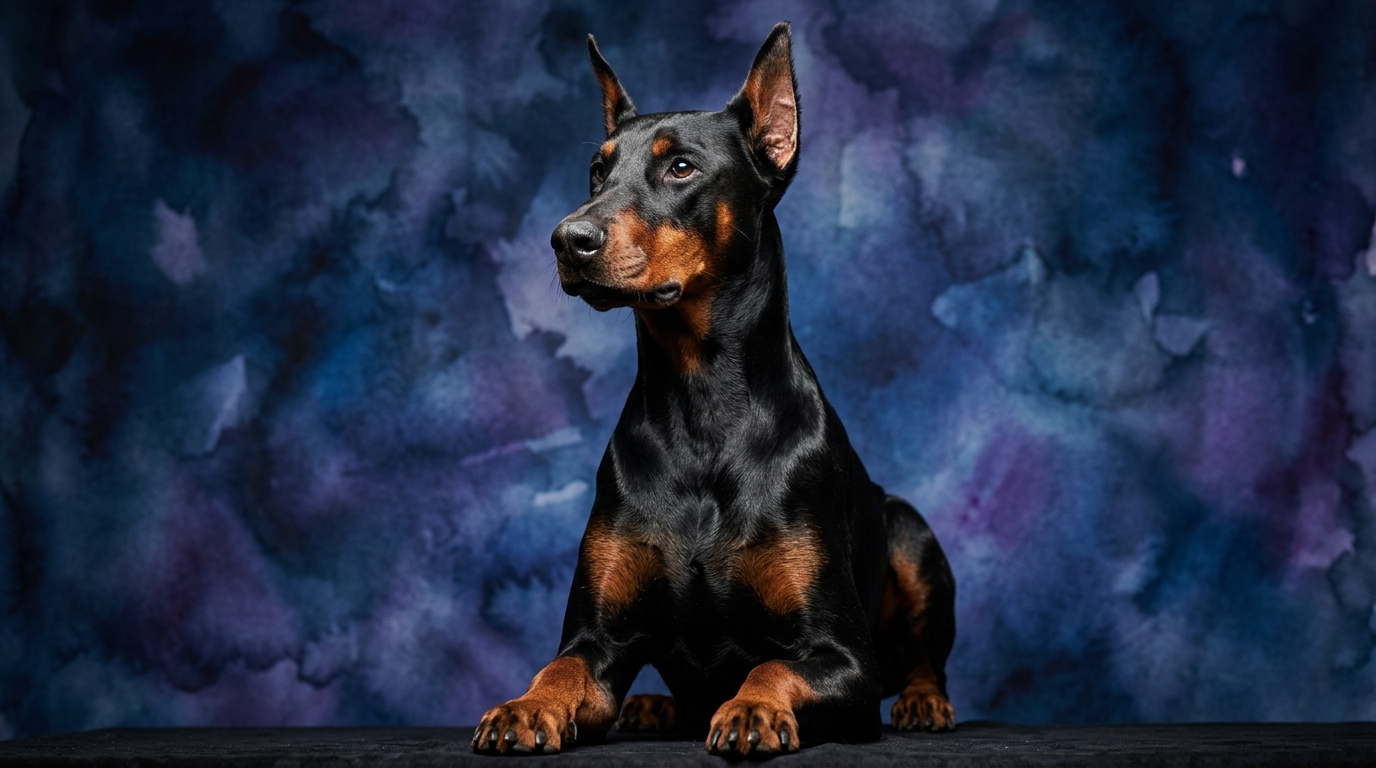
A formidable presence, the Doberman Pinscher, ranking #5 on the Coren scale, presents a cognitive profile built for purpose and partnership. Our Pet IQ Lab scores reveal a remarkable 5/5 in Problem Solving, indicating an exceptional capacity to navigate complex situations and devise solutions, whether it's understanding intricate multi-step commands or figuring out environmental puzzles.
Their Training Speed also reaches a perfect 5/5, showcasing an astonishing ability to grasp new instructions and behaviors with minimal repetition. Complementing this is a 5/5 in Memory, ensuring that learned lessons are deeply retained, and a powerful 5/5 in Instinctive Drive, which fuels their intense focus and dedication to tasks. Their Social Intelligence, rated 4/5, points to a strong awareness of human cues and pack dynamics, critical for their historically protective roles.
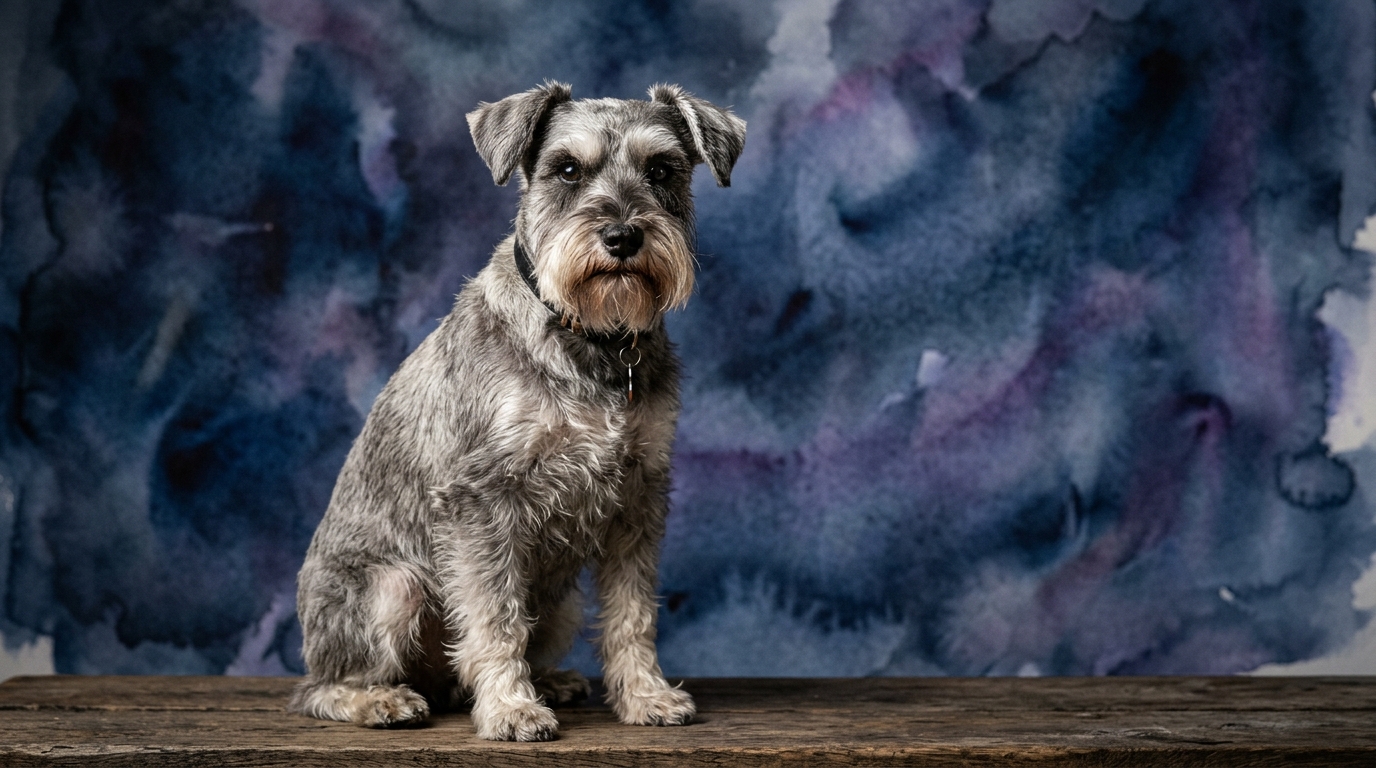
In contrast, the Miniature Schnauzer, a vibrant terrier sitting at #12 on the Coren scale, offers a different yet equally engaging cognitive makeup. This breed earns a strong 4/5 in Problem Solving, demonstrating a good aptitude for figuring things out, often with a clever, independent streak. Like the Doberman, their Training Speed is a commendable 5/5, meaning they are quick studies when it comes to learning new commands and routines. Their Social Intelligence matches the Doberman's at 4/5, indicating a good understanding of social interactions and a capacity to connect with their human companions. Rounding out their profile, the Miniature Schnauzer scores 4/5 in both Instinctive Drive and Memory, reflecting a solid foundation for learning and task engagement, albeit with a slightly different emphasis than their larger counterpart.
Where the Doberman Pinscher Excels Cognitively
The Doberman Pinscher's cognitive architecture truly shines in areas demanding high-level processing, retention, and a strong work ethic. Their perfect 5/5 in Problem Solving allows them to tackle intricate scenarios, from advanced obedience sequences requiring discrimination and sequencing to complex search and rescue patterns. This isn't just about following orders; it's about understanding the objective and adapting strategies, such as figuring out how to open a complicated latch or navigating an obstacle course with novel elements. Coupled with a 5/5 in Memory, Dobermans exhibit an impressive recall of past experiences and learned behaviors, making them adept at long-term retention of vast repertoires of commands and routines, even after periods of inactivity.
Furthermore, the Doberman's 5/5 Instinctive Drive fuels an unwavering focus and determination, particularly in tasks involving protection, scent work, or competitive dog sports like Schutzhund. This drive isn't merely physical energy; it's a deep cognitive engagement where their natural instincts are channeled into purposeful action, allowing them to maintain concentration on a target or task for extended periods. Their ability to synthesize complex information, remember detailed instructions, and apply a powerful, directed drive makes them unparalleled in roles requiring precision, vigilance, and the capacity to learn and perform highly specialized tasks consistently.
Where the Miniature Schnauzer Excels Cognitively
While the Doberman excels in large-scale, cooperative tasks, the Miniature Schnauzer demonstrates unique cognitive strengths particularly suited to its terrier heritage and compact size. Their 4/5 in Problem Solving, combined with their instinctive drive, manifests as a tenacious and clever approach to smaller-scale challenges, especially those involving independent navigation or outsmarting. For instance, a Miniature Schnauzer might exhibit remarkable ingenuity in finding a dropped treat under furniture or meticulously working to extract a toy from a tight space, leveraging their size and persistence in ways a larger dog might not. This problem-solving is often self-directed, reflecting a historical role where they needed to think on their paws without constant human direction.
Their 4/5 Instinctive Drive, though numerically lower than the Doberman's, is intensely focused on specific terrier tasks, such as scenting and pursuing small prey. This drive fuels incredible persistence and determination in digging, exploring, and investigating, demanding a particular type of cognitive engagement to navigate tunnels or locate hidden objects. Additionally, while both breeds score 4/5 in Social Intelligence, the Miniature Schnauzer's non-intimidating presence often allows them to integrate into diverse social settings with greater ease, using their charm and expressive nature to navigate interactions. This can be a cognitive advantage in adapting to various human personalities and environments, fostering quick rapport without the initial reservations sometimes associated with larger, more imposing breeds.
Which is Easier to Train and Why
Both the Doberman Pinscher and the Miniature Schnauzer boast an impressive 5/5 in Training Speed, indicating that both breeds are remarkably quick to pick up new commands and cues. This means neither breed will struggle with the comprehension aspect of training; they both understand what is being asked of them rapidly. However, the application and consistency in training reveal subtle but significant differences rooted in their other cognitive dimensions and breed temperaments.
The Doberman's 5/5 Instinctive Drive is often directed towards pleasing its handler and fulfilling a purpose, making them highly compliant and eager to work in partnership. Their strong desire to be "useful" combined with their exceptional Memory (5/5) means they not only learn quickly but retain complex sequences of commands and are motivated by the collaborative nature of training. This handler-focused drive often translates into a dog that is easier to train for advanced obedience, precision sports, and tasks requiring sustained focus and intricate execution.
The Miniature Schnauzer, while equally quick to learn (5/5 Training Speed), possesses a 4/5 Instinctive Drive that, while strong, is often more independently oriented, characteristic of its terrier lineage. They are quick to grasp concepts but might occasionally prioritize an interesting scent or a perceived "job" over a handler's command if not consistently engaged and motivated. Training a Miniature Schnauzer requires more creativity to maintain focus against their independent streak and occasional stubbornness, ensuring the training remains more captivating than environmental distractions. Therefore, while both learn fast, the Doberman's inherent desire for partnership often makes them more consistently responsive in training scenarios, particularly for advanced work, while the Schnauzer requires a more persuasive and engaging approach to channel their quick intellect.
Which Suits Active Owners vs. Relaxed Owners
The Doberman Pinscher is unequivocally suited for active owners who are prepared to provide significant physical exercise and, crucially, consistent mental stimulation. Their 5/5 Problem Solving, 5/5 Instinctive Drive, and 5/5 Memory mean they thrive when given a "job" or a clear purpose. This isn't a breed that contentedly lounges all day; they require vigorous daily exercise, such as long runs, advanced obedience training, agility, or protection work, to channel their immense energy and cognitive capacity constructively. An owner who cannot commit to regular, challenging engagement will likely find a Doberman frustrated, potentially leading to undesirable behaviors stemming from boredom and understimulation. They demand an owner who is as dedicated to their mental and physical well-being as the Doberman is to their companionship.
The Miniature Schnauzer, while still an energetic and curious companion, offers a more adaptable profile for owners with varying activity levels, leaning towards moderately active rather than entirely relaxed. Their 4/5 Instinctive Drive and 4/5 Memory provide a solid foundation for engagement, and they enjoy regular walks, playtime, and interactive games. They benefit greatly from consistent mental stimulation through puzzle toys, training sessions, or participation in dog sports like agility or earthdog trials, which tap into their terrier problem-solving and drive. However, their needs are generally less intense and physically demanding than a Doberman's. A Miniature Schnauzer can thrive in an apartment setting with sufficient daily walks and indoor play, making them a more manageable choice for individuals or families who enjoy activity but may not be able to commit to the rigorous, high-intensity lifestyle a Doberman truly needs to flourish.
The Verdict
Choose the Doberman Pinscher if: You are an experienced, active owner seeking an intensely loyal, highly capable working companion who thrives on complex training, consistent mental challenges, and a clear, purposeful role within your life.
Choose the Miniature Schnauzer if: You desire a spirited, clever, and tenacious companion in a smaller package, appreciating their independent problem-solving and quick learning, and are prepared to provide engaging, consistent training and moderate activity.
🧠 Find Your Pet's IQ Score
Our Pet IQ Lab assessment covers 25+ tests across 5 cognitive dimensions — personalized to your breed.
Take the Full IQ Test →Frequently Asked Questions
Are Doberman Pinschers good with children?
Dobermans can be excellent family dogs, especially when well-socialized and trained from a young age to respect boundaries. Their protective instincts and loyalty make them devoted companions, but they require consistent guidance and integration into family activities to ensure harmonious interactions.
Do Miniature Schnauzers require professional grooming?
Yes, Miniature Schnauzers have a dense, wiry double coat that requires regular grooming to prevent matting and maintain skin health. This typically involves professional stripping or clipping every 6-8 weeks, alongside regular brushing at home.
Which breed is more prone to separation anxiety?
Both breeds can develop separation anxiety if not properly socialized or if left alone for excessive periods, as both form strong bonds with their families. However, Dobermans, with their strong desire for companionship and purpose, might exhibit more pronounced distress if their need for interaction and engagement is not met.