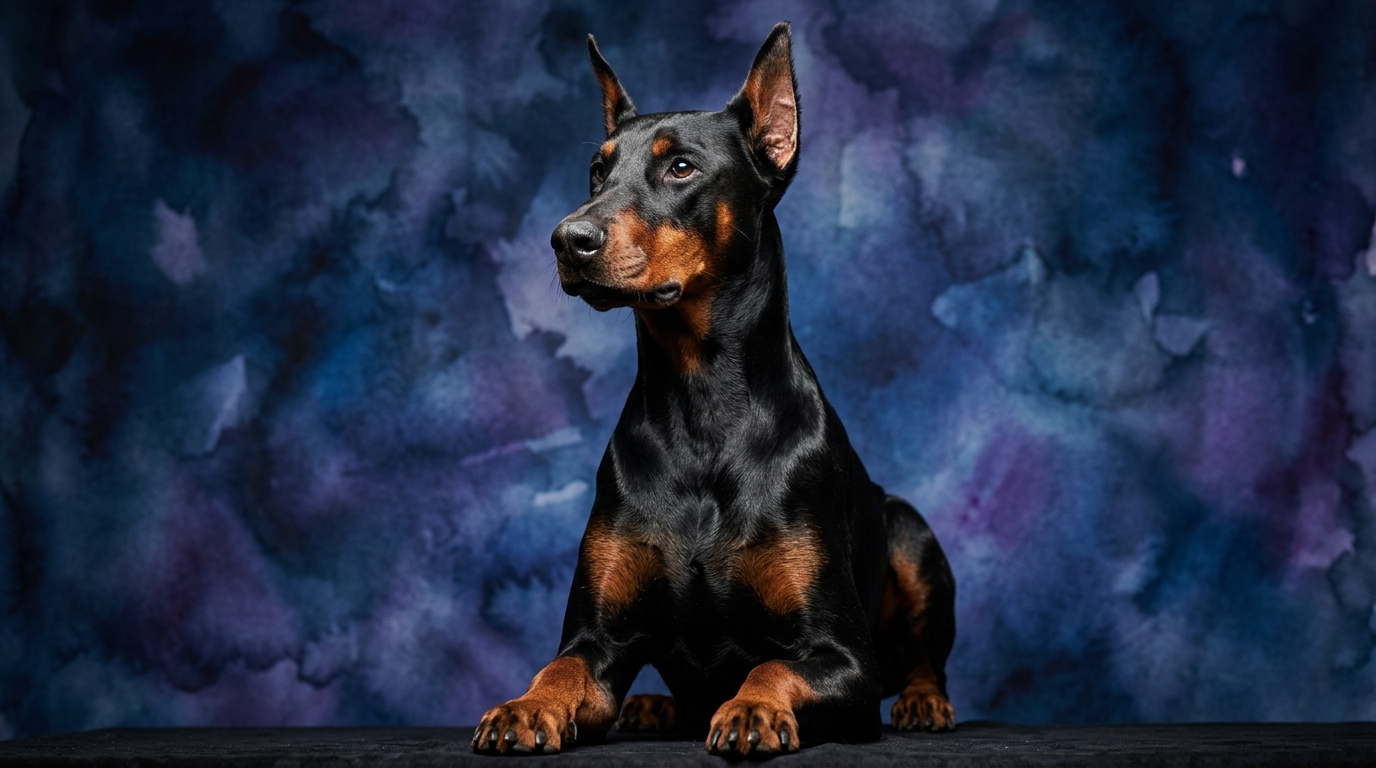
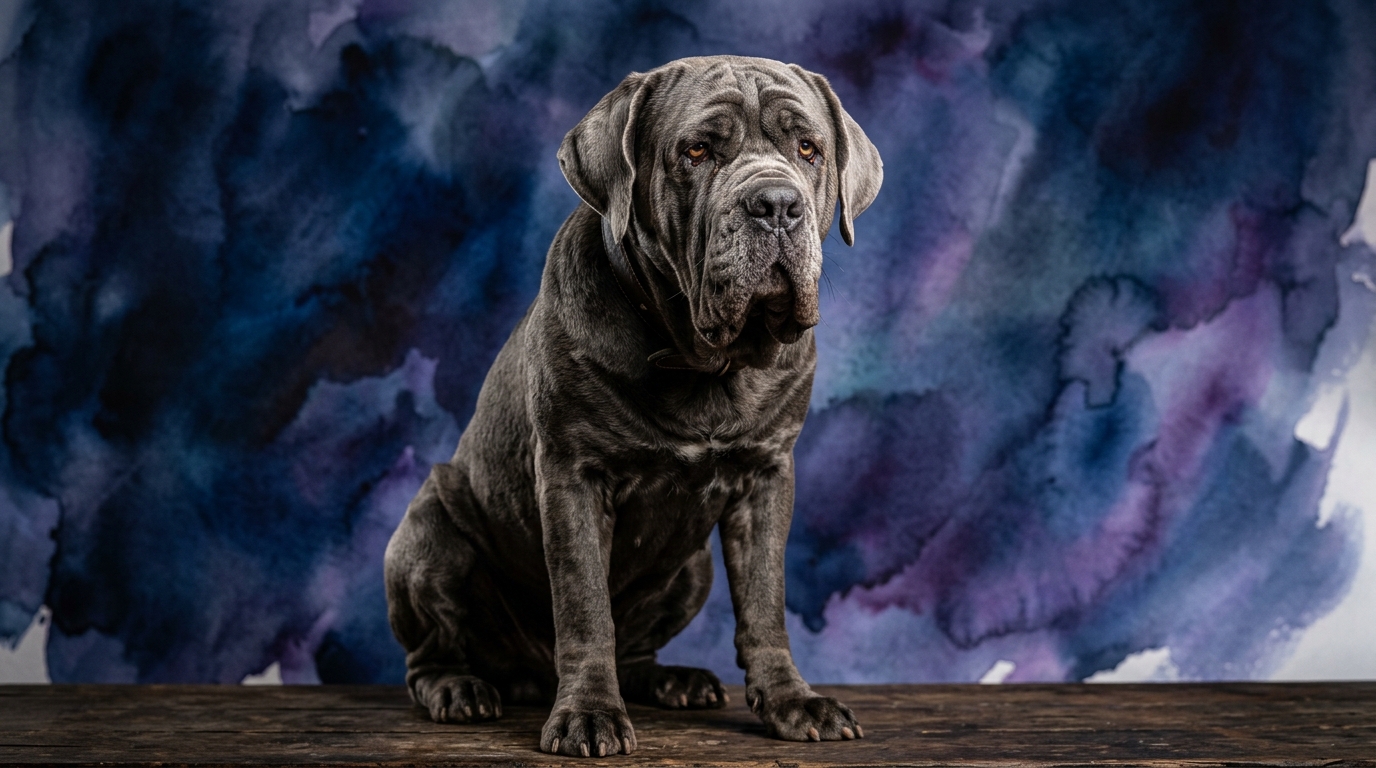
Side-by-Side IQ Profile: Doberman Pinscher vs. Neapolitan Mastiff
At The Cosmic Pet Pet IQ Lab, we evaluate canine intelligence across five critical dimensions. Here’s how the Doberman Pinscher and Neapolitan Mastiff compare.
**Problem Solving:** This dimension measures a dog's capacity to navigate novel situations or overcome obstacles.
**Doberman Pinscher (5/5):** Possessing a quick-fire mind, Dobermans rapidly assess environmental cues, formulating effective solutions. This manifests in their historical roles requiring split-second decisions, whether tracking or outmaneuvering. They don't just react; they strategize.
**Neapolitan Mastiff (3/5):** The Neapolitan Mastiff approaches problems with a more measured, deliberate pace. While capable of resolving straightforward challenges, complex, multi-step puzzles requiring abstract thought are less their forte. Their strength lies in steadfast, rather than swift, analysis.
**Training Speed:** This indicates how quickly a breed grasps new commands and behaviors.
**Doberman Pinscher (5/5):** These dogs are sponges for information, often needing only a few repetitions to cement a new command. This accelerated learning curve, combined with their eagerness, makes them exceptionally responsive to structured training, thriving on mental engagement.
**Neapolitan Mastiff (3/5):** Training a Neapolitan Mastiff requires patience and consistency. They learn at a more relaxed tempo, needing more repetitions and a clear, unwavering approach. Their cognitive process values routine, making them less inclined to quickly generalize new concepts without thorough reinforcement.
**Social Intelligence:** This is the ability to understand and respond appropriately to human and canine social cues, emotions, and intentions.
**Doberman Pinscher (4/5):** Dobermans exhibit robust social awareness, keenly attuned to their human companions' moods and subtle body language. This allows deep bonds and anticipation of needs, making them alert guardians. Their focus is often task-oriented or family-centric.
**Neapolitan Mastiff (3/5):** The Neapolitan Mastiff's social intelligence is primarily geared towards their immediate family, displaying profound loyalty and protective instincts. They are discerning of strangers, observing before accepting. Their social interactions tend to be less nuanced, prioritizing loved ones' safety.
**Instinctive Drive:** This refers to the inherent motivation to perform breed-specific behaviors, such as guarding or tracking.
**Doberman Pinscher (5/5):** Their instinctive drive is profoundly strong, channeled into vigilance, protection, and a desire for purpose. This manifests as a tireless work ethic, an innate readiness to defend, and a powerful urge for stimulation. Properly directed, it makes them exceptional partners.
**Neapolitan Mastiff (3/5):** The Neapolitan Mastiff possesses a significant, yet more contained, instinctive drive focused almost exclusively on guarding and family protection. It's often expressed through watchful waiting and a formidable presence, activated primarily when a threat is perceived, rather than constant activity.
**Memory:** This is the capacity to recall past experiences, learned commands, and associations.
**Doberman Pinscher (5/5):** Dobermans possess exceptional memory, retaining commands, routines, and events with striking clarity. This contributes to training success and the ability to learn complex sequences. They recall both positive and negative experiences, reinforcing good habits but also making them sensitive to harsh methods.
**Neapolitan Mastiff (3/5):** Neapolitan Mastiffs have a reliable memory, capable of remembering training and family members, though perhaps not with the same intricate detail or speed. They form strong, lasting associations, particularly with trusted humans and established routines. Consistent reinforcement helps deeply ingrain these memories.
Where the Doberman Pinscher Wins Cognitively
The Doberman Pinscher truly shines in areas demanding rapid cognitive processing and a strong work ethic, evidenced by their 5/5 Problem Solving. They proactively analyze and devise strategies, adept at tasks requiring quick improvisation like complex search and rescue or advanced obedience. Coupled with a 5/5 Training Speed, they absorb new information with astonishing efficiency, mastering an extensive repertoire of commands often within a few repetitions. Their 5/5 Instinctive Drive fuels a relentless pursuit of purpose, providing motivation for high-level performance in protection work or competitive sports. This is all underpinned by their perfect 5/5 Memory, ensuring learned behaviors and past experiences are retained with precision, making them reliable and consistent performers.
Where the Neapolitan Mastiff Wins Cognitively
While the Neapolitan Mastiff may not possess the lightning-fast processing of a Doberman, its cognitive profile offers distinct advantages where steadfastness and a deeply rooted, calm protective nature are paramount. Its 3/5 Instinctive Drive means formidable guarding instincts are typically less volatile and more reserved, activating with purpose rather than constant agitation. This allows them to be imposing guardians without the perpetual need for intense mental stimulation. Their 3/5 Problem Solving and Training Speed translate into a thoughtful, unhurried approach, not prone to impulsive decisions, relying instead on deliberate assessment. This considered mental pace, combined with a 3/5 Social Intelligence focused intensely on their immediate family, fosters an unwavering, almost stoic, loyalty. They win in providing a grounded, formidable presence that prioritizes deep, singular bonds and a measured response to perceived threats.
Which is Easier to Train and Why?
Unquestionably, the Doberman Pinscher presents as the easier breed to train for most owners, a direct consequence of its superior cognitive scores. Their 5/5 Training Speed means they pick up commands with remarkable swiftness, often eager to engage and please their handler. They thrive on the mental stimulation of learning new tasks and possess the Problem Solving capacity (5/5) to understand the 'why' behind a command, making them less likely to simply parrot behaviors and more likely to truly grasp concepts. This is further supported by their 5/5 Memory, ensuring that once a behavior is learned, it is retained.
In contrast, the Neapolitan Mastiff's 3/5 Training Speed necessitates a far more patient, consistent, and repetitive approach. They are not as inherently driven to engage in complex training exercises, and their Problem Solving at 3/5 suggests they prefer straightforward, unambiguous instructions. While capable of learning, their progress will be slower, requiring an owner who can commit to long-term, positive reinforcement without becoming frustrated by their more deliberate pace and occasional independent streak. The Doberman's inherent eagerness and cognitive agility make the training journey generally smoother and more rewarding for those seeking a highly compliant working partner.
Which Suits Active Owners vs. Relaxed Owners?
The Doberman Pinscher is unequivocally suited for active owners who relish engaging deeply with their canine companion. Their 5/5 Instinctive Drive demands a significant outlet, manifesting as a need for regular, vigorous exercise, advanced training, and mentally stimulating activities like agility, obedience, or protection work. A Doberman thrives when given a 'job' and will become restless or destructive if their considerable mental and physical energy is not appropriately channeled. They require an owner who can match their enthusiasm and provide consistent mental challenges to prevent boredom.
Conversely, the Neapolitan Mastiff, with its 3/5 Instinctive Drive, aligns better with more relaxed owners, provided they understand the breed's fundamental needs. While they still require regular, moderate exercise to maintain their substantial physique and prevent boredom, their daily energy output is significantly lower than a Doberman's. They are less inclined to constant activity and more content to be a watchful presence within the home. However, 'relaxed' does not mean 'neglectful'; their immense size and protective nature necessitate early socialization and consistent, firm guidance, even if the training pace is slower. They are ideal for owners who appreciate a formidable, loyal presence and are prepared for a commitment to foundational training and responsible management, without needing a canine athlete.
The Verdict
Choose a Doberman Pinscher if you seek a highly engaged, intellectually agile companion eager to learn, perform complex tasks, and share an active, purpose-driven lifestyle. Their quick mind and boundless energy make them ideal for experienced owners committed to advanced training, dog sports, or dedicated working roles.
Opt for a Neapolitan Mastiff if you desire a steadfast, imposing guardian whose loyalty runs deep, and you appreciate a more deliberate, watchful presence rather than constant activity. They are best suited for patient owners who can provide consistent foundational training, early socialization, and a calm, secure home environment without requiring a canine athlete.
🧠 Find Your Pet's IQ Score
Our Pet IQ Lab assessment covers 25+ tests across 5 cognitive dimensions — personalized to your breed.
Take the Full IQ Test →Frequently Asked Questions
Does the Doberman Pinscher's high instinctive drive make them difficult to live with?
A Doberman's 5/5 instinctive drive means they possess a strong urge for purpose and activity. Without proper outlets like regular exercise, training, and mental stimulation, this drive can lead to restlessness or unwanted behaviors. With appropriate engagement, however, it translates into an eager, focused, and highly capable companion.
Is a Neapolitan Mastiff's lower problem-solving score a disadvantage for family life?
Not necessarily. A Neapolitan Mastiff's 3/5 problem-solving score means they approach new situations with deliberation rather than swift improvisation. While they may not excel at complex puzzles, this trait often contributes to their calm, steady demeanor in a family setting, where consistency and a predictable routine are often valued over constant mental gymnastics.
How important is early socialization for these breeds given their social intelligence scores?
Early socialization is crucial for both, though for different reasons. For the Doberman (4/5 social intelligence), it helps channel their perceptive nature into appropriate interactions, preventing over-alertness. For the Neapolitan Mastiff (3/5 social intelligence), it's vital to broaden their inherent discernment of strangers, ensuring their deep protective instincts are well-managed and they develop into confident, rather than overly suspicious, adults.