Side-by-Side IQ Profile
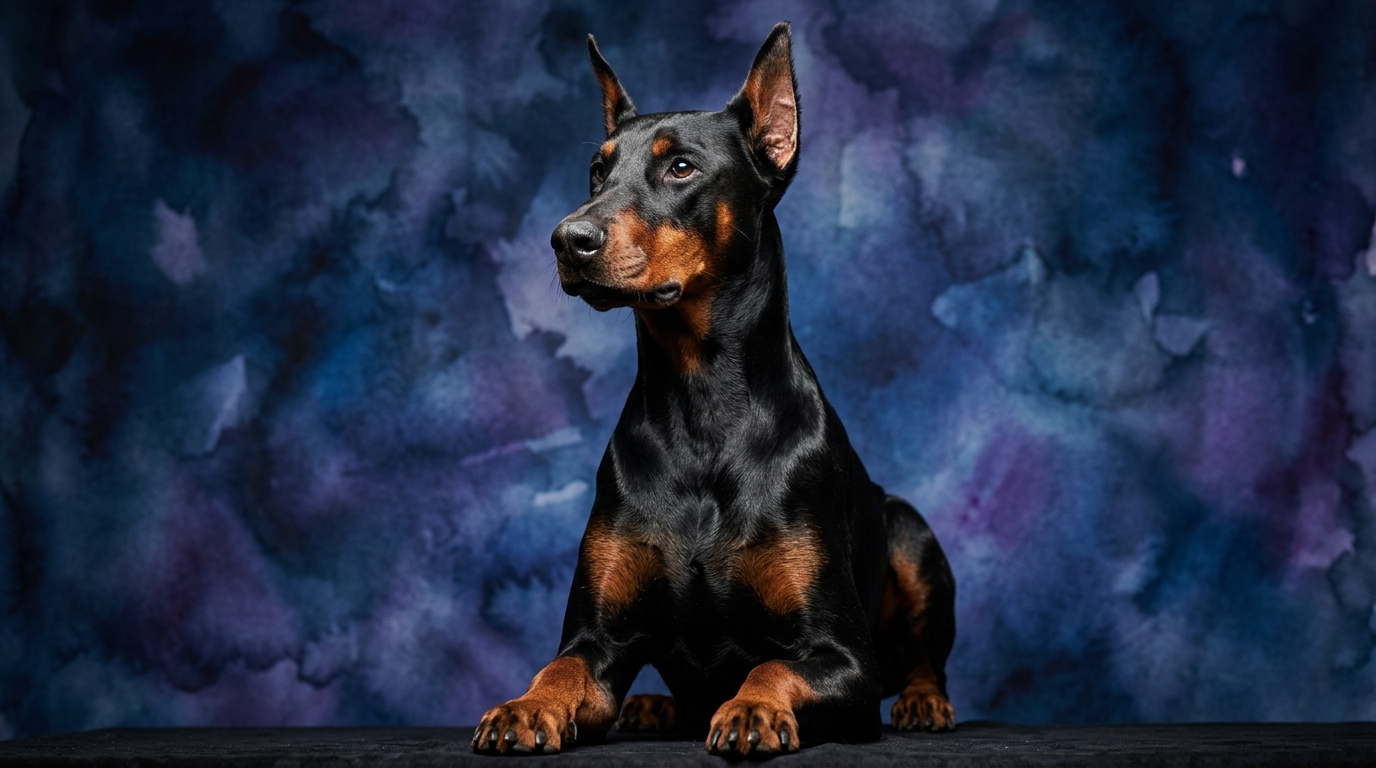
The Doberman Pinscher, ranking #5 in Coren's intelligence categories, presents a formidable cognitive profile. Its Problem Solving is rated 5/5, indicating an exceptional capacity to analyze novel situations and devise effective solutions, often with minimal human intervention. Their minds are constantly processing environmental cues, allowing them to quickly adapt to new challenges, whether it's figuring out a complex puzzle toy or navigating an unfamiliar obstacle course.
In Training Speed, the Doberman also scores 5/5, absorbing new commands and routines with remarkable rapidity. They require fewer repetitions than most breeds to solidify a behavior, making them highly responsive to consistent instruction and capable of mastering intricate sequences of tasks in short order.
Their Social Intelligence stands at 4/5, exhibiting a deep understanding of human social cues and emotional states. While intensely loyal and attuned to their primary family, their social acumen is often channeled towards protective roles or specific tasks, meaning they are discerning rather than universally outgoing with strangers.
Instinctive Drive is a perfect 5/5 for the Doberman Pinscher, reflecting a profound innate drive for purpose and activity. This translates into a powerful desire to work, patrol, and engage in high-intensity tasks, making them incredibly focused and persistent when motivated by a clear objective or a perceived duty.
Finally, the Doberman's Memory is rated 5/5, showcasing an outstanding ability to recall learned behaviors, commands, and experiences over long periods. This strong memory contributes significantly to their training retention and their capacity to learn from past interactions, whether positive or negative.
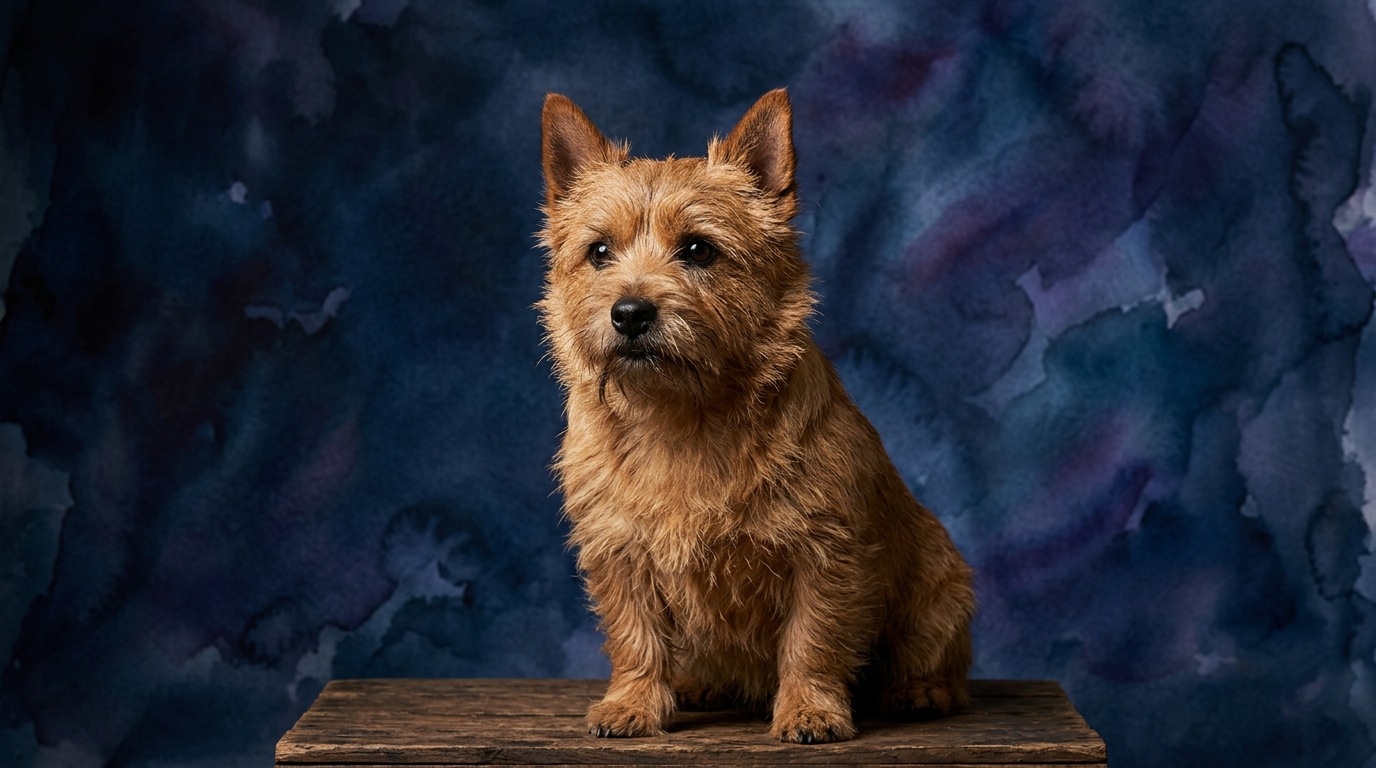
The Norwich Terrier, though not Coren-ranked, possesses a consistent cognitive profile across the board. Its Problem Solving is rated 3/5, meaning Norwich Terriers approach problems with a characteristic terrier tenacity, but their methods are often more direct and less analytical than a Doberman's. They can figure out how to achieve their goals, such as finding a dropped treat, but might rely more on trial-and-error and persistence rather than sophisticated strategic planning.
Their Training Speed is 3/5, indicating that this breed learns at a moderate pace, requiring consistent and engaging training sessions. While capable of mastering a wide range of commands, they benefit from shorter, more frequent repetitions and positive reinforcement to maintain focus, rather than the rapid assimilation seen in some working breeds.
Social Intelligence for the Norwich Terrier is 3/5. They are generally affable and enjoy companionship, demonstrating a straightforward understanding of social interactions. They are affectionate with their families and typically friendly, though their social cues might be less subtle or complex compared to breeds bred for intricate human-dog partnerships.
The Norwich Terrier's Instinctive Drive is also 3/5. As terriers, they possess an inherent drive for exploration and pursuit, but it's often more about independent investigation and playful engagement rather than intense, task-oriented focus. Their drive fuels curiosity and a desire for moderate activity, without the relentless intensity of a dedicated working dog.
Their Memory score is 3/5, meaning Norwich Terriers possess a solid memory for routines and familiar commands. They remember their experiences and learn from them, though perhaps not with the same depth or long-term retention of highly specialized working breeds, requiring occasional refreshers for less frequently practiced behaviors.
Where Doberman Pinscher Wins Cognitively
The Doberman Pinscher’s cognitive architecture provides distinct advantages in several areas. Their 5/5 score in Problem Solving means they can swiftly assess complex scenarios, such as navigating a new agility course or understanding the mechanics of an escape-proof crate, often finding solutions that would baffle other breeds. This superior analytical capacity allows them to not just follow commands, but to interpret and act within a broader context, making them exceptional partners for intricate tasks.
Their perfect 5/5 in Training Speed is a testament to their neural efficiency. A Doberman can learn a new behavior, like 'heel' or 'stay,' in a fraction of the repetitions a Norwich Terrier might require, solidifying the command into their repertoire almost immediately. Coupled with a 5/5 Memory, once a Doberman learns something, it tends to stick, meaning less re-training and more reliable performance over time. This combination makes them incredibly efficient learners, retaining vast amounts of information and complex sequences with ease.
Furthermore, their 5/5 Instinctive Drive gives them an unparalleled focus and resilience in task execution. Whether it's tracking, protection work, or competitive obedience, a Doberman’s internal motivation to complete an objective is profound, allowing them to push through distractions and maintain concentration for extended periods, a trait less pronounced in breeds with a lower drive score.
Where Norwich Terrier Wins Cognitively
While the Doberman excels in raw processing power and drive, the Norwich Terrier’s cognitive profile offers unique advantages for specific living situations. Their 3/5 Instinctive Drive, in contrast to the Doberman’s 5/5, translates to a more manageable level of 'busyness' for many companion dog owners. This means a Norwich is less likely to become restless or destructive if not constantly engaged in a 'job,' making them content with regular exercise and mental enrichment rather than requiring intense, purpose-driven activity every day. Their drive is often directed towards playful interaction and independent exploration rather than demanding a constant directed task.
The Norwich’s 3/5 in Problem Solving and Training Speed, while not as rapid as a Doberman, means they are less prone to 'outsmarting' their owners in complex ways. They are smart enough to learn and adapt, but perhaps less inclined to devise elaborate strategies to bypass rules or manipulate situations. This can make them simpler to manage in a typical household setting, as their cognitive demands are more straightforward and their independence is often expressed through cheerful self-amusement rather than complex behavioral challenges.
Their 3/5 Social Intelligence can also be a 'win' for owners seeking a more direct and less intensely demanding social dynamic. A Norwich is generally friendly and enjoys interaction, but might not possess the Doberman’s intense focus on reading every nuanced human emotion or anticipating every command. This can result in a more relaxed social presence, where their affection is clear and their needs are expressed directly, without the potential for the Doberman’s deep, almost symbiotic, emotional connection that requires significant owner engagement to manage.
Which Is Easier to Train and Why
Without question, the Doberman Pinscher presents as the easier breed to train, primarily due to its exceptional 5/5 scores in both Training Speed and Memory. A Doberman’s brain is wired for rapid assimilation and retention of information; they grasp new commands quickly, often after just a few repetitions, and remember them reliably over time. Their inherent eagerness to please, combined with their profound Instinctive Drive, means they are highly motivated to engage in training and excel at tasks presented to them. This allows for the rapid progression through complex obedience routines and specialized skills, making the training process feel highly rewarding and efficient for a dedicated handler. Behavioral differences are evident in their rapid response to cues and their ability to generalize learned behaviors to new environments with minimal prompting.
The Norwich Terrier, with its 3/5 scores in Training Speed and Memory, will require a different approach to training. While capable of learning, they demand more patience, consistency, and shorter, more engaging sessions to maintain their interest. Their terrier independence means they might occasionally weigh the 'cost-benefit' of obeying a command, rather than offering instant compliance. Owners will find that the Norwich requires more repetitions to solidify a behavior and may need more frequent refreshers to keep commands sharp. Their training is best approached with positive reinforcement, emphasizing fun and variety, to work with their spirited nature rather than against it. For example, teaching a Doberman to 'stay' for five minutes might take a handful of sessions, while a Norwich might require many more, broken into shorter increments, to achieve the same reliability.
Which Suits Active Owners vs. Relaxed Owners
The Doberman Pinscher is unequivocally suited for active, engaged owners who are prepared to meet substantial physical and mental demands. Their 5/5 Instinctive Drive, coupled with their high problem-solving capacity, means they thrive on purpose and consistent activity. These dogs require daily vigorous exercise, such as long runs, advanced obedience work, agility, or protection training, to prevent boredom and potential behavioral issues. They need owners who are not just physically active but also mentally stimulating, providing complex training, puzzle toys, and consistent interaction to keep their sharp minds occupied. A Doberman is not a dog for a relaxed owner; they demand a significant investment of time, energy, and cognitive engagement.
The Norwich Terrier, while still requiring regular exercise and mental enrichment, is a more adaptable fit for owners who might describe themselves as moderately active or seeking a companion with a more relaxed daily rhythm. Their 3/5 Instinctive Drive means they enjoy walks, playtime, and exploring, but they don't possess the relentless need for a 'job' that defines the Doberman. They are content with a good daily stroll, interactive games, and cuddle time on the couch. Owners who appreciate a spirited companion that is less demanding in terms of constant, high-intensity activity, yet still enjoys engagement and learning, would find the Norwich Terrier a suitable match. They are active enough to join in family outings but also happy to relax by your side, making them a good fit for owners with a balanced lifestyle.
The Verdict
Choose a Doberman Pinscher if you are an experienced, dedicated owner seeking a highly trainable, intensely driven, and cognitively advanced partner for demanding activities like protection sports, competitive obedience, or an active family life requiring a vigilant companion. They thrive with consistent mental challenges and physical exertion, offering unparalleled loyalty and capability to those who can meet their profound needs.
Opt for a Norwich Terrier if you appreciate a spirited, independent, and affectionate companion with a more moderate activity requirement and a straightforward approach to life, ideal for owners seeking a cheerful, adaptable dog for family life without the intense demands of a high-drive working breed. They offer delightful companionship with a manageable level of cognitive stimulation and physical exercise.
🧠 Find Your Pet's IQ Score
Our Pet IQ Lab assessment covers 25+ tests across 5 cognitive dimensions — personalized to your breed.
Take the Full IQ Test →Frequently Asked Questions
Does a Doberman Pinscher need a job to be happy?
Yes, a Doberman's 5/5 instinctive drive means they genuinely thrive when given a purpose. This doesn't always mean a formal "job" like police work, but consistent training, puzzle-solving, and engaging activities are crucial for their mental well-being.
Are Norwich Terriers difficult to train because of their terrier nature?
Norwich Terriers, with their 3/5 training speed, can be more challenging than a Doberman due to their independence and spirited nature, often perceived as stubbornness. However, with consistent, positive, and engaging training methods, they are perfectly capable of learning and becoming well-mannered companions.
How do their social intelligence scores impact family life?
A Doberman's 4/5 social intelligence means deep loyalty and attunement to their family, often expressing protective instincts. A Norwich Terrier's 3/5 social intelligence results in a generally friendly and affectionate demeanor, but perhaps less intense in reading complex human emotions, making them a straightforward and cheerful family member.