Side-by-Side Cognitive Profiles
The Cosmic Pet Pet IQ Lab employs a five-dimensional framework to assess canine intelligence, providing a nuanced view beyond simple rankings. While the Doberman Pinscher holds a distinguished Coren rank of #5, signifying exceptional working and obedience intelligence, the Pharaoh Hound, as a sighthound, is not included in Coren's traditional ranking, highlighting their distinct cognitive approach.
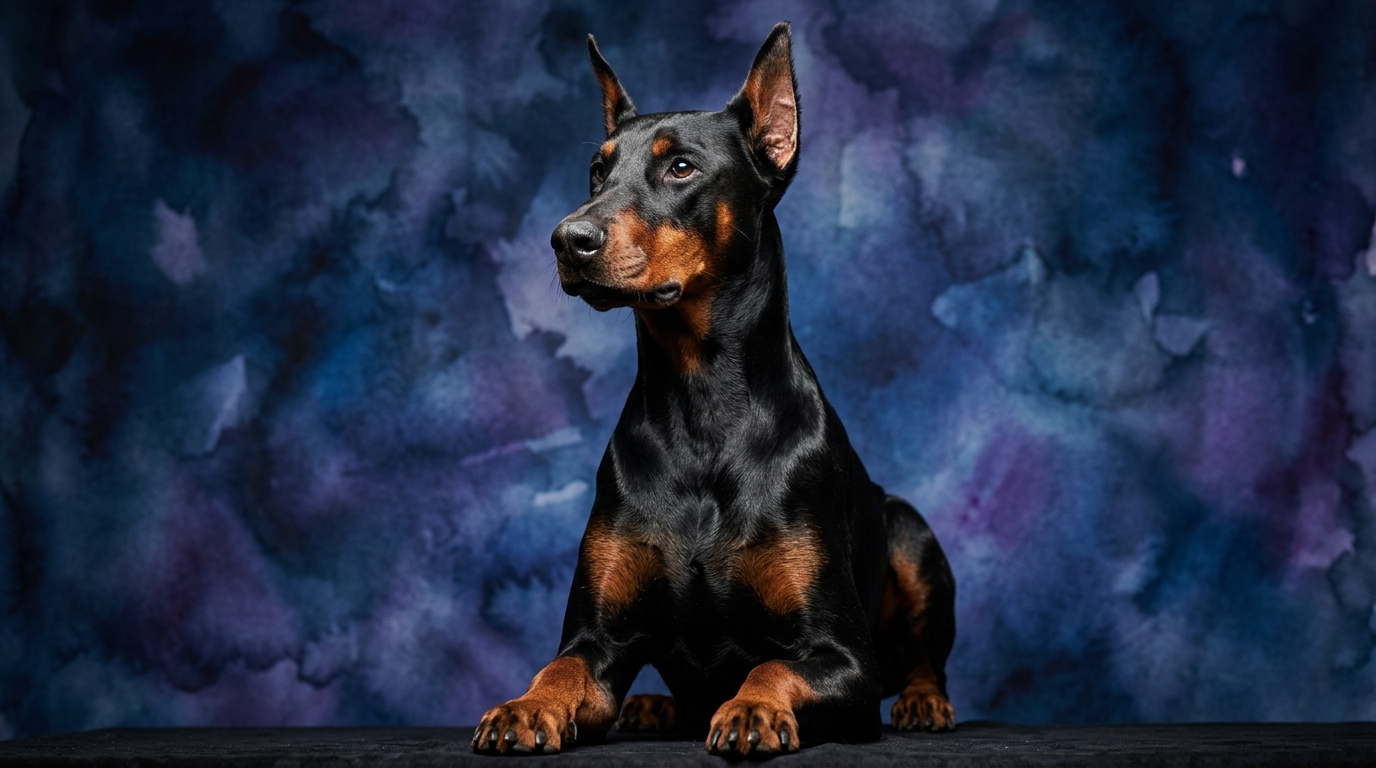
The Doberman Pinscher's profile paints a picture of sharp, eager-to-please intellect: Problem Solving 5/5, Training Speed 5/5, Social Intelligence 4/5, Instinctive Drive 5/5, and Memory 5/5. These scores suggest a breed exceptionally adept at understanding and executing complex commands, quickly learning new tasks, and remembering them over time, all while maintaining a strong connection to their human companions. Their high instinctive drive often translates into a powerful desire to perform tasks and engage in structured activities.
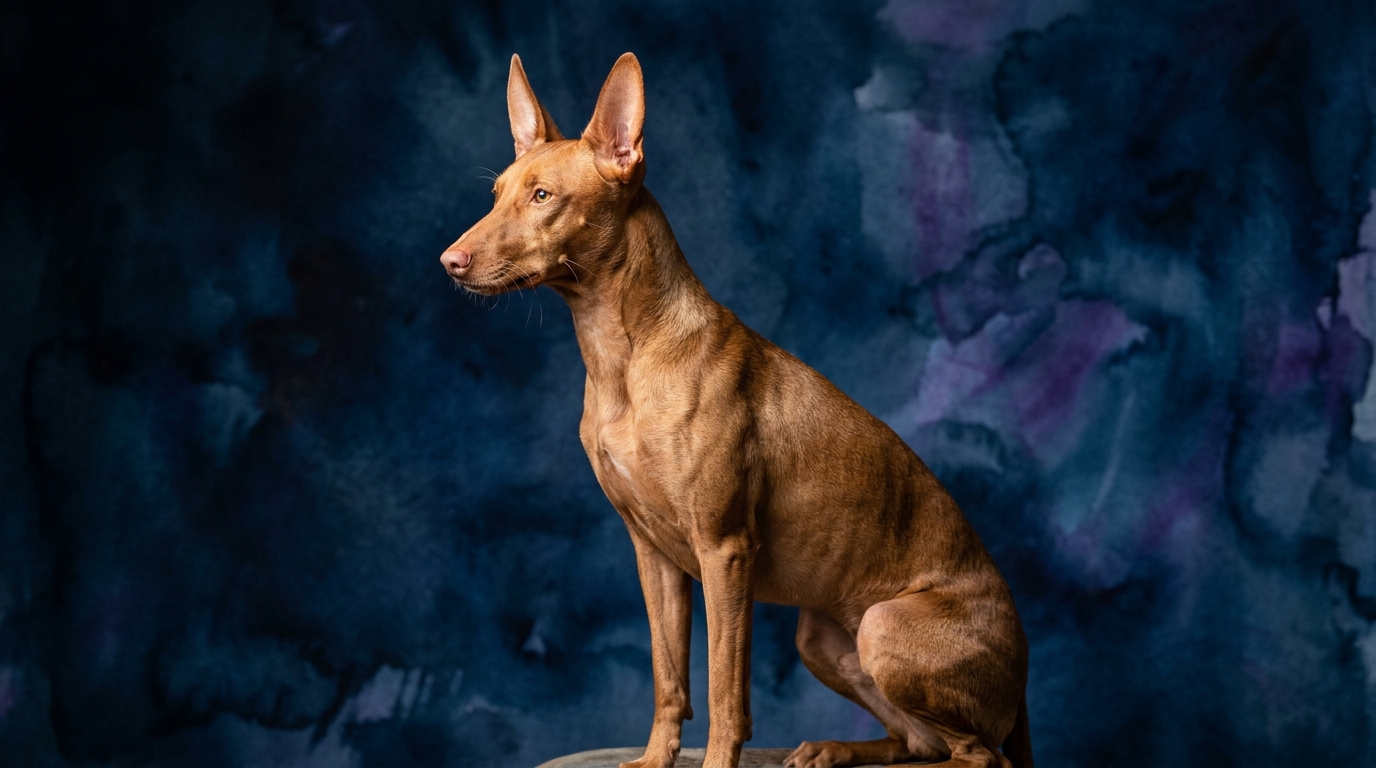
In contrast, the Pharaoh Hound exhibits a more balanced, self-reliant cognitive pattern: Problem Solving 3/5, Training Speed 3/5, Social Intelligence 3/5, Instinctive Drive 3/5, and Memory 3/5. These scores do not indicate a lack of intelligence, but rather a different kind of operational intelligence. They reflect a breed that, while capable of learning and bonding, operates with a greater degree of independence, relying on their own judgment and innate hunting instincts more readily than on constant human direction.
Where the Doberman Pinscher Excels Cognitively
The Doberman Pinscher's cognitive strengths are profoundly evident in their Problem Solving (5/5) and Training Speed (5/5). They possess an innate ability to quickly grasp intricate concepts, linking actions to desired outcomes with remarkable efficiency. This translates into rapid acquisition of complex obedience routines, advanced trick training, and even specialized roles like assistance work or search and rescue, where understanding multi-step processes is critical.
Their Instinctive Drive (5/5) and Memory (5/5) further amplify their cognitive prowess. Dobermans are driven to engage in purposeful activities, often displaying an intense focus on tasks. This drive, combined with an exceptional memory, allows them to master long sequences of commands and recall them reliably, even after extended periods. A Doberman can learn a multi-part routine and execute it flawlessly, remembering the nuances of each step.
While their Social Intelligence stands at a robust 4/5, it signifies a strong capacity for understanding human cues and intentions, fostering a deep partnership. This means they are not just capable learners but also keen observers of their human companions, often anticipating needs and responding to subtle social signals, though perhaps not with the same immediate, unyielding compliance as their problem-solving and training speed might suggest in all social contexts.
Where the Pharaoh Hound's Cognitive Strengths Lie
The Pharaoh Hound's cognitive profile, while numerically lower in a comparative framework, represents a distinct set of adaptive strengths perfectly suited to their heritage as independent sighthounds. Their Problem Solving (3/5) and Instinctive Drive (3/5) manifest as a specialized form of intelligence: the ability to make autonomous decisions in pursuit of prey, often at a distance from a handler. This is not about solving a puzzle box for a treat, but about independently navigating terrain, assessing environmental cues, and executing a chase strategy without direct human intervention.
Their Social Intelligence (3/5) reflects a capacity for affectionate bonding, but often on their own terms. Pharaoh Hounds form deep attachments, yet retain an elegant independence, appreciating companionship without necessarily demanding constant interaction or immediate obedience to every whim. Their memory (3/5) serves them well in recalling familiar routes and the locations of past interesting scents or sights, rather than an extensive repertoire of human-taught commands.
The Pharaoh Hound's Training Speed (3/5) indicates that they are certainly trainable, but they require a different approach. Their learning is often motivated by perceived self-interest or the joy of the activity itself, rather than an inherent eagerness to please. For a Pharaoh Hound, 'winning cognitively' means possessing the precise mental toolkit to excel at what their breed was developed for: independent hunting, requiring keen senses, swift decision-making, and self-reliance in the field.
Trainability: Doberman Pinscher vs. Pharaoh Hound
The Doberman Pinscher's training journey is typically characterized by speed and enthusiasm. Their 5/5 scores in Problem Solving, Training Speed, and Instinctive Drive mean they are highly receptive to instruction and eager to engage in structured learning. They excel in environments where clear commands, consistent routines, and positive reinforcement are employed, often picking up new behaviors after only a few repetitions. This makes them exceptionally rewarding partners for obedience, agility, and protection sports.
Conversely, training a Pharaoh Hound requires a nuanced understanding of their independent sighthound nature. Their 3/5 scores in Training Speed and Problem Solving suggest they learn at a moderate pace and often need more consistent, highly motivating reinforcement. A Pharaoh Hound's strong prey drive (Instinctive Drive 3/5, though still potent for their purpose) means they can be easily distracted by environmental stimuli, making recall training a significant challenge in open, unfenced areas. Their intelligence is geared towards independent action rather than constant human direction, so they may weigh the value of a command against their own inclinations.
Real behavioral differences highlight this contrast: a Doberman might look to their owner for the next command during a training session, anticipating and seeking direction. A Pharaoh Hound, however, might pause, consider the request, and then decide if it's worth their effort, especially if a squirrel or interesting scent presents itself. This calls for patience, creativity, and high-value rewards to make training engaging and worthwhile for the Pharaoh Hound, transforming it into a cooperative game rather than a strict lesson.
Lifestyle Suitability: Active vs. Relaxed Owners
For owners seeking an active, engaged companion, the Doberman Pinscher is an ideal match. Their high instinctive drive and problem-solving abilities demand consistent mental and physical stimulation. They thrive in households that provide structured activities, advanced obedience training, dog sports like agility or Schutzhund, or even a 'job' around the home. A Doberman needs an owner who is prepared to be an active participant in their cognitive development and physical exercise, channeling their immense energy and focus productively to prevent boredom-induced behaviors.
The Pharaoh Hound also requires an active owner, but the nature of that activity differs significantly. While they possess bursts of incredible speed and need ample opportunity to run in a secure, fenced area, their mental engagement is often less about complex tasks and more about satisfying their sighthound instincts. They enjoy exploring, chasing, and can be quite content to lounge elegantly after their exercise needs are met. An owner who appreciates their independent spirit and provides outlets for their physical prowess without demanding constant, intricate mental work will find a compatible partner.
Neither breed is truly suited for a 'relaxed' owner in the sense of minimal engagement. Both require dedication to exercise and socialization. However, an owner who prefers less intensive, highly structured training and appreciates a dog with a more self-sufficient demeanor might find the Pharaoh Hound a better fit, provided they can accommodate its physical activity needs. The Doberman, conversely, demands an owner ready for a deep, collaborative partnership involving significant time commitment to training and structured activities.
The Verdict
Choose the Doberman Pinscher if you seek a highly trainable, intensely focused, and deeply engaged partner for complex tasks, structured activities, and a close, collaborative lifestyle. They thrive with owners who provide consistent guidance and channel their exceptional drive into purposeful work.
Opt for the Pharaoh Hound if you appreciate an elegant, independent companion requiring less intensive mental training but plenty of physical exercise and a nuanced understanding of their sighthound motivations. They suit owners who value grace, self-reliance, and are prepared for a dog that sometimes makes its own decisions.
🧠 Find Your Pet's IQ Score
Our Pet IQ Lab assessment covers 25+ tests across 5 cognitive dimensions — personalized to your breed.
Take the Full IQ Test →Frequently Asked Questions
Are Dobermans difficult to handle due to their drive?
Dobermans possess a powerful instinctive drive that, when properly channeled, makes them eager learners and dedicated partners. Without consistent training, mental stimulation, and physical exercise, this drive can manifest as unwanted behaviors, but with appropriate guidance, they are highly manageable and responsive.
Do Pharaoh Hounds respond well to positive reinforcement?
Absolutely, positive reinforcement is the most effective approach for Pharaoh Hounds. Their independent nature means they respond best when motivated by high-value rewards, praise, and when training is framed as an enjoyable game rather than a chore, respecting their inherent desire for autonomy.
Which breed is better for first-time dog owners?
Given the Doberman's high drive and need for consistent, structured training, they can be challenging for a first-timer without significant dedication to learning and implementation. The Pharaoh Hound's independence also requires specific understanding and patience, making neither an ideal 'beginner' dog without a committed owner willing to research and adapt to their unique needs.