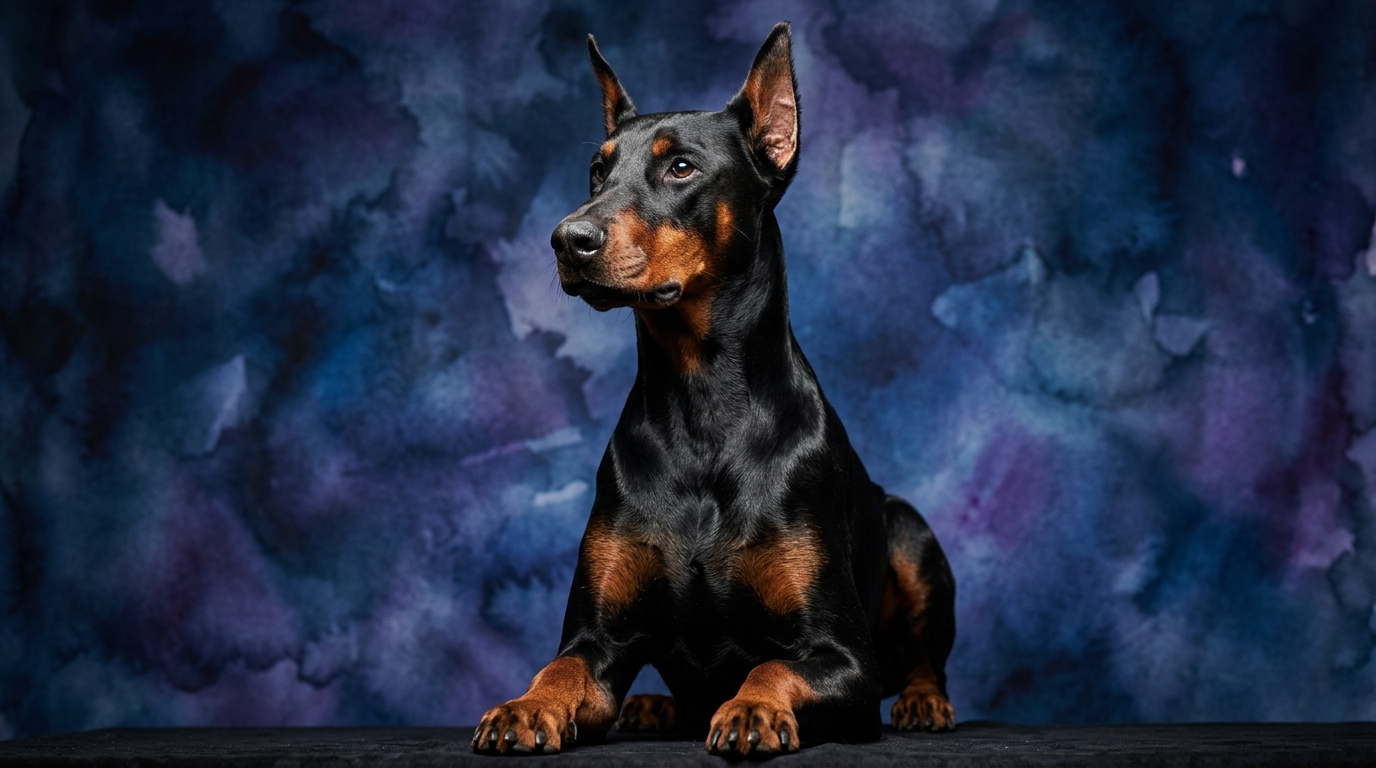
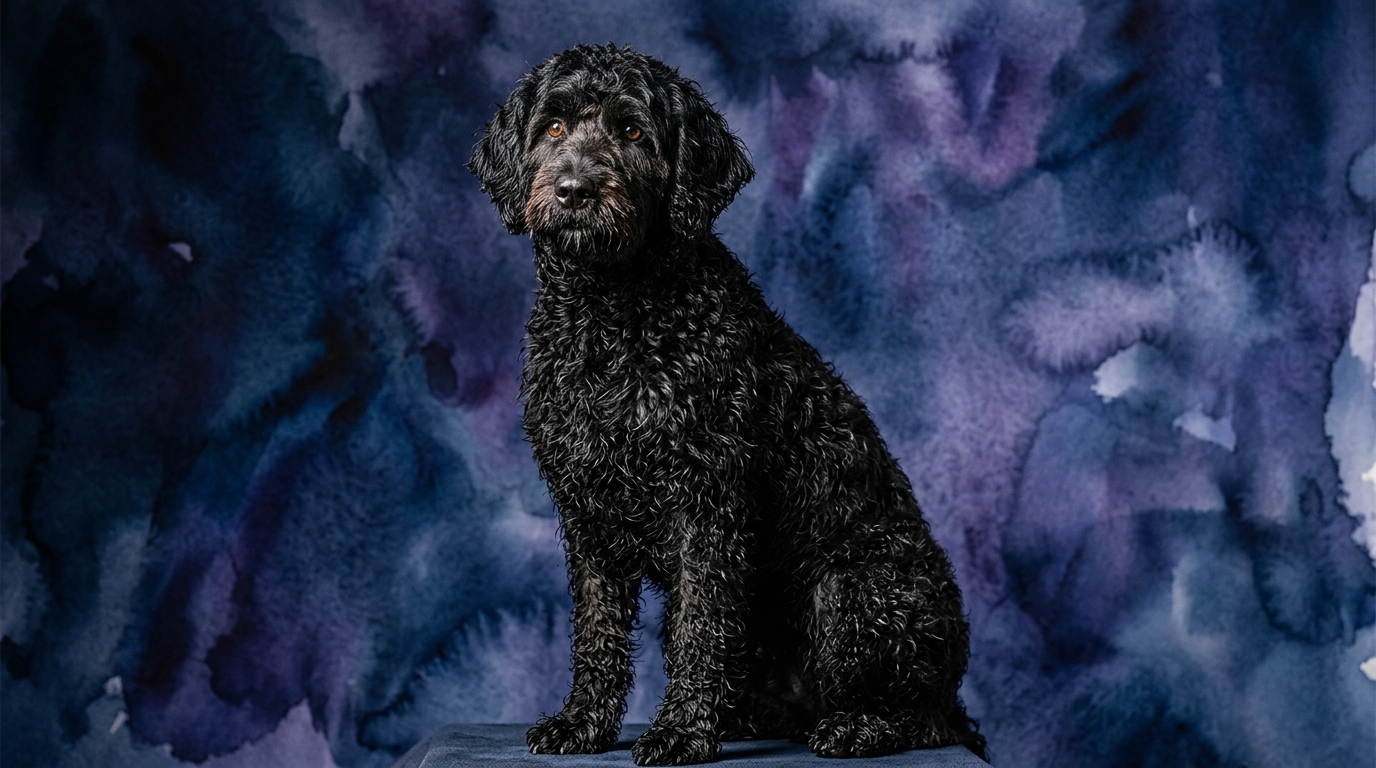
Side-by-Side Cognitive Profile
The Cosmic Pet Pet IQ Lab employs a five-dimensional framework to assess canine cognitive abilities: problem-solving, training speed, social intelligence, instinctive drive, and memory. These metrics provide a nuanced view beyond anecdotal observations, offering a window into how each breed processes information and interacts with their environment and human companions.
The Doberman Pinscher, a Working breed, stands out with exceptional scores across the board. They achieve a perfect 5/5 in problem-solving, training speed, instinctive drive, and memory, alongside a robust 4/5 in social intelligence. This profile suggests a canine partner that not only learns with remarkable swiftness but also retains information effectively, possesses a strong inherent motivation for tasks, and adeptly interprets human cues, all while independently navigating complex challenges.
In contrast, the Portuguese Water Dog, also a Working breed, presents a balanced yet more moderate cognitive profile. They register a consistent 3/5 across all five dimensions: problem-solving, training speed, social intelligence, instinctive drive, and memory. This indicates a capable learner and companion, but one who approaches tasks with a different pace and intensity compared to the Doberman Pinscher, aligning with their historical role as adaptable aquatic retrievers.
Comparing these profiles directly highlights the Doberman's cognitive acceleration and intensity versus the Portuguese Water Dog's steady, practical aptitude. While both breeds are undeniably functional, their differing scores foreshadow distinct requirements for mental engagement and training methodologies, reflecting their unique evolutionary paths and working histories.
Where Doberman Pinschers Excel Cognitively
The Doberman Pinscher's cognitive strengths are evident in its 5/5 ratings for problem-solving, training speed, instinctive drive, and memory. This breed demonstrates an impressive capacity for rapid analysis, quickly assessing novel situations and formulating effective responses. Their cognitive processing allows them to grasp complex commands and sequences with minimal repetition, making them exceptionally efficient learners in structured environments.
Their elevated instinctive drive means Dobermans possess a powerful internal motivation to engage in purposeful activities, whether it's protection work, competitive sports, or intricate obedience routines. This drive, coupled with a 5/5 memory, enables them to reliably recall vast amounts of information and execute learned behaviors with precision and consistency over long periods. Owners often observe their Dobermans anticipating commands or proactively engaging with tasks based on prior experiences.
While scoring 4/5 in social intelligence, the Doberman Pinscher still exhibits a profound understanding of human intentions and emotional states. This allows for a deep, responsive partnership, where they are keenly attuned to their handler's directives. Their cognitive makeup favors a working relationship built on clear communication and consistent expectations, thriving when given a defined role and mental challenge.
Where Portuguese Water Dogs Excel Cognitively
Despite their consistent 3/5 scores across all cognitive dimensions, the Portuguese Water Dog demonstrates a unique set of practical cognitive advantages tailored to their heritage. Their moderate problem-solving ability, for instance, is not a deficit but an aptitude for navigating practical, environmental challenges pertinent to their role as aquatic helpers. They are adept at figuring out how to retrieve objects from water, navigate varied terrains, and adapt to changing conditions without the potential for overthinking or creating complex, self-imposed tasks.
The Portuguese Water Dog's 3/5 in instinctive drive signifies a manageable level of motivation that is less intense than breeds with higher scores. This allows them to sustain focus on repetitive tasks, such as retrieving fishing nets or lost gear, without becoming overly fixated or prone to the high-intensity behavioral issues that can arise from an unchanneled 5/5 drive. Their drive is persistent and adaptable, well-suited for a variety of family activities without demanding constant, high-stakes mental stimulation.
Their 3/5 social intelligence score also presents a distinct advantage for certain owners. It suggests a dog that is amiable and connected to its human family, yet perhaps less prone to intense separation anxiety or an overwhelming need for constant validation compared to some more intensely social breeds. This balance fosters a resilient and independent companionship, valuing interaction but also comfortable with a degree of self-sufficiency, which can be a cognitive win for households seeking a more balanced social dynamic.
Training Aptitude: Doberman Pinscher vs. Portuguese Water Dog
When considering ease of training, the Doberman Pinscher’s cognitive profile, with 5/5 in training speed and memory, positions them as remarkably quick learners. They absorb new commands, intricate sequences, and behavioral cues with impressive efficiency, often requiring very few repetitions to achieve mastery. Their exceptional memory ensures that once a behavior is learned, it is retained consistently, making them highly reliable in performing complex tasks or competitive routines.
This rapid acquisition and retention are powerfully supported by their 5/5 instinctive drive. Dobermans possess an inherent eagerness to engage in purposeful activities and respond to direction, which translates into a dedicated work ethic during training sessions. They thrive on clear, consistent instruction and mental challenges, viewing training not just as a task but as an opportunity for engagement and fulfillment, which expedites the learning process considerably.
In contrast, the Portuguese Water Dog, with a 3/5 in training speed and memory, requires a more patient and consistent approach. They are certainly capable of learning a wide array of commands and behaviors, but they will typically take longer to grasp new concepts and achieve proficiency. Owners should anticipate more repetitions and a slower progression through training stages, emphasizing positive reinforcement and making the learning process enjoyable.
Their moderate instinctive drive means that while they are willing participants, they may not possess the same intense urgency to perform as a Doberman. PWDs can exhibit an independent streak, a trait valuable in their original working capacity, which means training success relies heavily on making tasks engaging and demonstrating clear value. While the Doberman excels at rapid, high-volume learning, the PWD thrives with consistent, positive reinforcement that respects their thoughtful, adaptable nature.
Matching Canine Companions to Lifestyles
The distinct cognitive profiles of the Doberman Pinscher and Portuguese Water Dog mean they are suited for different types of owners and lifestyles. Understanding these differences is crucial for fostering a harmonious and fulfilling partnership, ensuring the dog's cognitive and physical needs are met effectively.
The Doberman Pinscher is an ideal match for highly active, experienced owners who are prepared to provide consistent, high-level mental and physical stimulation. Their 5/5 problem-solving and instinctive drive mean they thrive in environments where they are challenged with advanced obedience, protection work, agility, or other competitive dog sports. A Doberman requires a structured routine, extensive training, and a clear role within the family to prevent boredom and redirected energy. They demand an owner who can match their cognitive intensity and dedication.
The Portuguese Water Dog, while also an active working breed, offers a more adaptable cognitive profile that suits active owners seeking a versatile companion without the Doberman's intense cognitive demands. Their moderate drives and problem-solving abilities make them excellent partners for outdoor adventures, water sports, hiking, and family activities. They appreciate consistent engagement and training, but their cognitive needs are often met through varied daily activities rather than highly specialized, demanding tasks.
It is important to clarify that neither breed is truly suited for a 'relaxed' or sedentary owner. Both possess a working heritage that necessitates substantial physical exercise and mental engagement. However, the *intensity* and *type* of engagement differ significantly. The Doberman demands a partner who actively seeks out complex challenges, whereas the PWD thrives with a partner who enjoys varied, consistent activity and patient, engaging companionship.
The Verdict
Choose the Doberman Pinscher if you are an experienced owner seeking a highly responsive, task-oriented companion for advanced training, protective roles, or competitive dog sports, demanding consistent mental engagement and a structured environment.
Opt for the Portuguese Water Dog if you are an active individual or family who values a versatile, amiable companion for outdoor adventures and practical tasks, offering a balanced cognitive engagement that thrives on consistent, patient guidance.
🧠 Find Your Pet's IQ Score
Our Pet IQ Lab assessment covers 25+ tests across 5 cognitive dimensions — personalized to your breed.
Take the Full IQ Test →Frequently Asked Questions
What does a 3/5 for problem-solving mean for a Portuguese Water Dog?
It indicates they possess a functional capacity to navigate challenges and learn from experience, though they may take longer to process complex novel situations or require more structured guidance compared to breeds with higher scores. Their problem-solving often relates to environmental navigation and task completion relevant to their working heritage.
How does a Doberman Pinscher's 5/5 training speed translate to daily life?
A Doberman Pinscher's rapid training speed means they pick up new commands and routines with remarkable efficiency, often requiring fewer repetitions. This translates to quicker mastery of obedience, agility, or specialized tasks, but also necessitates consistent mental stimulation to prevent boredom and redirected energy.
Are both breeds suitable for first-time dog owners?
While both breeds are capable companions, their working heritage and cognitive profiles suggest they are generally better suited for owners with some prior dog experience. The Doberman's intense cognitive needs and drive require a confident, knowledgeable handler, while the PWD's independent streak benefits from patient, consistent training.