Side-by-Side Cognitive Profile
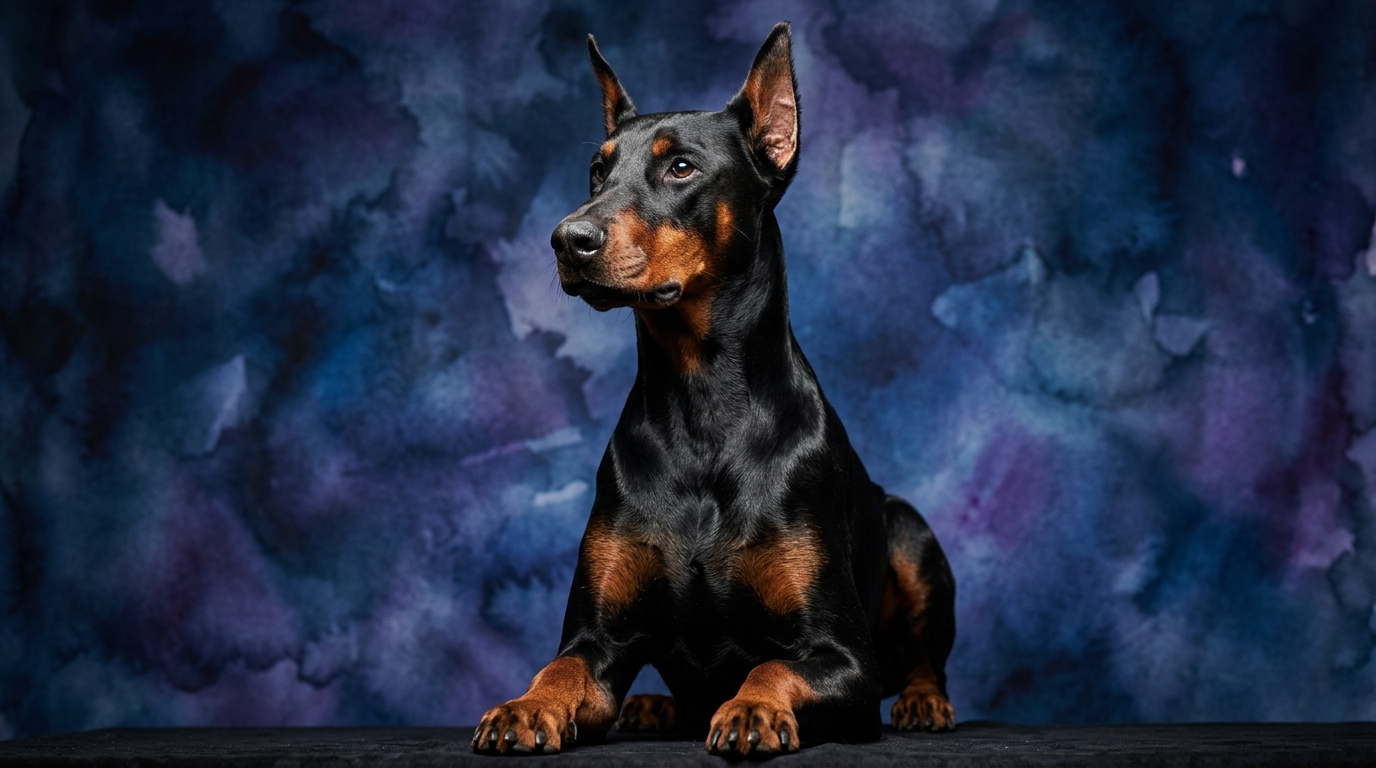
The Doberman Pinscher, holding a Coren rank of #5, demonstrates exceptional cognitive prowess across most dimensions. Its Problem Solving is rated 5/5, indicating an ability to quickly assess complex situations and formulate effective solutions, often anticipating human cues. Training Speed also scores 5/5, reflecting its remarkable capacity to rapidly form associations and master new commands with minimal repetition, driven by a strong desire for precise execution. Social Intelligence stands at 4/5, showing a deep understanding of human intentions and strong bonds with its primary family, though often reserved with strangers. Its Instinctive Drive is a perfect 5/5, channeling immense energy into focused work like guarding or obedience, while Memory, also 5/5, ensures learned behaviors and past experiences are retained with impressive accuracy.
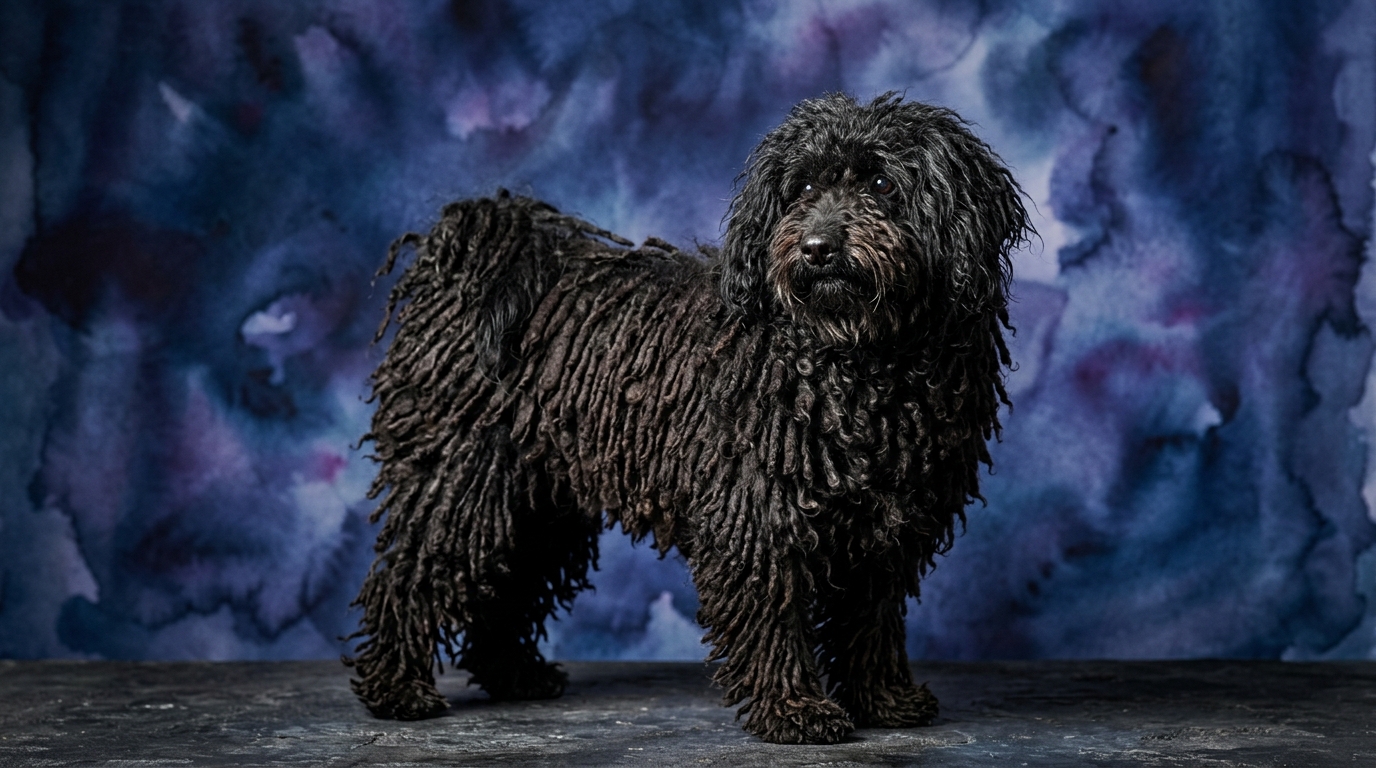
In contrast, the Puli, with a Coren rank of #25, presents a distinct set of cognitive strengths. Its Problem Solving is rated 4/5, showcasing resourceful thinking and adaptability, particularly in dynamic herding scenarios where independent decision-making is crucial. Training Speed is 4/5, meaning it learns efficiently, though its independent nature sometimes requires a more varied and patient motivational approach from the handler. Social Intelligence scores 3/5, indicating deep connections with its immediate family but a more selective approach to broader social interactions, often preferring familiar company. The Puli's Instinctive Drive is 3/5, exhibiting a persistent herding predisposition to manage and gather, yet often less intensely singular than some high-drive working breeds, allowing for more adaptability in its daily life. Memory, at 4/5, enables it to recall commands and routines effectively, though perhaps with less absolute precision than a Doberman.
Comparing these profiles reveals two distinct cognitive architectures. The Doberman excels in areas requiring precision, speed, and unwavering focus on a directed task, making it a master of structured obedience and protection work. Its high scores across problem-solving, training speed, instinctive drive, and memory point to a dog built for deliberate, high-stakes performance where every cue and response is critical. The Puli, while also a capable learner, operates with a more independent and adaptable mindset, perfectly suited for the fluid, unpredictable nature of herding where self-reliance and creative problem-solving are paramount. Its slightly lower social intelligence and instinctive drive scores, when viewed through the lens of its original purpose, suggest a dog that can operate effectively without constant human oversight, making independent judgments in the field.
Where the Doberman Pinscher Wins Cognitively
The Doberman Pinscher's superior scores in Problem Solving (5/5), Training Speed (5/5), and Memory (5/5) position it as a cognitive powerhouse in structured environments. This breed doesn't merely follow commands; its problem-solving acumen allows it to anticipate handler needs and execute complex sequences with remarkable foresight. This translates into an unparalleled ability to quickly grasp intricate tasks, such as multi-stage obedience routines or detailed protection work, mastering them in fewer repetitions than many other breeds.
Furthermore, the Doberman's exceptional memory (5/5) ensures that once a lesson is learned, it is deeply ingrained and consistently applied. This cognitive strength minimizes the need for retraining and fosters a high level of reliability in its performance, whether it's recalling a complex agility course or maintaining a precise heel. Coupled with its strong Instinctive Drive (5/5) for purpose and protection, the Doberman's cognitive profile makes it exceptionally well-suited for roles demanding unwavering focus, precision, and a rapid, dependable response to direction.
Where the Puli Wins Cognitively
The Puli's cognitive strengths lie in its independent adaptability and resourceful problem-solving (4/5) within dynamic, less structured contexts. While its training speed might be a point lower than the Doberman's, the Puli's herding background has honed its ability to make rapid, self-directed decisions in real-time, such as maneuvering a scattered flock without constant human instruction. This independent thinking allows it to creatively assess and resolve challenges as they arise, often relying on its own judgment rather than solely on direct handler cues, a crucial trait for a solo working dog.
Its Social Intelligence (3/5), while lower than the Doberman's, fosters an inherent self-reliance. This means the Puli is less overtly driven by a need to constantly please and more by its own assessment of a situation, which can be a significant advantage in tasks requiring autonomy. The Puli's Instinctive Drive (3/5) is persistent yet flexible, allowing it to transition from focused work to relaxed companionship without the intense, singular obsession that can characterize some higher-drive breeds, contributing to a resilient and adaptable cognitive approach to life.
Which Is Easier to Train and Why
Based on The Cosmic Pet Pet IQ Lab scores, the Doberman Pinscher (Training Speed 5/5) is generally easier to train in a conventional sense compared to the Puli (Training Speed 4/5). The Doberman's exceptional capacity for rapid association and its strong desire to work in tandem with its handler means it absorbs new commands and complex routines with remarkable speed. Its focus and precision allow for highly refined training, where clear, consistent methods yield swift and reliable results, making it a joy for trainers who appreciate a dog that learns quickly and accurately.
The Puli, while certainly capable of learning, approaches training with a more independent mindset, rooted in its herding heritage where making autonomous decisions was vital. This means that while it learns efficiently, it might occasionally offer its own interpretation of a command or require more varied motivation to maintain engagement, rather than simply accepting rote repetition. Trainers of a Puli often benefit from patience, creativity, and a willingness to engage its problem-solving abilities, rather than solely relying on strict, repetitive drills, which might be met with a thoughtful pause or a clever workaround from the Puli.
Which Suits Active Owners vs. Relaxed Owners
For owners seeking a highly active and purposeful companion, the Doberman Pinscher is an ideal match. Its 5/5 Instinctive Drive and 5/5 Problem Solving mean this breed thrives on consistent mental and physical engagement, demanding a structured outlet for its energy and focus. Owners must be prepared to provide regular, challenging activities such as obedience trials, agility, protection sports, or a rigorous daily exercise regimen that taps into its drive for purpose and provides ample opportunity for its sharp mind to work.
The Puli, while still an active breed, suits owners who appreciate a dog with a more balanced yet persistent need for activity. Its 3/5 Instinctive Drive suggests a moderate but consistent requirement for exercise and mental stimulation. Puli owners should be prepared for regular walks, opportunities for off-leash exploration, and engaging in activities like herding trials or canine parkour that tap into their agility and independent problem-solving without necessarily requiring the rigid, high-intensity structure a Doberman often seeks. They are adaptable to various active lifestyles, from hiking to simply enjoying a large yard.
The Verdict
Choose a Doberman Pinscher if you desire a highly responsive, purpose-driven companion thriving on precision training and consistent, structured engagement, excelling in demanding roles.
Opt for a Puli if you appreciate an independent, adaptable herding dog capable of solving problems creatively and enjoying varied activities, requiring a patient and understanding approach.
🧠 Find Your Pet's IQ Score
Our Pet IQ Lab assessment covers 25+ tests across 5 cognitive dimensions — personalized to your breed.
Take the Full IQ Test →Frequently Asked Questions
How does the Doberman's Coren rank of #5 compare to the Puli's #25?
The Doberman's Coren rank of #5 places it among the top five breeds in terms of understanding new commands with fewer repetitions, indicating superior working intelligence. The Puli's rank of #25 signifies it is still a capable learner, but typically requires more repetitions to master new commands compared to breeds in the top tier, reflecting its more independent cognitive style.
Does the Puli's lower social intelligence score mean it's less affectionate?
Not necessarily. A lower social intelligence score (3/5 for Puli vs. 4/5 for Doberman) suggests the Puli might be more selective in its social interactions and less overtly expressive with strangers. However, Pulik form deep, devoted bonds with their families, demonstrating affection in their own unique and often independent way, prioritizing familiar relationships over broad social engagement.
Are Dobermans or Pulik better for multi-dog households?
The suitability for multi-dog households depends more on individual temperament and socialization than breed alone. Dobermans, with their strong social intelligence (4/5) and desire for purpose, can integrate well with other dogs if properly socialized, especially if they have a clear role. Pulik, with their more selective social intelligence (3/5) and independent nature, might prefer fewer, more familiar canine companions, but can also thrive with others given appropriate introductions and management.