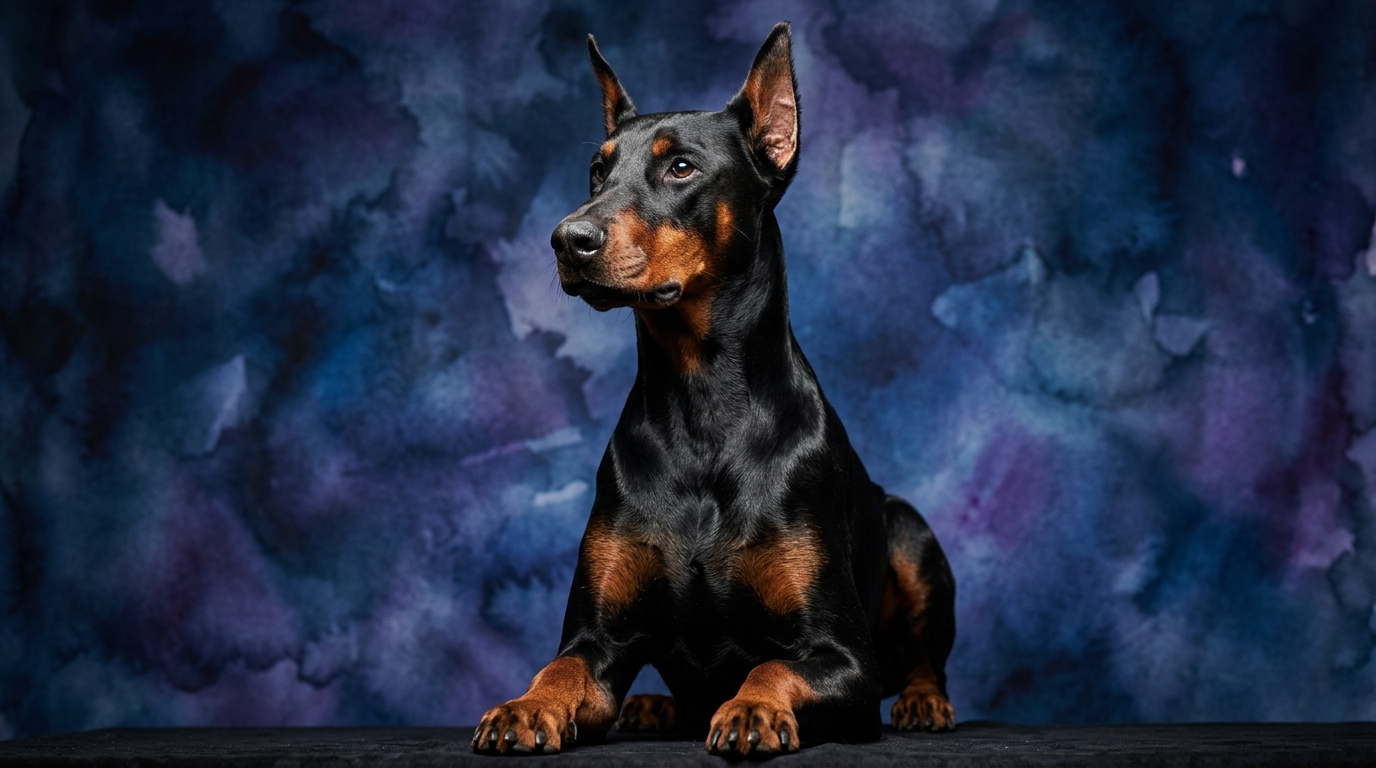
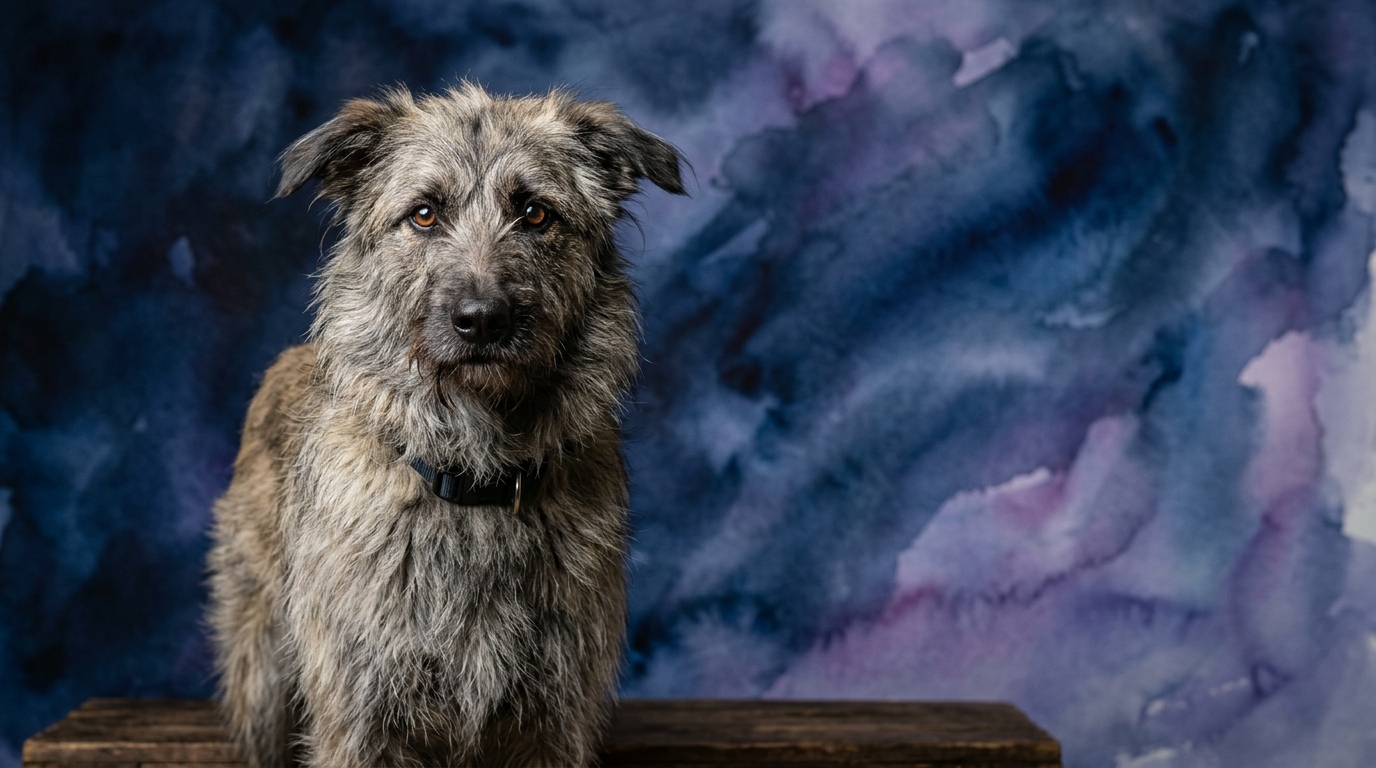
Side-by-Side Cognitive Profiles: Doberman Pinscher vs. Pyrenean Shepherd
The Cosmic Pet Pet IQ Lab provides a structured way to assess canine cognition across five key dimensions. For the Doberman Pinscher, a Working breed ranked #5 by Coren, its profile reflects a breed crafted for precise, demanding tasks. Its Problem Solving is rated 5/5, indicating an exceptional capacity for complex thought and swift analysis of situations. Training Speed also scores 5/5, meaning Dobermans typically grasp new commands and routines with remarkable swiftness, requiring minimal repetition. Social Intelligence stands at 4/5, suggesting a robust understanding of human cues and social dynamics, albeit with a potential for independence. Instinctive Drive is a perfect 5/5, highlighting profoundly strong and focused intrinsic drives, particularly for guarding and protection. Finally, Memory is rated 5/5, showcasing outstanding long-term recall for learned behaviors and routines.
In contrast, the Pyrenean Shepherd, a Herding breed not ranked by Coren, presents a different cognitive blueprint, reflecting its ancient role. Its Problem Solving is 3/5, indicating a practical, resourceful approach to challenges, finding functional solutions rather than engaging in abstract multi-step processes. Training Speed is also 3/5, meaning Pyrenean Shepherds generally require a moderate amount of repetition to master new commands, benefiting from consistent, engaging methods. Social Intelligence scores 3/5, suggesting a functional understanding of social cues and strong bonds within their primary family, though they can be reserved with strangers. Instinctive Drive is 3/5, with inherent herding drives that are present and can be channeled, manifesting as a desire to gather and manage. Memory is rated 3/5, typically displaying reliable recall for learned tasks and familiar environments, enabling adequate retention of past experiences.
Where the Doberman Pinscher Excels Cognitively
The Doberman's cognitive profile paints a picture of a precise, efficient thinker. Their perfect 5/5 scores in Problem Solving, Training Speed, Instinctive Drive, and Memory underscore a breed purpose-built for demanding work. A Doberman typically excels in scenarios requiring rapid assessment and decisive action, such as advanced obedience trials or protection sports, where their ability to process complex sequences and recall intricate commands is paramount. Their exceptional memory means that once a task is learned, it's deeply ingrained, making them incredibly reliable for intricate routines. This breed's instinctive drive, specifically its 5/5 score, manifests as an unwavering focus on its perceived duties, often translating into a dedicated work ethic and a profound protective nature towards its family. Their quick grasp of concepts combined with their memory allows for the rapid acquisition of skills, from scent work to agility, often surpassing breeds with a less immediate cognitive processing speed.
Where the Pyrenean Shepherd's Cognition Shines
While the Pyrenean Shepherd's scores might appear numerically lower, their cognitive strengths are uniquely adapted to their historical role, which emphasizes independent decision-making in a dynamic environment rather than human-directed precision. Their 3/5 in Problem Solving reflects a practical, on-the-spot resourcefulness crucial for managing livestock, where a dog needs to react to changing flock dynamics and environmental factors without constant human input. This isn't a deficiency; it's a different kind of intelligence, prioritizing adaptability and autonomous action over strict adherence to commands. Their social intelligence, also 3/5, often translates into a keen ability to read the subtle body language of animals and a nuanced understanding of their flock's needs, a skill not always captured by human-centric social metrics. The Pyrenean Shepherd's instinctive drive, also a 3/5, is geared towards the nuanced art of herding, requiring a delicate balance of assertiveness and restraint, a cognitive dance distinct from the Doberman's more direct protective instincts.
Training Dynamics: Doberman Pinscher vs. Pyrenean Shepherd
From a classical obedience perspective, the Doberman Pinscher is typically the “easier” breed to train, primarily due to their superior scores in Training Speed (5/5) and Memory (5/5). They generally pick up commands with minimal repetition, eager to please and quick to form associations between cues and desired actions. Their strong instinctive drive (5/5) means they are often highly motivated to perform tasks, especially those that align with their protective or working nature. This translates into a dog that can quickly master a vast repertoire of commands and perform them reliably.
The Pyrenean Shepherd, with a 3/5 in Training Speed and Memory, presents a different training experience. They are not unintelligent, but their herding background fosters a more independent, sometimes questioning, approach to directives. They may require more patience, creativity, and consistency to learn new tasks, as their focus can be more on environmental stimuli or their own inclinations rather than solely on the handler. Their social intelligence (3/5) suggests they forge deep bonds, but their compliance might stem more from partnership than from immediate, unquestioning obedience. Training a Pyrenean Shepherd often means understanding their nuanced herding instincts and channeling them productively, rather than expecting the rapid, precise responses of a Doberman.
Matching Breeds to Lifestyles: Active vs. Engaged Owners
The Doberman Pinscher, with its exceptional problem-solving, training speed, and powerful instinctive drive, generally thrives with active, engaged owners who can provide ample mental and physical stimulation. They require consistent training, opportunities for structured work (like obedience, agility, or protection sports), and regular exercise to channel their considerable energy and cognitive capacity. An owner who understands and can harness their strong protective instincts will find a loyal, dedicated companion. Without sufficient engagement, a Doberman can become bored, potentially leading to undesirable behaviors as they seek outlets for their considerable cognitive and physical drives.
The Pyrenean Shepherd, while possessing a different cognitive profile, is also a breed for active owners. Their herding background means they have stamina and a need for purpose, even if their problem-solving and training speed scores are lower. They excel in activities like herding, agility, or long hikes where their natural athleticism and vigilance can be utilized. A truly relaxed owner who cannot meet their needs for activity and mental stimulation might find a Pyrenean Shepherd to be restless or prone to “herding” family members or objects. Neither of these breeds is ideal for an owner seeking a low-maintenance companion.
The Verdict
Choose the Doberman Pinscher if you seek a highly trainable, intensely focused working partner for precision tasks, protection, or advanced obedience, and are prepared to provide rigorous mental and physical challenges.
Opt for the Pyrenean Shepherd if you appreciate an independent, resourceful companion for active outdoor pursuits like herding or hiking, and are willing to engage in patient, consistent training that respects their nuanced instincts.
🧠 Find Your Pet's IQ Score
Our Pet IQ Lab assessment covers 25+ tests across 5 cognitive dimensions — personalized to your breed.
Take the Full IQ Test →Frequently Asked Questions
Is the Pyrenean Shepherd less intelligent than the Doberman Pinscher?
No, their intelligence manifests differently. Dobermans excel in human-directed tasks requiring precision and rapid learning, while Pyrenean Shepherds possess a practical, independent intelligence suited for autonomous decision-making in herding environments, which the IQ lab scores reflect.
Can a Doberman Pinscher be a good family dog?
Yes, with proper socialization, training, and mental stimulation, Dobermans can be devoted family members. Their high social intelligence (4/5) allows them to integrate well, but their strong protective instincts (5/5) require responsible management within a family setting.
What kind of activities best suit a Pyrenean Shepherd's cognitive profile?
Activities that leverage their practical problem-solving (3/5) and instinctive drive (3/5) for herding are ideal, such as actual herding work, agility, or long, exploratory hikes. These engage their natural vigilance and need for purpose.