Side-by-Side Cognitive Profiles
The Cosmic Pet Pet IQ Lab provides a detailed lens into the cognitive makeup of these two distinct breeds, highlighting their strengths across five crucial dimensions.
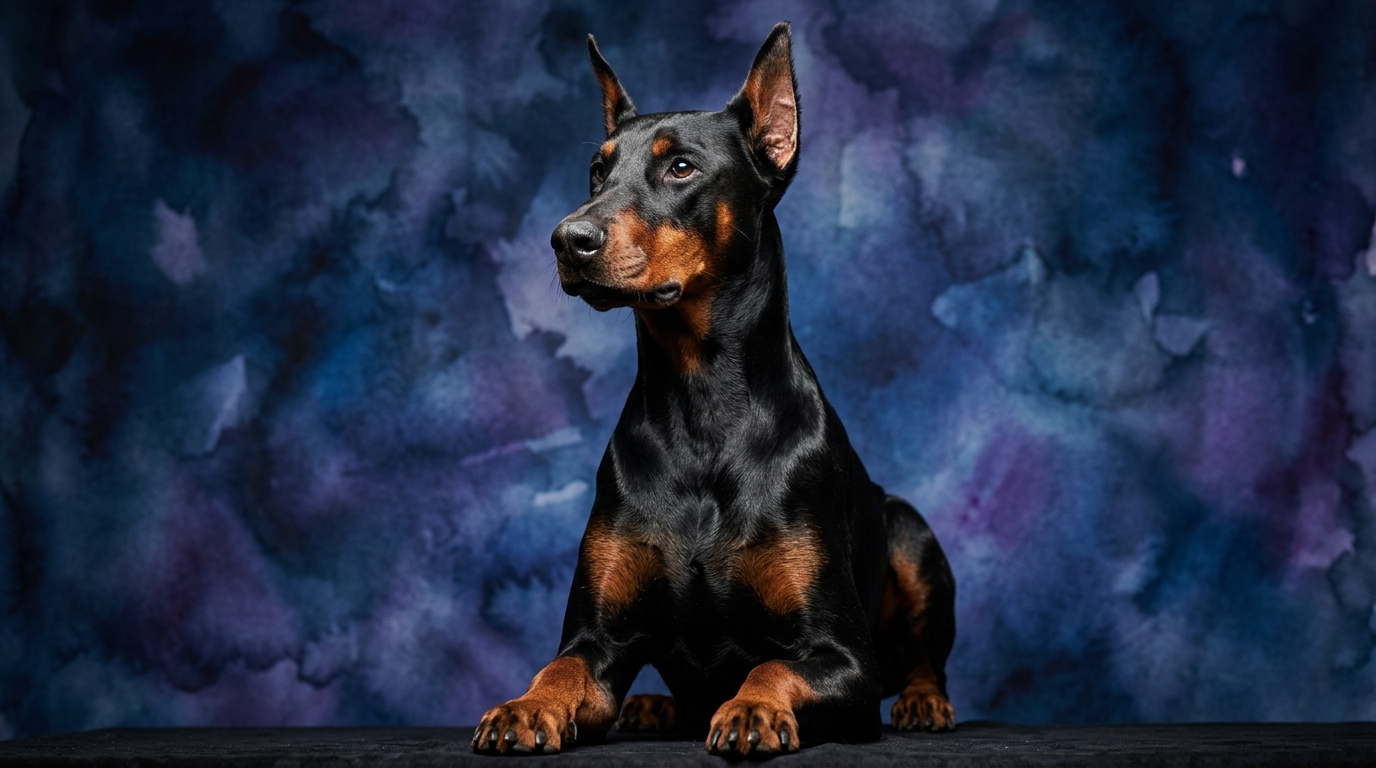
For the Doberman Pinscher, a Working breed with a Coren rank of #5, their cognitive profile is marked by exceptional mental agility. Their Problem Solving is rated 5/5, indicating an outstanding capacity to analyze complex situations and formulate solutions with speed and precision. Training Speed also scores 5/5, signifying their rapid grasp of new commands and routines, often requiring minimal repetition. Social Intelligence stands at 4/5, reflecting a deep attunement to their human family's emotional states and cues, though their focus can be intensely directed towards their immediate pack. Their Instinctive Drive is a robust 5/5, underpinning their inherent desire for purpose and their strong protective tendencies. Finally, Memory receives a 5/5, demonstrating an impressive ability to retain learned behaviors and recall past experiences with accuracy, contributing to their consistent performance.
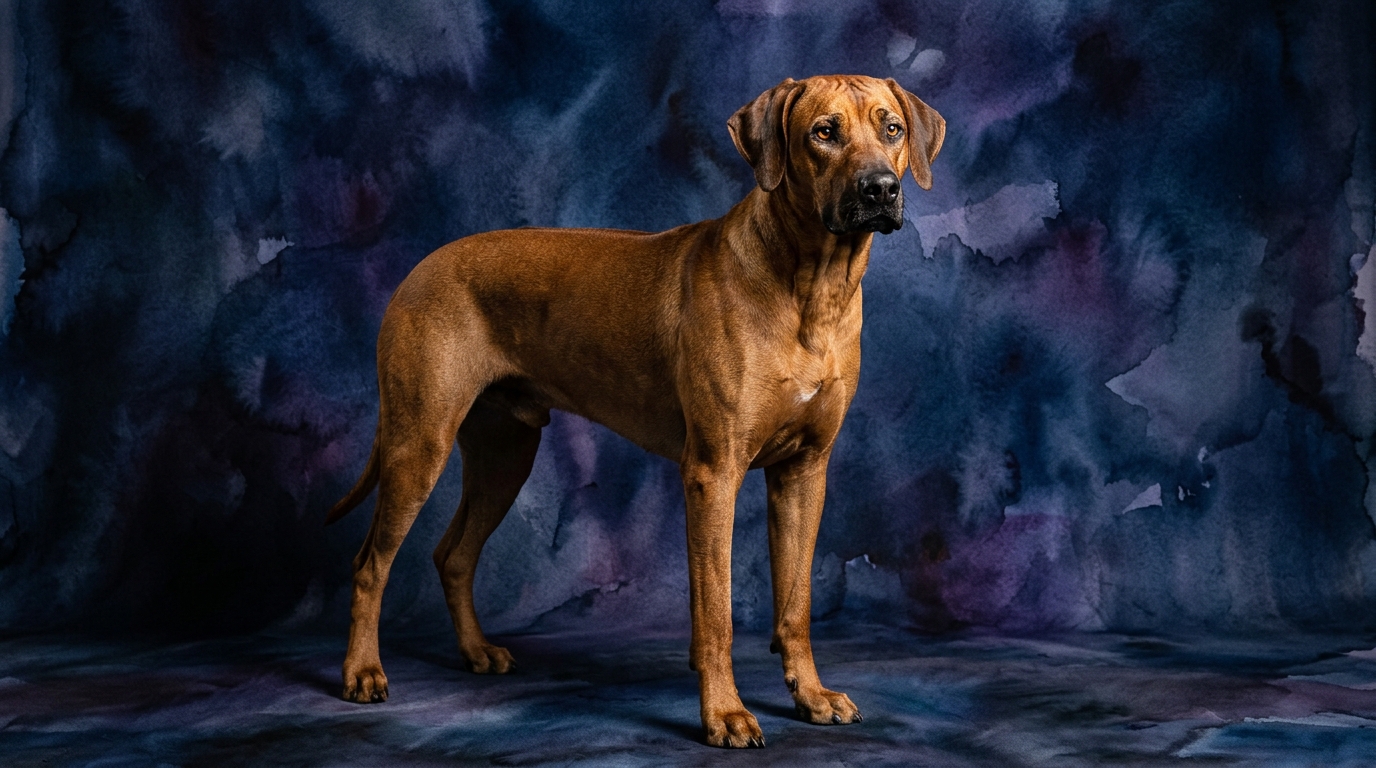
In contrast, the Rhodesian Ridgeback, a Hound breed with a Coren rank of #52, presents a different cognitive landscape, characterized by independence and deliberate thought. Their Problem Solving is rated 3/5, suggesting a more measured, sometimes self-reliant, approach to challenges, preferring to assess situations thoroughly. Training Speed also scores 3/5, indicating they learn at a moderate pace, often requiring patient and consistent repetition to solidify new behaviors. Social Intelligence is 3/5, reflecting a discerning but often reserved understanding of social dynamics, where they observe before engaging. Their Instinctive Drive is 3/5, rooted in a historical hunting role that emphasizes steady persistence and self-sufficiency rather than intense, constant engagement. Memory is rated 3/5, meaning they retain information adequately, but their recall may not be as immediate or comprehensive as breeds with higher scores, favoring practical, experiential learning.
Where Doberman Pinschers Excel Cognitively
The Doberman Pinscher's cognitive prowess shines brightly in areas requiring rapid processing and execution. Their 5/5 Problem Solving score means they are adept at quickly deciphering intricate puzzles or navigating complex, changing environments, demonstrating a remarkable capacity for swift situational assessment. This mental agility allows them to adapt with striking efficiency to novel challenges.
Furthermore, their superior 5/5 Training Speed allows for the mastery of advanced obedience, protection work, or intricate dog sports routines in significantly less time than most breeds. This translates into a broader repertoire of learned behaviors and a deeper, more nuanced understanding of human directives.
The Doberman’s intense Instinctive Drive (5/5), particularly for purpose-driven activities, means they thrive when given a 'job.' This cognitive strength allows them to maintain focus and motivation over extended periods, whether engaged in scent detection, guarding roles, or competitive events. Their exceptional 5/5 Memory ensures that once a concept or command is learned, it is deeply embedded. This robust recall makes retraining or reinforcing old skills remarkably straightforward, indicating strong neural pathways for long-term retention and consistent performance.
Where Rhodesian Ridgebacks Demonstrate Unique Strengths
While their cognitive scores are generally lower than the Doberman's, the Rhodesian Ridgeback possesses a distinct set of mental attributes that reflect their heritage and purpose. Their 3/5 Problem Solving score, while moderate, often manifests as a unique cognitive resilience, particularly in situations demanding self-reliance. They excel at independent decision-making, a trait honed by their history of tracking large game without constant human direction. This isn't about speed, but about sustained, autonomous thought in challenging, often solitary, environments.
Their Instinctive Drive, rated at 3/5, speaks to a balanced, enduring persistence rather than an immediate, intense burst. This cognitive trait allows them to maintain focus on a task, such as tracking a scent over long distances, without becoming overly stimulated or requiring constant external motivation. It's a steady, internal motor that supports their historical role as persistent hunters.
Ridgebacks' 3/5 Social Intelligence fosters a discerning judgment of unfamiliar individuals and situations. This cognitive caution allows them to assess social dynamics carefully, often preferring to observe before engaging, demonstrating a nuanced, rather than overtly expressive, understanding of their environment. Their 3/5 Memory supports their practical, real-world application of learned experiences, allowing them to remember critical pathways, significant individuals, and effective strategies encountered during their independent pursuits, serving their self-reliant nature well.
Training Aptitude: Doberman Pinscher vs. Rhodesian Ridgeback
When it comes to ease of training, the Doberman Pinscher stands out as the more responsive student, a direct consequence of its superior training speed (5/5) and profound memory (5/5). These dogs possess an innate desire to understand and execute commands, often grasping complex tasks in just a few repetitions. Their high instinctive drive (5/5) means they thrive on having a purpose, eagerly channeling their mental energy into structured learning. They proactively seek engagement, making them highly receptive to instruction and remarkably quick to form strong associations between commands and actions. This cognitive agility, reflected in their Coren rank of #5, allows them to build a vast repertoire of behaviors efficiently, making advanced obedience or specialized roles a natural fit.
In contrast, the Rhodesian Ridgeback, with a training speed of 3/5 and a Coren rank of #52, presents a different training landscape. Their independent nature and historical role as self-reliant hunters mean they often evaluate commands rather than immediately complying. While capable of learning, they require more patience and consistent reinforcement, responding best to positive methods that respect their thoughtful, sometimes stubborn, cognitive process. Their memory (3/5) is sufficient, but new information may take longer to solidify, necessitating a more methodical and less hurried approach to training. The Doberman's cognitive makeup makes them a more fluid and responsive student, whereas the Ridgeback's thoughtful autonomy requires a trainer who appreciates their deliberate learning style and is prepared for a more gradual progression.
Lifestyle Compatibility: Active vs. Relaxed Owners
For owners seeking a highly engaged and purpose-driven companion, the Doberman Pinscher aligns perfectly with an active lifestyle that includes significant mental and physical stimulation. Their exceptional instinctive drive (5/5) and high problem-solving capacity (5/5) mean they require consistent challenges, whether through advanced training, dog sports, or a 'job' around the home. A Doberman thrives when their cognitive abilities are regularly exercised, making them a superb match for individuals who enjoy structured activities, long runs, or complex tasks. Neglecting their need for mental engagement can lead to boredom and undesirable behaviors, underscoring their requirement for an owner committed to an active, stimulating partnership.
The Rhodesian Ridgeback, while certainly requiring regular exercise, offers a nuanced balance that can suit active owners who also appreciate periods of calm. Their instinctive drive (3/5) is less about constant engagement and more about purposeful activity, such as tracking or extended walks. They possess a robust endurance for outdoor adventures but are generally content to relax indoors once their physical needs are met. This makes them suitable for active individuals or families who enjoy outdoor pursuits but also value a companion capable of settling down. While they need vigorous activity daily, their independent nature means they may not constantly demand interaction in the same way a Doberman might, offering a slightly more relaxed companionship dynamic after their exercise requirements are fulfilled.
The Verdict
Choose a Doberman Pinscher if you desire a highly trainable, purpose-driven companion for advanced tasks, protection, or intense dog sports, and can provide consistent mental and physical challenges. They thrive on engagement and structured activity.
Opt for a Rhodesian Ridgeback if you appreciate an independent, resilient companion capable of self-reliance, enjoy outdoor adventures, and are prepared for patient, consistent training methods. They offer a balanced blend of activity and calm.
🧠 Find Your Pet's IQ Score
Our Pet IQ Lab assessment covers 25+ tests across 5 cognitive dimensions — personalized to your breed.
Take the Full IQ Test →Frequently Asked Questions
Are Doberman Pinschers better for protection than Rhodesian Ridgebacks?
Doberman Pinschers, with their 5/5 instinctive drive and high trainability, are often more overtly suited for structured protection work, quickly learning complex commands. Rhodesian Ridgebacks possess a protective instinct, but it's often more discerning and less immediately reactive, relying on their independent judgment.
Do Rhodesian Ridgebacks get bored easily?
Rhodesian Ridgebacks require regular physical exercise to prevent boredom, but their independent nature means they are generally less prone to destructive boredom than breeds that demand constant mental engagement. Once their exercise needs are met, they are often content to relax, although they do appreciate purposeful activities.
Which breed is more social with strangers?
Doberman Pinschers, with 4/5 social intelligence, can be reserved with strangers but are generally more open to forming new bonds once introduced and accepted by their owner. Rhodesian Ridgebacks, at 3/5 social intelligence, tend to be more aloof and discerning with strangers, often maintaining a watchful distance and requiring more time to accept new individuals into their circle.