
Side-by-Side IQ Profile: Doberman Pinscher vs. Russian Toy
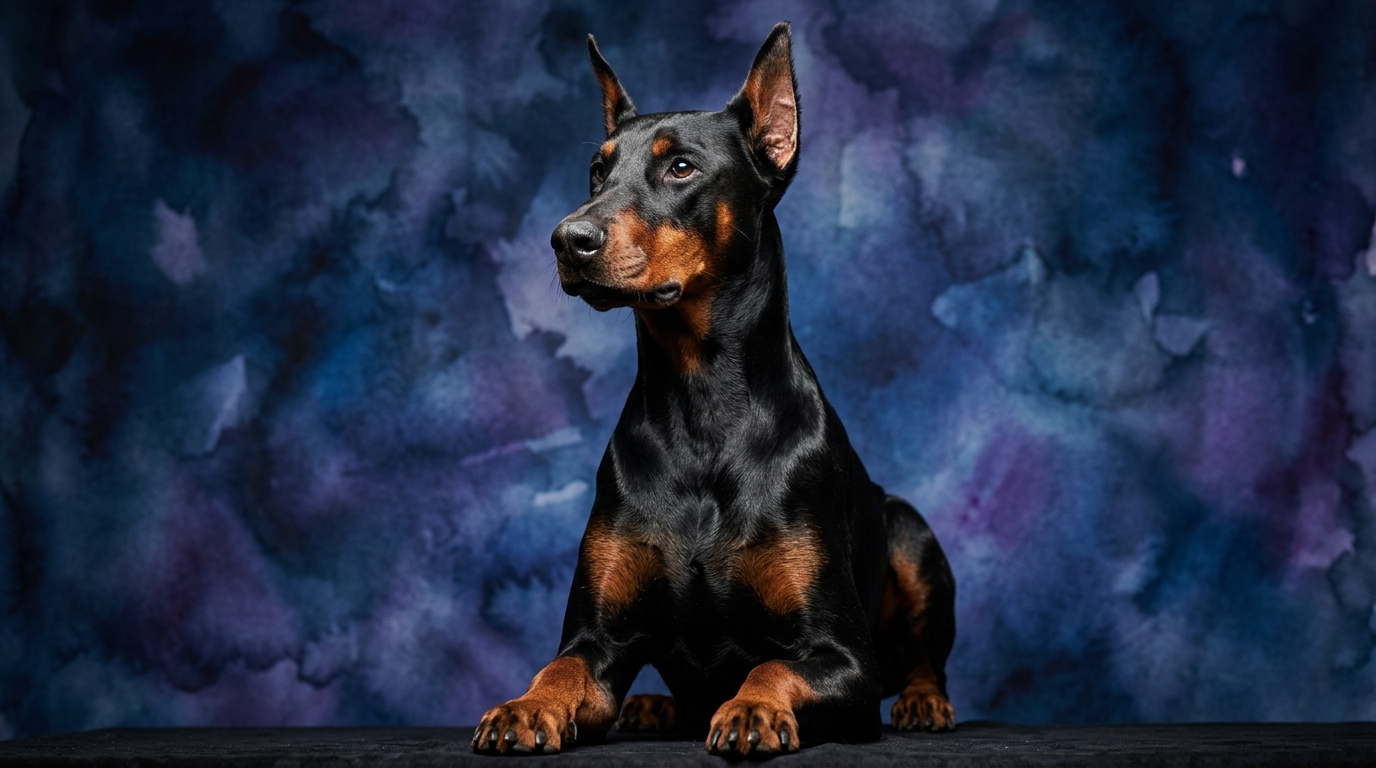
The Cosmic Pet Pet IQ Lab assesses canine intelligence across five key dimensions, revealing distinct cognitive landscapes for each breed. For the Doberman Pinscher, a breed with a Coren rank of #5, its profile reflects a powerful intellect geared towards purpose and protection. Its Problem Solving is rated 5/5, indicating an exceptional capacity to analyze novel situations and devise effective solutions, often navigating complex tasks and intricate puzzle toys with a direct, persistent approach. Training Speed is also 5/5, demonstrating a remarkable ability to grasp new commands and routines with minimal exposure, fueled by eagerness and focused attention. Social Intelligence stands at 4/5, signifying a strong understanding of human cues, body language, and social hierarchies, forming deep bonds while maintaining a protective stance. An Instinctive Drive of 5/5 highlights a profound internal motivation for work, guarding, and territoriality, a direct legacy of its heritage. Lastly, a Memory score of 5/5 means Dobermans retain vast repertoires of commands, routines, and experiences over long periods, contributing to their reliability and consistency.
In stark contrast, the Russian Toy, an unranked Toy breed, presents a cognitive profile more aligned with companionship and adaptability. Its Problem Solving is rated 3/5, indicating a moderate aptitude for navigating simple obstacles and learning basic tricks, though less inclination for independent strategy or persistence with highly challenging cognitive tasks. Training Speed is 3/5, meaning they learn at a moderate pace, requiring patience and consistent positive reinforcement to master commands compared to breeds with higher scores. Social Intelligence also scores 3/5; they form affectionate bonds and understand basic social cues, but may not interpret subtle human expressions or complex social dynamics with the same depth, sometimes leading to sensitivity or shyness without extensive early socialization. An Instinctive Drive of 3/5 reflects their role as companions, showing moderate drive for play but generally low intensity for work, guarding, or persistent hunting behaviors, with motivation more tied to comfort. Finally, Memory is 3/5, sufficient for retaining common commands and routines, but perhaps not intricate sequences or less frequently performed tasks with the same precision and longevity as higher-scoring breeds.
Where the Doberman Pinscher Wins Cognitively
The Doberman's cognitive prowess is most evident in its unparalleled capacity for complex task mastery and rapid skill acquisition. Their 5/5 problem-solving ability means they don't just follow commands; they understand the purpose behind them, often anticipating next steps or adapting to minor variations in a task. This manifests in their proficiency in protection work, search and rescue, or competitive obedience, where precise execution and independent decision-making are paramount. Furthermore, their perfect score in instinctive drive fuels an unwavering focus and persistence, allowing them to maintain high performance levels even under distracting conditions. This breed excels when presented with a clear objective and the freedom to apply their mental and physical faculties to achieve it, demonstrating a profound internal motivation that drives their cognitive engagement far beyond simple rote learning.
Where the Russian Toy Wins Cognitively
While the Russian Toy's scores are generally lower, their cognitive strengths are uniquely suited to their companion role. Their 3/5 social intelligence, combined with their small stature, makes them exceptionally adept at intimate companionship, fostering deep emotional connections within a family unit. They excel at being present, responsive to affection, and providing comfort, thriving on close interaction rather than complex work. Their moderate instinctive drive means they are generally less prone to exhibiting high-energy, destructive behaviors born from boredom or unfulfilled working instincts, making them more adaptable to quieter domestic environments. This breed's cognitive profile emphasizes emotional attunement and a gentle presence, where their "wins" are measured in their capacity for devoted companionship and their ability to integrate seamlessly into a relaxed home life without demanding constant mental challenge.
Which is Easier to Train and Why
The Doberman Pinscher is objectively easier to train for complex tasks and advanced obedience, owing to its 5/5 training speed and 5/5 instinctive drive. Their rapid learning curve means they pick up new commands with very few repetitions, and their inherent desire to work and please their handler provides a strong motivational foundation. This breed thrives on structure and mental engagement, often finding the training process itself highly rewarding. They are highly responsive to consistent, clear instruction and excel in environments where their cognitive abilities are regularly challenged.
In contrast, the Russian Toy, with its 3/5 training speed and 3/5 instinctive drive, requires a more patient and consistently positive approach. While capable of learning basic obedience and tricks, they may take longer to solidify commands and are less driven by the inherent desire for a "job." Their smaller size and potential for sensitivity mean that harsh corrections are counterproductive, necessitating gentle, reward-based methods to encourage cooperation and build confidence during training sessions. Success with a Russian Toy hinges on making training a fun, low-pressure bonding experience.
Which Suits Active Owners vs. Relaxed Owners
For active owners seeking a canine partner for demanding activities, the Doberman Pinscher is the clear choice. Their high instinctive drive, combined with exceptional problem-solving and memory, means they require significant mental and physical stimulation. They excel in dog sports like agility, obedience trials, protection work, or long hikes, thriving when given a purpose and an outlet for their abundant energy and focus. Owners who appreciate a dog that can learn complex routines and participate actively in an engaged lifestyle will find a Doberman exceptionally rewarding, provided they can commit to the necessary time and effort.
Conversely, the Russian Toy is ideally suited for more relaxed owners. Their moderate drive and smaller physical requirements mean they are content with shorter walks, indoor play, and extensive cuddle time. They are not built for endurance activities or complex tasks, preferring the comfort of their home and the close company of their family. Owners looking for a devoted, gentle companion that integrates seamlessly into a calm, less demanding routine will find the Russian Toy a perfect fit, appreciating their capacity for quiet companionship rather than high-performance activities.
The Verdict
Choose a Doberman Pinscher if you seek a highly engaged, capable working partner for advanced training, dog sports, or protection, and are prepared to meet their significant cognitive and physical demands.
Choose a Russian Toy if you desire a gentle, devoted companion for a relaxed home environment, valuing emotional connection and minimal demands over complex task performance.
🧠 Find Your Pet's IQ Score
Our Pet IQ Lab assessment covers 25+ tests across 5 cognitive dimensions — personalized to your breed.
Take the Full IQ Test →Frequently Asked Questions
Do Doberman Pinschers require extensive mental stimulation?
Yes, Dobermans possess exceptional problem-solving abilities and high instinctive drive, necessitating daily mental challenges through training, puzzle toys, or dog sports to prevent boredom and destructive behaviors. Their cognitive capacity thrives on continuous engagement and purpose-driven activities.
Are Russian Toys prone to behavioral issues due to lower intelligence scores?
No, lower scores simply mean they are less inclined towards complex problem-solving or intense work, not that they are inherently problematic. Behavioral issues in Russian Toys are more often linked to insufficient socialization, insecurity, or inconsistent training methods, rather than a lack of inherent cognitive ability for their intended companion role.
Can a Russian Toy be trained for advanced tricks or obedience?
While capable of learning basic obedience and a variety of tricks, a Russian Toy typically requires more patience and repetition than a Doberman Pinscher for advanced tasks. Their training speed is moderate, and their motivation often stems from positive reinforcement and bonding, rather than an innate drive for complex work or high-level performance.