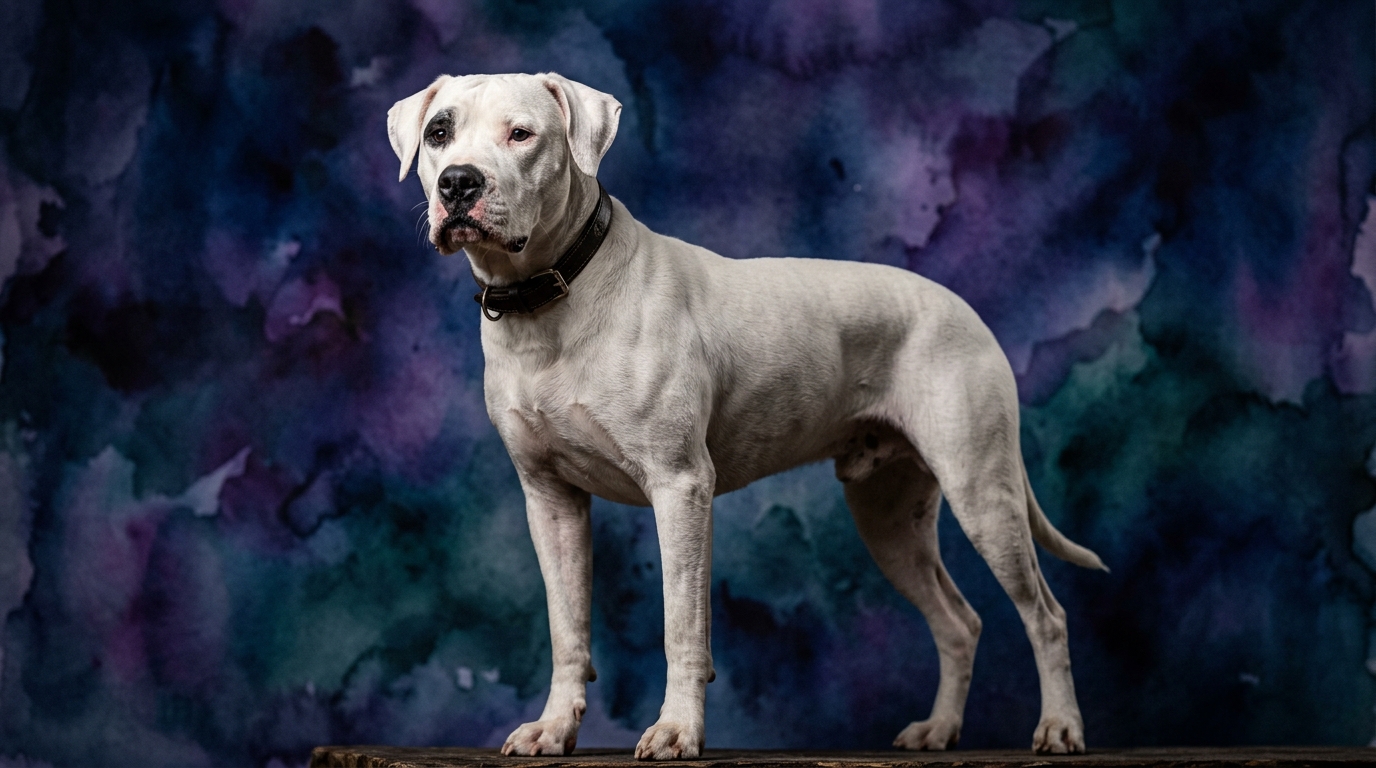
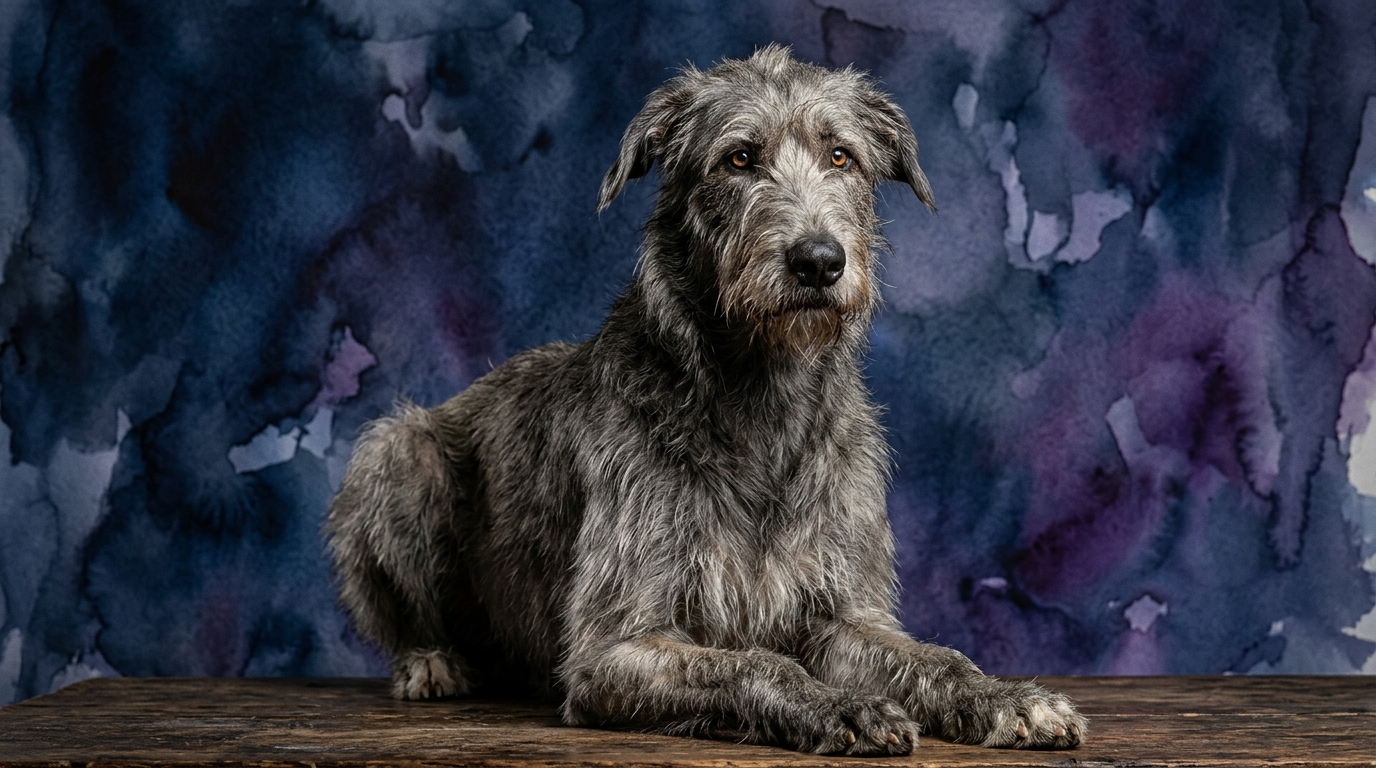
Side-by-Side Cognitive Profile: Dogo Argentino vs. Irish Wolfhound
At The Cosmic Pet Pet IQ Lab, we evaluate canine intelligence across five key dimensions. Interestingly, both the Dogo Argentino and the Irish Wolfhound score a consistent 3 out of 5 in each category, suggesting a balanced cognitive toolkit. However, a deeper look reveals how these scores translate into distinct operational styles, heavily influenced by their ancestral roles.
For the Dogo Argentino, a breed developed for cooperative big-game hunting in packs, a 3/5 in **Problem Solving** reflects its capacity for practical, real-world solutions. This involves discerning prey, coordinating with fellow dogs and human hunters, and strategizing to corner or hold large animals. It's about engagement and control within a specific, high-stakes context, demanding quick, decisive actions rather than abstract reasoning. Their **Training Speed** at 3/5 indicates a willingness to learn and respond, driven by a desire for partnership and purpose. They absorb commands consistently when motivated by a clear role and strong handler bond. **Social Intelligence** at 3/5 for the Dogo is rooted in its pack mentality; it understands social hierarchies, discerns friend from foe, and is deeply loyal and protective of its human family, though often reserved with strangers. Their **Instinctive Drive** also at 3/5 manifests as a strong prey drive geared towards tracking, baying, and holding, coupled with notable territorial and guardian instincts. Finally, their **Memory** (3/5) is robust, allowing them to recall training, routines, and past interactions, which is crucial for consistent performance in their working role and for maintaining stable social relationships.
Irish Wolfhound: A Noble Hunter's Mind
The Irish Wolfhound, a sighthound bred to pursue and dispatch large, fast-moving prey like wolves, interprets its 3/5 scores through a different lens. Its **Problem Solving** (3/5) is less about cooperative strategy and more about independent, rapid assessment during a chase. This involves quickly navigating varied terrain, anticipating prey movements, and making split-second decisions at speed. It's a kinetic, spatial form of problem-solving. Their **Training Speed** (3/5) means they are capable of learning commands, but their sighthound independence can lead them to prioritize visual stimuli or intriguing scents over a handler's instruction if not sufficiently engaged. They understand, but sometimes choose to follow their nose or eyes. **Social Intelligence** at 3/5 for the Wolfhound reflects its historical need to be imposing yet gentle; they are often described as amiable giants, discerning of human intentions and generally tolerant, though they don't possess the same intense guardian focus as a Dogo. Their **Instinctive Drive** (3/5) is profoundly rooted in the chase, a powerful prey drive focused on pursuit and capture, but typically less concerned with territorial defense than a Dogo. Their **Memory** (3/5) is also sound, enabling them to remember training, past routes, and previous encounters, which aids both in learning and in navigating familiar environments during their expansive runs.
Where the Dogo Argentino Excels Cognitively
The Dogo Argentino shines in cognitive areas requiring focused partnership and discerning judgment within a structured environment. Its problem-solving capabilities are best displayed in situations demanding tactical engagement, such as navigating a complex scent trail to locate a specific target, or making independent decisions to contain a situation while awaiting human guidance. Their social intelligence is finely tuned for close human-canine working relationships, allowing them to quickly assess threats to their family and act as a vigilant, protective presence. This breed's memory supports a consistent adherence to routines and learned behaviors, making them reliable partners when their role is clearly defined and consistently reinforced.
Where the Irish Wolfhound Excels Cognitively
The Irish Wolfhound's cognitive strengths lie in its ability to process dynamic, rapidly changing information over large areas. Its problem-solving excels in scenarios demanding swift, independent action and spatial reasoning, such as navigating varied terrain at high speed during a pursuit, or instantly adapting to a prey animal's evasive maneuvers. Their observational memory for landscapes, scents, and movement patterns is particularly strong, enabling them to efficiently cover ground and track. The Wolfhound's social intelligence allows it to be a gentle and tolerant companion, adept at reading subtle cues in human interaction and generally exhibiting a calm demeanor in social settings, preferring to observe rather than to assert dominance or protection in the same direct manner as a Dogo.
Training Dynamics: Dogo Argentino vs. Irish Wolfhound
When considering ease of training, the Dogo Argentino often presents a more straightforward path for experienced owners. Their working background instills a desire for purpose and a strong bond with their handler, making them generally biddable and eager to please. They learn commands efficiently, provided the training is consistent, fair, and establishes clear leadership. Their powerful instinctive drives, however, mean that training must be firm and structured to channel these energies productively, preventing them from becoming self-directed or overly protective without guidance.
The Irish Wolfhound, conversely, can be more of a nuanced training endeavor. While they possess the capacity to learn, their sighthound heritage imbues them with a remarkable independence. They often understand a command but might weigh it against a compelling visual stimulus or an interesting scent. This isn't defiance, but rather a reflection of their historical role requiring independent decision-making during the chase. Training success with a Wolfhound hinges on high-value motivation, positive reinforcement, and making training feel like a collaborative game rather than a strict command-and-obey exercise. Patience and an understanding of their deep-seated drive to pursue are paramount.
Lifestyle Match: Active vs. Relaxed Owners
For the truly active owner seeking a canine partner in structured activities, the Dogo Argentino is an excellent match. They thrive with owners who can provide consistent mental engagement, rigorous physical exercise, and a clear 'job' or purpose, be it advanced obedience, protection sports, or even just long, purposeful hikes. Their need for structure and a strong leader means they are not suited for relaxed owners who cannot commit to their demanding physical and mental requirements. Neglecting these needs can lead to boredom-related behaviors.
The Irish Wolfhound, while appearing stately and often calm indoors, also requires a significant commitment to exercise, though of a different nature. They need owners who can provide opportunities for long, expansive walks and, crucially, safe, secure areas where they can gallop at full speed to satisfy their coursing instincts. While they don't demand the same 'job-oriented' mental stimulation as a Dogo, they need companionship and space. They are a good fit for owners who appreciate a gentle, independent giant for companionship, providing ample outdoor exploration and bursts of intense, free-running exercise, rather than highly structured work.
The Verdict
Choose the Dogo Argentino if you seek a dedicated, protective partner for structured activities and are committed to providing consistent leadership and engagement for a strong-willed, purposeful companion.
Opt for the Irish Wolfhound if you appreciate a gentle, independent giant for calm companionship indoors, paired with a commitment to providing ample opportunities for expansive, safe, free-running exercise outdoors.
🧠 Find Your Pet's IQ Score
Our Pet IQ Lab assessment covers 25+ tests across 5 cognitive dimensions — personalized to your breed.
Take the Full IQ Test →Frequently Asked Questions
Are Dogo Argentinos suitable for families with children?
With proper socialization from a young age and consistent training, Dogo Argentinos can be devoted and protective family members. Their strong guardian instincts mean they require an experienced owner to manage their interactions and ensure appropriate behavior, especially around young children and strangers.
Do Irish Wolfhounds require a large living space?
While Irish Wolfhounds are large, they are often described as calm indoors and can adapt to various living situations if their exercise needs are met. However, due to their size, they certainly benefit from a spacious home and, more importantly, a large, securely fenced yard or access to safe open areas for their essential full-speed runs.
How do their problem-solving skills differ in practical daily life?
The Dogo Argentino's problem-solving often manifests in strategic thinking for a task, such as figuring out how to retrieve a toy from a complex spot or discerning who belongs in the house. The Irish Wolfhound's problem-solving is more focused on dynamic, reactive decisions, like navigating obstacles during a fast run or finding the quickest route to an interesting sight or scent.