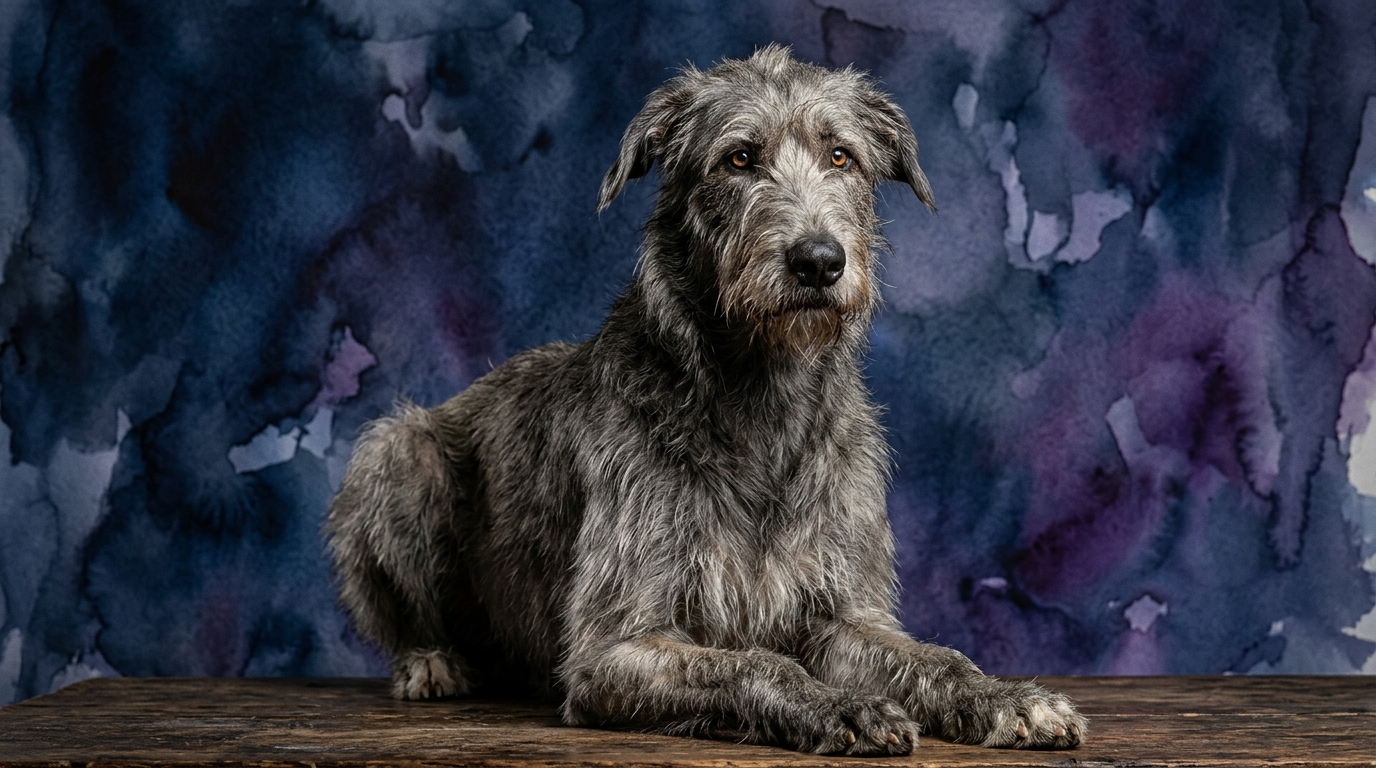
Irish Wolfhound at a glance
| IQ Rank / Score | 14/25 |
|---|---|
| Trainability | ★★★☆☆ (3/5) |
| Social Intelligence | ★★★★☆ (4/5) |
| Lifespan | 10-12 years |
| Shedding | Moderate to high |
| Exercise Needs | Moderate (30-45 min/day) |
| Origin | Ireland |
The Discerning Intelligence of a Gentle Giant
The primary angle for understanding the Irish Wolfhound's intelligence lies in their 'Discerning Independence and Gentle Giant Empathy.' This breed is not overtly demonstrative in its intelligence like some herding breeds, nor is it prone to frantic enthusiasm; rather, its cognitive strength is characterized by a thoughtful, observational approach to the world. They possess a remarkable ability to assess situations and individuals with a calm, almost stoic wisdom, making decisions based on careful consideration rather than impulsive reaction. This discerning nature is a hallmark of their sighthound lineage, requiring keen observation and independent judgment in the field, now translated into a subtle yet profound understanding of their domestic environment.
Their empathy is equally profound, allowing them to tune into human emotions with an impressive accuracy, a trait often overlooked given their formidable appearance. An Irish Wolfhound will often offer comfort simply by their calm presence, sensing distress without needing overt cues. This emotional intelligence is crucial for a breed known for its patience and gentleness, especially with children and smaller pets, demonstrating a cognitive capacity for nuanced social interaction and a deep understanding of their role within the family unit. They are not easily fooled or swayed by superficial charm, requiring genuine connection and respect from those they interact with, reflecting a high level of social discernment that underscores their unique cognitive makeup.
A Cognitive Balancing Act: Hunter & Companion
One of the most surprising scientific and historical facts about Irish Wolfhound cognition is the extreme historical selection for a dual cognitive mandate: to be a formidable, independent wolf hunter and, simultaneously, a gentle, loyal, and composed companion within the castle walls. This wasn't merely about physical prowess; it required a profound cognitive balancing act. Breeders over centuries intentionally cultivated an animal capable of engaging in fierce, solitary pursuit and dispatch of dangerous predators, demanding intense focus, courage, and quick, independent decision-making. Yet, the same dog was expected to live harmoniously and calmly within a family, exhibiting immense patience and docility, even with children, without any lingering aggression or unpredictability.
This historical requirement instilled a unique cognitive duality that is still evident today. Modern Irish Wolfhounds retain the deep-seated instincts of a sighthound – the keen vision, the explosive chase drive, and a degree of independent thought – but these are tempered by an equally powerful, almost innate, gentleness and a strong desire to be close to their human companions. This blend demonstrates an extraordinary capacity for cognitive compartmentalization and situational awareness, where innate drives are controlled and directed appropriately, a testament to centuries of deliberate breeding for both formidable capability and unparalleled temperament. This careful selection for a balanced, discerning mind truly sets their intelligence apart, demanding a complex interplay of instinct, self-control, and social acumen.
Training the Thoughtful Hound: Patience and Purpose
Training an Irish Wolfhound is a journey that requires patience, consistency, and an understanding of their thoughtful, discerning nature rather than an expectation of immediate, eager-to-please compliance. Unlike some working breeds that thrive on repetitive tasks and constant engagement, the Irish Wolfhound often needs to understand the 'why' behind a command. They are not unintelligent, but rather possess a selective intelligence, processing information and making choices based on what they perceive as purposeful or beneficial. Early socialization and consistent positive reinforcement are paramount, as these gentle giants mature slowly both physically and mentally, often not reaching full cognitive maturity until well past two years of age, which can sometimes be mistaken for slowness in learning.
Their training speed is a '3' not because of an inability to learn, but because their independent streak means they may not always comply simply for the sake of pleasing; they are partners, not automatons. Short, engaging training sessions that utilize praise, gentle encouragement, and valuable rewards work best. They excel when tasks feel like a shared activity or a game, especially those that involve scent work or gentle problem-solving. Owners must embrace their subtle communication and respect their independent decision-making, guiding them with a calm, confident hand. This thoughtful approach to training not only builds a strong bond but also taps into their deep memory and keen social intelligence, allowing them to flourish as well-adjusted, confident companions.
The Heart of a Wolfhound: Empathy and Understanding
The social intelligence of the Irish Wolfhound scores a remarkable '5,' reflecting their exceptional ability to connect with humans and other animals on a profound level. They are renowned for their gentle demeanor, their patience with children, and their ability to integrate seamlessly into diverse family dynamics. This isn't passive tolerance; it's an active, empathic understanding. They are masters of reading subtle human cues, often anticipating needs or moods before they are overtly expressed. Their calm presence is a source of comfort, and their watchful nature provides a sense of quiet protection without being overly reactive or aggressive. This high social IQ is fundamental to their identity as both historical companions and cherished modern family members.
Their instinctive drive, rated '4,' is a fascinating blend of their ancient wolf-hunting heritage and their cultivated role as a gentle companion. While the raw prey drive for large game has been largely softened through breeding, they retain a strong sighthound instinct to chase moving objects, which needs careful management. However, this drive is balanced by an equally strong instinct for companionship, loyalty, and protection of their family, manifesting as a watchful, rather than overtly assertive, guardian. Their memory, scoring '4,' reinforces their social bonds and training, enabling them to remember routines, commands, and especially the people they love, forming deep, lasting attachments that are central to their cognitive and emotional well-being.
3 At-Home Tests to Measure Your Irish Wolfhound's IQ
These tests are adapted from peer-reviewed ethology research. No equipment is needed beyond items you have at home. Run each test 5–10 times for reliable results.
The Myth: "Irish Wolfhounds are slow-witted or difficult to train due to their independent nature."
✅ Irish Wolfhounds are highly intelligent and capable learners, but they require positive reinforcement, patient consistency, and motivation that appeals to their discerning nature, often performing best when they understand the 'why' behind a command.
Irish Wolfhound vs. Similar Breeds
🧠 What's Your Dog's IQ Score?
Our full Pet IQ Lab assessment includes 12+ tests across 5 cognitive dimensions, calibrated for Irish Wolfhounds specifically.
Take the Full IQ Test →Frequently Asked Questions
How smart is a Irish Wolfhound?
Our Pet IQ Lab framework scores cognition across five dimensions (max 25). The Irish Wolfhound totals 14/25 — above-average for a domestic dog. The full article breaks down each dimension with at-home tests.
Are Irish Wolfhounds easy to train?
Irish Wolfhounds can learn most cues, but expect to repeat lessons and keep sessions short. They score 3/5 on Training Speed in our breed profile.
Are Irish Wolfhounds good with children and other pets?
Yes — their Social Intelligence rates 4/5 in our Pet IQ Lab framework. With early socialization and supervised play, most Irish Wolfhounds integrate well into families with respectful children and other pets.
Do Irish Wolfhounds need a lot of mental stimulation?
Irish Wolfhounds benefit from 10-15 minutes of focused enrichment a day: food puzzles, short training drills, or novel toys rotated weekly.
How much exercise does a Irish Wolfhound need?
Irish Wolfhounds do well with 20-40 minutes of daily walks and play plus a few short training moments.
How good is a Irish Wolfhound's memory?
Irish Wolfhounds score 2/5 on memory. They remember high-value associations well; less-used cues fade without refresher sessions.
What is the typical lifespan of a Irish Wolfhound?
Typical lifespan is 10-12 years for a giant dog like the Irish Wolfhound.
The Irish Wolfhound's intelligence is a multifaceted tapestry woven with independence, deep empathy, and a quiet observational wisdom. Understanding their unique cognitive profile allows owners to foster their full potential, celebrating the gentle giant's remarkable mind and spirit.