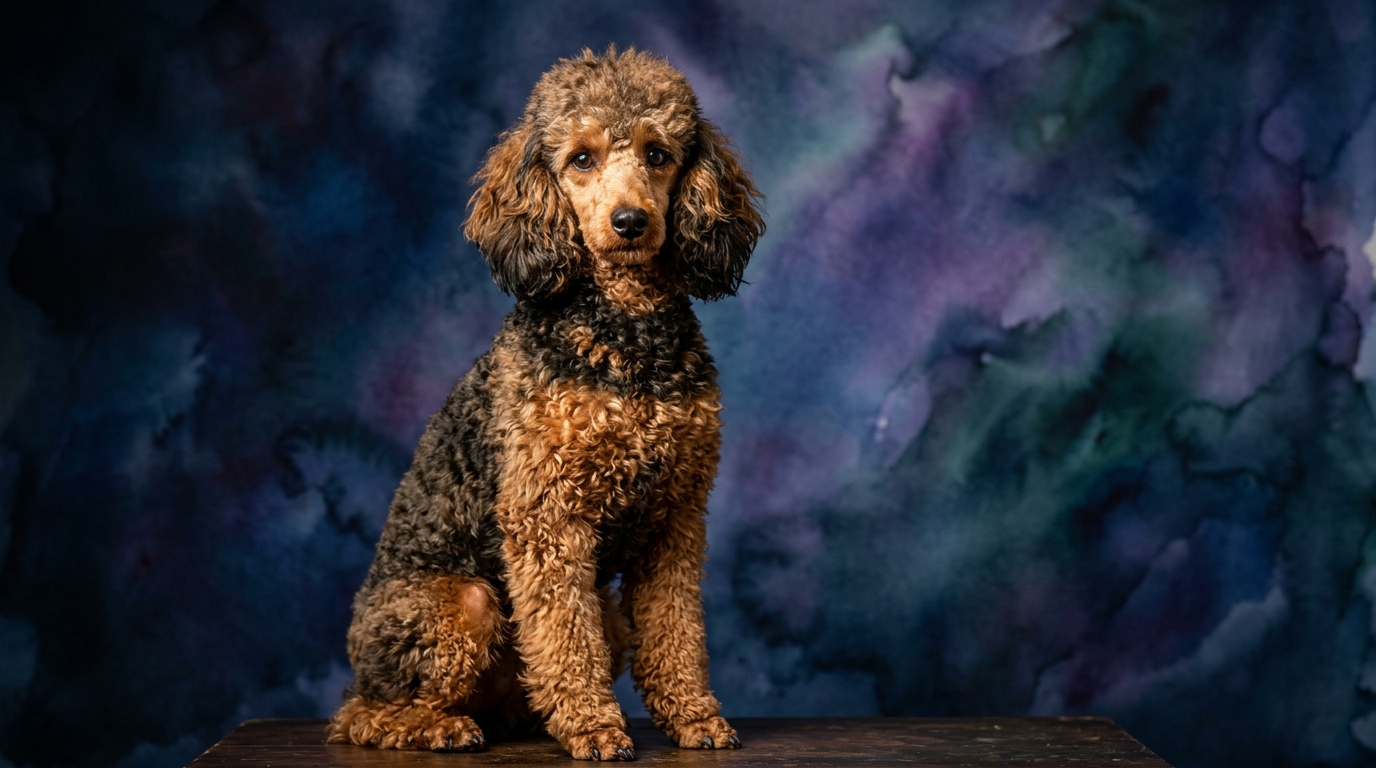
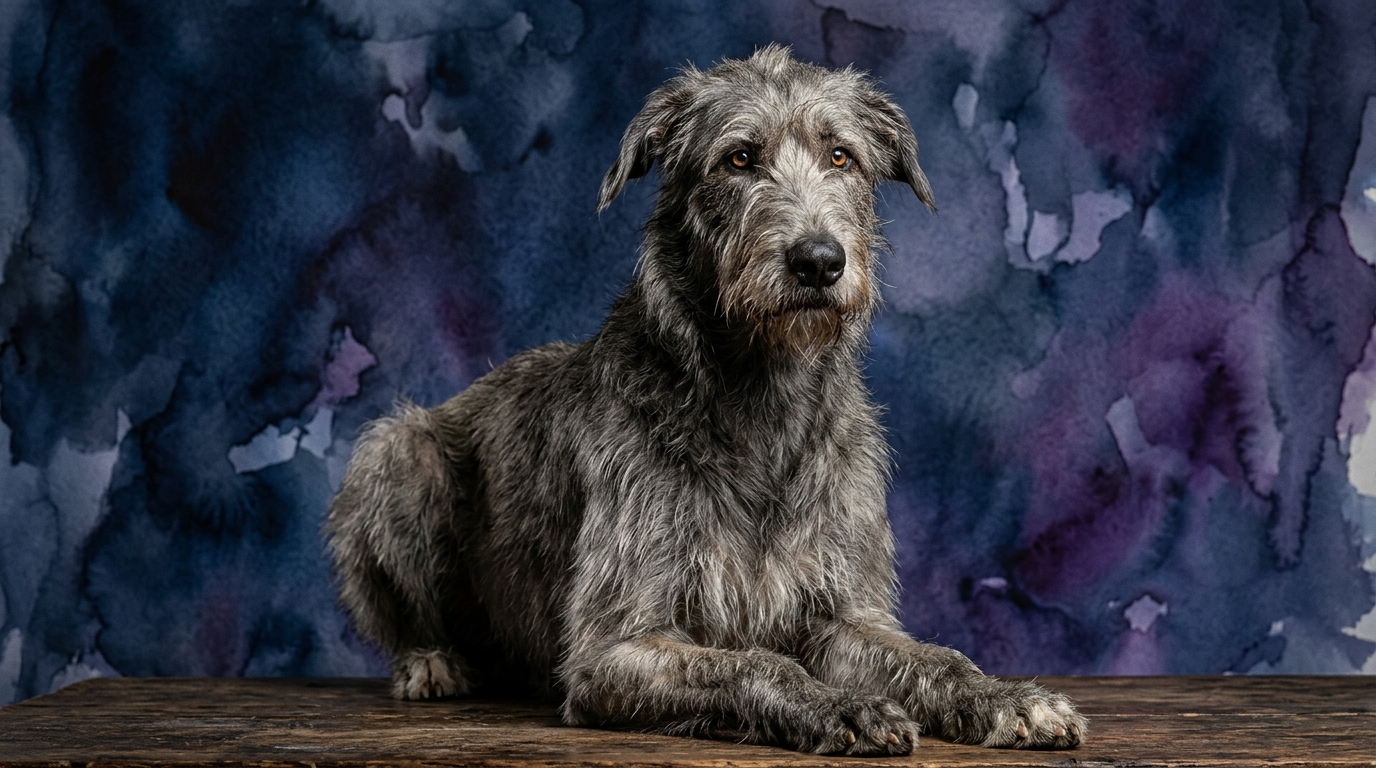
The Cosmic Pet IQ Profile: Poodle (Standard) vs. Irish Wolfhound
At The Cosmic Pet Pet IQ Lab, we analyze canine cognition across five key dimensions. The Standard Poodle, a member of the Non-Sporting group, consistently demonstrates exceptional cognitive abilities, earning a Coren rank of #2, signifying their remarkable capacity for understanding and executing new commands with minimal repetition. Their Problem Solving score of 5/5 indicates an exceptional ability to navigate novel situations, unravel complex puzzles, and adapt strategies when faced with obstacles, often demonstrating insightful leaps in understanding. Training Speed, also at a perfect 5/5, reflects their rapid acquisition of new behaviors and concepts, absorbing instruction with striking efficiency. Social Intelligence, rated 5/5, points to their profound understanding of human emotions, intentions, and social cues, enabling them to form deep bonds and respond appropriately in varied social contexts. Their Instinctive Drive, at 4/5, encompasses a strong desire to work alongside humans, often expressed through retrieving, agility, or obedience tasks, coupled with a capacity to channel these drives into productive activities. Finally, a Memory score of 5/5 means they retain learned information, commands, and experiences over extended periods, making review sessions often unnecessary after initial mastery.
In contrast, the Irish Wolfhound, a majestic Hound breed, presents a different cognitive profile, not Coren-ranked in the traditional obedience sense, reflecting their specialized historical role. Their Problem Solving is rated 3/5, suggesting they approach challenges with a more direct, less abstract method, often relying on learned patterns rather than innovative solutions, which suits their original purpose of independent pursuit rather than complex human-directed tasks. Training Speed also sits at 3/5, indicating that while trainable, they require more consistent repetition and patience to solidify new commands, preferring to learn at their own deliberate pace. Social Intelligence, at 3/5, means they are observant and form strong attachments but may not interpret subtle human emotional shifts with the same nuance as a Poodle, often projecting a calm, somewhat independent demeanor. Their Instinctive Drive, also 3/5, is primarily rooted in their sighthound heritage – a powerful urge to sight, chase, and pursue, which operates independently and can be less amenable to redirection towards human-centric tasks. Their Memory score of 3/5 suggests they recall familiar routines, people, and places adequately, but may not retain intricate sequences or infrequent commands with the same precision or longevity as a breed with a higher score.
Where the Poodle (Standard) Shines Cognitively
The Standard Poodle's cognitive strengths are particularly evident in their capacity for intricate learning and adaptability. Their 5/5 Problem Solving isn't just about figuring out a puzzle toy; it extends to understanding multi-step commands, adapting to new environments quickly, and even anticipating a handler's next move. For instance, a Poodle might learn a complex agility course after just a few repetitions, remembering the sequence of jumps, tunnels, and weaves with precision. This superior memory (5/5) means they rarely 'forget' a command once mastered, making them exceptional candidates for advanced obedience, service work, or performing complex tricks. Their high Social Intelligence (5/5) allows them to pick up on subtle changes in human tone or body language, often responding with empathy or adjusting their behavior to match the mood of their family, making them incredibly attuned companions. They excel in environments where constant learning and mental engagement are part of daily life, thriving on intellectual challenges that other breeds might find overwhelming or tedious.
Where the Irish Wolfhound Excels Cognitively
While the Irish Wolfhound's cognitive scores may appear modest compared to the Poodle, their strengths lie in a different, historically relevant form of intelligence. Their Instinctive Drive (3/5), though lower than a Poodle's, is acutely focused on their sighthound heritage. This translates into an exceptional ability to observe, track, and pursue targets over vast distances, requiring a specific kind of perceptual problem-solving and memory for terrain and movement. They possess a profound, quiet observational capacity, often surveying their surroundings with a calm intensity that belies their size. Their Problem Solving (3/5) manifests in practical, functional ways; for example, navigating familiar outdoor spaces efficiently or understanding consistent household routines, rather than engaging with abstract brain games. The Irish Wolfhound's Social Intelligence (3/5) fosters a dignified, steadfast companionship, where they develop deep, loyal bonds without the constant need for validation or complex interactive games, providing a serene, independent presence that some owners find profoundly appealing. Their cognitive strengths are geared towards independence and focused observation, rather than human-directed collaborative tasks.
Training Dynamics: Poodle (Standard) vs. Irish Wolfhound
Training a Standard Poodle often feels like teaching a keen student. Their 5/5 Training Speed means they grasp new commands almost immediately, requiring few repetitions before they can reliably perform a behavior. For instance, teaching a Poodle to 'stay' with distractions might take a handful of short sessions, whereas for many breeds, it could be weeks. Their high Problem Solving and Memory scores enable them to generalize commands to new environments quickly and retain them for life. They thrive on positive reinforcement and mental stimulation, often seeking out opportunities to learn and please, making advanced obedience, rally, or even complex trick training a rewarding experience for both dog and owner. They are receptive to subtle cues and respond well to varied training techniques, often anticipating what is expected of them.
Training an Irish Wolfhound, while certainly achievable, requires a different approach, characterized by patience and consistency due to their 3/5 Training Speed. They will learn, but it takes more repetitions to cement a command, and their independent nature means they may weigh the 'value' of complying versus following an interesting scent or visual stimulus. For example, teaching an Irish Wolfhound a reliable recall in an open field against their powerful sighthound Instinctive Drive (3/5) demands extensive proofing and highly motivating rewards. Their Problem Solving (3/5) suggests they benefit from clear, simple, and consistent commands rather than complex sequences. While they are sensitive and respond well to positive reinforcement, their social intelligence (3/5) indicates they may not be as driven by the desire to 'please' in the same overt way as a Poodle, requiring trainers to understand their independent hound mentality and make training engaging and rewarding on their terms. Consistency across all family members is paramount to ensure their memory (3/5) solidifies learned behaviors effectively.
Matching Breeds to Lifestyles: Active vs. Relaxed Owners
The Standard Poodle is an excellent match for active owners who relish mental engagement and consistent physical activity. Their high cognitive scores across the board mean they require daily mental stimulation to prevent boredom, whether through puzzle toys, training sessions, or participation in dog sports like agility, obedience, or dock diving. Owners who enjoy teaching new tricks, attending classes, or involving their dog in various activities will find a Poodle a willing and enthusiastic partner. Their adaptability and social intelligence also mean they can thrive in diverse environments, from city apartments to country homes, as long as their intellectual and physical needs are met. They are not content to be mere couch potatoes; their minds need to be challenged just as much as their bodies.
The Irish Wolfhound, despite their immense size, can suit owners seeking a more relaxed pace, though their physical needs are significant. They require regular, moderate exercise, such as long walks or opportunities to gallop in a secure area, but they are not typically candidates for high-intensity dog sports that demand complex, rapid decision-making. Their lower cognitive scores in problem-solving and training speed suggest they are not inherently driven by constant mental challenges in the same way a Poodle is. Owners who appreciate a calm, dignified presence indoors, coupled with a love for leisurely outdoor excursions, might find an Irish Wolfhound a fitting companion. They are generally content to lounge and observe, provided their basic exercise needs are met, and they have comfortable spaces to stretch their considerable frames. Their independent nature also means they are less likely to demand constant interactive play, making them suitable for owners who appreciate a dog with a serene, self-contained demeanor.
The Verdict
Choose a Standard Poodle if you are an owner who thrives on intellectual engagement, seeks a highly trainable companion for complex activities, and values a dog that is profoundly attuned to human social cues.
Opt for an Irish Wolfhound if you appreciate a noble, independent companion with a calm indoor presence, are prepared for consistent, patient training, and enjoy long, moderate outdoor activities without the pressure of constant mental gymnastics.
🧠 Find Your Pet's IQ Score
Our Pet IQ Lab assessment covers 25+ tests across 5 cognitive dimensions — personalized to your breed.
Take the Full IQ Test →Frequently Asked Questions
Do Irish Wolfhounds understand complex commands?
Irish Wolfhounds can learn commands, but their 3/5 Problem Solving and Training Speed scores mean they generally prefer simpler, consistent instructions. They may require more repetition and patience than some other breeds to fully grasp and reliably execute complex sequences.
Are Standard Poodles good for first-time dog owners?
Standard Poodles can be excellent for first-time owners who are committed to providing consistent mental and physical stimulation. Their 5/5 Training Speed and Problem Solving make them responsive, but their need for engagement means they aren't a 'set it and forget it' pet.
How do their social intelligence scores impact family life?
A Poodle's 5/5 Social Intelligence means they are highly attuned to family dynamics, often anticipating needs and reacting empathetically. An Irish Wolfhound's 3/5 Social Intelligence indicates they are loyal and affectionate but may express it with more independence, offering a calm, observant presence rather than constant interactive engagement.