
Side-by-Side Cognitive Profiles: German Shepherd vs. Irish Wolfhound
The Cosmic Pet Pet IQ Lab provides a structured way to evaluate canine cognition across five key dimensions. For the German Shepherd, a breed frequently associated with demanding roles, their profile reflects exceptional aptitude across the board. Their Problem Solving is rated 5/5, indicating a remarkable capacity for analyzing complex situations and devising effective solutions, often demonstrating foresight in their actions, crucial for tasks like search and rescue. Training Speed is also 5/5, meaning they assimilate new commands and routines with exceptional rapidity, often requiring fewer repetitions than many other breeds due to their eagerness to engage. Social Intelligence stands at 5/5, showcasing a keen ability to interpret human cues and social dynamics, allowing for deep bonds and effective communication. Their Instinctive Drive is a robust 5/5, manifesting as a strong work ethic, a natural inclination to protect, and an inherent motivation to perform tasks. Finally, Memory is 5/5, demonstrating robust long-term recall for commands, routines, and specific environments, crucial for sustained performance in demanding roles. This breed's Coren rank of #3 further solidifies its position among breeds recognized for rapid learning and reliable obedience.
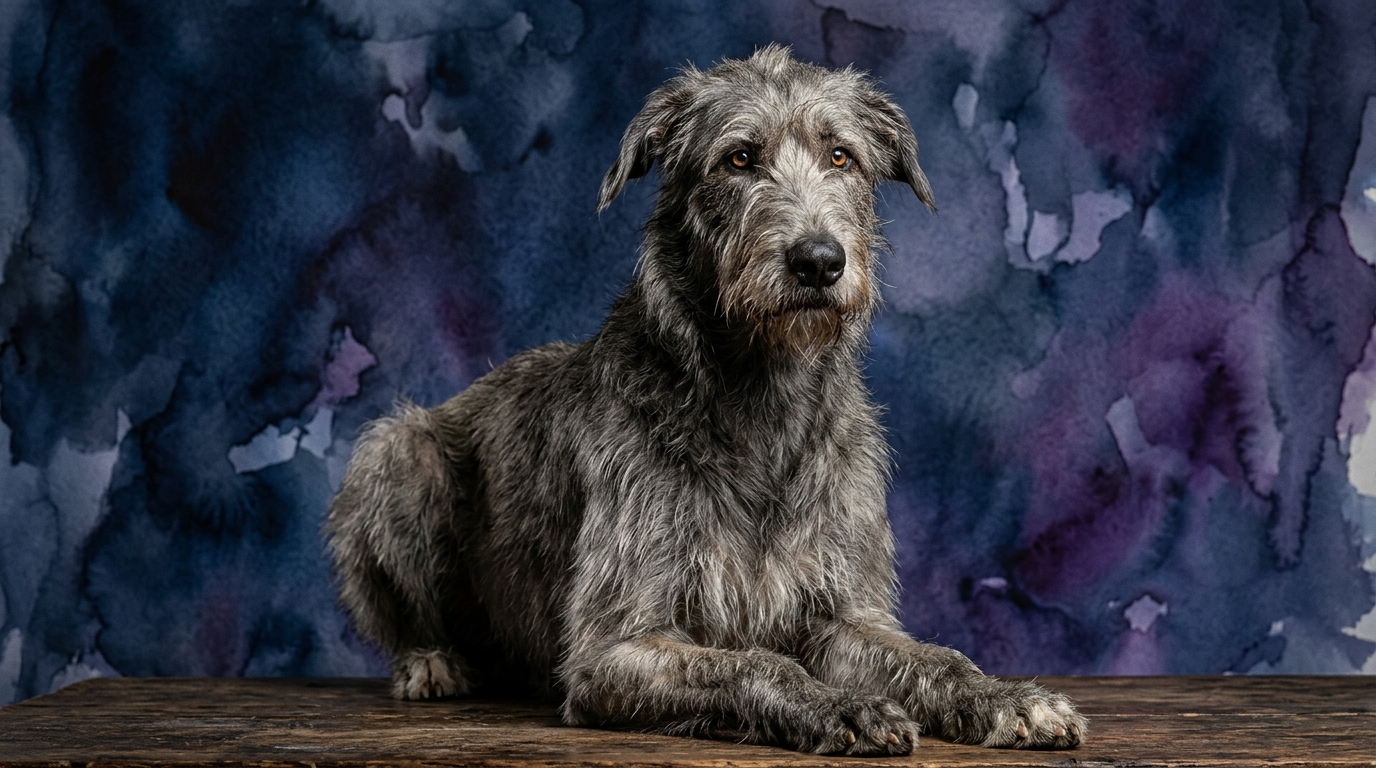
In contrast, the Irish Wolfhound presents a different cognitive profile, reflecting their sighthound heritage. Their Problem Solving is rated 3/5; while capable of navigating their environment and learning through experience, they typically approach challenges with a more straightforward, less analytical style, often relying on direct action. Training Speed is 3/5, indicating they learn at a moderate pace, requiring consistent and patient instruction, partly due to their independent nature. Social Intelligence is 3/5; they form strong attachments and are gentle, but their interpretation of subtle human cues might be less nuanced compared to breeds developed for close partnership, often characterized by a calm, observant demeanor. Their Instinctive Drive is 3/5, primarily centered on their sighthound prey drive for visual pursuit, with other generalized work ethics or protective instincts typically less pronounced. Memory is 3/5; Irish Wolfhounds retain information adequately for daily life and basic commands, though their recall for complex sequences or less frequently practiced tasks might be less tenacious than breeds with higher memory scores.
Where the German Shepherd Excels Cognitively
The German Shepherd's cognitive architecture truly shines in scenarios demanding sustained mental engagement and precise execution. Their consistent 5/5 scores across problem-solving, training speed, social intelligence, instinctive drive, and memory underscore a complete package for complex tasks that require both intellect and dedication. Consider a German Shepherd engaged in scent detection: they not only learn the specific scent quickly (training speed) but also devise efficient search patterns (problem-solving), remember specific scent profiles over time (memory), and work in seamless synchronization with their handler (social intelligence). This integrated cognitive strength allows them to excel in roles requiring continuous adaptation and precise decision-making under pressure, such as police work or assistance dog roles, where interpreting subtle environmental changes and human instructions is paramount. Their ability to process and act upon multiple layers of information simultaneously is a significant cognitive advantage.
Where the Irish Wolfhound Excels Cognitively
While not excelling in the same metrics as the German Shepherd, the Irish Wolfhound's cognitive strengths are deeply rooted in their autonomous decision-making and keen observational skills, traits honed by their sighthound heritage. Their problem-solving at 3/5 might be less about intricate planning and more about direct, efficient action when pursuing a visual target. For example, an Irish Wolfhound demonstrates exceptional cognitive prowess in independently spotting fast-moving objects from a distance and reacting instantaneously, a specialized intellectual process that bypasses the need for human command in that specific context. Their instinctual drive (3/5) is powerfully channeled into pursuit, showcasing a focused, specialized intelligence for a particular task, rather than a broad aptitude for diverse instructions. This independence and highly developed visual acuity, while not fitting traditional 'trainability' metrics, are distinct and effective cognitive advantages in their domain.
Ease of Training: German Shepherd vs. Irish Wolfhound
When considering ease of training, the German Shepherd holds a distinct advantage, primarily due to their exceptional training speed (5/5) and profound social intelligence (5/5). They possess an inherent desire to work collaboratively and a remarkable ability to interpret human intentions, making them highly receptive students. Teaching a German Shepherd a multi-step command sequence, for instance, often requires fewer repetitions, and they are more likely to perform it reliably, even with distractions, because their strong instinctive drive (5/5) is readily channeled into fulfilling tasks for their handler. Conversely, the Irish Wolfhound's moderate training speed (3/5) and more independent nature mean they require more patience and creative motivation. Their sighthound instincts often mean they'll prioritize an interesting visual stimulus over a command if not properly engaged, making consistency, positive reinforcement, and understanding their motivations crucial for successful training outcomes.
Matching Breeds to Lifestyles: Active vs. Relaxed Owners
The German Shepherd is an ideal match for active owners who can provide consistent mental and physical challenges. Their high instinctive drive (5/5) and problem-solving capacity (5/5) necessitate engaging activities like obedience trials, agility, tracking, or protection work to prevent boredom and destructive behaviors. They thrive when given a 'job' and require an owner willing to dedicate significant time to structured training and rigorous exercise, fostering their working capabilities. In contrast, the Irish Wolfhound, despite its imposing size, often suits more relaxed owners. While they need regular exercise to maintain health and enjoy a good run, their energy levels are typically lower than a German Shepherd's, and their moderate instinctive drive (3/5) means they are generally content with daily walks and a comfortable place to lounge. They appreciate companionship but don't demand constant intellectual stimulation or demanding training schedules.
The Verdict
Opt for a German Shepherd if you are an experienced, active owner seeking a highly trainable partner for complex tasks, protection, or competitive dog sports, and are prepared to provide consistent mental and physical engagement.
Select an Irish Wolfhound if you appreciate a gentle giant with a calm demeanor, seeking a loyal companion for a more relaxed lifestyle, and are prepared for their independent streak and specific sighthound needs.
🧠 Find Your Pet's IQ Score
Our Pet IQ Lab assessment covers 25+ tests across 5 cognitive dimensions — personalized to your breed.
Take the Full IQ Test →Frequently Asked Questions
Do Irish Wolfhounds need less exercise than German Shepherds?
Generally, yes. While both breeds require daily activity, Irish Wolfhounds often have bursts of energy followed by long periods of rest, making their overall exercise demands lower than the continuously active and mentally driven German Shepherd.
Can an Irish Wolfhound be trained for protection work like a German Shepherd?
While an Irish Wolfhound can be trained for basic obedience, their inherent instinctive drive (3/5) and temperament are not geared towards protection work in the same way as a German Shepherd (5/5). Their sighthound heritage emphasizes pursuit rather than guarding instincts.
How do their memory capabilities affect daily life?
The German Shepherd's 5/5 memory means they recall commands and routines with exceptional clarity, making daily interactions smooth and predictable. The Irish Wolfhound's 3/5 memory is sufficient for daily life but might require more consistent reinforcement for less common commands or longer gaps between training sessions to maintain recall.