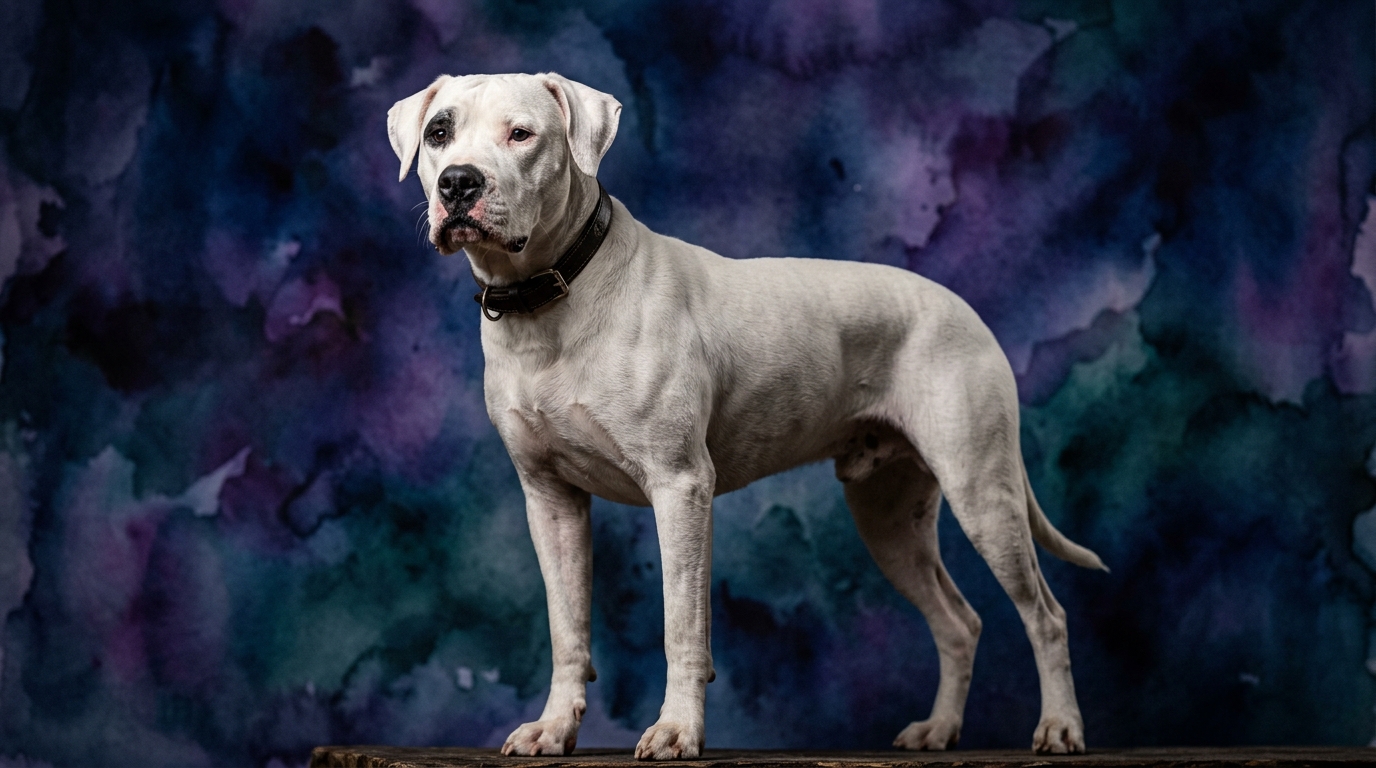
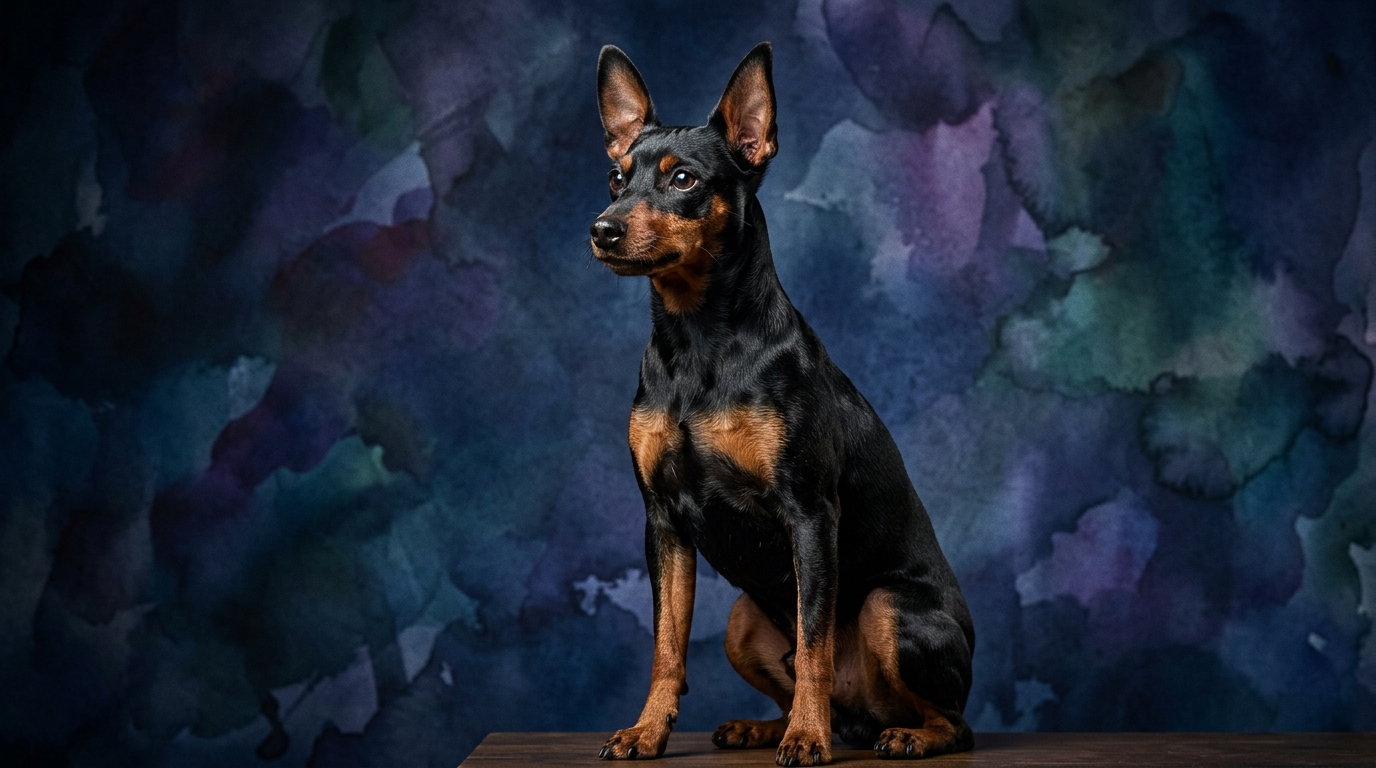
Side-by-Side IQ Profile: Dogo Argentino vs. Miniature Pinscher
**Dogo Argentino (Working Group)** For the Dogo, a Problem Solving score of 3/5 reflects their capacity for strategic thought in complex scenarios, such as tracking game through varied terrain or assessing threats. Their problem-solving isn't about opening cabinets but navigating and influencing their surroundings effectively, often involving physical exertion and focused intent. A Dogo's moderate Training Speed (3/5) means they absorb commands steadily, requiring consistent reinforcement and clear leadership; their drive to work can make them receptive, but independence demands a structured approach. Their Social Intelligence (3/5) involves discerning family members from strangers, understanding complex household dynamics, and reacting appropriately to social cues, focusing on vigilant observation and protective instinct. Rooted in their origin as big-game hunters, a Dogo's Instinctive Drive (3/5) manifests as powerful prey drive, territoriality, and a strong guardian impulse, requiring careful channeling. Their Memory (3/5) is robust enough to recall extensive training sequences, recognize individuals, and remember specific locations, supporting their ability to perform complex tasks and maintain consistent behavior.
**Miniature Pinscher (Toy Group)** For the Min Pin, Problem Solving (3/5) often translates into clever domestic strategies, like accessing forbidden treats, escaping enclosures, or manipulating situations to their advantage. Their small stature doesn't limit their ingenuity in navigating their human-centric world. Despite energetic demeanor, Min Pins learn at a moderate pace (Training Speed 3/5); however, their independent 'King of Toys' attitude can present as stubbornness, making consistency crucial. A Min Pin's Social Intelligence (3/5) is evident in their ability to read human moods, demand attention with assertive vocalizations, and navigate home hierarchies, adept at charming or demanding. Despite their size, Min Pins possess a strong Instinctive Drive (3/5), manifesting as keen prey drive for small vermin, alert vocal territoriality, and a bold, protective nature, making them excellent watchdogs. Their Memory (3/5) allows them to recall routines, remember which family member gives in, and retain learned behaviors—both desirable and undesirable—over time, contributing to their consistent personality.
Where the Dogo Argentino Wins Cognitively
While both breeds share a 3/5 across all cognitive dimensions, the Dogo Argentino’s advantage emerges in scenarios demanding sustained focus, physical endurance, and the application of problem-solving to larger, more complex physical environments. Their problem-solving isn't just about outsmarting a cabinet latch; it extends to strategizing how to track a scent across varying terrains or how to effectively patrol a vast property. This breed excels in tasks that require a blend of physical prowess and mental grit, such as advanced protection work or search and rescue, where their social intelligence aids in assessing human intent in high-stakes situations, and their memory helps them recall intricate sequences of learned behaviors under pressure. Their instinctive drive, when properly channeled, empowers them to maintain vigilance and dedication to a task far beyond what a smaller companion breed might be equipped for, making them specialists in roles demanding robust physical and mental engagement.
Where the Miniature Pinscher Wins Cognitively
Conversely, the Miniature Pinscher's cognitive strengths shine in environments that reward quick thinking, adaptability to human routines, and a certain audacious charm. Their problem-solving, while numerically identical, is often applied to more nuanced, domestic challenges: how to access a counter, how to gain attention from a busy owner, or how to navigate a complex indoor obstacle course of furniture. Their social intelligence is exceptionally geared towards human interaction, allowing them to quickly learn which behaviors yield desired outcomes from specific individuals, often leveraging their small size and energetic personality to their advantage. The Min Pin's instinctive drive translates into an unparalleled alertness and vocal warning system, making them superior watchdogs within the home, instantly signaling any perceived anomaly. Their memory, combined with their spirited independence, allows them to master household routines and exploit any inconsistencies, making them surprisingly adept at bending the rules to their favor with a disarming tenacity.
Which is Easier to Train and Why
On paper, both the Dogo Argentino and the Miniature Pinscher share a 'Training Speed' score of 3/5, suggesting a moderate learning curve. However, the *ease* of training diverges significantly due to their distinct behavioral traits and motivations. The Dogo Argentino, a working breed, often possesses a strong desire to please a respected leader and a capacity for sustained focus. Their social intelligence fosters deep bonds, making them receptive to consistent, firm, and positive reinforcement. Training a Dogo requires confidence and clarity, as their size and instinctive drive necessitate precise guidance early on; once they understand their role, they apply problem-solving and memory to master complex commands with dedication. In contrast, the Miniature Pinscher, while also 3/5, can be more challenging due to their independent and often stubborn nature. Their problem-solving might be employed to *avoid* training or find loopholes. Their strong instinctive drive and 'King of Toys' attitude mean they often demand to be convinced of a command's *value*, rather than simply obeying. Potty training, for instance, can be prolonged for a Min Pin due to small bladder and occasional defiance, whereas a Dogo’s greater bladder control and desire for a clean den might make it smoother. Therefore, while both learn at a similar pace, the Dogo Argentino is generally easier to train for obedience, leveraging their natural drive to work, given clear leadership. The Miniature Pinscher requires a more patient, creative, and consistent approach to counteract their strong-willed personality.
Which Suits Active Owners vs. Relaxed Owners
The Dogo Argentino is unequivocally suited for highly active owners who can provide substantial daily exercise, consistent mental stimulation, and a clear sense of purpose. Their powerful physique and working background mean they thrive when given a 'job'—be it structured walks, intense play, or advanced training. A relaxed or sedentary owner would likely struggle to meet a Dogo's needs, potentially leading to boredom or destructive behaviors from unfulfilled energy. Their instinctive drive and problem-solving capacities require outlets engaging both body and mind. The Miniature Pinscher, while small, is far from a sedentary lap dog and also requires an active owner, albeit on a different scale. They possess surprising stamina, needing regular walks, engaging play, and exploration. However, a 'relaxed' owner for a Min Pin might enjoy daily brisk walks and indoor games but not multi-mile runs. They adapt to apartment living if energy needs are consistently met, but a completely relaxed owner offering minimal engagement will find their Min Pin prone to excessive barking or mischief. Neither breed is truly for a completely 'relaxed' owner; both demand consistent engagement, but the *intensity* and *scale* differ significantly.
The Verdict
Choose the Dogo Argentino if you are an experienced, active owner seeking a powerful, devoted protector for a large property, committed to extensive training and early socialization.
Choose the Miniature Pinscher if you desire a bold, energetic, and spirited small companion, capable of keeping you entertained with their clever antics, and are prepared for consistent, patient training.
🧠 Find Your Pet's IQ Score
Our Pet IQ Lab assessment covers 25+ tests across 5 cognitive dimensions — personalized to your breed.
Take the Full IQ Test →Frequently Asked Questions
Do identical IQ scores mean these breeds are equally 'smart'?
Not precisely. While their scores for specific cognitive dimensions are the same, how that intelligence manifests differs greatly due to their breed purpose, physical capabilities, and inherent drives. Their problem-solving or social intelligence applies to very different contexts.
Which breed is better for first-time dog owners?
Neither breed is typically recommended for first-time owners without significant prior research and commitment to professional guidance. Both possess strong personalities and specific needs that can be overwhelming for inexperienced individuals, with the Dogo Argentino being particularly demanding due to its size and power.
How does a Dogo Argentino's memory compare to a Miniature Pinscher's?
Both have a memory score of 3/5, indicating a solid ability to recall information. For the Dogo, this supports remembering complex command sequences for working tasks, while for the Min Pin, it aids in recalling routines and which household members are most lenient with rules or treats.