Side-by-Side Cognitive Profiles
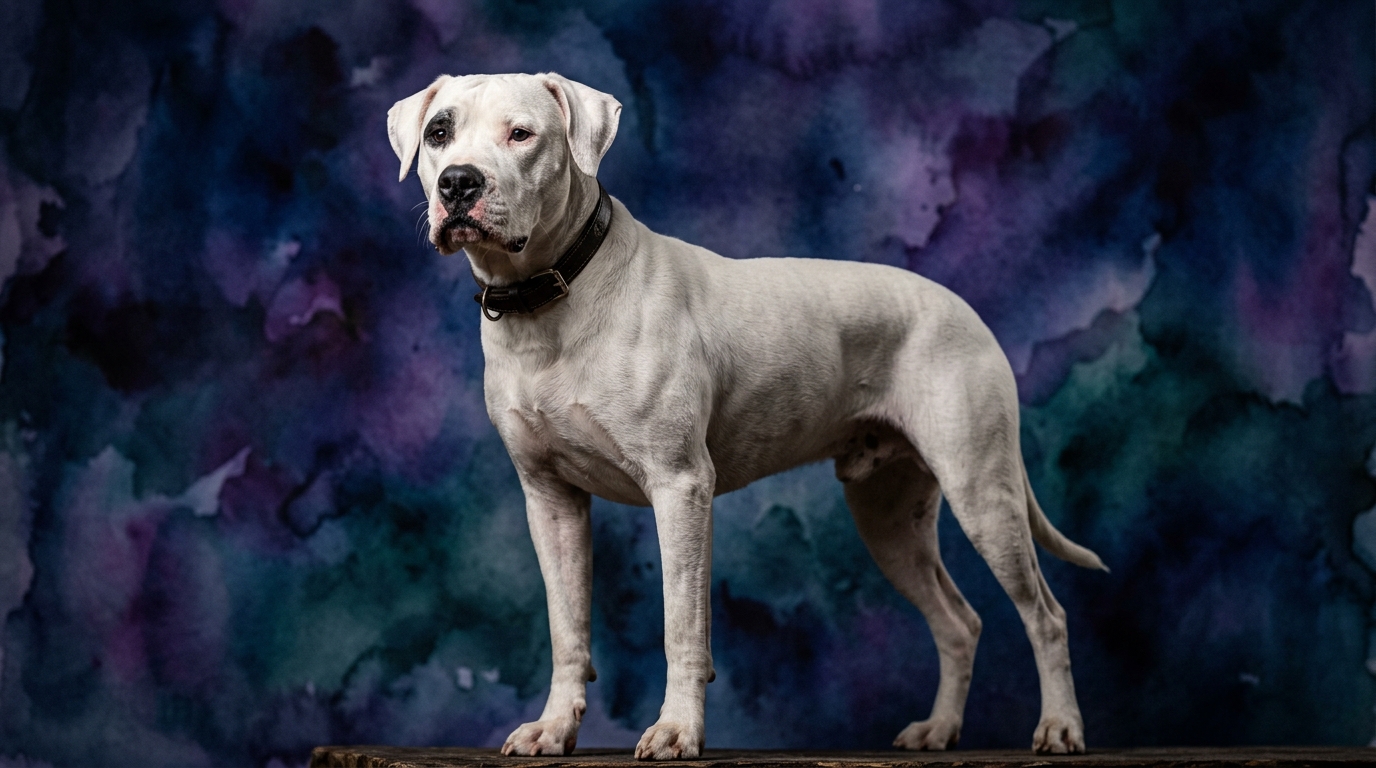
The Cosmic Pet Pet IQ Lab employs a five-dimensional framework to assess canine intelligence, providing a nuanced understanding beyond simple obedience. For the Dogo Argentino, a Working breed not ranked by Coren, its profile reflects its demanding heritage. Its Problem Solving scores 3/5, indicating a practical, situation-specific intellect particularly in threat assessment and physical challenges. Training Speed is also 3/5, suggesting a need for consistent, firm guidance to integrate new behaviors. Social Intelligence registers 3/5, manifesting as discerning loyalty and protective instincts towards its family. Its Instinctive Drive is 3/5, reflecting a powerful prey drive and protective nature. Finally, Memory stands at 3/5, meaning it retains training and experiences well, aiding in its guardian role.
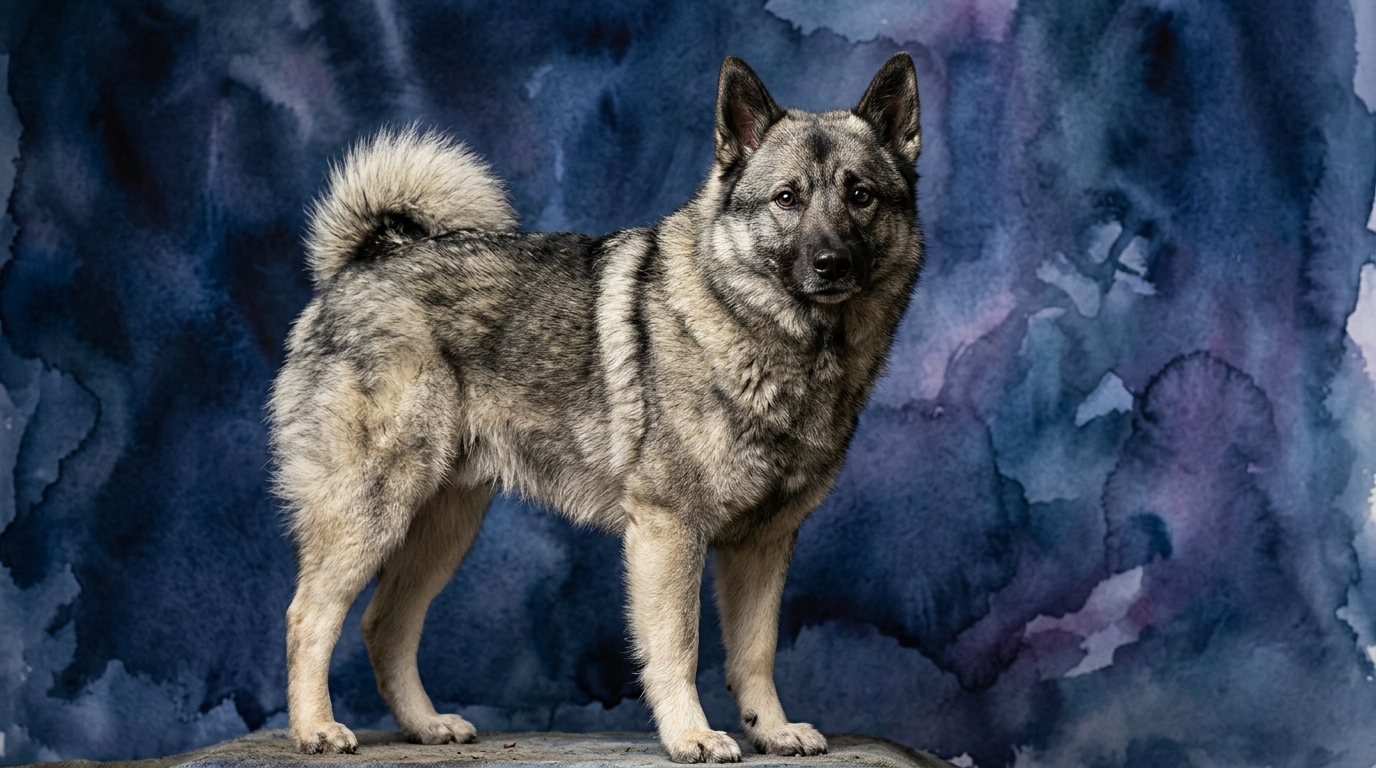
In contrast, the Norwegian Elkhound, a Hound breed ranked #36 by Coren, presents a different cognitive landscape. Its Problem Solving is a robust 4/5, showcasing a keen ability for independent navigation and strategic thinking, especially in tracking. Training Speed is also 4/5, indicating a generally quicker grasp of new commands and routines. Social Intelligence is 3/5, highlighting its deep family bonds and sensitivity to human emotions, though it can display an independent streak. Its Instinctive Drive is 3/5, characterized by a strong impulse for tracking, endurance, and vocalization. The Elkhound's Memory is rated 4/5, demonstrating superior retention of complex sequences and learned behaviors.
Where the Dogo Argentino Wins Cognitively
The Dogo Argentino’s cognitive strengths are deeply rooted in its heritage as a big-game hunter and formidable guardian. While its Problem Solving is rated 3/5, this score reflects a practical, situation-specific intellect, particularly when it comes to assessing threats or navigating complex physical challenges related to its protective duties. They excel in what we might term 'situational problem-solving,' swiftly evaluating a dynamic environment to identify perceived dangers to their family or territory and formulating a decisive response. This isn't about solving abstract puzzles, but rather about effective, often physical, action in real-world scenarios.
Their Social Intelligence, also rated 3/5, manifests as an acute ability to discern subtle shifts in human body language or tone, especially from those outside their immediate family circle. This allows them to act as discerning protectors, recognizing genuine threats versus benign interactions. The Dogo Argentino’s Instinctive Drive (3/5) is a powerful cognitive asset, providing immense focus and determination when engaged in tasks aligned with their protective or hunting heritage. This sustained drive translates into a remarkable endurance and mental fortitude for tasks requiring prolonged vigilance or physical exertion, such as tracking a scent over distance or maintaining a watchful guard. Their Memory (3/5) is particularly robust for recalling past encounters, which reinforces their protective instincts and allows them to distinguish between familiar and potentially threatening individuals, contributing to their selective loyalty.
Where the Norwegian Elkhound Wins Cognitively
The Norwegian Elkhound, with its distinct cognitive profile, shines in areas reflecting its ancient role as an independent hunter. Its Problem Solving is rated 4/5, indicating a superior capacity for independent thought and strategic navigation, particularly when faced with environmental complexities. These dogs are adept at figuring out how to overcome obstacles or locate hidden targets through self-directed exploration and logical deduction, a trait invaluable for a tracker working ahead of its human companion. This isn't just about following directions; it's about making intelligent choices in novel situations.
Their Training Speed, at 4/5, positions them as generally quicker learners than the Dogo Argentino when it comes to acquiring new commands and routines. This responsiveness is often fueled by an eagerness to engage and a desire to please, although their independent streak means consistency remains paramount. The Elkhound's Memory (4/5) is a significant advantage, allowing them to retain complex sequences of commands, intricate scent trails, and spatial layouts with greater precision and for longer durations. This robust memory enhances their reliability in tasks requiring recall of patterns or previously learned information, making them highly effective in repeated tasks or elaborate scent work. Their Instinctive Drive (3/5), while similar in score to the Dogo, manifests differently; it’s geared towards independent tracking, vocalization, and endurance in challenging terrains, requiring them to make decisions autonomously and persist in their pursuit without constant human oversight, showcasing a distinct form of cognitive tenacity.
Which is Easier to Train and Why?
When evaluating ease of training, the Norwegian Elkhound generally presents a more straightforward experience for most owners, largely due to its higher Training Speed rating of 4/5 compared to the Dogo Argentino's 3/5. Elkhounds often display an inherent eagerness to engage with their human companions and respond positively to reward-based methods. Their history as independent hunters means they are accustomed to making their own decisions, but they are typically willing to partner with a handler who uses clear, consistent, and positive reinforcement.
The Dogo Argentino, while capable of learning, requires a more specific approach. Their 3/5 Training Speed reflects a need for exceptionally consistent, firm, and fair leadership. They are powerful dogs with strong protective instincts, and they may test boundaries, requiring an owner who can confidently establish themselves as the pack leader. While they form strong bonds, their training is less about eager compliance and more about respecting authority and understanding their role within the family structure. Their protective nature means they need extensive socialization and clear guidance to channel their instincts appropriately, which can be a more intensive training commitment than with an Elkhound.
Suitability for Active vs. Relaxed Owners
Neither the Dogo Argentino nor the Norwegian Elkhound are truly suited for a genuinely 'relaxed' owner in the sense of minimal engagement; both breeds demand significant commitment and activity to thrive mentally and physically. However, they appeal to different types of active owners.
The Dogo Argentino is an ideal match for an active owner who seeks a powerful, loyal companion and is prepared to provide structured, purposeful activity. This includes vigorous physical exercise to manage their strength and stamina, coupled with mental engagement through advanced obedience, protection sports, or scent work that channels their Instinctive Drive. Owners who enjoy establishing strong leadership and working closely with a dog that requires clear direction will find the Dogo rewarding. They need an owner who is confident and consistent, providing outlets for their protective instincts in a controlled and appropriate manner.
The Norwegian Elkhound, conversely, suits an active owner who appreciates an independent thinker and enjoys outdoor adventures. Their high Problem Solving and Memory scores, combined with their Instinctive Drive for tracking, mean they excel in activities like hiking, scent work, or agility. They require consistent mental stimulation and physical exercise to prevent boredom and manage their energy. An owner who understands and respects their independent nature, and can provide varied activities that satisfy their natural inclinations for exploration and vocalization, will find the Elkhound a spirited and engaging partner. They are less about constant direct control and more about shared, adventurous experiences.
The Verdict
Choose the Dogo Argentino if you are an experienced owner seeking a formidable, loyal guardian and companion, prepared to commit to firm, consistent leadership and provide ample outlets for their working drive.
Choose the Norwegian Elkhound if you appreciate an independent, intelligent, and vocal companion, eager for outdoor adventures and mental challenges, and can manage their strong will with patience and positive reinforcement.
🧠 Find Your Pet's IQ Score
Our Pet IQ Lab assessment covers 25+ tests across 5 cognitive dimensions — personalized to your breed.
Take the Full IQ Test →Frequently Asked Questions
Are Dogo Argentinos difficult to train?
Dogo Argentinos are not inherently difficult to train, but they require a confident, consistent handler who can establish clear leadership. Their training speed is 3/5, meaning they learn well with firm guidance and proper socialization, but may test boundaries more than some breeds.
Do Norwegian Elkhounds bark a lot?
Norwegian Elkhounds are known for being vocal, a trait stemming from their hunting heritage where they would alert hunters to game. Their instinctive drive includes vocalization, so prospective owners should be prepared for their propensity to bark, especially when excited or sensing something new.
Which breed is better with children?
Both breeds can be good with children when properly socialized and raised, but their approaches differ. The Dogo Argentino's social intelligence makes it a protective family guardian, while the Norwegian Elkhound can be a playful and devoted companion, though supervision is always important due to their independent nature and energy levels.