
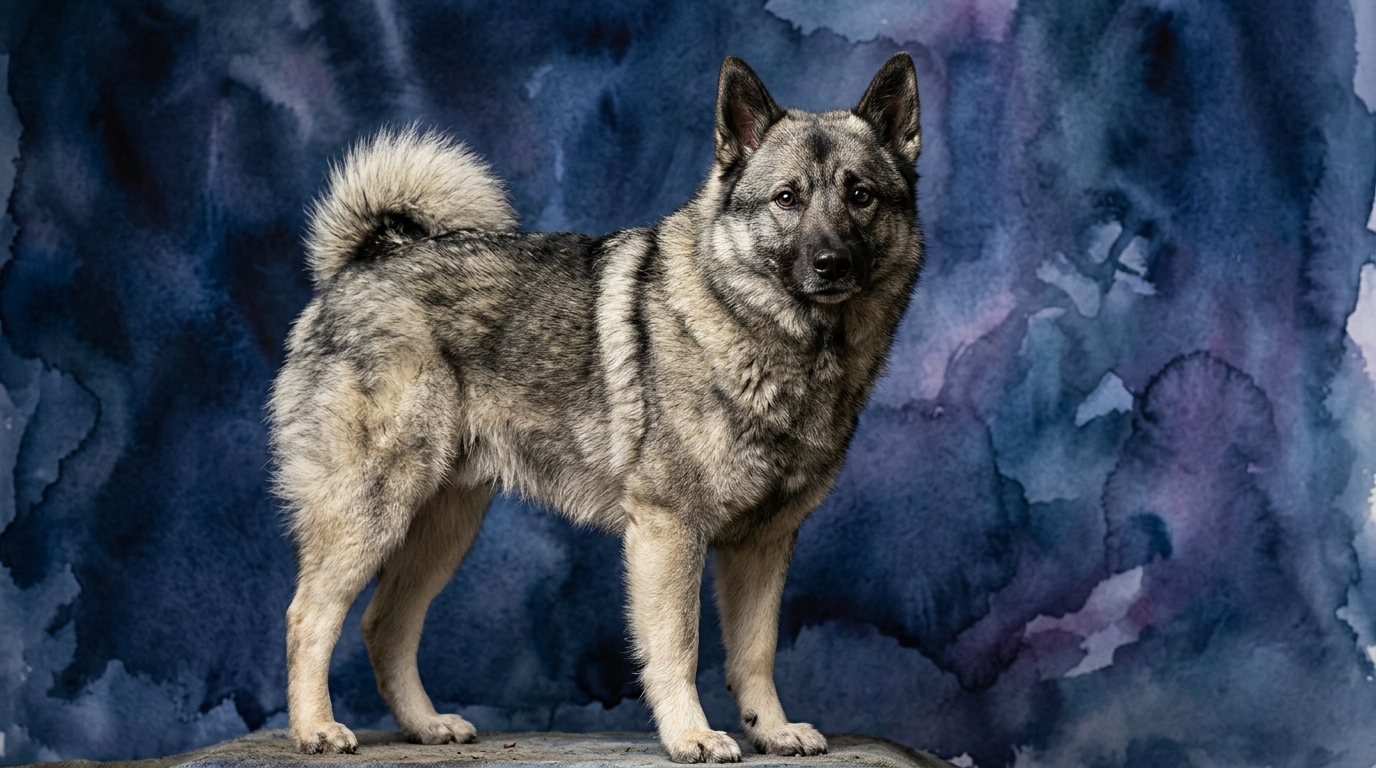
Side-by-Side IQ Profile: German Shepherd vs. Norwegian Elkhound
The Cosmic Pet Pet IQ Lab employs a robust framework to assess canine intelligence, breaking it down into five crucial dimensions. Let's examine how the German Shepherd and Norwegian Elkhound measure up, providing a nuanced understanding of their cognitive strengths.
The German Shepherd, a Herding group dog, stands remarkably high on the Coren ranking at #3. Its IQ profile reflects this, scoring a perfect 5/5 across all categories: problem-solving, training speed, social intelligence, instinctive drive, and memory. This breed demonstrates an exceptional capacity for analytical thought, quickly dissecting new challenges and formulating effective solutions. Its training speed is unparalleled, absorbing new commands and complex sequences with minimal repetition, often appearing to anticipate its handler's intentions. Social intelligence at 5/5 indicates an acute awareness of human emotions, body language, and social structures, making them highly cooperative partners. Their instinctive drive, also at 5/5, fuels a powerful motivation for task execution, whether herding livestock, performing protection duties, or engaging in scent work. Complementing these traits is a 5/5 memory, allowing them to retain vast amounts of information and complex behavioral patterns over long periods.
In contrast, the Norwegian Elkhound, a Hound group member, occupies Coren rank #36. While still a capable and astute dog, its cognitive architecture presents a different set of strengths. Its problem-solving ability scores 4/5, indicating competence in navigating challenges, though perhaps with a preference for established methods over spontaneous innovation compared to a 5/5 scorer. Training speed at 4/5 suggests a solid capacity for learning, albeit potentially requiring more consistent reinforcement and patience than its Herding counterpart. The most significant divergence lies in social intelligence, where the Elkhound scores 3/5. This reflects a more independent nature, less reliant on constant human direction or social cues, and often possessing a strong self-directed will. Instinctive drive, at 3/5, is geared specifically towards its ancestral role of tracking and baying big game, making it highly focused in that domain but perhaps less broadly adaptable to diverse working roles. Finally, its memory at 4/5 is robust, enabling it to recall learned behaviors and scent trails effectively, though possibly not with the same intricate detail or volume as a 5/5 scorer.
Where the German Shepherd Excels Cognitively
The German Shepherd's cognitive profile showcases a breed engineered for multifaceted, high-stakes work, consistently outperforming many peers in specific intellectual domains. Their perfect 5/5 score in problem-solving means they don't just follow instructions; they analyze situations, anticipate outcomes, and often devise solutions independently when faced with novel obstacles. This is evident in their success as search and rescue dogs, where they navigate complex environments and make critical decisions without direct human prompting, or in protection work, where they must assess threats and respond strategically. Their 5/5 training speed translates into an almost effortless acquisition of new skills, making them incredibly efficient learners for advanced obedience, agility, or specialized service tasks. They grasp abstract concepts and generalize learned behaviors to new contexts with remarkable fluidity. Furthermore, their 5/5 social intelligence creates an unparalleled bond of cooperation. German Shepherds are profoundly attuned to their handler's subtle cues, moods, and intentions, making them exceptionally responsive and intuitive partners. This deep understanding of human-canine social dynamics allows for seamless communication and intricate teamwork, whether in competitive sports or critical assistance roles. Their instinctive drive, also at 5/5, is not merely strong but also highly adaptable, allowing it to be channeled into a vast array of working disciplines, from precision obedience to scent detection, security, and therapy work, showcasing a remarkable cognitive flexibility in applying their innate motivations.
Where the Norwegian Elkhound Shines Cognitively
While the Norwegian Elkhound’s cognitive scores might appear lower on a universal scale, they represent a highly specialized and effective intelligence perfectly suited to its ancestral purpose. Its 3/5 social intelligence, far from being a deficit, signifies a profound independence and self-reliance crucial for a dog expected to track big game for hours or even days, often out of sight and hearing of its handler. This breed excels at autonomous decision-making in the field, relying on its own judgment rather than constant human direction. This independence is a cognitive 'win' for owners seeking a companion that isn't overly reliant on constant human social interaction for validation or task initiation, fostering a dog with a strong internal compass. The Elkhound's 3/5 instinctive drive is singularly focused on scent work and baying, demonstrating an unwavering persistence and resilience in pursuing a trail. This specialized drive means that once engaged in its primary function, it exhibits an almost unstoppable mental and physical endurance, a distinct cognitive advantage in its niche. Their 4/5 problem-solving, coupled with a 4/5 memory, allows them to effectively navigate complex terrains and remember intricate scent patterns, essential for successfully locating and holding game. They are masters of their specific environment, demonstrating a robust, practical intelligence that prioritizes self-sufficiency and tenacious pursuit over collaborative problem-solving, making them exceptional at their dedicated tasks.
Training Dynamics: Which Breed is Easier to Teach?
When evaluating ease of training, the German Shepherd unequivocally presents a smoother and more rapid learning curve due to its superior cognitive scores in key areas. With a 5/5 in training speed, German Shepherds absorb new commands and complex sequences with remarkable alacrity, often requiring fewer repetitions to achieve mastery. This rapid acquisition is further bolstered by their 5/5 social intelligence, which makes them inherently eager to cooperate and deeply attuned to their handler's intentions and feedback. They actively seek to understand and please, making the training process a highly collaborative and rewarding experience. Their ability to generalize learned behaviors to new contexts and maintain focus over extended periods makes them ideal candidates for advanced obedience, specialized work, and competitive dog sports.
The Norwegian Elkhound, while certainly trainable, offers a different experience. Its 4/5 training speed means it learns at a respectable pace, but typically requires more patience and consistent reinforcement to solidify new behaviors. The primary distinction lies in its 3/5 social intelligence. Elkhounds possess a more independent and self-directed nature, which can sometimes be interpreted as stubbornness in a training context. They are less driven by the desire to please and more by their own motivations or the intrinsic reward of a task. This means a trainer must be highly engaging, consistent, and creative to maintain an Elkhound's focus and overcome their natural inclination towards autonomy. While they learn, they may challenge commands or seek to interpret them in their own way, demanding a firm yet fair and understanding approach to training.
Matching Breeds to Owner Lifestyles: Active vs. Relaxed
Matching a dog's cognitive and physical needs with an owner's lifestyle is paramount for a harmonious relationship. The German Shepherd, with its perfect 5/5 instinctive drive and problem-solving, is undeniably suited for highly active and engaged owners. This breed thrives on having a purpose and requires consistent mental stimulation alongside rigorous physical exercise. Owners who enjoy dog sports like agility, obedience, protection work, or long, challenging hikes will find a German Shepherd an eager and tireless partner. Their cognitive architecture demands varied tasks and intellectual engagement to prevent boredom, which can manifest as destructive behaviors if their sharp minds are left unstimulated. They are not content to be merely companions; they wish to be active participants in their owner's life, needing daily structured activities to channel their powerful drives and analytical capabilities.
The Norwegian Elkhound also requires an active owner, but of a slightly different temperament. Its 3/5 instinctive drive, while potent, is specifically geared towards endurance, scent work, and tracking. This means an Elkhound owner should be prepared for long walks, runs, or hikes, ideally in varied terrain where their natural hunting instincts can be engaged through scent games or controlled tracking exercises. While they possess a 4/5 problem-solving capacity, it's often applied to their primary drive, meaning they need outlets for their independent, persistent nature rather than constant directed tasks. After sufficient exercise and mental engagement, Elkhounds can be quite content to relax indoors, often displaying a calmer demeanor than a German Shepherd who might perpetually seek the next 'job.' They suit owners who appreciate a dog's independence, enjoy outdoor adventures, and can provide consistent, vigorous exercise without necessarily needing a dog for competitive or highly structured work.
The Verdict
Opt for a German Shepherd if you are seeking a highly engaged, profoundly trainable, and versatile working partner capable of mastering complex tasks and forming an intensely cooperative bond. They are ideal for active individuals or families committed to providing consistent mental stimulation, advanced training, and a clear purpose, whether for sport, service, or protection.
Select a Norwegian Elkhound if you appreciate an independent, self-reliant canine companion with a robust spirit for outdoor adventures and an innate talent for endurance and scent work. They are best suited for active owners who value a dog's autonomous nature and can provide ample opportunities for physical exertion and engagement of their specialized hunting drives, without requiring constant direction.
🧠 Find Your Pet's IQ Score
Our Pet IQ Lab assessment covers 25+ tests across 5 cognitive dimensions — personalized to your breed.
Take the Full IQ Test →Frequently Asked Questions
Is the Norwegian Elkhound significantly harder to train than a German Shepherd?
While both breeds are capable learners, the Norwegian Elkhound's more independent nature and lower social intelligence (3/5 vs. GSD's 5/5) means it typically requires more patience, consistency, and motivational creativity during training. German Shepherds, with their 5/5 training speed and strong desire to cooperate, generally learn new commands more rapidly and with less effort.
Do Norwegian Elkhounds require as much daily exercise as German Shepherds?
Both breeds are active and require substantial daily exercise, but their needs differ in type. German Shepherds thrive on varied mental and physical challenges, whereas Elkhounds excel in endurance-based activities like long runs or hikes, satisfying their specialized hunting drive. While an Elkhound might be content with less structured 'work,' it still needs significant physical exertion to stay balanced.
Which breed is generally more suited for families with children?
The German Shepherd's high social intelligence (5/5) often makes them highly adaptable and protective family members, though early socialization is crucial. Norwegian Elkhounds, with their more independent social intelligence (3/5), can be good family dogs but might be less overtly demonstrative or tolerant of constant interaction, preferring a bit more personal space.