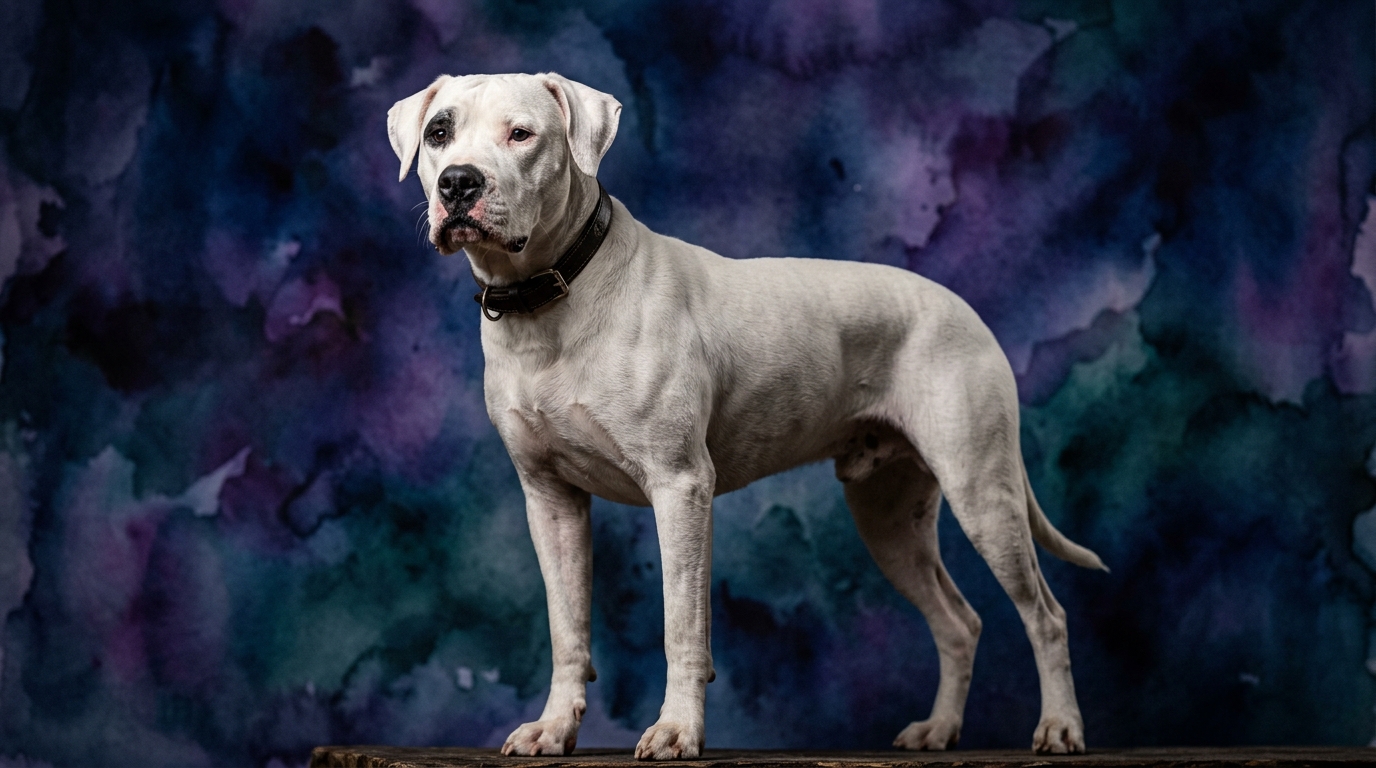
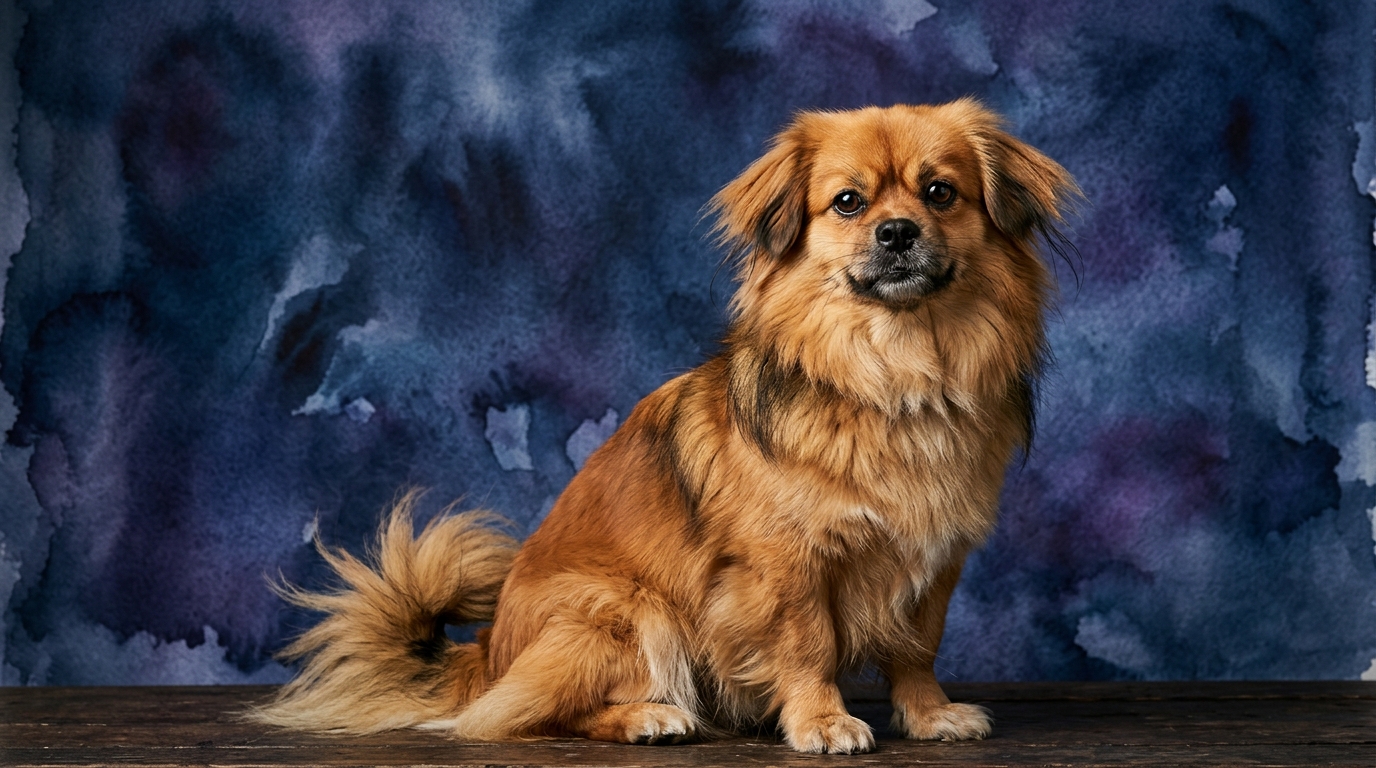
Side-by-Side IQ Profile: Dogo Argentino vs. Tibetan Spaniel
At The Cosmic Pet Pet IQ Lab, we assess canine intelligence across five key dimensions. While both the Dogo Argentino and the Tibetan Spaniel share a 3/5 rating across all categories, their unique histories and breed characteristics mean these scores manifest quite differently in their day-to-day cognitive functions. Let's delve into what these numbers mean for each breed.
The **Dogo Argentino**, a robust dog from the Working group, approaches problem-solving with a direct, persistent attitude (3/5). They are not typically inclined towards intricate strategizing but rather rely on physical prowess and learned routines to overcome obstacles, such as finding the most direct path to a desired object. Their training speed (3/5) is moderate, requiring consistent, clear instruction; once a command is grasped, their inherent drive ensures reliable performance. Social intelligence (3/5) in a Dogo Argentino is characterized by deep devotion to their immediate family, discerning subtle cues within their human pack, but often accompanied by a reserved or wary demeanor towards strangers. Their instinctive drive (3/5) is balanced, rooted in their big-game hunting origins, manifesting as a strong prey drive and protective instinct that is manageable with appropriate training. Finally, their memory (3/5) is solid for routines, commands, and the people and places associated with their safety and purpose, contributing to their overall reliability.
The **Tibetan Spaniel**, a charming companion from the Non-Sporting group, exhibits a pragmatic approach to problem-solving (3/5), often using observation and a touch of independent thought. They might cleverly manipulate a toy to get a treat or figure out how to access a comfortable sunbeam, showcasing a clever, though not overly complex, cognitive strategy. Their training speed (3/5) is also moderate, but they often display a quirky independence, making training an exercise in patience and positive reinforcement; they grasp concepts well but might choose to obey based on their own assessment. Tibetan Spaniels possess keen social awareness (3/5), particularly within their immediate family, adept at reading human emotions and intentions, acting as sensitive barometers of household moods. Their instinctive drive (3/5) is moderate, primarily geared towards companionship and observation, retaining some watchdog tendencies from their monastery origins without intense prey or guarding instincts. Their memory (3/5) is good for their people, routines, and home rules, contributing to their consistency as household members and precise recall of past associations.
Where the Dogo Argentino Excels Cognitively
The Dogo Argentino’s cognitive strengths are particularly evident in scenarios demanding robust application of learned behaviors and unwavering persistence. While both breeds score 3/5 in problem-solving, the Dogo’s approach is often more physically assertive and singularly task-oriented, especially when presented with a clear objective. For tasks requiring sustained physical effort or overcoming tangible obstacles, their direct method of engagement, coupled with their inherent physical capabilities, often gives them a distinct advantage. Their training speed, also rated 3/5, is bolstered by an earnest desire to work alongside a respected handler, making them highly responsive to well-defined, structured tasks once the initial learning phase is complete. This translates into reliable execution of complex sequences once mastered, particularly in situations demanding physical presence and controlled power. Furthermore, their instinctive drive, while numerically similar, is geared towards a more active, protective role, meaning they thrive and excel in contexts requiring vigilance and a strong sense of purpose, such as property monitoring or focused activity participation like tracking or scent work.
Where the Tibetan Spaniel Excels Cognitively
The Tibetan Spaniel, despite sharing similar numerical scores, often demonstrates a more nuanced and independently applied form of social intelligence and observational problem-solving. Their 3/5 in social intelligence manifests as a remarkable ability to interpret subtle human cues and adapt their behavior accordingly, often anticipating needs or moods without direct command. This makes them exceptionally attuned companions, excelling in environments where subtle communication and emotional resonance are highly valued. While their problem-solving is also rated 3/5, it frequently involves more observational learning and clever manipulation of their environment, rather than relying on brute force. A Tibetan Spaniel might figure out how to open a cupboard for a treat or strategically position themselves for maximum comfort, showcasing a thoughtful, self-serving ingenuity. Their moderate instinctive drive, rooted in their historical role as companion and alert dogs, makes them superior in environments requiring less physical intervention but keen awareness, such as alerting to visitors without excessive territoriality. Their memory, while rated similarly, often focuses on the intricacies of household dynamics and personal preferences, making them highly adaptable to the rhythms of family life and understanding individual family member habits.
Training Dynamics: Dogo Argentino vs. Tibetan Spaniel
Determining which breed is "easier" to train is a nuanced matter, as both hold a 3/5 rating for training speed, yet their underlying motivations and behavioral tendencies diverge significantly. The Dogo Argentino, with its working heritage, typically responds well to clear, consistent, and confident leadership. Their eagerness to please a respected handler, combined with a focused drive, means they can learn and reliably perform complex commands, especially those tied to a specific purpose or task. However, their considerable physical strength and potential for independence necessitate an experienced trainer capable of managing their strong will and channeling their energy effectively. Without firm, consistent guidance, their powerful instincts can lead to challenging behaviors that require careful intervention.
The Tibetan Spaniel, conversely, presents a different set of training considerations. Their independence and cleverness, while endearing, mean they often need to be convinced that a command is worth their effort. They are less inclined to blindly obey and more likely to assess the situation for their own benefit, requiring a trainer who employs positive reinforcement, engaging games, and a great deal of patience. A Tibetan Spaniel might "think about it" before complying, requiring a creative approach to maintain their interest and motivation. While their smaller stature makes physical management less demanding, their selective hearing can be more frustrating for novice owners. Ultimately, the Dogo Argentino is often easier to train for specific, task-oriented obedience under a strong, confident leader, while the Tibetan Spaniel is easier to train for harmonious cohabitation if the owner understands their independent spirit and uses reward-based methods effectively, prioritizing engagement over strict compliance.
Lifestyle Match: Active vs. Relaxed Owners
For active owners seeking a canine partner for demanding physical pursuits and structured activities, the Dogo Argentino is often a fitting choice. Their robust build, impressive stamina, and focused drive make them excellent companions for long hikes, jogging, or participation in dog sports such as agility, obedience, or protection work. They thrive on having a "job" and require consistent physical and mental stimulation to prevent boredom and potential destructive behaviors. An active owner who can provide ample exercise, clear boundaries, and purposeful engagement will find the Dogo Argentino to be a loyal, capable, and deeply devoted partner, adept at channeling their instinctive drive into productive and enjoyable outlets.
Relaxed owners, or those seeking a devoted, observant companion for a less physically demanding lifestyle, would find the Tibetan Spaniel more suitable. While they certainly enjoy walks and playtime, their overall exercise requirements are significantly lower than those of a Dogo Argentino. Their primary contentment stems from being close to their human family, observing household activities, and offering affectionate companionship. A relaxed owner who appreciates a dog's subtle social cues, enjoys quiet companionship, and can provide gentle mental stimulation through puzzle toys or short, engaging training sessions will find the Tibetan Spaniel an adaptable and charming presence. They are well-suited to apartment living, provided they receive daily walks and consistent, loving interaction within the home.
The Verdict
Choose the Dogo Argentino if you are an experienced, active owner ready to commit to consistent training, socialization, and providing a purposeful role for a powerful, devoted, and physically capable dog.
Choose the Tibetan Spaniel if you seek an intelligent, independent, yet deeply affectionate companion for a relaxed household, valuing a dog's nuanced social interactions and manageable exercise needs.
🧠 Find Your Pet's IQ Score
Our Pet IQ Lab assessment covers 25+ tests across 5 cognitive dimensions — personalized to your breed.
Take the Full IQ Test →Frequently Asked Questions
Are Dogo Argentinos good family dogs despite their hunting background?
With proper socialization from a young age and consistent training, Dogo Argentinos can be incredibly loyal and protective family members, especially with children they've been raised with. Their strong protective instincts require careful management to ensure they differentiate between perceived threats and normal interactions.
Do Tibetan Spaniels bark a lot, given their watchdog history?
Tibetan Spaniels do have a tendency to bark to alert their owners to new sights or sounds, a remnant of their monastery guard dog role. However, with consistent training and redirection, this can be managed, preventing excessive or nuisance barking.
Is one breed significantly healthier than the other?
Both breeds have their own predispositions; Dogo Argentinos are prone to deafness and hip dysplasia, while Tibetan Spaniels can experience patellar luxation and eye issues. Prospective owners should research reputable breeders who screen for these conditions to ensure the health of their chosen puppy.