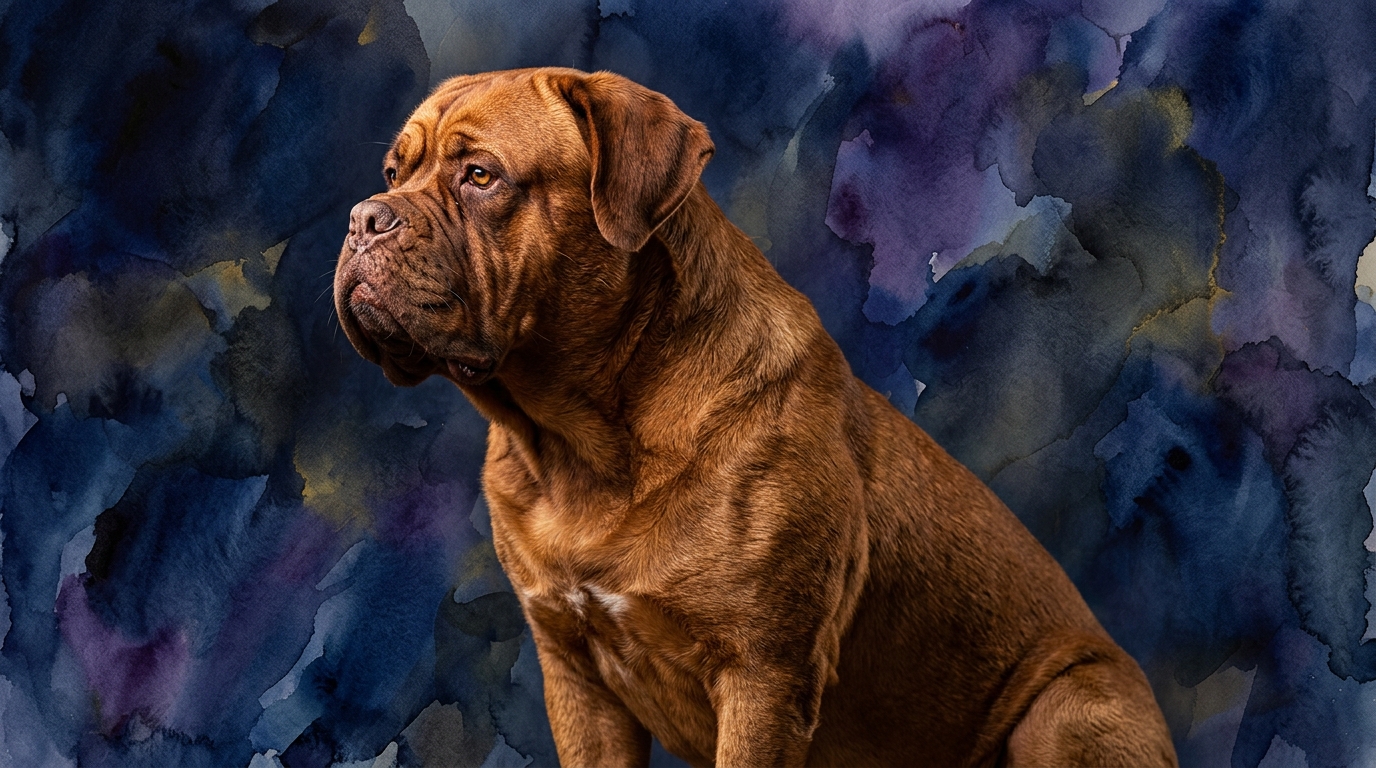
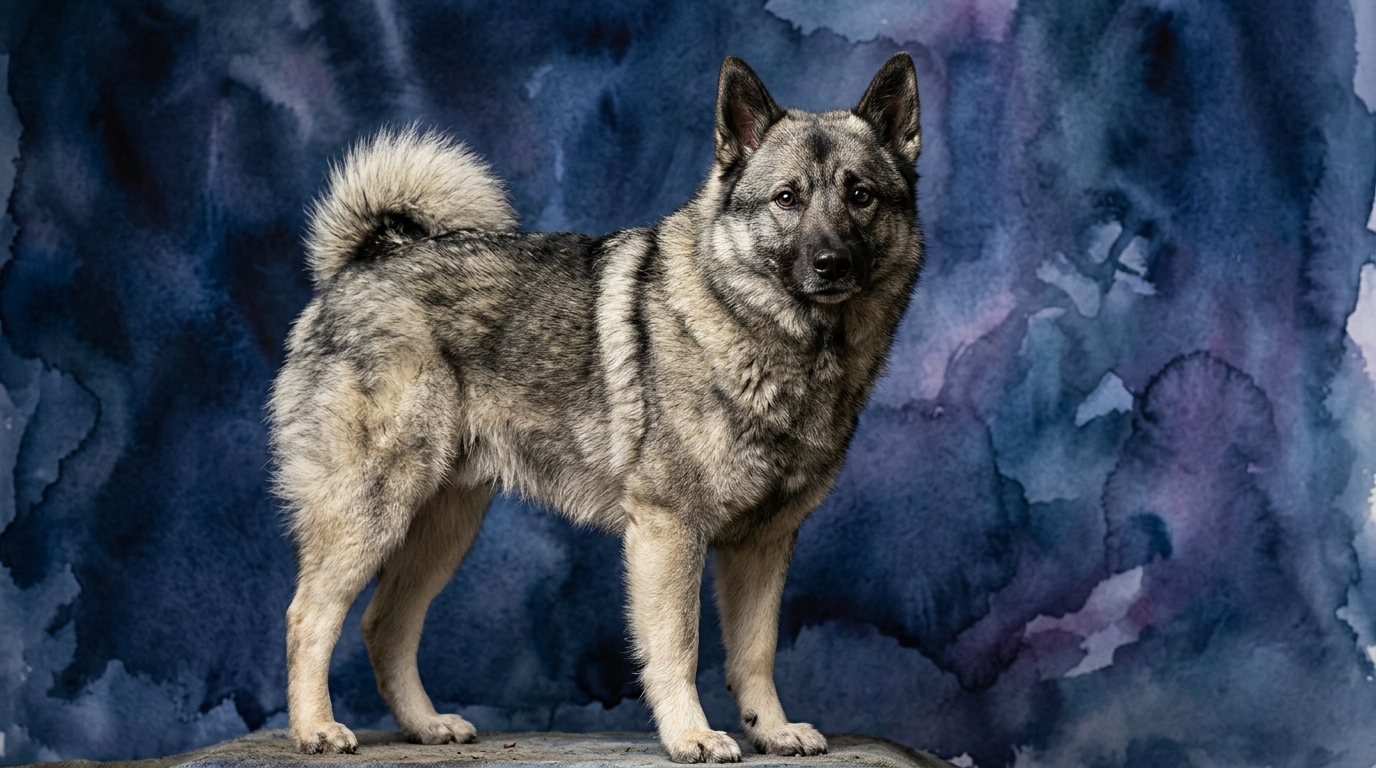
Side-by-side IQ profile
The Cosmic Pet Pet IQ Lab offers a detailed view of canine cognition. The Dogue de Bordeaux, a breed not Coren-ranked, consistently scores 3/5 across Problem Solving, Training Speed, Social Intelligence, Instinctive Drive, and Memory. This uniform profile suggests a steady, reliable cognitive approach. Their Problem Solving at 3/5 indicates they address challenges with persistent effort and learned routines rather than complex strategic planning. A Training Speed of 3/5 means they learn new commands at a moderate pace, benefiting from consistent instruction. Social Intelligence at 3/5 points to an adequate understanding of human cues, fostering strong family bonds without excessive sensitivity. Their Instinctive Drive, also 3/5, manifests as a composed, protective instinct rooted in their guardian heritage. Memory at 3/5 implies steady retention of experiences and training, reinforcing established patterns.
Conversely, the Norwegian Elkhound, Coren-ranked #36, shows a more varied profile. Its Problem Solving is 4/5, reflecting a greater capacity for strategic thinking and independent decision-making, vital for its hunting history. This breed also has a Training Speed of 4/5, meaning quicker learning of commands and routines. Social Intelligence matches at 3/5, indicating strong bonds but with a typical hound independence. Instinctive Drive is 3/5, profoundly shaped by its hunting heritage, leading to strong urges to track and vocalize. Memory, at 4/5, highlights superior retention of complex information like tracking routes and detailed training sequences.
Where Dogue de Bordeaux wins cognitively
The Dogue de Bordeaux's consistent 3/5 profile across all dimensions signifies unwavering reliability and steadfastness. Their moderate problem-solving approach, often involving determined physical effort, means they apply known solutions with calm persistence, rarely overthinking. This steadiness extends to their social intelligence; their 3/5 suggests a profound, unflashy loyalty and deep understanding of their immediate family's routines and emotional states within their trusted circle. Their instinctive drive is reliably channeled into a calm, protective watchfulness, offering a predictable presence. For owners valuing stable, predictable cognitive responses and dependable companionship, the Dogue de Bordeaux’s balanced profile is a clear advantage.
Where Norwegian Elkhound wins cognitively
The Norwegian Elkhound’s cognitive profile shows distinct advantages in areas demanding quick wit and robust recall. With Problem Solving at 4/5, Elkhounds excel at navigating complex environments or strategizing during scent work, demonstrating a more adaptive and resourceful mind. This superior cognitive flexibility allows independent assessment and solution-devising, honed by centuries of hunting. Their Training Speed of 4/5 means they absorb new commands and complex sequences efficiently, requiring fewer repetitions. Memory at 4/5 underpins their ability to recall intricate scent trails, remember commands, and learn extensive geographical layouts, making them adept at navigation and consistent in learned behaviors. For owners valuing rapid information processing and effective retention, the Elkhound’s cognitive strengths are a significant draw.
Which is easier to train and why
Assessing ease of training considers intelligence, willingness, and inherent drives. The Norwegian Elkhound, with 4/5 scores in Training Speed and Memory, generally learns commands faster and retains them well. This makes initial training stages quicker. However, their Problem Solving (4/5) and hound independence can lead them to "think for themselves" if not engaged. Engaging their intelligence with varied, positive reinforcement is crucial.
Conversely, the Dogue de Bordeaux, with consistent 3/5 scores, requires more patience and repetition. Their moderate Training Speed means new concepts take longer to solidify, demanding owner consistency. While not as quick to grasp commands, their moderate Memory ensures retention once learned. Their lower problem-solving score means they are less likely to try to outsmart their handler, preferring established routines. Training a Dogue de Bordeaux focuses on building a solid foundation through calm, consistent leadership. Therefore, while Elkhounds learn *faster*, the Dogue de Bordeaux's more compliant nature, once a routine is established, can make them *easier* in terms of sustained adherence, given a patient and consistent owner.
Which suits active owners vs relaxed owners
The breeds' cognitive profiles offer clear guidance for owner match. The Norwegian Elkhound, with higher Problem Solving (4/5) and strong instinctive drive for tracking, suits active owners. They thrive on consistent mental and physical stimulation, enjoying hiking, scent work, or agility that challenge their intellect and utilize their robust memory. Their quick learning makes them suitable for owners who enjoy teaching new, varied activities. A sedentary home would likely lead to boredom and potential behavioral issues.
The Dogue de Bordeaux, with its moderate scores and guardian role, suits more relaxed owners, provided daily exercise is met. While large, they are not high-endurance dogs. Their 3/5 instinctive drive channels into calm companionship and watchful protection, not incessant dynamic activity. They flourish in stable, predictable environments and appreciate comfortable home life. Owners valuing a steadfast presence, patient with training, and providing a secure environment without demanding intense mental gymnastics will find a Dogue de Bordeaux a rewarding companion.
The Verdict
For those seeking a loyal, calm, and reliably protective companion who thrives on routine and consistent, patient guidance, offering a steady presence in a stable home, the Dogue de Bordeaux is an excellent choice.
Owners desiring a quick-witted, agile partner for diverse outdoor activities and challenging training, who enjoys problem-solving and retains complex information, will find the Norwegian Elkhound to be an engaging and rewarding companion.
🧠 Find Your Pet's IQ Score
Our Pet IQ Lab assessment covers 25+ tests across 5 cognitive dimensions — personalized to your breed.
Take the Full IQ Test →Frequently Asked Questions
Are Dogue de Bordeaux good family dogs?
Yes, Dogue de Bordeaux typically form deep bonds with their families, exhibiting a steady social intelligence (3/5) and a calm, protective nature. They thrive in stable environments and are often gentle with children when properly socialized.
Do Norwegian Elkhounds bark a lot?
Norwegian Elkhounds do tend to be vocal, a trait linked to their instinctive drive (3/5) for alerting hunters to game. Their barking is a form of communication or reaction to stimuli; while manageable with training, owners should expect some vocal expression.
What kind of mental stimulation do these breeds need?
The Norwegian Elkhound requires significant mental engagement, thriving on scent work, puzzle toys, and varied training due to its higher problem-solving (4/5) and memory (4/5). The Dogue de Bordeaux benefits from consistent, routine-based training and social interaction, focusing on reinforcing learned behaviors.