
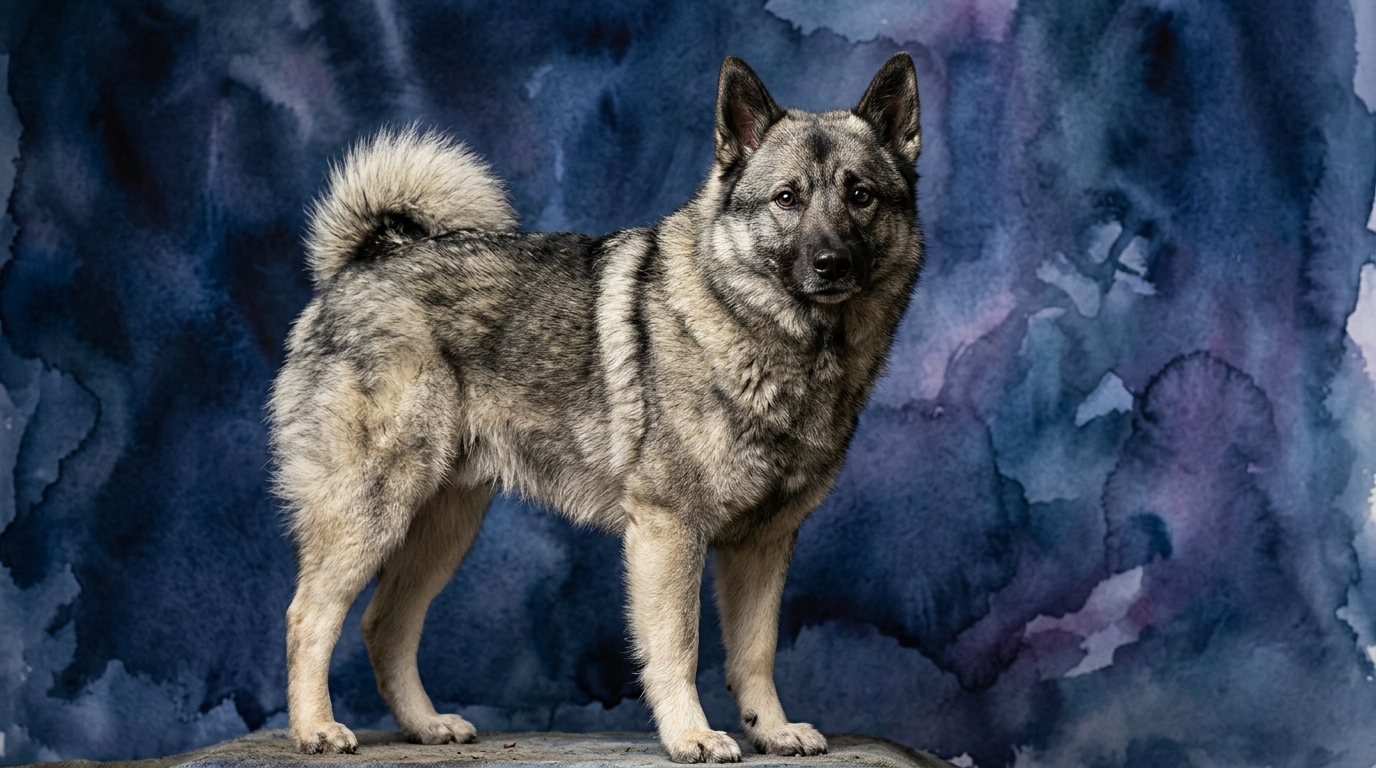
Side-by-Side IQ Profile: English Cocker Spaniel vs. Norwegian Elkhound
The English Cocker Spaniel, ranked #18 by Dr. Stanley Coren, exhibits impressive cognitive strengths. Their Problem Solving is 4/5, indicating an adaptive mind capable of navigating new situations and deciphering puzzles, generally preferring human guidance. Training Speed also stands at 4/5, reflecting a quick grasp of commands and a willingness to learn, often eager to please. Social Intelligence scores 3/5, meaning they are responsive to human cues and bond deeply, but may not instinctively read complex emotional states without clear communication. An Instinctive Drive of 3/5 points to their historical role as flushing dogs, possessing a moderate drive for scent work and retrieving. A standout feature is their Memory, rated a perfect 5/5, signifying an exceptional ability to recall learned behaviors, routines, and past experiences with remarkable accuracy, enhancing overall trainability.
The Norwegian Elkhound, positioned at #36 on Coren's list, offers a distinct, robust cognitive makeup. Their Problem Solving, also 4/5, manifests as resourceful and independent, often relying on innate instincts for navigation or tracking. Training Speed is 4/5, demonstrating efficient learning, but often requiring consistent motivation and a clear 'why' due to their self-reliant nature. Social Intelligence is 3/5, indicating they are observant of surroundings and form strong family bonds, yet can be reserved with strangers. An Instinctive Drive of 3/5 highlights their strong ancestral drive for hunting, manifesting as an acute sense of smell and persistent pursuit of scents. Their Memory, excellent at 4/5, suggests strong retention of routines and commands, though perhaps not with the same exhaustive detail or immediate recall as the Spaniel, often tempered by independent thought processes.
Where the English Cocker Spaniel Wins Cognitively
The English Cocker Spaniel clearly surpasses the Norwegian Elkhound in memory, boasting a perfect 5/5 score against the Elkhound’s 4/5. This superior recall translates into tangible advantages: they solidify new commands with fewer repetitions and retain them more consistently, making advanced obedience or complex trick training smoother. Their remarkable memory extends to boundaries and household rules, leading to a more predictable and compliant companion. For instance, a Cocker Spaniel taught not to jump on guests will likely remember this reliably, even after a long period. Furthermore, their higher Coren rank of #18, compared to the Elkhound's #36, suggests a greater general aptitude for working and obedience, indicating a stronger intrinsic motivation to comply with human directives. This makes them inherently more handler-focused, readily seeking guidance and reinforcement, a significant cognitive win for owners prioritizing cooperative learning and a strong training partnership.
Where the Norwegian Elkhound Wins Cognitively
While the English Cocker Spaniel excels in memory and cooperative learning, the Norwegian Elkhound demonstrates a distinct cognitive edge in areas demanding independent thought and self-reliance, particularly in their ancestral environments. Both score 4/5 in Problem Solving, but the Elkhound's approach is more autonomous and resilient. Their hound heritage has honed their ability to make decisions without constant human intervention, such as tracking a scent over varied terrain for extended periods or navigating complex outdoor scenarios independently. An Elkhound might be more resourceful in figuring out how to bypass an obstacle or locate a hidden treat, relying less on cues and more on innate intelligence and persistence. Their instinctive drive, while also 3/5, manifests as powerful, self-directed persistence in scent work and exploration. This independent cognitive style allows them to thrive where human guidance is minimal, utilizing their wits and determination. For owners valuing a dog capable of robust problem-solving in challenging outdoor settings, the Elkhound's cognitive strengths truly shine, offering a capable and self-assured partner for wilderness adventures.
Which is Easier to Train and Why
Assessing ease of training involves more than just 'training speed' scores. Both breeds rate 4/5 for Training Speed, meaning they grasp concepts efficiently. However, the English Cocker Spaniel generally proves easier to train, primarily due to their superior Memory (5/5) and inherent desire to please. A Cocker Spaniel’s excellent recall means learned commands are deeply ingrained, requiring fewer refreshers. They are typically more handler-focused, eager for interaction and praise, making them highly motivated students. Behaviorally, they tend to maintain eye contact, readily respond to their owner's voice, and remain engaged without significant distraction. Conversely, while the Norwegian Elkhound learns quickly, their training demands more patience and consistency due to their independent nature and strong instinctive drives. An Elkhound might understand a command but choose not to comply if a compelling scent or stimulus captures their attention. Their problem-solving (4/5) can sometimes lead to 'negotiating' commands. For instance, a Cocker Spaniel is less likely to ignore a recall for a squirrel than an Elkhound, whose hunting instincts might override obedience. Successful Elkhound training relies on making it intrinsically rewarding and consistently reinforcing desired behaviors, often requiring creative motivation.
Which Suits Active Owners vs. Relaxed Owners
Both the English Cocker Spaniel and the Norwegian Elkhound are best suited for active owners, though their activity needs differ. The English Cocker Spaniel thrives with consistent mental stimulation and moderate physical exercise. Their ideal day includes engaging training sessions, interactive games like fetch or scent work, and regular walks or runs. They are adaptable and enjoy family activities, making them excellent companions for owners who partake in agility, obedience, or long walks. A relaxed owner neglecting their mental and physical needs might find a Cocker Spaniel becoming bored or seeking self-amusement, potentially leading to undesirable behaviors. The Norwegian Elkhound demands a more robust and enduring level of activity. Their heritage as a hunting dog in rugged terrain means incredible stamina and a deep-seated need for purpose-driven exercise. These dogs are ideal for very active owners who enjoy long hikes, trail running, skijoring, or extensive scent tracking. A 'relaxed' owner would struggle to meet an Elkhound's needs, as unfulfilled energy and strong independent drive can lead to destructive chewing, excessive barking, or escape attempts. They require an owner who understands their need for consistent, vigorous outdoor activity and outlets for their powerful instinctive drives.
The Verdict
For owners seeking a highly trainable, eager-to-please companion excelling in obedience and interactive learning, and thriving on shared activities, the English Cocker Spaniel is likely your ideal match. Their superior memory and handler-focused nature make them a joyful, cooperative partner.
For experienced, active owners valuing an independent, resilient partner for rigorous outdoor exploration, scent work, and committed to consistent, engaging training that respects their hound nature, the Norwegian Elkhound will prove to be an immensely rewarding companion. They offer unique self-reliance and loyalty.
🧠 Find Your Pet's IQ Score
Our Pet IQ Lab assessment covers 25+ tests across 5 cognitive dimensions — personalized to your breed.
Take the Full IQ Test →Frequently Asked Questions
Are English Cocker Spaniels good at agility sports?
Yes, English Cocker Spaniels often excel in agility sports due to their combination of good memory, quick training speed, and natural athleticism. Their eagerness to please and moderate instinctive drive make them highly responsive to the intricate commands required for agility courses.
Can Norwegian Elkhounds be trusted off-leash in open areas?
Trusting a Norwegian Elkhound off-leash, particularly in open areas with potential wildlife, requires extensive and consistent training due to their strong prey drive and independent nature. While they are capable of learning recall, their instinct to track a scent can often override obedience, making secure, fenced areas or long lines preferable for their safety.
Which breed is generally more vocal, the English Cocker Spaniel or the Norwegian Elkhound?
The Norwegian Elkhound tends to be the more vocal of the two breeds, often using barks, howls, and baying as a primary form of communication, reflecting their use in hunting. English Cocker Spaniels are generally less vocal, though they will bark to alert or express excitement.