
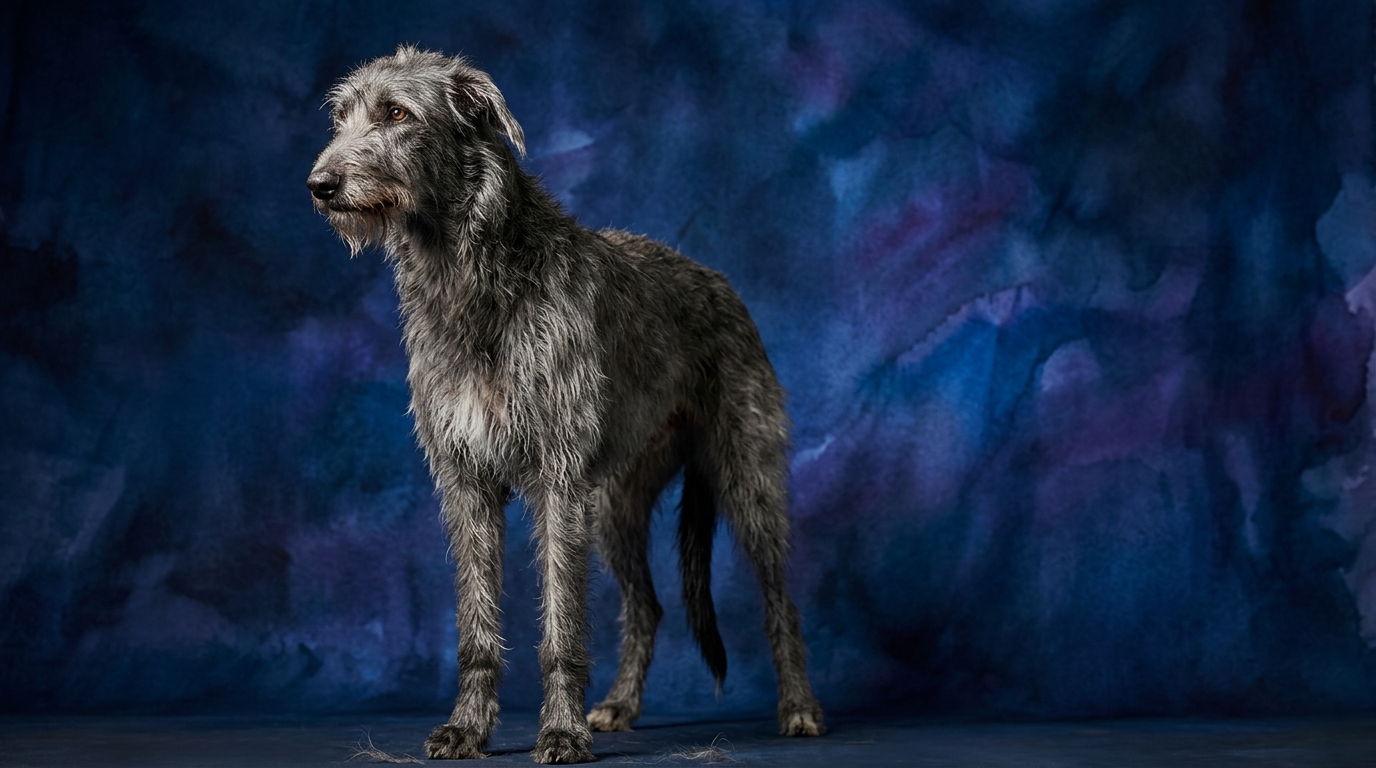
Side-by-Side IQ Profile: English Cocker Spaniel vs. Scottish Deerhound
The Cosmic Pet Pet IQ Lab evaluates canine cognition across five key dimensions, providing a nuanced understanding beyond simple 'smart' labels. For the English Cocker Spaniel, ranked #18 by Stanley Coren, we observe a profile geared towards active partnership, while the unranked Scottish Deerhound presents a more independent, instinct-driven cognitive style.
**Problem Solving:** The English Cocker Spaniel earns a 4/5, indicating a strong capacity for navigating complex scenarios, figuring out how to retrieve items, or manipulating objects to achieve a goal. Their cognitive flexibility allows them to quickly adapt strategies. In contrast, the Scottish Deerhound scores 3/5, suggesting a more direct approach to problems, often relying on their physical prowess and keen senses rather than intricate manipulation or multi-step solutions. Their problem-solving is often task-specific, focused on efficient pursuit.
**Training Speed:** With a 4/5, the English Cocker Spaniel demonstrates a quick uptake of new commands and routines, often eager to please and highly responsive to instruction. This makes them relatively swift learners in formal obedience settings. The Scottish Deerhound, at 3/5, learns at a more moderate pace. Their independent nature, characteristic of sighthounds, means they may require more repetition and motivation, often processing commands through the lens of their own motivations.
**Social Intelligence:** Both breeds score 3/5 in social intelligence. The English Cocker Spaniel typically forms strong bonds with their family, understanding human cues and intentions well within their social circle. They can be reserved with strangers but are generally attuned to their handler's mood. The Scottish Deerhound also shows a moderate social intelligence, deeply devoted to their chosen family, capable of subtle communication, but often quite reserved or aloof with those outside their immediate circle, indicating a discerning social approach.
**Instinctive Drive:** Both breeds register 3/5, but the nature of their drives differs significantly. The English Cocker Spaniel possesses a strong retrieve and flush drive, characteristic of a gundog, motivating them to work collaboratively with a handler in the field. This drive is often channeled into various dog sports or retrieving games. The Scottish Deerhound's instinctive drive is primarily a powerful prey drive, focused on sight-hunting. This manifests as a strong impulse to chase anything that moves quickly and at a distance, a deeply ingrained behavior stemming from their historical role as deer hunters.
**Memory:** Here, the English Cocker Spaniel excels with a perfect 5/5. They display remarkable retention of commands, routines, and experiences, remembering complex sequences and locations with ease. This superior memory aids significantly in their training and adaptability. The Scottish Deerhound scores 3/5, indicating a functional memory sufficient for their needs. They will remember their family, routines, and learned behaviors, but may not retain lengthy, intricate command sequences with the same precision or speed as the Spaniel, often relying more on pattern recognition in their environment.
Where the English Cocker Spaniel Wins Cognitively
The English Cocker Spaniel distinctly outshines the Scottish Deerhound in areas requiring intricate cognitive engagement and sustained focus on a human partner. Their 4/5 in problem solving means they are adept at navigating novel situations, such as figuring out how to open a puzzle toy or locating a hidden treat, often employing trial-and-error strategies effectively. This translates into a dog that can be taught complex tasks and enjoys mental challenges that require active thought.
Their exceptional 5/5 memory is a significant cognitive advantage, allowing them to recall a vast repertoire of commands, routines, and learned associations. This makes multi-stage training much more efficient and enables them to perform reliably in diverse environments, remembering specific cues and their associated actions. Coupled with a 4/5 training speed, this breed is exceptionally well-suited for owners seeking a companion that can master a wide array of skills, from advanced obedience to agility courses, demonstrating a remarkable capacity for learning and retention.
Where the Scottish Deerhound Wins Cognitively
While not scoring higher in the traditional IQ metrics, the Scottish Deerhound possesses a distinct cognitive strength rooted in their specialized function and sighthound heritage. Their 3/5 in instinctive drive, though numerically similar, represents a highly refined, singular focus on sight-hunting that is unparalleled in its efficiency. This means their cognitive processing is exceptionally geared towards visual tracking, rapid assessment of movement, and strategic pursuit over open terrain. Their problem-solving (3/5) in this context involves quick, decisive action based on visual stimuli, rather than manipulative tasks.
Their cognitive strengths lie in their ability to make independent decisions in vast spaces, relying on their acute senses and innate understanding of prey dynamics. They exhibit a calm, observant intelligence indoors, often assessing situations quietly before reacting. This suggests a cognitive preference for efficiency and purpose-driven action, rather than constant interaction or complex mental gymnastics. Their memory, while 3/5, is perfectly adequate for remembering their territory, established routines, and the subtle cues of their family, contributing to their serene yet capable demeanor.
Which is Easier to Train and Why
Based on their cognitive profiles, the English Cocker Spaniel is generally easier to train for a wide variety of tasks, particularly formal obedience and complex tricks. Their 4/5 training speed and 5/5 memory mean they grasp new concepts quickly and retain them effectively. Behaviorally, they often exhibit a strong desire to please their handler and thrive on interaction and positive reinforcement, making them highly receptive students. Their instinctive drive, geared towards working collaboratively, reinforces this trainability.
The Scottish Deerhound, with a 3/5 training speed and a more independent nature, presents a different training experience. While they are certainly capable of learning, their inherent sighthound independence means they may not always see the immediate value in performing a command unless it aligns with their own motivations. They require patient, consistent training methods that are engaging and reward-based, avoiding harsh corrections which can cause them to shut down. Their strong prey drive means off-leash reliability in open spaces can be a significant challenge, as their instinct to chase can override learned commands, requiring different management strategies than a Spaniel.
Which Suits Active Owners vs. Relaxed Owners
The English Cocker Spaniel, with their zest for life and highly engaged cognitive profile, is ideally suited for active owners who relish a canine partner for various activities. Their strong problem-solving and memory make them excellent candidates for dog sports like agility, obedience, and scent work, requiring owners who can provide consistent mental stimulation and physical exercise. They thrive on having a 'job' and being an integral part of family outings, enjoying long walks, retrieving games, and interactive play.
The Scottish Deerhound, despite their historical role as hunters, often surprise owners with their relaxed and gentle demeanor indoors. They are better suited for owners who appreciate a calm, dignified companion within the home, but who can also accommodate bursts of intense outdoor activity. While they don't demand constant mental challenges in the same way as a Spaniel, they absolutely require ample space for galloping and free-running in a secure area to satisfy their instinctive drive. Owners should be prepared for their independent streak and provide opportunities for expansive physical exercise rather than intricate training sessions.
The Verdict
Choose the English Cocker Spaniel if you desire a highly trainable, mentally agile companion eager to learn and participate in a wide range of activities, thriving on close partnership and consistent engagement.
Opt for the Scottish Deerhound if you seek a calm, gentle giant indoors who requires ample space for running, appreciating their independent spirit and dignified presence, rather than intense obedience training.
🧠 Find Your Pet's IQ Score
Our Pet IQ Lab assessment covers 25+ tests across 5 cognitive dimensions — personalized to your breed.
Take the Full IQ Test →Frequently Asked Questions
Do English Cocker Spaniels get bored easily?
Yes, due to their high problem-solving ability and memory, English Cocker Spaniels require regular mental stimulation and activities to prevent boredom. Without engaging tasks, they may invent their own 'fun' which might not always align with owner expectations.
Can a Scottish Deerhound live in an apartment?
While Scottish Deerhounds are calm indoors, their need for bursts of intense running means apartment living is challenging unless owners commit to providing daily opportunities for secure off-leash exercise in a large, safe area. Their size also requires ample indoor space.
Which breed is better with children?
Both breeds can be good with children when properly socialized and supervised. English Cocker Spaniels are generally more playful and tolerant, while Scottish Deerhounds are gentle but can be reserved and prefer a quieter environment, making them better suited for older, respectful children.