
Side-by-Side Cognitive Profiles
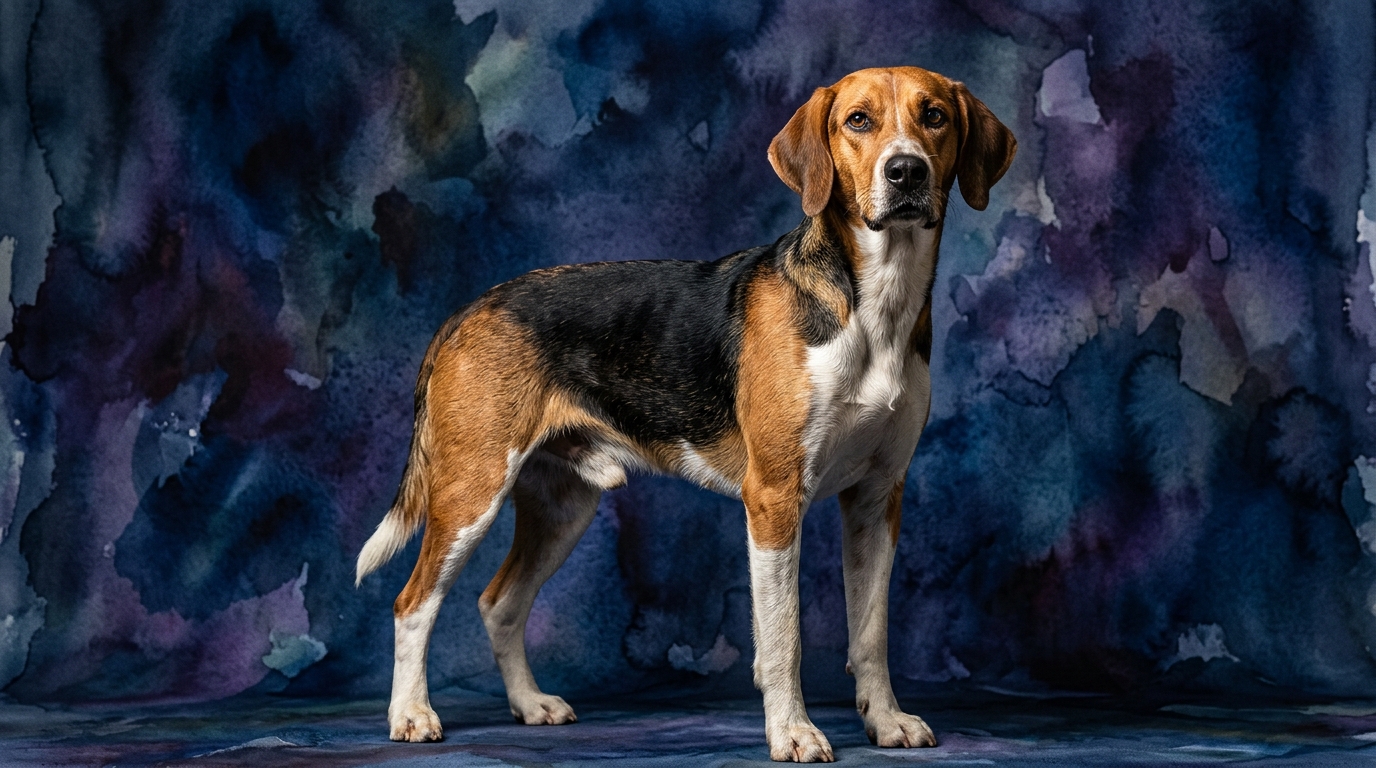
The English Foxhound, a breed forged for the chase, exhibits a cognitive profile deeply rooted in its ancestral role. Their Problem Solving (3/5) is less about intricate puzzles and more about navigating complex terrains and persistent scent tracking, often for miles, to locate quarry. Training Speed (3/5) reflects their capacity to learn routine commands at a moderate pace, though their strong independent streak and overwhelming focus on scent can make consistent obedience a nuanced challenge. Social Intelligence (3/5) primarily revolves around cooperative pack dynamics, making them amiable with other dogs but sometimes less attuned to subtle human emotional cues. Their Instinctive Drive (3/5) is overwhelmingly directed towards scent, pursuit, and stamina, often overriding other stimuli. Finally, their Memory (3/5) is exceptional for recalling vast scent trails and geographical layouts relevant to their hunting pursuits.
In contrast, the German Pinscher, a versatile working and companion breed, displays a cognitive makeup geared towards domestic utility and protection. Their Problem Solving (3/5) typically involves strategic thinking in a home environment, such as figuring out how to deter a perceived threat or outmaneuver small vermin, rather than long-distance tracking. Training Speed (3/5) indicates a moderate learning pace, often coupled with an eagerness to please their family, though they can become bored without varied engagement. Social Intelligence (3/5) is often directed inwards, forming strong, perceptive bonds with their human family while remaining reserved or suspicious of strangers, showcasing a protective discernment. Their Instinctive Drive (3/5) encompasses guarding territory, controlling vermin, and a strong desire to be involved in family activities. Their Memory (3/5) is sound for retaining learned commands, routines, and the boundaries of their domestic territory.
Where the English Foxhound Excels Cognitively
The English Foxhound's cognitive strengths lie in its specialized sensory processing and unwavering persistence, a testament to centuries of selective breeding. Their Problem Solving (3/5) isn't about abstract thought, but about the practical application of their olfactory prowess: deciphering faint scent trails, distinguishing target scents from environmental clutter, and making real-time decisions about direction and speed during a hunt. This requires an incredible level of sustained focus and decision-making driven purely by scent, filtering out all other sensory input. Their Instinctive Drive (3/5) is not merely strong; it is foundational to their being, enabling them to work tirelessly and independently for extended periods. This unique cognitive architecture means that while they might not excel at parlor tricks, their ability to process and act upon complex scent information over vast distances is a specific cognitive triumph.
Where the German Pinscher Holds a Cognitive Edge
Conversely, the German Pinscher's cognitive advantages manifest in a more adaptable and socially aware manner, particularly within a human-centric environment. Their Social Intelligence (3/5) allows them to develop a deep, empathetic connection with their human companions, often anticipating moods or responding to subtle verbal and non-verbal cues that a less human-focused breed might miss. This attentiveness translates into their Problem Solving (3/5) in domestic contexts, where they might strategically navigate household dynamics or understand complex rules with greater nuance. Their Instinctive Drive (3/5) is also more versatile, balancing protective instincts with a strong desire for active participation in family life, making them adept at various roles from vigilant guardians to playful companions. This breed's memory (3/5) is particularly well-suited for retaining complex routines and commands, especially when those tasks involve interaction with their primary caregivers.
Training Dynamics: Which is Easier and Why?
While both breeds are rated 3/5 for Training Speed, the practical experience of training an English Foxhound versus a German Pinscher differs significantly due to their intrinsic motivations and historical roles. The English Foxhound's training journey is often defined by its powerful Instinctive Drive (3/5) for scent and pursuit. This means that while they can learn commands, their attention can be incredibly difficult to redirect once a compelling scent is detected. Training requires immense patience, creativity in making commands more appealing than the environment, and an understanding that off-leash reliability outside of a secure, scent-free area will be an ongoing, formidable challenge. Their problem-solving (3/5) during training is often about figuring out how to get back to the scent, rather than what their human wants.
The German Pinscher, on the other hand, typically offers a more collaborative training experience. Their Social Intelligence (3/5) means they are generally more focused on their human handler and more motivated by praise and interaction. While they possess a strong instinctive drive (3/5) for protection and vermin control, it is often more easily channeled through structured training and mental engagement. Their problem-solving (3/5) in training situations frequently involves understanding the desired outcome to earn rewards or maintain harmony within the family unit. They respond well to varied tasks that challenge their minds, and while they can be opinionated, their desire to be an active participant in family life generally makes them more amenable to consistent obedience training than their hound counterpart. Consistency, positive reinforcement, and engaging methods are crucial for both, but the Pinscher's inherent desire for partnership often makes the process feel less like a battle against instinct.
Matching Breeds to Lifestyles: Active vs. Relaxed Owners
When considering an English Foxhound or a German Pinscher, an owner's lifestyle, particularly their activity level and preferred engagement style, is paramount. An English Foxhound is the ideal companion for the truly active, outdoors-oriented individual or family who thrives on extensive, long-duration physical activity. They require vast opportunities for secure, leash-controlled exploration, long hikes, and potentially participation in scent work or field trials. Their stamina is legendary, and their mental stimulation comes from following complex scent trails. A 'relaxed' day for a Foxhound still involves significant physical output, making them unsuitable for sedentary lifestyles or apartment living where their energy cannot be adequately expressed. They are best suited for rural or semi-rural environments with secure fencing to prevent them from following their powerful nose.
The German Pinscher also demands a highly active owner, but their needs are often more adaptable to varied environments. They excel with vigorous daily exercise that includes structured play, running, and mentally stimulating activities like agility, obedience, or puzzle toys. They require an owner who enjoys consistent engagement, providing both physical exertion and cognitive challenges. While they can adapt to apartment living if their exercise needs are rigorously met, they are not a 'relaxed' dog in terms of mental and physical demands. They thrive on being an integral part of family activities, making them a better fit for active owners who desire a versatile, engaged partner for a range of activities, both indoors and out.
The Verdict
Choose the English Foxhound if you are an avid outdoors enthusiast, ready to embrace their independent, scent-driven nature and provide ample opportunities for extensive, leash-secured exploration or field work. They thrive with owners who appreciate a dog whose purpose is deeply rooted in ancient hunting traditions and are prepared for a companion whose primary focus can often be the world of scent.
Opt for the German Pinscher if you seek a highly engaged, energetic companion who thrives on close family interaction, structured training, and diverse mental challenges. They are an excellent match for active owners who desire a versatile partner for dog sports, protection, and a lively presence within the home, valuing a strong bond and mutual participation in daily life.
🧠 Find Your Pet's IQ Score
Our Pet IQ Lab assessment covers 25+ tests across 5 cognitive dimensions — personalized to your breed.
Take the Full IQ Test →Frequently Asked Questions
Are English Foxhounds good family pets?
Yes, English Foxhounds can be good family pets, often displaying a sociable nature with children and other dogs due to their pack mentality. However, their immense energy and powerful scent drive necessitate significant daily exercise and a securely fenced yard, as their independent nature and focus on scent might not suit every family seeking a constant lap dog.
How much exercise does a German Pinscher need?
German Pinschers require substantial daily exercise, typically an hour or more of vigorous activity such as running, brisk walks, or participation in dog sports like agility. This physical exertion must be combined with consistent mental stimulation through training and puzzle toys to prevent boredom and potential behavioral issues.
Can a German Pinscher live in an apartment?
A German Pinscher can adapt to apartment living, but only if their significant exercise and mental stimulation requirements are consistently and rigorously met. This means daily, dedicated outings for physical activity and engaging training sessions, as they are not a breed content with minimal activity in a small space.