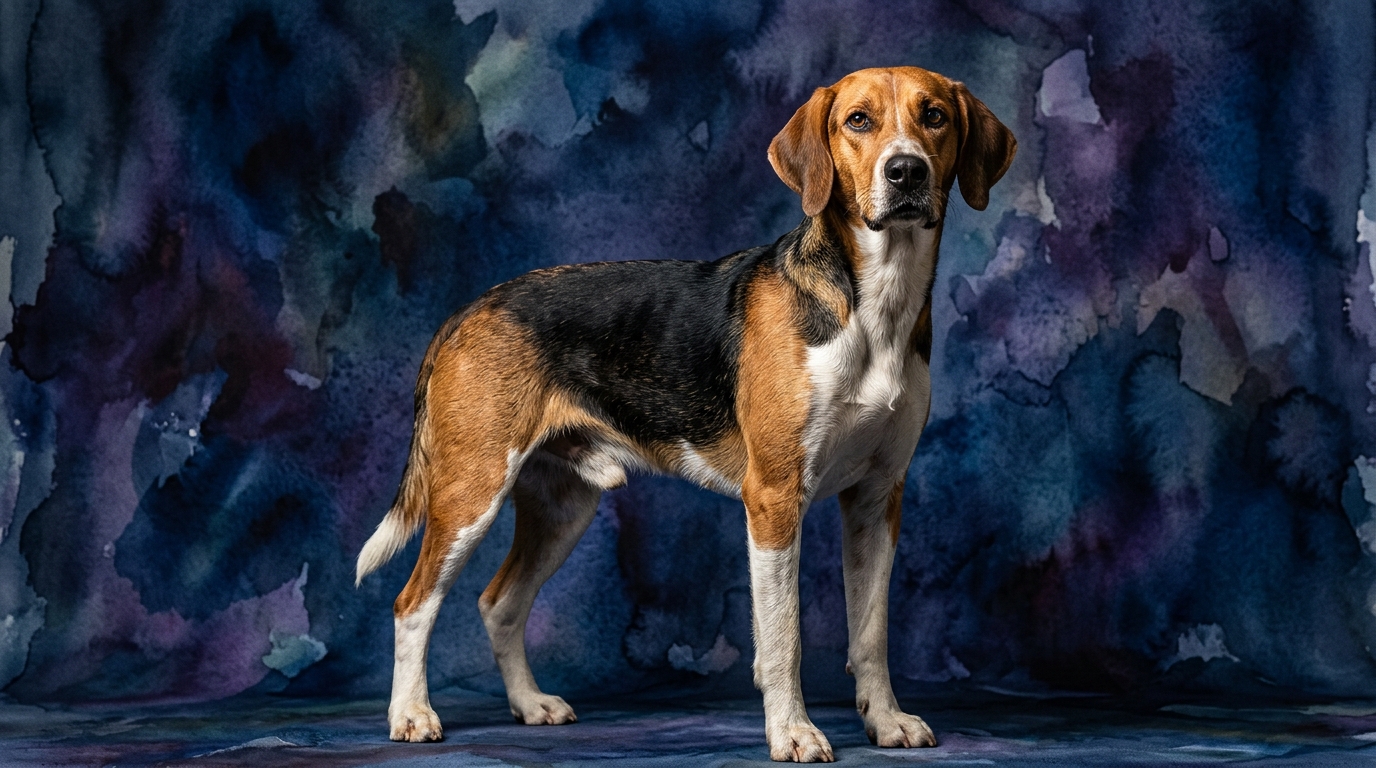
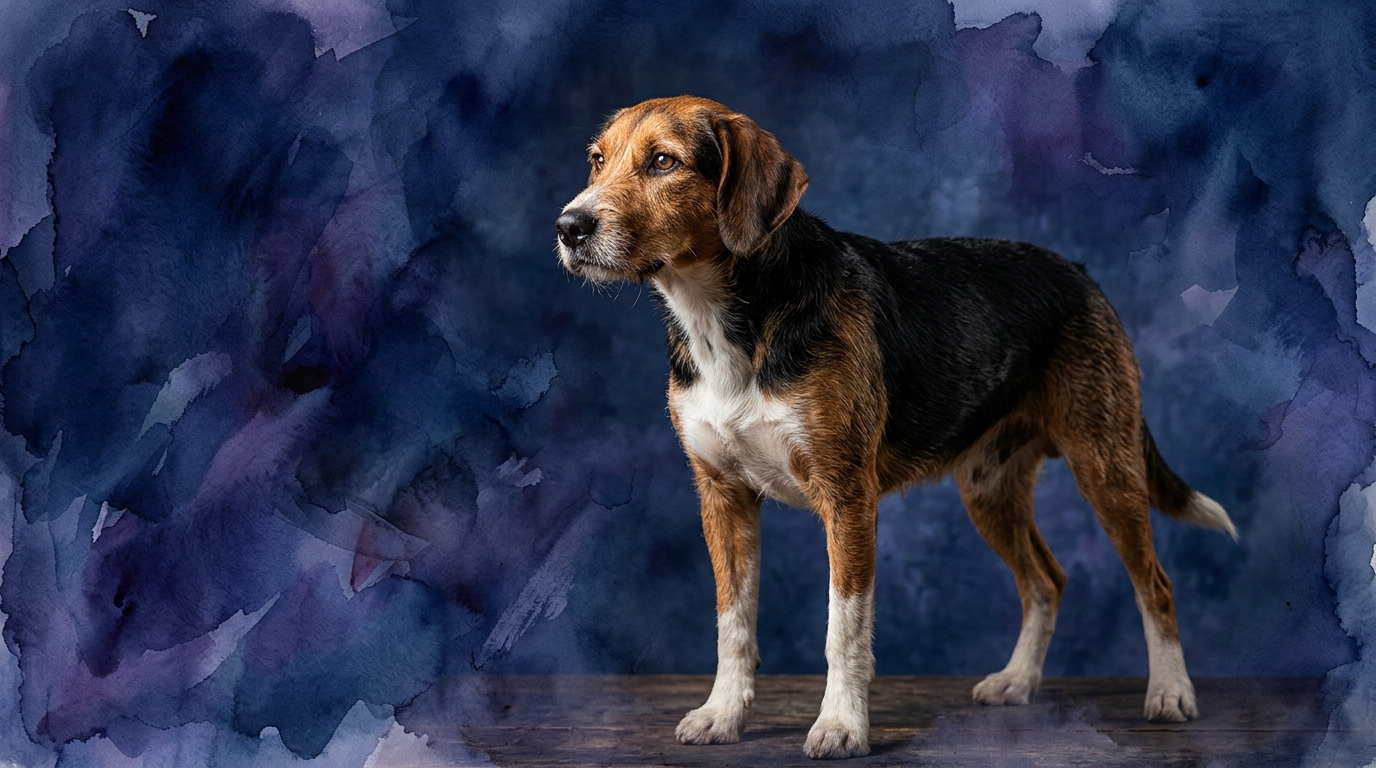
Side-by-Side IQ Profile: English Foxhound vs. Harrier
At first glance, the English Foxhound and Harrier present an identical cognitive blueprint, each scoring a 3 out of 5 across all five dimensions of our Pet IQ Lab assessment. This parity indicates both breeds possess a moderate level of cognitive ability and instinctual drive, suggesting a capable yet nuanced approach to learning and interaction. However, the manifestation of these scores is where their individual character truly emerges, reflecting their distinct historical purposes and physical attributes.
For the **English Foxhound**, their **Problem Solving (3/5)** capacity often manifests in their impressive ability to independently decipher complex scent trails and navigate challenging, expansive environments. Their cognitive strength lies in sustained focus on a singular objective – the quarry's path – often requiring them to make autonomous decisions about direction and persistence without immediate human input. They excel at mapping intricate scent puzzles over vast, often unfamiliar, territories. Their **Training Speed (3/5)** indicates a moderate pace of learning; they are capable of acquiring commands, but their deep-seated hunting instincts and independent nature mean training requires consistent, patient, and engaging methods. Their primary motivation often remains the thrill of the chase, so compliance with human directives can be secondary to a compelling scent. The **Social Intelligence (3/5)** of an English Foxhound is primarily geared towards harmonious interaction within a large canine pack. While generally amicable with people, their historical role fostered less reliance on intricate human-canine communication, making them understand social hierarchies but not necessarily seek out constant human affirmation or instruction. Their **Instinctive Drive (3/5)** is the robust core of their being, manifesting as an unrelenting desire to track and pursue scent over long distances and for extended periods; it is a powerful, intrinsic motivation that shapes much of their behavior. Finally, their **Memory (3/5)** allows them to recall complex scent patterns, remember vast geographical layouts, and retain learned routines, enabling them to return to established paths or effectively pick up a lost scent.
The **Harrier**, also scoring 3 out of 5 across the board, applies these same cognitive strengths in slightly different contexts. Their **Problem Solving (3/5)** is often applied in a more collaborative and adaptable manner. Harriers are adept at working within a pack to overcome immediate environmental challenges, such as dense undergrowth or broken trails, making quick decisions to maintain the hunt's momentum. Their **Training Speed (3/5)** is also moderate, similar to their Foxhound cousins. However, their slightly more pack-oriented nature can sometimes make them appear a bit more biddable, especially in training contexts that involve their human handler as part of the 'pack.' Still, their strong prey drive demands engaging and persistent training. The **Social Intelligence (3/5)** of a Harrier reflects their strong capacity for cooperative social interaction, particularly within a smaller, more intimate pack structure that often includes human hunters. They are typically responsive to social cues from both dogs and people, fostering a strong bond and collaborative spirit. The Harrier's **Instinctive Drive (3/5)** is characterized by tenacious, focused tracking of hare, often in varied and challenging terrain. This persistent motivation ensures they meticulously follow a trail, showcasing considerable stamina and dedication to their primary purpose. Their **Memory (3/5)** effectively retains scent information, remembers the specific dynamics and roles within their pack, and recalls learned commands and hunting patterns, aiding their efficiency in tracking and ability to work effectively as a unit.
Where the English Foxhound's Cognitive Profile Shines
While both breeds score identically in our IQ dimensions, the English Foxhound's expression of its 3/5 cognitive abilities particularly shines in scenarios demanding sustained, independent decision-making over vast distances. Their problem-solving (3/5) excels when untangling intricate scent puzzles across expansive territories without constant human direction, showcasing an impressive capacity for autonomous navigation and persistent pursuit. This is a breed designed for the grand scale, thinking independently to follow a cold trail for miles, a testament to their historical role in large-scale fox hunts. Their memory (3/5) is particularly well-suited for retaining the nuances of extensive landscapes and complex scent trails, allowing them to effectively 'map' their hunting grounds mentally and recall patterns over significant timeframes. This long-term spatial memory is crucial for their endurance in the field. Furthermore, their instinctive drive (3/5) is uniquely geared towards prolonged, high-stamina endeavors, demonstrating a profound internal motivation to follow a quarry for hours on end, often ignoring distractions that might deter other breeds. This steadfastness, combined with their ability to operate without constant human oversight, truly sets their cognitive application apart.
Where the Harrier's Cognitive Profile Shines
Conversely, the Harrier's manifestation of its 3/5 cognitive scores demonstrates a distinct advantage in situations requiring closer pack cooperation and adaptable problem-solving within more confined or varied environments. Their social intelligence (3/5) is particularly attuned to coordinating efforts within a smaller hunting group, enabling seamless communication and shared strategy with both canine and human companions. This makes them more responsive to handler cues within a dynamic hunting scenario, prioritizing group cohesion to achieve the objective. The Harrier's problem-solving (3/5) is often expressed through their adeptness at navigating dense cover and overcoming immediate obstacles encountered during the chase, showcasing a quick, practical application of their wits to maintain the pursuit in challenging terrain. They are less about the grand, independent sweep and more about the meticulous, collaborative unraveling of a trail in complex surroundings. Furthermore, their instinctive drive (3/5) is finely tuned for persistent, often meticulous tracking of hare. This tenacity allows them to work a specific area thoroughly, making them exceptionally dedicated and focused in their pursuit, even when the scent is faint or the conditions are difficult. Their cognitive strengths lie in their ability to adapt and cooperate within a team, making them efficient and effective in their traditional role.
Training Dynamics: English Foxhound vs. Harrier
Given both breeds possess a 3/5 rating in training speed, neither is inherently 'easy' or 'difficult' in a universal sense, but their training experiences can differ based on their inherent inclinations. The English Foxhound's strong independent streak and historical role in large, self-sufficient packs mean their training often requires exceptional patience and creativity to hold their attention against the siren call of a scent. Their problem-solving (3/5) is frequently directed towards their hunting objectives, making them less inclined to view human commands as the primary 'problem' to solve. Consistent, positive reinforcement is crucial, as their robust instinctive drive (3/5) means they can be single-minded when a compelling scent presents itself, potentially overriding learned commands. An English Foxhound might 'tune out' if a smell is particularly intriguing, demanding an owner who understands their profound motivation and can make training equally engaging.
Harriers, while equally driven by scent, often exhibit a slightly greater inclination towards cooperative work, stemming from their history in smaller, more handler-integrated packs. Their social intelligence (3/5) can make them marginally more responsive to human cues and group dynamics during training sessions. They are often more interested in being a direct part of their human's 'pack,' which can translate to a higher desire to please and a greater willingness to engage in structured learning. However, their tenacious instinctive drive (3/5) still demands a firm but fair approach, as they too can become singularly focused on a trail, requiring careful management of distractions. Both breeds will test an owner's commitment to consistent, engaging training that respects their hound nature. Neither breed is suited for a novice seeking effortless obedience; both require dedicated effort to channel their natural hound instincts effectively and build a strong, trusting relationship.
Lifestyle Suitability: Active vs. Relaxed Owners
Both the English Foxhound and the Harrier are undeniably breeds for active owners, making neither suitable for a truly 'relaxed' lifestyle in the typical sense. Their 3/5 instinctive drive necessitates substantial daily physical and mental engagement, meaning a sedentary owner will quickly find themselves with a bored, potentially destructive, and vocal companion. The English Foxhound, with its history of covering immense distances, thrives on extensive, high-endurance activities like long-distance running, hiking, or dedicated scent work in large, secure areas. Their independent problem-solving (3/5) and memory (3/5) for vast territories mean they need space to explore and satisfy their deep-seated urge to follow a trail; a securely fenced rural property is often ideal. For owners who enjoy exploring the outdoors for hours on end, and who appreciate a dog with a strong sense of self and an enduring stamina, the Foxhound can be a rewarding companion.
The Harrier, while also requiring significant exercise, might be marginally more adaptable to varied activities, including agility or structured obedience, due to their slightly more collaborative nature (social intelligence 3/5). They still demand vigorous daily exercise, such as long walks, jogs, or off-leash play in a secure environment. Their tendency towards pack work means they often enjoy activities that involve their human family or other canine companions, making them potentially more suitable for owners who want to actively engage with their dog in sports or group activities. Neither breed will be content with only short walks around the block; both need an owner committed to channeling their substantial energy and keen senses into appropriate outlets to prevent boredom and potential destructive behaviors. A relaxed owner simply cannot meet the fundamental needs of either of these dedicated scent hounds.
The Verdict
Opt for the English Foxhound if you are an owner who cherishes an independent companion for expansive outdoor adventures, possesses a large, securely fenced property, and can dedicate substantial time to long-distance exercise and scent work.
Select the Harrier if you seek a tenacious, collaborative companion for varied terrain and structured activities, appreciate a slightly more handler-oriented hound, and can provide consistent, vigorous exercise in a secure environment.
🧠 Find Your Pet's IQ Score
Our Pet IQ Lab assessment covers 25+ tests across 5 cognitive dimensions — personalized to your breed.
Take the Full IQ Test →Frequently Asked Questions
Are English Foxhounds and Harriers good family pets?
Both breeds, with their 3/5 social intelligence, can be genial family companions, especially if raised with children and other pets. Their strong prey drive means supervision is always wise around very small animals, but they generally enjoy being part of a 'pack,' which includes their human family.
Do these breeds have strong vocalizations?
Yes, both English Foxhounds and Harriers are hounds and possess a characteristic baying vocalization, which is part of their instinctive drive (3/5) for hunting. This can be quite loud and frequent, particularly when they pick up a scent or are bored, requiring thoughtful management in residential settings.
Are English Foxhounds or Harriers suitable for apartment living?
Neither breed is well-suited for apartment living due to their high energy levels, significant exercise requirements, and strong vocalizations. Their instinctive drive (3/5) and need for extensive mental and physical stimulation mean they thrive best in homes with large, secure outdoor spaces.