
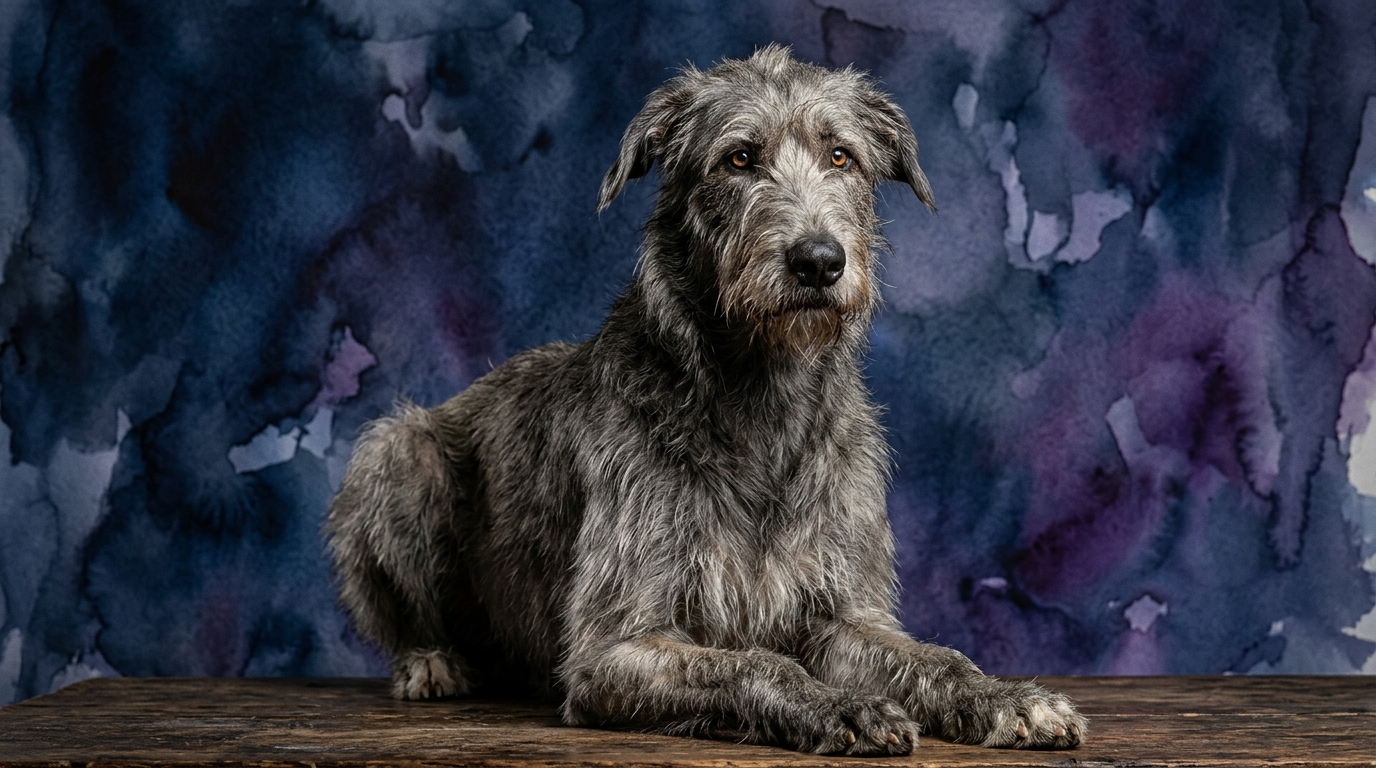
Side-by-Side IQ Profile: English Setter vs. Irish Wolfhound
The English Setter, a member of the Sporting Group and ranked #37 by Coren for working and obedience intelligence, presents a clear cognitive profile. This breed demonstrates a notable aptitude for problem Solving (4/5), indicating a capacity to navigate complex situations and figure out novel solutions, often linked to their historical role in bird hunting where independent decision-making was crucial. Their training Speed (4/5) is equally impressive, allowing them to grasp new commands and routines with relative swiftness, a hallmark of breeds valued for intricate fieldwork. Social Intelligence (3/5) suggests a moderate ability to interpret human cues and interact appropriately with their environment, while their instinctive Drive (3/5) is clearly present, channeling their bird-finding and pointing instincts in a controlled manner. A strong memory (4/5) supports their ability to retain complex sequences of commands and learned behaviors over time, reinforcing their reliability in the field.
The majestic Irish Wolfhound, belonging to the Hound Group and not Coren-ranked, presents a different cognitive profile. Their problem Solving (3/5) is competent, though perhaps less inclined towards intricate, multi-step solutions compared to the Setter, often preferring more direct approaches. Training Speed (3/5) indicates they will learn, but may require more consistent repetition and patience than some other breeds, reflecting a more independent hound mentality. Their social Intelligence (3/5) mirrors the Setter, suggesting a balanced ability to interact and understand their human companions without being overly dependent or aloof. The instinctive Drive (3/5) in the Wolfhound is profoundly tied to their sighthound heritage, focusing on pursuit and observation, a drive that, while present, is typically expressed with a calm dignity in a domestic setting. Their memory (3/5) is solid, allowing them to recall routines and established commands, though perhaps not with the same rapid recall or long-term retention of detailed sequences as a Setter.
Where the English Setter Wins Cognitively
The English Setter's cognitive strengths distinctly outpace the Irish Wolfhound in areas demanding rapid assimilation of new information and complex problem-solving. Their problem Solving (4/5) score highlights a superior ability to analyze novel situations and devise effective strategies, whether it's navigating an agility course or figuring out how to retrieve a toy from a tricky spot. This is further bolstered by their impressive training Speed (4/5), allowing them to quickly connect actions with consequences and master new commands efficiently. Unlike the Wolfhound, the Setter's Coren rank of #37 specifically acknowledges their capacity for working obedience, reflecting a strong desire and aptitude for understanding and executing human directives. This manifests in their ability to learn intricate multi-step tasks and adapt quickly to changing training scenarios. Furthermore, their superior memory (4/5) ensures that learned behaviors, once established, are retained with remarkable consistency, making them highly reliable in performing complex routines over extended periods.
Where the Irish Wolfhound Wins Cognitively
While the Irish Wolfhound might not exhibit the same quick-wittedness in formal obedience or complex problem-solving as the English Setter, their cognitive strengths lie in a different domain, rooted in their ancient purpose. Their instinctive Drive (3/5), though numerically similar to the Setter, manifests as a specialized focus on observation and pursuit, demanding a unique blend of patience, discernment, and independent judgment. This isn't about retrieving a bird, but about assessing and reacting to movement over vast distances, a cognitive task requiring sustained focus and an inherent understanding of their environment. While their training Speed (3/5) is moderate, it reflects a thoughtful processing style rather than a deficit; they ponder before acting, leading to a deeper, more ingrained understanding once a concept is grasped. Their equal social Intelligence (3/5), combined with their imposing presence, allows them to convey a quiet confidence and form deep, discerning bonds, often exhibiting a profound understanding of their family's emotional states without needing constant verbal cues. They excel in roles demanding stoic presence and independent decision-making in specific, historical contexts, rather than rapid-fire obedience.
Which Is Easier to Train and Why
Based on their respective IQ profiles, the English Setter is unequivocally easier to train for a wide range of tasks, particularly those involving obedience, dog sports, or intricate commands. Their training Speed (4/5) means they pick up new cues and behaviors with fewer repetitions, making training sessions more efficient and rewarding. This is coupled with their strong memory (4/5), ensuring that once a command is learned, it sticks, reducing the need for constant re-teaching. Furthermore, their Coren ranking as #37 among breeds for working and obedience intelligence signifies a natural inclination to cooperate and respond to human direction. For example, a Setter can often learn a complex retrieve pattern or an agility sequence in a fraction of the time it would take an Irish Wolfhound. The Wolfhound's training Speed (3/5) and memory (3/5), while adequate, mean that owners must approach training with greater patience and consistency. Their independent hound nature means they might ponder commands or prioritize their own observations over immediate compliance, requiring more motivation and understanding of their unique thought process. Teaching an Irish Wolfhound a new trick might involve dozens more repetitions and more creative reinforcement strategies compared to a Setter.
Suited for Active vs. Relaxed Owners
The English Setter is an ideal companion for active owners who relish engaging their dogs in a variety of physical and mental pursuits. Their high scores in problem Solving (4/5) and training Speed (4/5) mean they thrive on structured activities like obedience trials, agility, field work, or even complex trick training. Owners who enjoy long hikes, running, or participating in dog sports will find a Setter to be an eager and capable partner, requiring consistent mental stimulation to prevent boredom. Their inherent drive and learning capacity mean they enjoy having a 'job' to do and excel when given opportunities to utilize their cognitive abilities. In contrast, the Irish Wolfhound, while requiring regular exercise appropriate for their giant size, is generally better suited for more relaxed owners who appreciate a calm, dignified presence. While they enjoy bursts of activity in a secure area, their instinctive Drive (3/5) is less about constant work and more about focused observation and occasional, powerful sprints. Owners who value a serene companion for quiet evenings, gentle walks, and a majestic presence in the home, but are also prepared for the physical demands of a giant breed, will find a Wolfhound to be a fulfilling match. They do not require the same intensity of mental 'work' as a Setter, thriving instead on a stable routine and affectionate companionship.
The Verdict
Choose an English Setter if: You are an active owner eager to participate in dog sports, advanced obedience, or field work, and you appreciate a dog that learns quickly, retains commands, and enjoys consistent mental challenges.
Choose an Irish Wolfhound if: You seek a calm, majestic companion, are prepared for the unique needs of a giant breed, and value a dog with a thoughtful, independent nature that thrives on routine and deep companionship rather than constant formal training.
🧠 Find Your Pet's IQ Score
Our Pet IQ Lab assessment covers 25+ tests across 5 cognitive dimensions — personalized to your breed.
Take the Full IQ Test →Frequently Asked Questions
Does the Coren rank mean the English Setter is definitively 'smarter' than the Irish Wolfhound?
The Coren rank primarily assesses a breed's working and obedience intelligence, reflecting their ability to learn and execute human commands quickly. While the English Setter's #37 rank signifies a strong aptitude in this area, the Irish Wolfhound's lack of ranking doesn't imply a lack of cognitive capacity, but rather a different kind of intelligence, perhaps more focused on independent thought and specialized instinctive behaviors not measured by Coren's criteria. Both breeds possess distinct cognitive strengths.
How does 'social intelligence' impact daily life for these breeds with similar scores?
A 3/5 social intelligence score for both breeds suggests they are moderately adept at reading human cues and interacting appropriately within their family. For the English Setter, this often translates to being responsive and engaged with their owners, eager to please within a training context. For the Irish Wolfhound, it means forming deep, affectionate bonds and being attuned to family dynamics, though perhaps expressing their understanding with a quiet dignity rather than overt enthusiasm, and they may be less inclined to follow every command if they deem it unnecessary.
What specific activities would best engage the 'problem solving' differences?
For the English Setter, activities like puzzle toys requiring manipulation, advanced scent work that demands tracking and decision-making, or complex agility courses with novel obstacles would highlight their 4/5 problem-solving ability. For the Irish Wolfhound, their 3/5 problem-solving might be better engaged by activities like exploring new, safe environments where they can observe and navigate at their own pace, or tasks that involve assessing a situation and making an independent judgment, rather than quickly executing a pre-programmed sequence.