
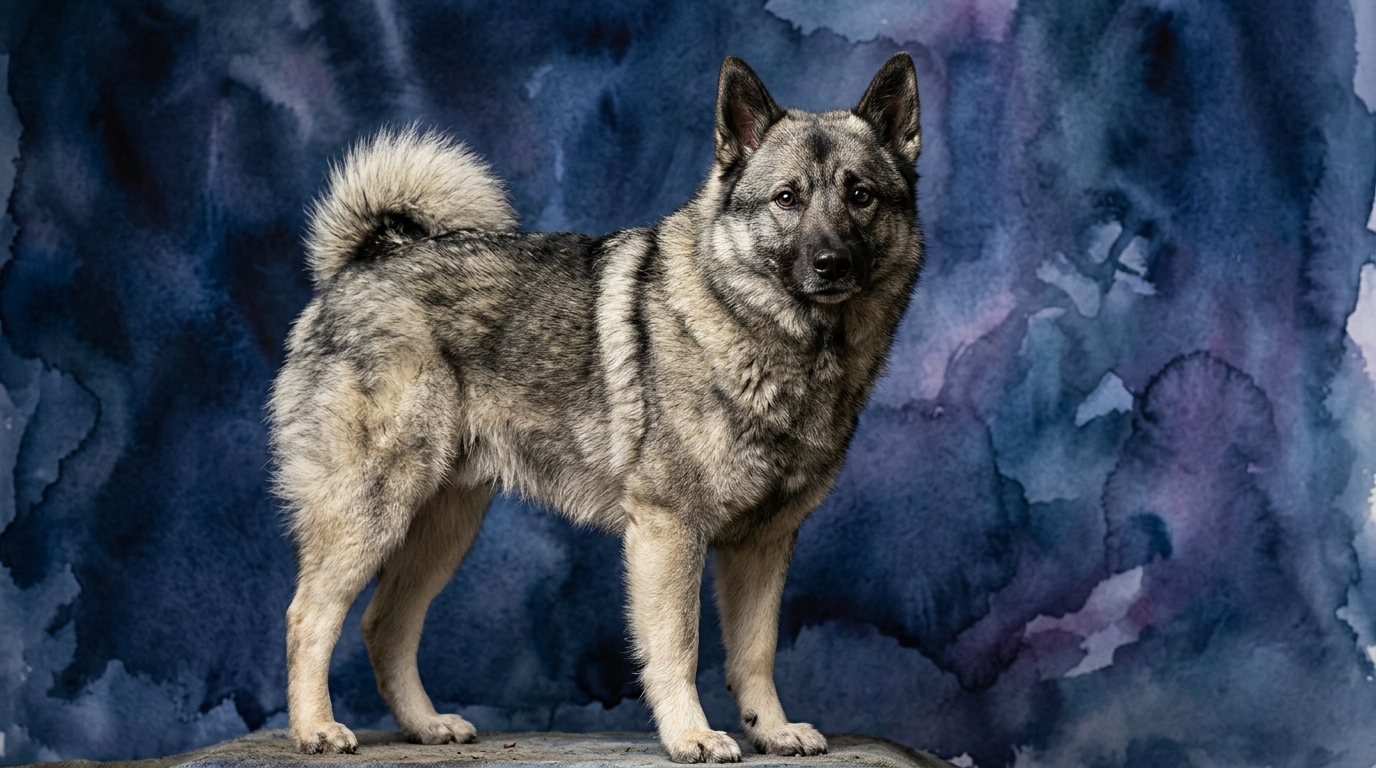
Side-by-Side IQ Profile: English Setter vs. Norwegian Elkhound
At first glance, the English Setter and the Norwegian Elkhound present near-identical cognitive scores according to The Cosmic Pet Pet IQ Lab, a testament to their robust mental faculties. Both breeds score 4/5 in Problem Solving, 4/5 in Training Speed, 3/5 in Social Intelligence, 3/5 in Instinctive Drive, and 4/5 in Memory. However, these scores are general aptitudes, and their expression is profoundly shaped by each breed's historical purpose and inherent temperament.
For **Problem Solving (4/5)**, the English Setter's acumen often shines in field strategy, like locating concealed game or understanding complex handler signals to flush birds, demonstrating a sophisticated understanding of a shared objective. The Norwegian Elkhound's problem-solving manifests in its ability to independently track elusive prey over varied terrain, making quick decisions to overcome obstacles or outmaneuver an animal.
Regarding **Training Speed (4/5)**, English Setters typically grasp new commands and routines quickly, especially when training taps into their desire for partnership and natural pointing instincts. Norwegian Elkhounds also pick up tasks efficiently, particularly those related to scent work or navigating trails, though their independent spirit might require consistent motivation to maintain focus on human-directed tasks.
In **Social Intelligence (3/5)**, English Setters are generally attuned to human moods and enjoy cooperative interactions, making them responsive companions in a family setting. Norwegian Elkhounds, while affectionate with their families, often display a more reserved social demeanor, capable of independent work and less overtly driven by social approval from strangers.
Their **Instinctive Drive (3/5)** for the English Setter is rooted in its bird-dog heritage, manifesting as a keen desire to scent, point, and retrieve with graceful precision. The Norwegian Elkhound's drive is tied to its ancient purpose as a hunter of large game, exhibiting a powerful urge to track, bay, and hold quarry, demanding outlets for this inherent roaming and vocalization.
Finally, for **Memory (4/5)**, English Setters retain complex sequences of commands and handler cues, crucial for coordinated field work, and remember specific locations where game was found. Norwegian Elkhounds demonstrate strong spatial memory for territories and hunting grounds, alongside an impressive ability to recall specific scent trails, vital for their independent tracking roles.
Where the English Setter's Cognition Excels
While their core cognitive metrics align, the English Setter's intellectual strengths distinctly shine in collaborative environments, particularly those involving nuanced communication and partnership. Their 4/5 Problem Solving is often expressed through anticipating a hunter's next move or strategizing how to flush birds from dense cover while staying within range, demonstrating a sophisticated understanding of a shared objective. This cooperative intelligence is further underscored by their 4/5 Training Speed, which allows them to absorb complex multi-step commands and hand signals with an eagerness to please that fosters a deep working bond. The English Setter's 3/5 Social Intelligence, while not the highest, is primarily directed towards their human companions, making them exceptionally responsive to subtle cues and emotional states, vital for their role as close working partners in the field. This specific application of their cognitive abilities means they excel in situations demanding synchronized effort and fine-tuned human direction.
Where the Norwegian Elkhound's Cognition Excels
The Norwegian Elkhound, with its equally robust cognitive scores, showcases its intellectual prowess through a different lens: self-reliance and environmental mastery. Their 4/5 Problem Solving capacity is particularly evident in their ability to independently navigate challenging landscapes, make strategic decisions to corner or bay large game, and persist through adverse conditions, often far from direct human guidance. This breed’s 4/5 Training Speed, while effective, often benefits from methods that acknowledge their independent nature, excelling at tasks requiring initiative and determination rather than strict adherence to repetitive drills. The Elkhound's 3/5 Social Intelligence supports their ability to operate autonomously, making decisions based on their keen instincts and environmental observations rather than constant deference to human input. Their 3/5 Instinctive Drive translates into an unwavering focus on scent and trail, a cognitive strength that allows them to process vast amounts of olfactory information and maintain a persistent pursuit, showcasing a deep, specialized intelligence for their hunting heritage.
Training Dynamics: English Setter vs. Norwegian Elkhound
Despite both breeds scoring 4/5 in Training Speed, the practical experience of training an English Setter versus a Norwegian Elkhound can differ significantly due to their inherent temperamental and motivational profiles. The English Setter's strong desire to please and its ingrained cooperative nature, stemming from centuries of working alongside hunters, often makes them more amenable to conventional obedience training. They thrive on positive reinforcement and respond well to consistent, gentle guidance, eager to form a partnership. Their inclination to stay within handler range and their responsiveness to commands make them relatively straightforward to teach complex sequences, especially when training harnesses their natural bird-dog instincts.
In contrast, the Norwegian Elkhound's independent spirit and deeply ingrained hunting drive can present different training challenges. While they learn quickly, their focus might be more directed towards their environment and intriguing scents rather than human directives. Training an Elkhound often requires immense patience, creativity, and a solid understanding of their hound nature. Recall, for instance, can be a persistent challenge if an enticing scent overrides their attention to a human command. They respond best to training that respects their intelligence and drive, often excelling in scent work or agility, but may require more consistent and engaging motivation to master general obedience in distracting environments. Therefore, while both are capable learners, the English Setter generally proves easier for the average owner to train in everyday obedience due to its inherent cooperative disposition.
Activity Levels: Matching Breed to Lifestyle
Both the English Setter and the Norwegian Elkhound are breeds with significant energy and a need for mental stimulation, making them generally unsuitable for truly 'relaxed' or sedentary owners. However, their activity needs manifest differently. An English Setter thrives with active owners who enjoy long walks, runs, or engaging in canine sports like agility, obedience, or field trials. Their stamina is considerable, and they benefit from consistent exercise that allows them to stretch their legs and engage their keen senses. They are excellent companions for hikers or joggers who appreciate a dog that stays close and is responsive to commands. Their need for activity is often balanced with a desire for companionship and comfort indoors.
The Norwegian Elkhound, on the other hand, demands an owner who is not only active but also understands and can manage a dog with a powerful, independent drive. They require extensive physical exercise, often preferring to explore and track. Owners who enjoy rugged outdoor adventures, long-distance hiking, or even skijoring will find a willing partner in an Elkhound. Their stamina is legendary, bred to traverse vast northern landscapes. They are less prone to being 'lap dogs' after exercise, often content to rest independently, but their mental stimulation needs are equally high, requiring outlets for their tracking and problem-solving instincts. Therefore, while both demand active lifestyles, the English Setter suits owners seeking a highly engaged, cooperative partner for their activities, whereas the Norwegian Elkhound is better suited for owners who can facilitate independent exploration and robust, self-directed exercise.
The Verdict
Choose an English Setter if you seek a highly cooperative, responsive companion for outdoor activities and a dog eager to engage in joint learning endeavors, thriving on partnership and nuanced communication.
Opt for a Norwegian Elkhound if you are an experienced, active owner who appreciates an independent, resilient dog capable of self-directed problem-solving and vigorous outdoor exploration, understanding their inherent drive for tracking.
🧠 Find Your Pet's IQ Score
Our Pet IQ Lab assessment covers 25+ tests across 5 cognitive dimensions — personalized to your breed.
Take the Full IQ Test →Frequently Asked Questions
Do English Setters and Norwegian Elkhounds get along with other pets?
English Setters are generally amiable and can coexist peacefully with other pets, especially if socialized early; their hunting drive is typically bird-specific. Norwegian Elkhounds, while often tolerant, possess a stronger prey drive towards smaller animals and may require careful introductions and supervision with non-canine pets.
Are these breeds good with children?
Both breeds can be good family dogs with proper socialization and training. English Setters are typically gentle and patient, enjoying interaction with respectful children. Norwegian Elkhounds are loyal and protective but may be more reserved with boisterous play, requiring supervision with very young children.
What kind of grooming do English Setters and Norwegian Elkhounds need?
English Setters require regular grooming, including brushing several times a week to prevent mats in their long feathering, and occasional trims. Norwegian Elkhounds have a dense double coat needing weekly brushing to manage shedding, particularly during seasonal blows, but their coat is generally easier to maintain than a Setter's longer hair.