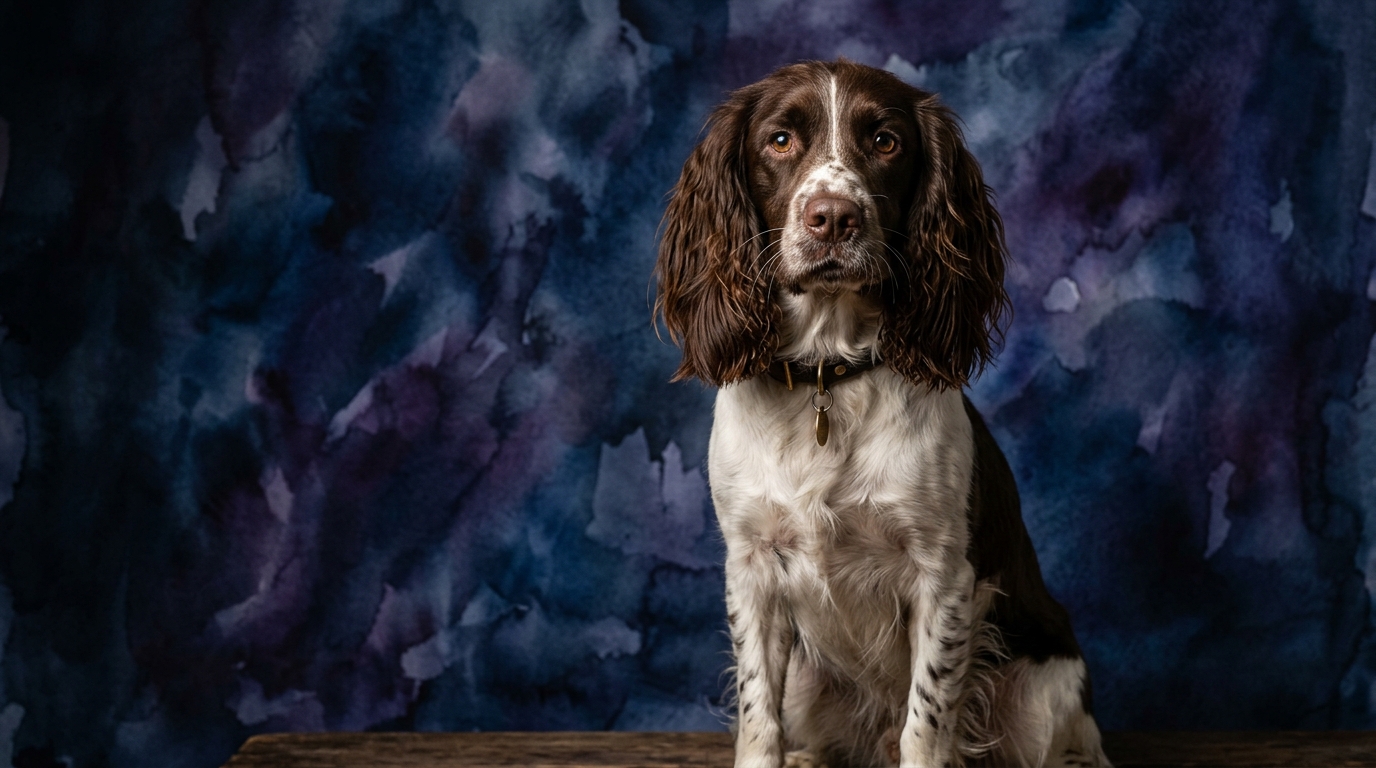
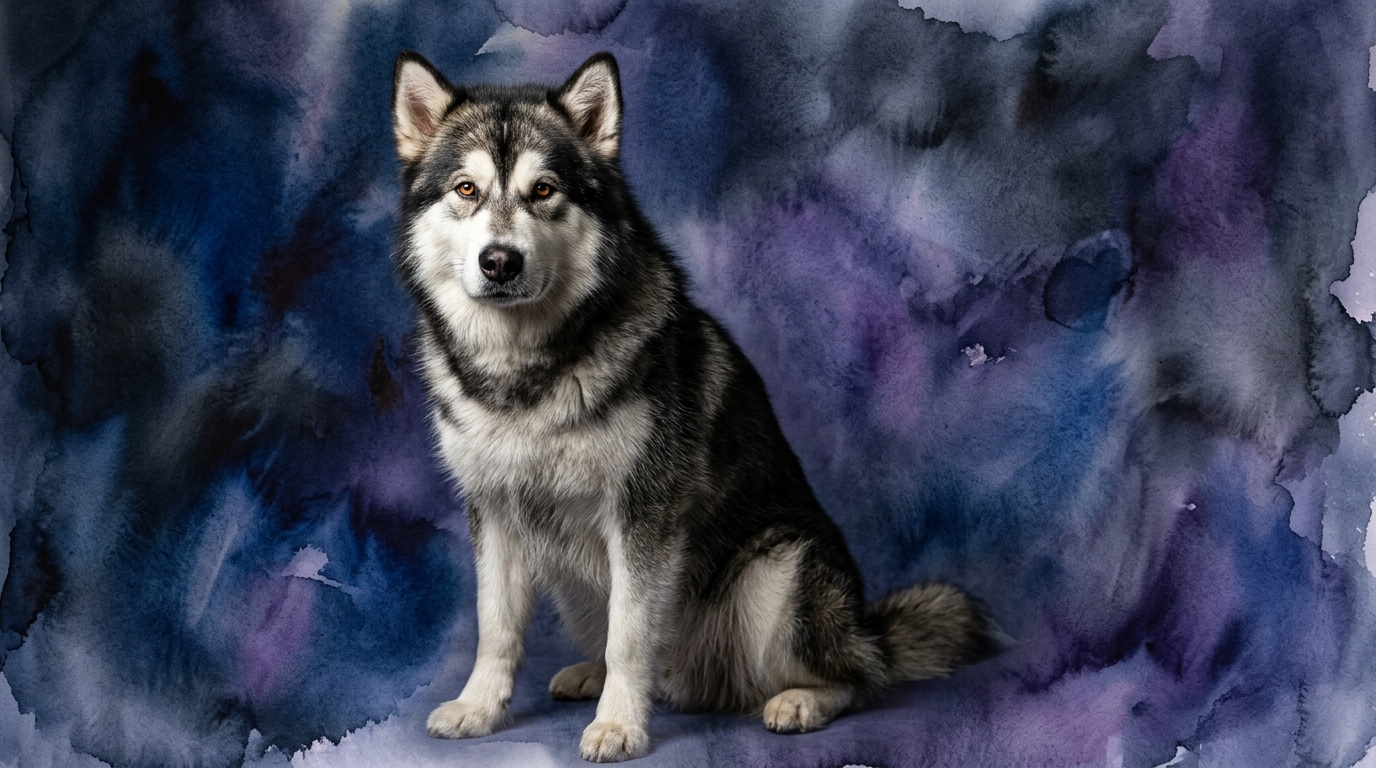
Side-by-Side IQ Profile: English Springer Spaniel vs. Alaskan Malamute
The Cosmic Pet Pet IQ Lab provides a nuanced lens through which to compare the English Springer Spaniel (Coren rank #13) and the Alaskan Malamute (Coren rank #50). The Springer Spaniel, a sporting breed, exhibits a Problem Solving score of 4/5, indicating a strong capacity for figuring out novel situations, often employing learned strategies to achieve goals, particularly those involving retrieval or scent work. Their Training Speed is an exceptional 5/5, reflecting their quick grasp of new commands and routines, driven by a keen desire to cooperate and a focused attention span. Social Intelligence is rated 4/5, demonstrating their attunement to human cues, while their Instinctive Drive is a powerful 5/5 for retrieving and tracking. Finally, their Memory is solid at 4/5, aiding consistent performance over time.
In contrast, the Alaskan Malamute, a working breed, shares a Problem Solving score of 4/5, though it manifests uniquely in navigating environments and overcoming physical obstacles with ingenuity, often for self-determined objectives. Their Training Speed is a more moderate 2/5, indicating a slower learning pace due to an independent nature and a tendency to prioritize their own motivations. Social Intelligence stands at 3/5; they understand human social structures but may exhibit a more reserved or selective responsiveness. Like the Springer, their Instinctive Drive is a commanding 5/5, geared towards endurance, pulling, and pack dynamics, translating into a powerful desire for purposeful physical exertion. Their Memory also scores 4/5, showing good retention of information, even if applying that knowledge is sometimes self-directed.
Where the English Springer Spaniel Wins Cognitively
The English Springer Spaniel's cognitive strengths distinctly shine in areas requiring rapid assimilation of information and cooperative partnership. Their remarkable Training Speed of 5/5 is a significant advantage, meaning they pick up new commands and complex sequences with impressive alacrity. This isn't just about speed; it reflects a mental agility and eagerness to engage in structured learning that makes them highly adaptable to diverse tasks, from advanced obedience to intricate scent detection work. Furthermore, their Social Intelligence, rated 4/5, allows them to finely interpret human intentions and emotions, fostering a strong, responsive bond that underpins their cooperative nature.
This cognitive profile makes them exceptional candidates for roles demanding precise execution and immediate compliance, such as competitive dog sports or service work where anticipating human needs is paramount. They excel in environments where the human-canine team functions as a single, synchronized unit, leveraging their innate desire to please and their focused attention. Their ability to quickly learn and consistently apply complex sequences of commands is a testament to their cognitive efficiency in a partnership context.
Where the Alaskan Malamute Wins Cognitively
While the Alaskan Malamute's cognitive profile emphasizes a different kind of brilliance, their strengths are equally compelling within their specialized domain. Their Problem Solving ability, also rated 4/5, manifests uniquely; it's often applied to navigating challenging physical environments and overcoming obstacles with a self-reliant ingenuity. This isn't about solving puzzles for human approval but about independently strategizing to achieve a goal, whether it's finding a way around a barrier or determining the most efficient path in a vast, complex landscape. This robust, independent problem-solving is a distinct cognitive advantage in specific contexts where self-reliance is valued.
Their Instinctive Drive, a powerful 5/5, is intrinsically linked to their cognitive abilities, fueling an unparalleled endurance and tenacity that allows them to persist through demanding tasks. This drive is not merely physical; it's a mental fortitude that enables them to maintain focus and motivation over long periods, often in harsh conditions, making them masters of sustained effort and robust outdoor work. Their memory, also 4/5, serves this independent problem-solving well, allowing them to recall successful strategies and navigate familiar territories with efficiency and confidence, even without constant human direction.
Which is Easier to Train and Why
Between these two breeds, the English Springer Spaniel is unequivocally easier to train, primarily due to their stellar Training Speed (5/5) and innate desire to cooperate. Springers possess an inherent 'biddability'—a strong inclination to work alongside their human companions and readily accept direction. This stems from centuries of selective breeding for close partnership in hunting, where quick responses to commands were critical. They typically exhibit a longer attention span during training sessions and are highly motivated by praise and positive reinforcement, making the learning process a collaborative and rewarding experience.
In contrast, the Alaskan Malamute, with a Training Speed of 2/5, presents a more significant training challenge. Their intelligence is undeniable, but it's coupled with a profound independence and a strong sense of self-preservation, stemming from their heritage as powerful sled dogs who often had to make decisions autonomously in life-or-death situations. Malamutes are thinkers who often question the 'why' behind a command, and if they perceive no immediate benefit or if their own instincts conflict, they may choose to ignore directives. This isn't a lack of understanding but rather a difference in motivation and willingness to comply, requiring trainers to be exceptionally patient, consistent, and creative in making training rewarding and relevant to the Malamute's strong intrinsic drives.
Suitability for Active vs. Relaxed Owners
For owners seeking an active, highly engaged partner for structured activities, the English Springer Spaniel is an ideal match. Their high Instinctive Drive (5/5) for work and their rapid Training Speed (5/5) mean they thrive on consistent mental and physical stimulation, excelling in dog sports like agility, flyball, or advanced obedience. They require owners who are prepared to channel their boundless energy and sharp minds into purposeful activities daily. A relaxed owner who cannot provide this level of engagement may find a Springer becomes restless or develops unwanted behaviors due to unfulfilled cognitive and physical needs.
The Alaskan Malamute also requires an active owner, but of a different kind. While their Instinctive Drive (5/5) is immense, geared towards endurance and pulling, their independent nature means they are less suited for owners who desire constant, precise obedience or highly structured, fast-paced activities. Malamutes need owners who appreciate long, robust outdoor adventures, such as hiking, sledding, or skijoring, where their stamina and problem-solving skills in natural environments can truly shine. A Malamute might not be the dog for a casual stroll around the block; they need purposeful, sustained exercise. Relaxed owners, or those seeking a dog content with minimal, low-impact activity, would find the Malamute's substantial energy and need for mental engagement overwhelming, potentially leading to destructive behaviors or escape attempts driven by boredom and unspent energy. Their independence also means they might not be constantly 'checking in' with their owner during activities, requiring a different style of engagement.
The Verdict
Choose the English Springer Spaniel if you seek a highly trainable, eager-to-please companion for structured activities, dog sports, or a close working partnership, valuing rapid learning and strong social engagement.
Opt for the Alaskan Malamute if you are an experienced owner prepared for an independent, robust companion for endurance activities and appreciate a dog that thinks for itself, thriving on physical challenges and self-directed problem-solving.
🧠 Find Your Pet's IQ Score
Our Pet IQ Lab assessment covers 25+ tests across 5 cognitive dimensions — personalized to your breed.
Take the Full IQ Test →Frequently Asked Questions
Do Alaskan Malamutes understand commands as well as English Springer Spaniels?
While both breeds possess good Problem Solving (4/5) and Memory (4/5), the Malamute's independent nature means they often choose whether to comply, even if they understand the command, unlike the Springer's eager-to-please disposition.
Which breed is better for a first-time dog owner?
The English Springer Spaniel is generally more suitable for a first-time owner due to their higher Training Speed and strong desire to cooperate, making the training process more forgiving and rewarding. The Malamute's strong will and independence can be challenging for inexperienced handlers.
How do their instinctive drives differ in application?
Both have a 5/5 Instinctive Drive, but the Springer's is channeled towards cooperative hunting tasks like flushing and retrieving, while the Malamute's drive focuses on endurance, pulling, and sustained effort in harsh conditions, often with a more self-directed approach.