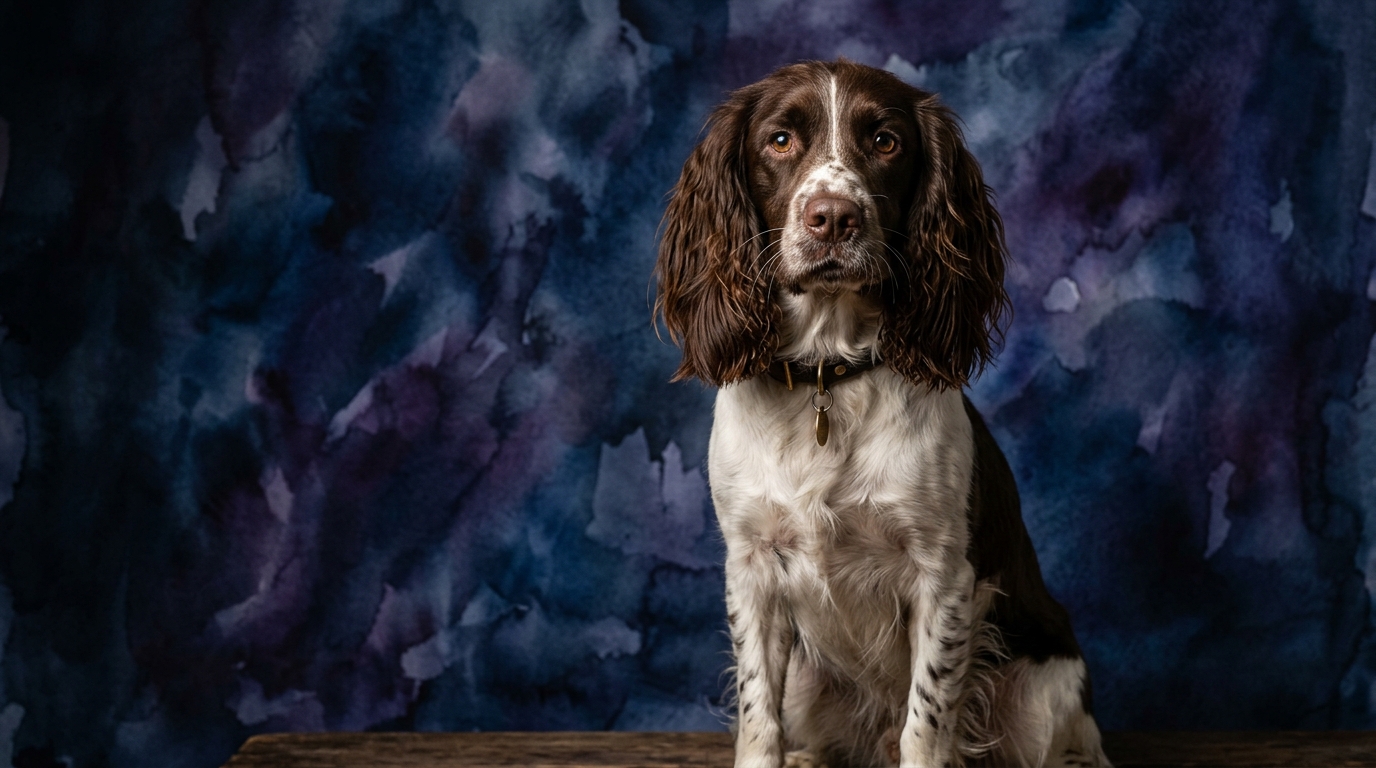
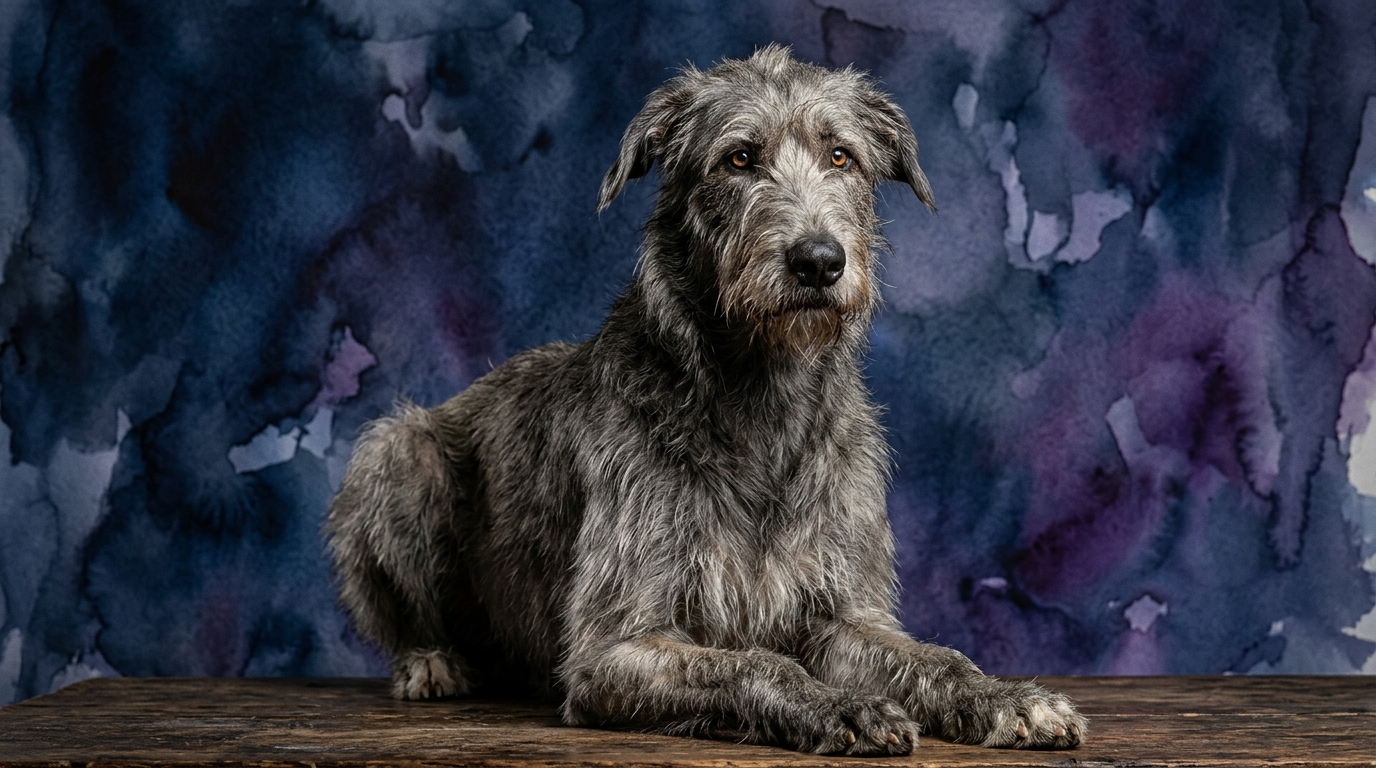
Side-by-Side IQ Profile: Springer vs. Wolfhound
The English Springer Spaniel, a Sporting group dog with a Coren rank of #13, presents a cognitive profile geared towards active collaboration and rapid task execution. Their Problem Solving is rated 4/5, indicating an adeptness at deciphering new challenges and finding effective solutions. Training Speed stands at an impressive 5/5, reflecting their exceptional ability to learn and retain commands quickly. Social Intelligence is strong at 4/5, showing a fine-tuned awareness of human emotions and social dynamics. An Instinctive Drive of 5/5 highlights their profound motivation for work and task completion, a hallmark of their retrieving heritage. Finally, their Memory is solid at 4/5, ensuring consistent recall of learned behaviors and routines.
In contrast, the Irish Wolfhound, a Hound group dog not listed on the Coren ranking, possesses a more independent and contemplative cognitive style. Their Problem Solving is 3/5, suggesting a thoughtful, perhaps less urgent, approach to novel situations. Training Speed is also 3/5, indicating a moderate pace of learning that requires consistent, patient guidance. Social Intelligence is rated 3/5, reflecting a deep but often subtle connection with their human companions. Their Instinctive Drive, also 3/5, is characteristic of a sighthound, primarily focused on visual pursuit rather than sustained collaborative tasks. Memory stands at 3/5, meaning they retain information adequately for essential commands and routines, but perhaps not with the same breadth as their Springer counterpart.
Where the English Springer Spaniel Wins Cognitively
The English Springer Spaniel's cognitive strengths shine brightly in scenarios demanding rapid learning and active participation. Their 4/5 problem-solving score means they are quick to connect actions with outcomes, whether it's navigating an agility course or figuring out how to retrieve a toy from an awkward spot. This breed's training speed of 5/5 is particularly striking; they absorb new commands and complex sequences with a remarkable alacrity, often eager to please and requiring fewer repetitions than many other breeds. This makes them exceptionally adaptable to various dog sports and working roles. Furthermore, their instinctive drive, also rated 5/5, is a powerful engine for sustained engagement in tasks, propelling them through training sessions and field work with unwavering focus. This drive isn't just about chasing; it's about the deep satisfaction derived from completing a task, making them highly motivated partners in structured activities. Their social intelligence, at 4/5, allows them to finely tune into human cues, anticipating needs and responding with an almost intuitive understanding, making them highly communicative companions in a family setting.
Where the Irish Wolfhound Wins Cognitively
While the Irish Wolfhound's IQ scores might appear lower across the board, their cognitive profile reflects a different kind of intelligence, one that values deliberation and independent thought over rapid compliance. Their problem-solving at 3/5 suggests a more considered approach to novel situations; rather than immediately jumping into action, they might observe and process before deciding on a course. This can manifest as a calm assessment of their surroundings, rather than a frantic attempt to 'solve' a perceived puzzle. Their social intelligence, rated 3/5, is characterized by a deep, quiet affection and sensitivity to their family's emotional states, often expressed through gentle presence rather than exuberant displays. They form profound bonds and possess a remarkable capacity for empathy, making them incredibly comforting companions. Their instinctive drive, also 3/5, is primarily a sighthound's drive – a powerful, focused burst of pursuit when a visual stimulus triggers it, rather than a sustained drive for collaborative tasks. This independent streak means they are not simply waiting for commands but often making their own observations and decisions, which, while challenging for some training methods, speaks to a unique self-reliance.
Which is Easier to Train and Why
When considering ease of training, the English Springer Spaniel (Training Speed 5/5) presents a significantly more straightforward path than the Irish Wolfhound (Training Speed 3/5). The Springer's intrinsic eagerness to please, coupled with their strong instinctive drive for task completion, means they are often highly motivated by positive reinforcement and respond swiftly to commands. Their remarkable memory aids in retention, allowing them to build a vast repertoire of learned behaviors with fewer repetitions. For instance, a Springer might master a complex multi-step retrieve in a fraction of the time it would take an Irish Wolfhound. Their high social intelligence also makes them highly receptive to human direction, often seeking guidance.
The Wolfhound, conversely, often requires more patience and creative motivation. Their independent sighthound nature means they might ponder a command before executing it, or prioritize an interesting scent or visual stimulus over immediate compliance. While they are certainly capable of learning, their training success hinges more on the handler's ability to engage their thoughtful nature and maintain consistency, rather than relying on an innate drive for rapid obedience. Their learning style is less about speed and more about understanding why a command is relevant, making them less prone to 'mindless' repetition. This requires a trainer who appreciates their independent spirit and can make learning a cooperative, rather than a strictly command-driven, experience.
Which Suits Active Owners vs. Relaxed Owners
For owners who lead an active lifestyle and seek a canine partner for engaging activities, the English Springer Spaniel is an excellent match. Their high instinctive drive (5/5) and problem-solving abilities (4/5) make them ideal for dog sports like agility, obedience, flyball, or field trials. They thrive on having a 'job' and require consistent mental and physical stimulation to prevent boredom. An owner who enjoys daily long walks, runs, or structured training sessions will find the Springer an enthusiastic and tireless companion. Their strong memory and social intelligence also mean they adapt well to varied environments and new learning experiences, making them versatile partners for an adventurous owner.
Conversely, the Irish Wolfhound is better suited for more relaxed owners who appreciate a calm, gentle giant. While they certainly enjoy a good stretch and a moderate daily walk, their energy profile is generally lower, and their instinctive drive (3/5) is less about sustained collaborative work and more about bursts of speed or quiet companionship. They don't demand constant mental stimulation in the same way a Springer does, preferring to observe and be a comforting presence. Owners who value a serene home environment and are content with a thoughtful, less intensely demanding companion will find the Irish Wolfhound a perfect fit, understanding that their exercise needs are more about gentle activity than high-impact sports. Their social intelligence, while not overtly demonstrative, allows for deep, quiet bonds that enrich a peaceful home.
The Verdict
Choose the English Springer Spaniel if you seek a highly trainable, energetic partner eager for varied activities and consistent mental engagement, thriving on a shared sense of purpose and quick learning. They are ideal for active individuals or families who can provide ample structured exercise and mental challenges.
Opt for the Irish Wolfhound if you desire a calm, empathetic companion who offers quiet companionship and possesses a thoughtful, independent spirit, requiring patience in training but rewarding with deep, subtle affection. They suit owners who appreciate a gentle giant and a more relaxed pace of life.
🧠 Find Your Pet's IQ Score
Our Pet IQ Lab assessment covers 25+ tests across 5 cognitive dimensions — personalized to your breed.
Take the Full IQ Test →Frequently Asked Questions
Is the Irish Wolfhound difficult to train?
While the Irish Wolfhound isn't 'difficult,' their training speed (3/5) means they require more patience and consistent methods than many breeds. Their independent nature often necessitates understanding their motivations rather than relying solely on repetition, making positive reinforcement crucial for success.
How much mental stimulation does an English Springer Spaniel need daily?
An English Springer Spaniel, with its high problem-solving and instinctive drive, requires significant daily mental stimulation. This can include training sessions, puzzle toys, scent work, or engaging in dog sports for at least 30-60 minutes, in addition to vigorous physical exercise, to keep them content.
Can an Irish Wolfhound live in an apartment?
Despite their immense size, an Irish Wolfhound can adapt to apartment living if provided with sufficient daily exercise, typically moderate walks. Their generally calm indoor demeanor and lower sustained energy requirements mean they can be content in smaller spaces, provided their physical and social needs are met outdoors.