
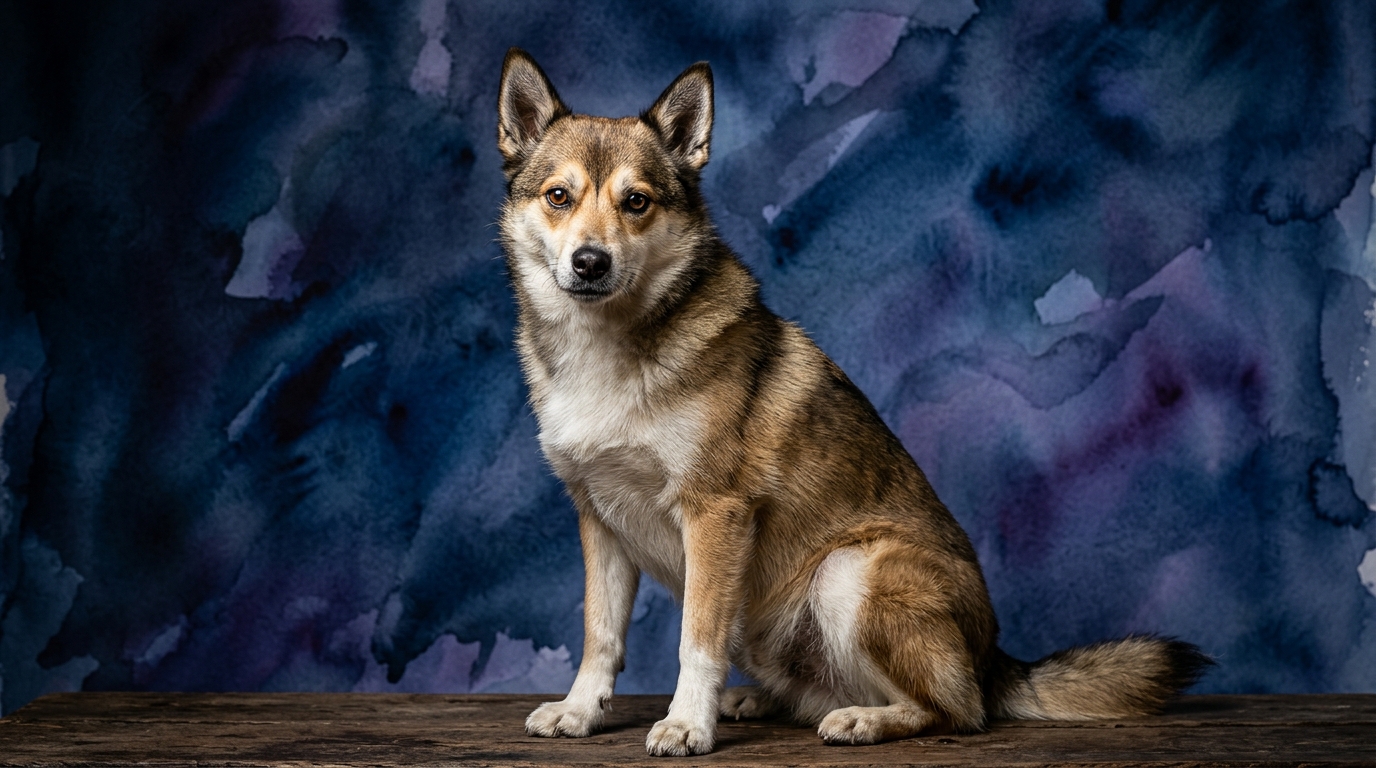
Side-by-side IQ profile
The English Toy Spaniel, a charming member of the Toy group, exhibits a moderate Problem Solving ability (3/5), often directed towards navigating their domestic environment to find comfort or human interaction. Their Training Speed (3/5) is steady, responding well to gentle, consistent positive reinforcement, eager to please their beloved people. Social Intelligence (3/5) in this breed is attuned to the emotional landscape of their immediate family, allowing them to understand subtle shifts in mood and respond with affectionate presence. Their Instinctive Drive (3/5) is moderate, primarily expressed as a desire for companionship and a soft curiosity, rather than strong prey pursuits. A solid Memory (3/5) allows them to retain routines, familiar faces, and learned commands, contributing to their consistent and comforting presence.
The Norwegian Lundehund, a unique Non-Sporting breed, also scores 3/5 across all cognitive dimensions, but their application is distinct. Their Problem Solving (3/5) is uniquely adapted to their historical role, exhibiting a moderate capacity to overcome physical obstacles like navigating tight spaces, reflecting their puffin-hunting heritage. Training Speed (3/5) is moderate, but their independent nature demands patience and creativity, as they excel when tasks align with their natural curiosity. Social Intelligence (3/5) manifests as an understanding of pack dynamics and personal space; they are loyal but can be reserved with strangers, reading social cues carefully. Their Instinctive Drive (3/5) is heavily influenced by their ancestral role, leading to a strong desire to explore, climb, and investigate. Lundehunds possess a reliable Memory (3/5) for learned routes, significant experiences, and trusted individuals, aiding their exploration and independent decision-making.
Where English Toy Spaniel wins cognitively
The English Toy Spaniel demonstrates a subtle advantage in applying its problem-solving and social intelligence within a deeply domestic, companion-focused context. While both breeds score 3/5, the Spaniel's cognitive efforts are more consistently directed towards understanding and integrating into human family life. Their ability to subtly interpret human emotional states and adapt their behavior to maintain harmony within a quiet home environment often appears more intuitive than the Lundehund's more independent social approach. This nuanced application of their 3/5 social intelligence makes them particularly adept at anticipating and responding to their owner's needs for comfort and closeness.
Where Norwegian Lundehund wins cognitively
The Norwegian Lundehund shows a distinct cognitive edge in practical, physically oriented problem-solving and the application of instinctive drives related to navigation and exploration. Although rated 3/5 for problem-solving, their historical role as puffin hunters has refined their ability to assess and overcome spatial challenges, such as squeezing through narrow gaps or climbing unconventional surfaces. This translates into a more robust and persistent approach to environmental puzzles compared to the English Toy Spaniel, whose problem-solving is generally less physically demanding. Their 3/5 instinctive drive is channeled into a persistent curiosity and a remarkable physical agility that reflects a unique form of applied cognition.
Which is easier to train and why
When considering ease of training, the English Toy Spaniel generally presents a smoother experience due to their innate desire to please and their consistent focus on human companionship. Their 3/5 training speed is coupled with a personality that thrives on positive interaction and a clear reward system, making them more pliable and less prone to independent diversions. They are typically motivated by praise and affection, aiming to maintain a harmonious relationship with their owner. In contrast, the Norwegian Lundehund, while also rated 3/5 for training speed, possesses a deeply ingrained independence and a strong exploratory drive. Their training often requires more creativity and patience, as they are less likely to perform a task simply to please; instead, they need to see the inherent value or reward in the activity, or for it to align with their natural curiosity. Their historical role demanded self-reliance, which sometimes translates into a “what's in it for me?” attitude during training sessions, making them more challenging for novice trainers who expect immediate compliance.
Which suits active owners vs relaxed owners
For relaxed owners seeking a devoted, calm presence, the English Toy Spaniel is often the more suitable choice. Their moderate instinctive drive and social intelligence are geared towards comfortable domesticity, enjoying gentle walks, lap time, and quiet companionship. They thrive in environments where their primary role is that of an affectionate family member, content with moderate daily activity and plenty of cuddles. Their cognitive energy is largely directed towards forming deep bonds and maintaining a peaceful home atmosphere. Conversely, the Norwegian Lundehund, with its equally rated but differently expressed instinctive drive and problem-solving, is better suited for active owners. These dogs possess a profound need for mental and physical engagement, often enjoying activities that challenge their agility, climbing abilities, and keen sense of exploration. Owners who enjoy hiking, puzzle toys, or even dog sports like agility will find the Lundehund’s unique cognitive makeup and physical prowess a rewarding match, as they require an outlet for their inherent curiosity and desire to investigate their surroundings.
The Verdict
Opt for the English Toy Spaniel if you desire a devoted, gentle companion whose cognitive strengths are expressed through quiet affection and a strong bond within a calm, domestic setting. They excel at understanding subtle emotional cues and integrating seamlessly into a relaxed family life.
Select the Norwegian Lundehund if you are an active, patient owner who appreciates an independent spirit and a dog whose problem-solving and drives are geared towards exploration and physical challenges. They thrive with engagement that taps into their unique athleticism and curiosity.
🧠 Find Your Pet's IQ Score
Our Pet IQ Lab assessment covers 25+ tests across 5 cognitive dimensions — personalized to your breed.
Take the Full IQ Test →Frequently Asked Questions
Do both breeds learn new commands at the same rate?
While both are rated 3/5 for training speed, their motivations differ. The English Toy Spaniel often learns steadily out of a desire to please, whereas the Norwegian Lundehund's learning pace is influenced by its independent nature, requiring more creative and engaging methods.
How do their 3/5 problem-solving scores manifest differently in daily life?
The English Toy Spaniel's problem-solving often relates to navigating social situations or comfort within the home, like finding the best napping spot. The Norwegian Lundehund, however, applies its 3/5 score to physical challenges, such as figuring out how to climb or squeeze into tight spaces, reflecting its unique heritage.
Is one breed more prone to separation anxiety given their social intelligence scores?
Both breeds have a 3/5 social intelligence, meaning they are capable of forming bonds. The English Toy Spaniel, being more companion-focused, might show distress if left alone for extended periods, while the more independent Norwegian Lundehund might cope better, provided its physical and mental needs are met before solitude.