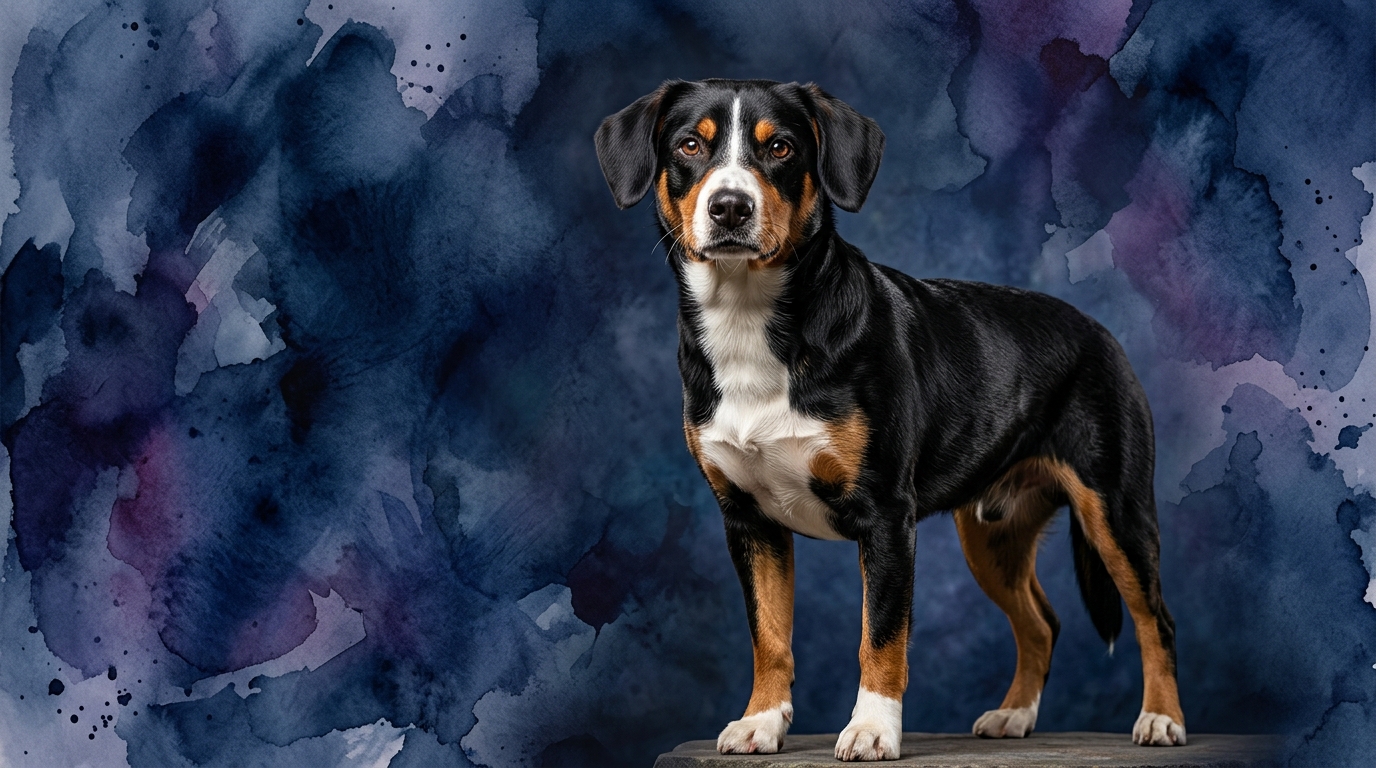
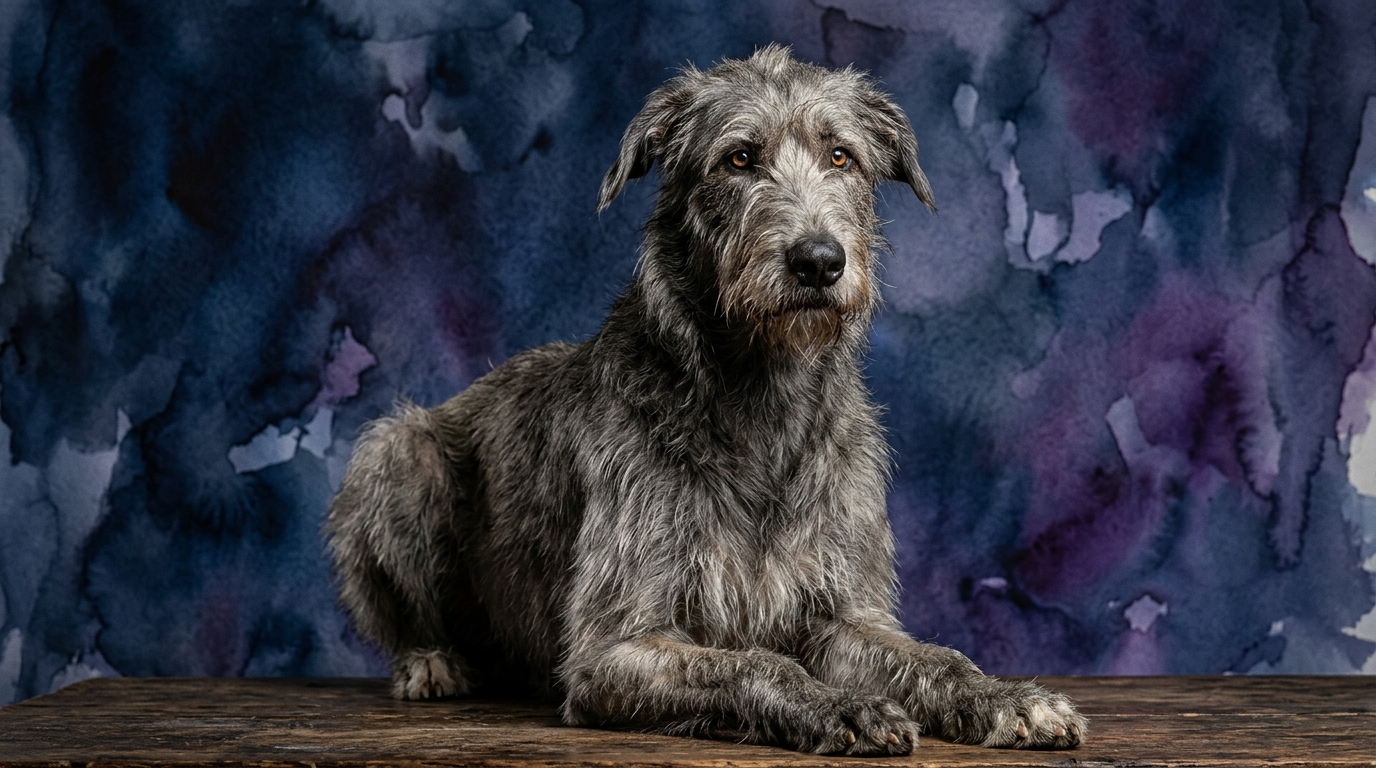
Side-by-Side IQ Profile: Shared Scores, Distinct Manifestations
Our Pet IQ Lab assigns both the Entlebucher Mountain Dog and the Irish Wolfhound a 3/5 rating across all five cognitive dimensions. This identical scoring doesn't suggest a lack of individual character, but rather invites a closer look at how these moderate capacities are expressed through the lens of each breed's unique heritage and purpose.
Problem Solving (3/5): Both breeds demonstrate a moderate capacity for navigating novel challenges. The Entlebucher's problem-solving often manifests in practical, task-oriented scenarios, such as figuring out how to direct livestock or solve puzzle toys that require sequential actions. Their approach leans towards finding solutions that maintain order or achieve a specific goal. The Irish Wolfhound, conversely, applies its problem-solving to more independent pursuits, such as strategizing how to track a scent or navigating varied terrain during a long exploration. Their solutions might appear less structured but are effective for their more self-directed activities.
Training Speed (3/5): A 3/5 rating indicates a moderate pace of learning new commands and routines for both breeds. For the Entlebucher, this speed is often facilitated by their inherent desire to collaborate and their historical role as a working dog, making them generally receptive to structured instruction. They tend to absorb commands steadily when consistently reinforced. The Irish Wolfhound also learns at a moderate pace, but their sighthound heritage means their focus can be more easily diverted by environmental stimuli. While capable of learning, their independent spirit may require more patient, engaging, and reward-based methods to maintain their attention and commitment to training tasks.
Social Intelligence (3/5): Both breeds exhibit a moderate understanding of social cues, whether from humans or other animals. The Entlebucher's social intelligence often revolves around interpreting handler intentions and maintaining harmonious working relationships within a family unit or with other working animals. They are generally adept at reading moods and responding appropriately to social dynamics. The Irish Wolfhound’s social understanding, while also moderate, tends to manifest in a more gentle and observant manner. They are typically sensitive to their human companions' emotions and interact peacefully with other creatures, often displaying a quiet empathy rather than overt responsiveness.
Instinctive Drive (3/5): Both breeds possess a moderate expression of their innate, breed-specific drives. The Entlebucher's 3/5 instinctive drive is strongly rooted in their herding background, manifesting as a propensity to gather, control movement, and be watchful. This drive, while present, is typically manageable and can be channeled effectively into appropriate activities or sports. The Irish Wolfhound's 3/5 instinctive drive is characterized by their sighthound heritage, primarily involving a moderate impulse to chase moving objects and an enduring stamina for long-distance observation and pursuit. This drive is often expressed in bursts of energy followed by periods of calm, making it distinct from the continuous watchfulness of a herding breed.
Memory (3/5): A 3/5 memory score signifies that both breeds retain learned information and experiences at a moderate level. The Entlebucher generally remembers commands, routines, and social interactions consistently, which aids in their working capacity and integration into a family's daily life. They tend to recall boundaries and expectations effectively. The Irish Wolfhound also demonstrates a moderate memory, remembering past training, familiar people, and their established environment. Their memory serves them well in recalling the layout of their home range and the comfort of their trusted companions, though they might not always apply past lessons with the same consistent zeal as a task-oriented breed.
Where the Entlebucher Mountain Dog Wins Cognitively
Despite identical scores, the Entlebucher's cognitive strengths shine in areas demanding cooperative effort and structured task completion. Their 3/5 problem-solving often appears more directed and purposeful when working alongside a human, excelling at tasks requiring sequential steps or strategic movement, like navigating an agility course or learning complex scent discrimination. This breed’s social intelligence, while rated 3/5, often manifests as a keen attentiveness to handler cues, making them particularly adept at understanding subtle body language and vocal inflections. This nuanced social awareness, combined with their moderate training speed, means they can quickly form a strong working partnership, anticipating instructions and adapting their behavior to meet expectations. Their instinctive drive, focused on herding, translates into a cognitive advantage in activities that simulate their original purpose, allowing them to apply their moderate problem-solving skills to managing and organizing, whether it's a flock of sheep or a group of children in a controlled environment.
Where the Irish Wolfhound Wins Cognitively
The Irish Wolfhound, while scoring identically, showcases cognitive strengths rooted in independence and observational prowess. Their 3/5 problem-solving often excels in situations requiring self-reliance and keen sensory input, such as successfully tracking a distant object or navigating a complex outdoor environment without constant human direction. This breed's moderate instinctive drive for pursuit means their cognitive focus can be incredibly sharp when a visual stimulus triggers their sighthound instincts, allowing them to process environmental data and make rapid, independent decisions. Their social intelligence, also rated 3/5, often manifests as a deep, quiet empathy and observational learning. They are excellent at discerning the emotional state of their human companions and can learn complex routines simply by watching, sometimes requiring less direct instruction than a more handler-dependent breed. This subtle observational learning, combined with their moderate memory, allows them to adapt to household rhythms and social nuances with remarkable, albeit understated, cognitive grace.
Which is Easier to Train and Why
Both breeds are rated 3/5 for Training Speed, but their inherent behavioral predispositions dictate very different training experiences. The Entlebucher Mountain Dog typically proves easier to train for obedience and complex tasks. Their herding background instills a natural inclination to work cooperatively with a handler, seeking direction and deriving satisfaction from completing a job. While their 3/5 training speed is moderate, their strong desire to please and their consistent focus on the task at hand mean they absorb commands steadily and reliably, especially with positive reinforcement. They thrive on consistency and clear communication, making them responsive to structured training environments.
In contrast, the Irish Wolfhound, despite the same 3/5 training speed score, can present more challenges in conventional obedience training due to their sighthound nature. They possess a strong independent streak and are acutely sensitive to environmental distractions, particularly moving objects that trigger their instinctive drive. Their motivation is often internally driven rather than solely focused on pleasing a handler. This means training requires immense patience, creativity, and highly rewarding incentives to capture and maintain their attention. While they are capable of learning, their independence means they often weigh whether a command is truly worth their effort, rather than simply complying. Therefore, while both learn at a moderate pace, the Entlebucher's inherent cooperativeness makes the training journey generally smoother and more predictable for most owners.
Which Suits Active Owners vs. Relaxed Owners
The Entlebucher Mountain Dog is undoubtedly better suited for active owners. Their herding heritage means they possess a moderate instinctive drive for activity and purpose, requiring significant mental and physical engagement daily. Owners who enjoy hiking, dog sports like agility or obedience, or even just consistent, structured walks will find the Entlebucher a willing and enthusiastic companion. Their 3/5 problem-solving and training speed mean they thrive when given tasks and opportunities to use their minds, making them less suitable for purely relaxed, sedentary lifestyles where their energy and cognitive needs might go unmet, potentially leading to boredom-induced behaviors.
The Irish Wolfhound, despite its imposing size, can be surprisingly suitable for more relaxed owners, provided their exercise needs are met in specific ways. While they require consistent, moderate exercise—such as brisk walks or opportunities to gallop in a secure area—they are not typically "busy" dogs who demand constant interaction or structured tasks throughout the day. Their moderate instinctive drive for pursuit is often satisfied with a good run, after which they are content to lounge calmly indoors. Their social intelligence often manifests as a quiet, observant presence, making them excellent companions for owners who appreciate a gentle, low-key presence once their exercise requirements are fulfilled. They adapt well to a relaxed household rhythm, enjoying comfortable spots and the quiet company of their family, making them less demanding in terms of continuous mental engagement than the Entlebucher.
The Verdict
Choose the Entlebucher Mountain Dog if you are an active owner seeking a cooperative, task-oriented partner for sports, structured activities, and consistent engagement, valuing their moderate but directed problem-solving and social attentiveness.
Choose the Irish Wolfhound if you appreciate a gentle giant who offers quiet companionship, thrives with independent exploration and bursts of exercise, and whose moderate intelligence manifests in observant empathy and self-sufficiency after their physical needs are met.
🧠 Find Your Pet's IQ Score
Our Pet IQ Lab assessment covers 25+ tests across 5 cognitive dimensions — personalized to your breed.
Take the Full IQ Test →Frequently Asked Questions
Do Entlebucher Mountain Dogs need a job to be happy?
While not strictly requiring a formal "job," Entlebuchers, with their moderate instinctive drive and problem-solving, thrive on purpose. Engaging them in activities like obedience, agility, or even complex puzzle toys helps channel their herding instincts and keeps their moderate intelligence stimulated, contributing significantly to their overall well-being.
Are Irish Wolfhounds difficult to train because of their independence?
Irish Wolfhounds, with their 3/5 training speed and independent sighthound nature, can be more challenging for novice trainers than more biddable breeds. Success hinges on patience, consistency, and highly motivating rewards, as their moderate problem-solving often involves evaluating whether compliance is personally advantageous, rather than simply seeking to please.
How do these breeds handle living with children or other pets?
Both breeds, with their 3/5 social intelligence, can integrate well into families. Entlebuchers are often watchful and protective, generally good with respectful children and other pets when properly socialized. Irish Wolfhounds are typically gentle and tolerant giants, often displaying a patient, quiet demeanor with children and other animals, though their size always warrants supervision.