Side-by-Side Cognitive Profiles
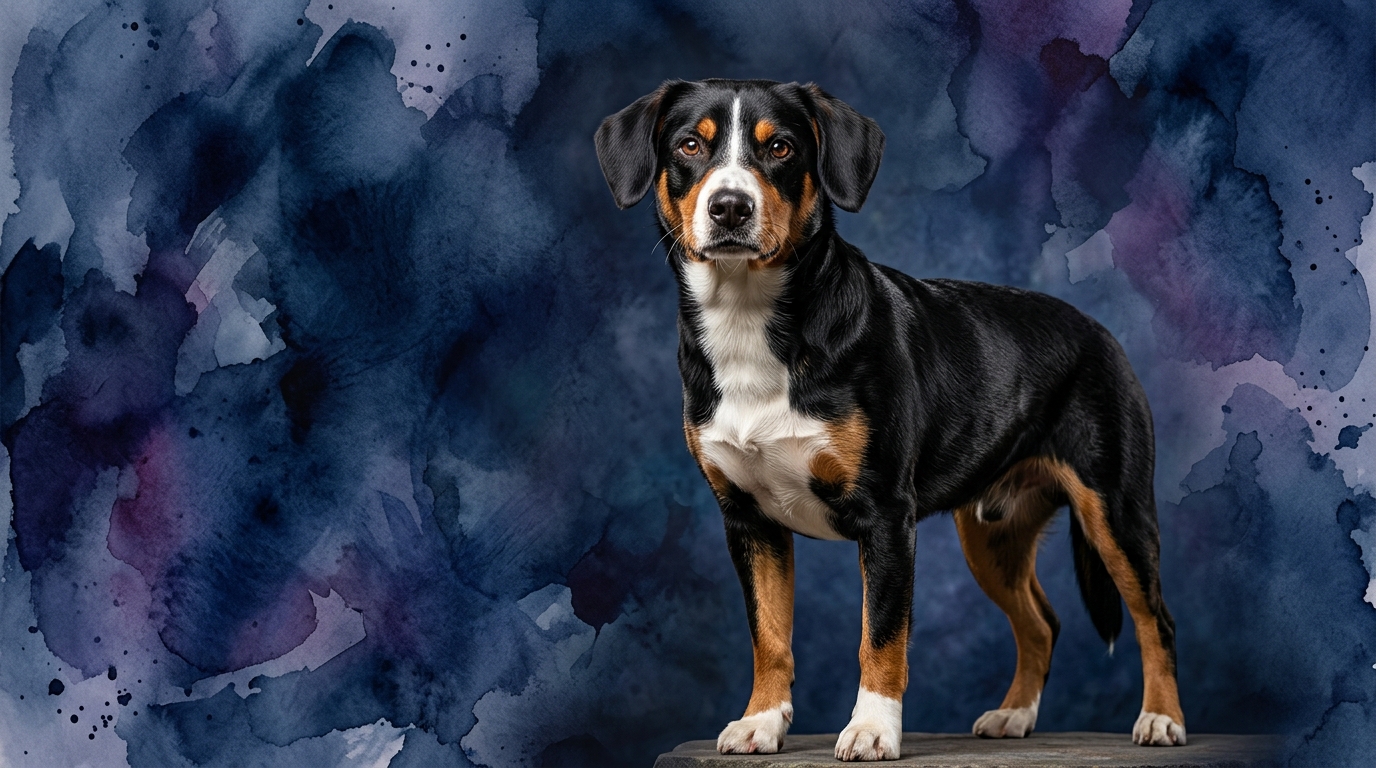
The Entlebucher Mountain Dog, a robust Swiss herding breed, demonstrates a cognitive profile geared towards consistent, purposeful work within a structured environment. Their Problem Solving is rated at 3/5, indicating a capacity to navigate complex situations, particularly those within established routines, though they might be less inclined to spontaneous innovation. They tend to apply learned solutions methodically rather than exploring entirely novel approaches. Training Speed is also 3/5; they absorb new commands steadily, thriving on clear, consistent instruction, and benefit from repetition to solidify their understanding. Their Social Intelligence, at 3/5, highlights their deep attunement to their immediate family and handler, making them responsive to known cues, though they can be reserved with unfamiliar people or situations. An Instinctive Drive of 3/5 is strongly tied to their herding origins, manifesting as a desire to organize and control movement, which can be channeled into various structured activities. Finally, their Memory, also 3/5, ensures that once a behavior or routine is mastered, it is reliably retained, making them dependable partners in established tasks.
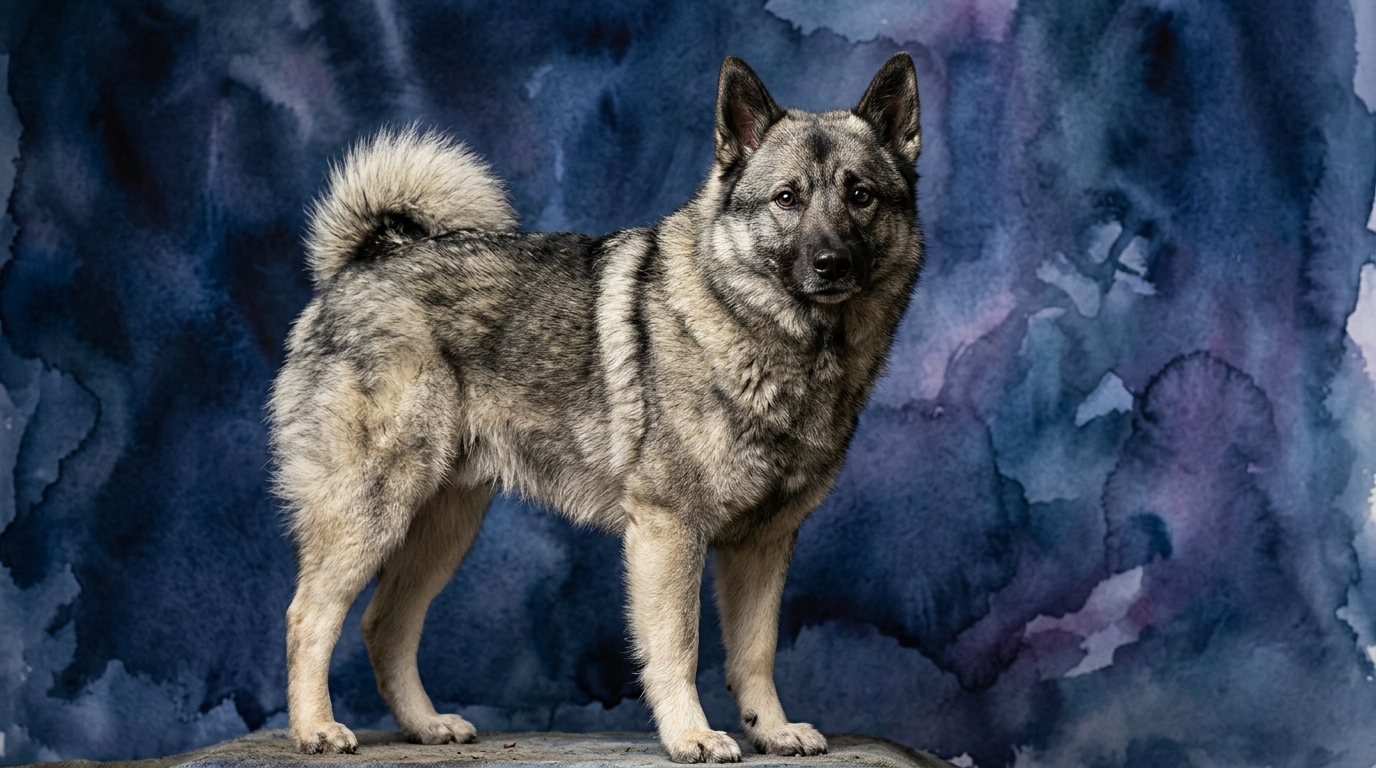
The Norwegian Elkhound, a resilient Nordic hound, exhibits a cognitive makeup optimized for independent problem-solving and efficient learning in challenging environments. With a Problem Solving score of 4/5, this breed demonstrates a more inventive and adaptive mind, capable of devising new strategies when faced with novel obstacles, a crucial trait for tracking prey autonomously. Their Training Speed, also 4/5, means they grasp new concepts and commands relatively quickly, often requiring fewer repetitions to achieve understanding compared to many breeds. Social Intelligence is rated 3/5, reflecting a loyalty to their family and an understanding of pack dynamics, yet balanced with a strong sense of independence characteristic of hounds. Their Instinctive Drive, at 3/5, is powerfully rooted in scenting and tracking, a persistent focus that directs much of their cognitive effort. Complementing this is a robust Memory score of 4/5, allowing them to recall complex scent trails, learned routes, and commands with impressive accuracy over time, essential for their historical hunting role.
Where the Entlebucher Mountain Dog Excels Cognitively
The Entlebucher's cognitive strengths often manifest in their methodical application of learned patterns and their focused dedication to a task. While their problem-solving score is 3/5 compared to the Elkhound's 4/5, the Entlebucher excels in tasks requiring consistent, predictable execution once the method is understood. For instance, in complex agility courses or obedience routines where the sequence is fixed, their steady learning speed (3/5) ensures reliable performance after sufficient practice. Their herding background imbues them with a nuanced understanding of spatial relationships and movement control, allowing them to anticipate and direct livestock with precision, a form of practical cognition that might not always be captured by abstract problem-solving tests. This breed's social intelligence (3/5) is deeply rooted in loyalty and a desire to work alongside their handler, making them particularly adept at discerning and responding to the subtle cues of their primary human companion, fostering a deep, collaborative bond in working contexts. They might not be as quick to innovate as an Elkhound, but their unwavering adherence to established procedures and their commitment to their handler's direction give them an edge in roles requiring steadfastness and cooperative focus within a defined framework.
Where the Norwegian Elkhound Excels Cognitively
The Norwegian Elkhound demonstrates a clear cognitive advantage in areas demanding independent thought and rapid adaptation, reflected in their 4/5 scores for problem-solving, training speed, and memory. Their historical role as a hunting companion, often working out of sight of their human, necessitated a capacity for autonomous decision-making and ingenuity. When faced with an unexpected obstacle on a trail or a novel puzzle, an Elkhound is more likely to experiment with different solutions until a successful outcome is achieved, rather than relying solely on previously taught methods. This inventive streak extends to their learning process; they often grasp new concepts with fewer repetitions, indicating a more efficient cognitive processing speed. Furthermore, their superior memory (4/5) is crucial for retaining vast amounts of sensory information, such as intricate scent trails over long distances and extended periods, making them exceptional at recall and pattern recognition in environmental contexts. While their social intelligence matches the Entlebucher at 3/5, the Elkhound's independent nature means their social understanding is often leveraged for self-directed actions that benefit the hunt, rather than solely for cooperative tasks. This breed's mental agility allows them to quickly process information and adjust strategies, giving them an edge in dynamic, unpredictable environments.
Training Dynamics: Which is Easier and Why
Based purely on the IQ metrics, the Norwegian Elkhound, with its 4/5 scores in training speed and problem-solving, would generally be considered quicker to train than the Entlebucher Mountain Dog, which scores 3/5 in both categories. The Elkhound’s propensity to grasp new commands with fewer repetitions and its more inventive approach to novel situations means that an owner might see faster progress in basic obedience and trick training. However, 'easier' is a nuanced term. The Elkhound's independent nature, a hallmark of many hound breeds, means that while they learn quickly, they might also choose to apply their knowledge selectively, especially if a more compelling scent or activity presents itself. Their strong instinctive drive (3/5) for tracking can make off-leash reliability a significant challenge without consistent, high-value motivation and extensive proofing. Their independence can translate into a perception of stubbornness if training isn't engaging.
The Entlebucher, while learning at a more moderate pace (3/5 training speed), often exhibits a stronger desire to please and a more cooperative temperament rooted in their herding heritage. Once a behavior is learned, they tend to perform it with a steadier, more predictable consistency. Their social intelligence, while also 3/5, is geared towards closer partnership, making them highly responsive to their handler's cues in a working context. Therefore, while the Elkhound might pick up the *concept* of a command faster, the Entlebucher might be *more reliable* in executing that command in real-world scenarios due to their inherent biddability and focus on their handler, provided the training is thorough and consistent. For an owner seeking a dog that is consistently attentive and collaborative, the Entlebucher's training journey, though potentially longer in initial stages, might feel more straightforward and less prone to independent diversions in the long run.
Matching Breeds to Owner Lifestyles: Active vs. Relaxed
Both the Entlebucher Mountain Dog and the Norwegian Elkhound are breeds that thrive with active owners, though their ideal activities diverge based on their cognitive and physical predispositions. The Entlebucher, a compact but robust herding dog, requires regular physical exertion and mental engagement. Their problem-solving (3/5) and instinctive drive (3/5) are best satisfied through activities that tap into their herding roots, such as agility, obedience, rally, or even urban herding classes. They need a job to do, whether it's managing a flock or learning complex sequences, and without sufficient outlets, their energy and focus can manifest as restless or constructive chewing behaviors. Owners who enjoy structured activities, consistent training, and providing a clear purpose for their canine companion will find the Entlebucher a rewarding partner.
The Norwegian Elkhound, with its background as an independent hunting dog, also demands substantial activity. Their higher problem-solving (4/5) and memory (4/5) combined with a strong instinctive drive (3/5) for scent work mean they excel in activities like tracking, search and rescue, or long, exploratory hikes where they can engage their noses and make independent decisions. They possess significant stamina and require owners who can provide outlets for their boundless energy and investigative curiosity. While they enjoy companionship, their independence means they are less suited to being a constant shadow and more content with periods of self-directed exploration. Neither breed is well-suited for truly 'relaxed' owners who prefer minimal activity; both require a dedicated commitment to physical exercise and mental stimulation to prevent boredom and potential behavioral challenges. However, the Entlebucher might appeal more to owners seeking a highly cooperative partner in structured sports, while the Elkhound might better suit those who enjoy exploring nature and allowing their dog more freedom to follow their instincts.
The Verdict
Choose the Entlebucher Mountain Dog if you seek a highly cooperative partner for structured dog sports and value a methodical learner who forms a deep, responsive bond. Their consistent application of learned behaviors makes them a steadfast companion for dedicated trainers.
Opt for the Norwegian Elkhound if you appreciate a dog with independent problem-solving skills and a quick grasp of new concepts, particularly enjoying activities that engage their powerful scenting instincts and stamina. Their self-reliant nature suits owners who embrace a dog's inquisitive spirit.
🧠 Find Your Pet's IQ Score
Our Pet IQ Lab assessment covers 25+ tests across 5 cognitive dimensions — personalized to your breed.
Take the Full IQ Test →Frequently Asked Questions
Do Entlebucher Mountain Dogs and Norwegian Elkhounds get along with other pets?
Entlebuchers, with proper socialization, generally coexist well with other pets, though their herding instinct might prompt them to 'manage' smaller animals. Elkhounds can also be good with other pets, but their strong prey drive, especially towards small, fast-moving creatures, requires careful introductions and supervision.
Are Entlebucher Mountain Dogs or Norwegian Elkhounds good for first-time dog owners?
Neither breed is typically recommended for first-time dog owners due to their strong working drives and need for consistent, experienced guidance. Both require owners who understand their specific cognitive needs and can provide ample mental and physical stimulation to prevent behavioral issues.
How much exercise do Entlebucher Mountain Dogs and Norwegian Elkhounds need daily?
Both breeds require substantial daily exercise, typically an hour or more of vigorous activity, including walks, runs, or structured training sessions. Mental stimulation through puzzle toys and training is equally important to satisfy their active minds.