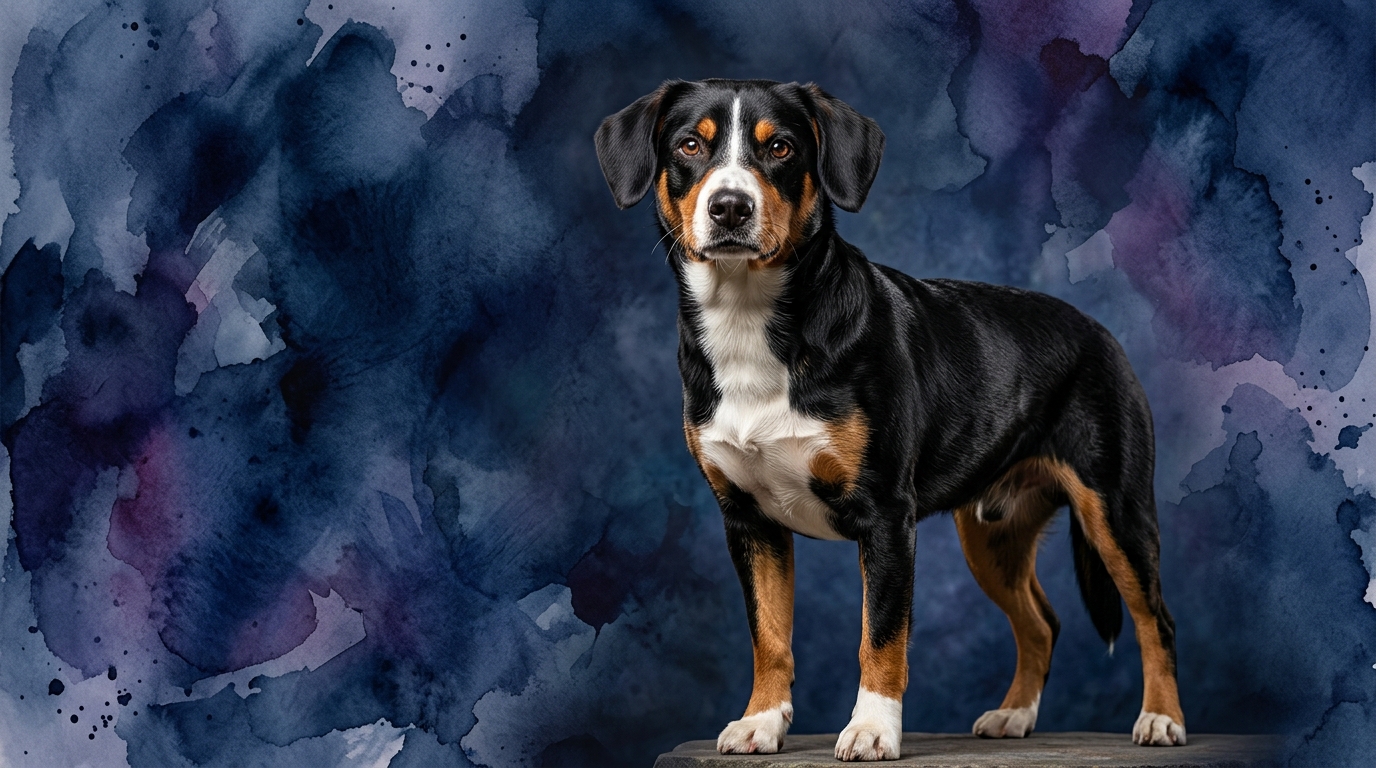
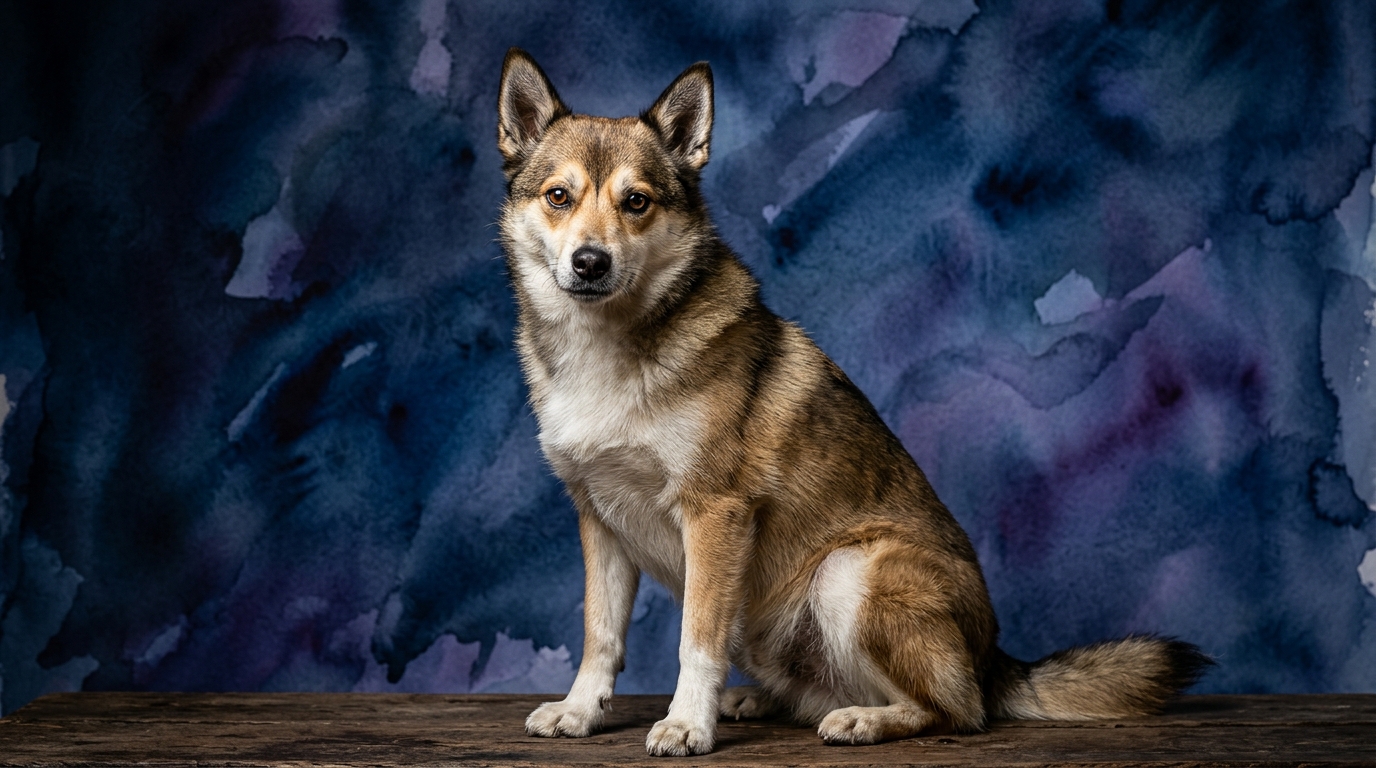
Side-by-Side IQ Profile: Unpacking Identical Scores
Despite their numerical parity, the Entlebucher Mountain Dog and Norwegian Lundehund exhibit their cognitive strengths in distinct ways, a reflection of their divergent evolutionary paths. Both breeds register a 3 out of 5 across Problem Solving, Training Speed, Social Intelligence, Instinctive Drive, and Memory. However, the *application* and *context* of these scores paint a picture of two uniquely capable canine minds.
For the Entlebucher, a 3/5 in problem-solving often translates to practical, real-world application in dynamic environments. Their historical role as cattle drivers required them to assess livestock movement, anticipate potential escape routes, and strategically guide animals with minimal human intervention. This problem-solving manifests as tactical thinking, adapting quickly to changing herd dynamics, and devising efficient paths for control.
The Lundehund's 3/5 in problem-solving is distinctly spatial and exploratory. Their ancestral task of hunting puffins in intricate cliff crevices demanded exceptional navigation skills, the ability to assess tight spaces, and to mentally map complex, three-dimensional environments. This involves unique physical adaptations, but cognitively, it means a profound aptitude for spatial reasoning, finding hidden passages, and overcoming physical obstacles through creative maneuvering.
A 3/5 training speed for an Entlebucher indicates a capable learner who, with consistent and clear methods, can master a variety of commands and complex tasks. Their inherent desire to work and please their handler, characteristic of many herding breeds, generally makes them receptive to instruction and eager to understand expectations. They absorb multi-step commands and routines effectively when motivated by collaboration.
The Lundehund also demonstrates a 3/5 training speed, but this often comes with a caveat of independence. While they are certainly capable of learning new behaviors and commands, their deeply ingrained self-reliance and historical need for autonomous decision-making can mean they require more creative motivational strategies. They learn quickly when engaged and when the task aligns with their natural curiosity or provides a perceived benefit to them.
An Entlebucher's 3/5 social intelligence is typically expressed through strong family bonds and an astute awareness of their human pack. They are often attuned to their handler's moods and intentions, a critical trait for cooperative herding work. While sometimes reserved with strangers, they excel at understanding social hierarchies within their own family unit and can be quite expressive in their interactions with trusted individuals.
The Lundehund's 3/5 social intelligence is marked by deep loyalty to their chosen family, often forming intense bonds with a few specific individuals. However, their historical isolation and independent hunting style mean they can be more aloof or wary of strangers. Their social understanding is less about broad group dynamics and more about selective, profound connections, often preferring to observe new people before engaging.
The Entlebucher's 3/5 instinctive drive is predominantly a strong herding impulse. This manifests as a desire to gather, direct, and control movement, whether it's livestock, children, or even other pets. This drive provides a powerful internal motivation for work and structured activity, making them thrive when given a “job” that channels this inherent energy.
For the Lundehund, a 3/5 instinctive drive is rooted in their ancestral hunting of puffins. This translates into a pronounced prey drive, a strong urge to explore, dig, and investigate. They are driven by curiosity and the thrill of discovery, often exhibiting behaviors like persistent searching, tunneling, and an intense focus on small, moving objects. This drive fuels their need for mental and physical engagement through exploration.
An Entlebucher's 3/5 memory is particularly effective for remembering routines, learned commands, and the spatial layout of their familiar territory, especially concerning livestock management. They can recall complex sequences of actions and past interactions, which aids in consistent performance and adapting to recurring situations.
The Lundehund's 3/5 memory shines in its capacity for spatial recall and remembering the success or failure of past exploratory endeavors. They can effectively map out complex environments, remember where they've “cached” items (or toys), and recall the most efficient routes through challenging terrains, a direct legacy of their puffin-hunting ancestry.
Where the Entlebucher Mountain Dog Wins Cognitively
Despite identical numerical scores, the Entlebucher Mountain Dog demonstrates a cognitive edge in areas requiring collaborative, directed work and dynamic management. Their problem-solving, while rated 3/5, is finely tuned for real-time adjustments in a fluid environment, such as anticipating the unpredictable movements of a herd and strategically positioning themselves to influence direction. This isn't just about finding a solution, but about managing an ongoing process with a clear objective. Their social intelligence, also 3/5, makes them particularly adept at reading human cues and working in tandem, translating into a greater capacity for understanding and responding to complex verbal and non-verbal commands during cooperative tasks.
This collaborative inclination means their memory (3/5) is optimized for retaining sequences of actions and handler expectations, making them exceptionally reliable in structured work roles where precision and consistency are paramount. Their instinctive drive (3/5) strongly supports this by providing a consistent motivation for engagement in tasks that involve control and direction. Essentially, their cognition is geared towards being a highly effective, responsive partner in directed activities, excelling at understanding and executing complex, multi-step instructions within a cooperative framework.
Where the Norwegian Lundehund Wins Cognitively
The Norwegian Lundehund, with its matching 3/5 scores, excels in areas demanding autonomous problem-solving and self-directed exploration. Their problem-solving skills, while numerically similar, are distinctly optimized for navigating intricate, unpredictable spatial environments, a direct inheritance from their puffin-hunting legacy. This involves a superior ability to mentally map complex terrains, assess physical constraints, and devise novel solutions to access confined spaces or overcome obstacles independently. Their unique physical adaptations, like extra toes and flexible joints, are intrinsically linked to this cognitive strength, allowing them to execute the solutions their minds devise.
Their instinctive drive (3/5) is a powerful engine for curiosity and persistent exploration, allowing them to engage deeply with their environment on their own terms, often discovering things others might miss. This independence also means their memory (3/5) is particularly strong for recalling complex routes, the locations of interesting scents or objects, and successful strategies for self-directed tasks, rather than primarily relying on human-given cues. Their social intelligence (3/5), while loyal, supports this independence by allowing them to function effectively without constant human oversight. Their cognitive strengths lie in their capacity for independent thought and resourceful navigation within their world, making them masters of self-directed discovery.
Which is Easier to Train and Why
When considering ease of training, the Entlebucher Mountain Dog generally presents a more straightforward experience. While both breeds score 3/5 in training speed, the Entlebucher's strong herding instinct translates into a fundamental desire to work with a human and respond to direction. They are inherently predisposed to forming a cooperative partnership, viewing the handler as a leader whose guidance is to be followed to achieve a shared goal. Their social intelligence, while equal in score, leans towards understanding and adhering to social structures within a human family, making them more receptive to consistent rules and commands.
The Norwegian Lundehund, despite its equal training speed score, can be more challenging due to its deeply ingrained independence and self-reliance. Their historical role required them to make autonomous decisions in the field, often far from human direction, which fosters a “what's in it for me?” attitude. While they are certainly capable of learning, their training requires more creativity, patience, and a deep understanding of their unique motivations. They might question commands, get distracted by their strong exploratory drive, or simply choose not to comply if a task doesn't immediately appeal to their instincts. Their 3/5 memory is excellent, but it's often applied to remembering their own successful strategies rather than solely human instructions. Therefore, while both learn, the Entlebucher's cooperative nature makes the process of training generally smoother and more predictable.
Which Suits Active Owners vs. Exploratory Owners
Neither the Entlebucher Mountain Dog nor the Norwegian Lundehund are suitable for truly relaxed owners, as both possess a 3/5 instinctive drive that demands significant physical and mental engagement. However, the type of activity they thrive on differs considerably, aligning them with either structured activity enthusiasts or those who appreciate independent exploration.
The Entlebucher Mountain Dog is an excellent match for active owners who enjoy structured activities and collaborative pursuits. Their herding drive and desire to work alongside their human make them ideal partners for dog sports like agility, obedience, rally, or even actual herding trials. They excel when given a “job” that channels their energy and problem-solving skills in a directed manner. Owners who enjoy long, vigorous hikes, consistent training sessions, and competitive mental challenges will find the Entlebucher a willing and engaged companion, thriving on the shared purpose and interaction.
The Norwegian Lundehund, while equally active, suits owners who appreciate and can accommodate a more independent and exploratory type of energy. Their strong prey drive and talent for spatial problem-solving mean they thrive on activities like scent work, puzzle toys, extensive off-leash exploration in secure areas, and opportunities to dig and investigate. They are excellent hiking partners, particularly in varied terrain, but their tendency to wander and follow scent trails means off-leash freedom requires careful consideration. Owners who understand and enjoy catering to a dog's intrinsic curiosity and unique physical capabilities, even if it means less direct collaboration, will find the Lundehund a captivating companion. Neither breed is content to be a couch potato, but their ideal forms of engagement vary significantly.
The Verdict
Choose the Entlebucher Mountain Dog when you seek a highly collaborative, energetic partner eager to engage in structured training and working activities, appreciating a dog whose intelligence is geared towards responsive partnership and dynamic management.
Choose the Norwegian Lundehund when you are drawn to an independent, curious, and resourceful companion who excels at autonomous problem-solving and exploration, valuing a dog whose unique physical and mental attributes make them a fascinating, self-directed adventurer.
🧠 Find Your Pet's IQ Score
Our Pet IQ Lab assessment covers 25+ tests across 5 cognitive dimensions — personalized to your breed.
Take the Full IQ Test →Frequently Asked Questions
Do Entlebucher Mountain Dogs and Norwegian Lundehunds have similar exercise needs?
Both breeds require substantial exercise, reflecting their 3/5 instinctive drive, but the nature of that exercise differs. Entlebuchers thrive on structured activities like herding or agility, while Lundehunds prefer exploratory adventures, digging, and scent work.
Are these breeds good with children given their social intelligence scores?
With a 3/5 social intelligence, both breeds can be good with children, especially if raised with them. Entlebuchers tend to be more watchful and may "herd" children, while Lundehunds can be more independent and may prefer older, respectful children who understand their need for space.
Can a Norwegian Lundehund be trained for competitive dog sports like an Entlebucher?
While a Lundehund can certainly learn competitive dog sports, their 3/5 training speed and independent nature mean they might require more creative motivation and patience than an Entlebucher, who typically thrives on the collaborative aspect of such activities.