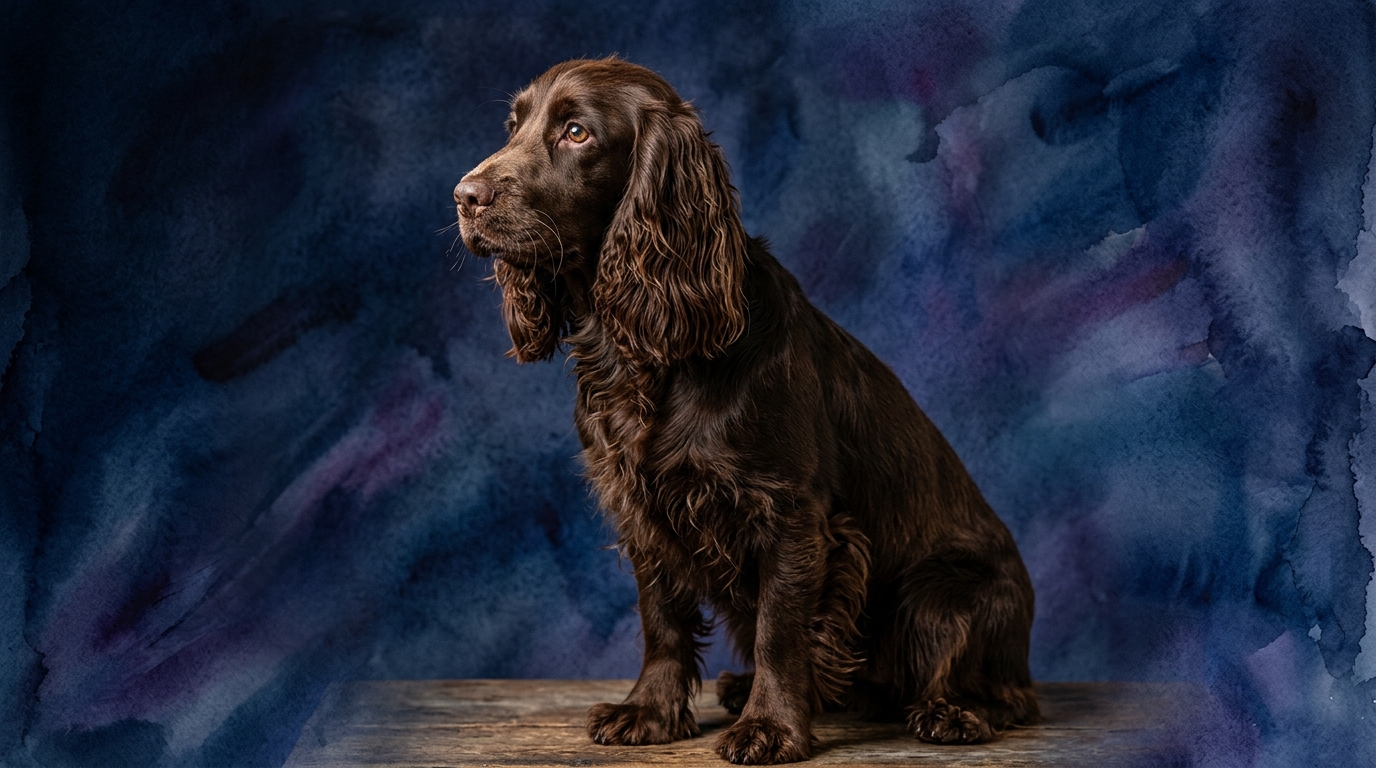
Side-by-Side IQ Profile: Field Spaniel
The Field Spaniel, a breed developed for flushing game, exhibits a capable, methodical approach to cognitive tasks. Their Problem Solving is rated 3/5; these dogs aren't typically quick to devise novel solutions to complex puzzles independently, but excel at learning and applying learned sequences to achieve goals, particularly those involving scent work or retrieving. Their persistence in the field translates to a steady, rather than brilliant, problem-solving style. For Training Speed (3/5), Field Spaniels demonstrate an average learning curve for new commands. They require consistent, positive reinforcement and repetition to solidify behaviors, but once a task is understood, they generally retain it well. Their eagerness to please, combined with their moderate distractibility by environmental stimuli, means training progresses steadily rather than rapidly.
In terms of Social Intelligence (3/5), Field Spaniels possess a good understanding of human cues, forming strong bonds with their families and adapting reasonably well to various social situations. They are generally sensitive to their handler's mood and intentions, responding with appropriate behaviors, though their focus on tasks can sometimes overshadow subtle social nuances. Their Instinctive Drive (3/5) is rooted in their ancestral purpose as a gundog, manifesting in a moderate, yet distinct, desire to flush and retrieve, a keen nose for scent, and an enjoyment of working alongside a human partner. This drive is present enough to be channeled into activities like scent work or agility, but not so overwhelming that it dominates their personality. Finally, their Memory (3/5) is reliable for retaining learned commands, routines, and the locations of familiar places or objects, contributing to their consistency in performance over time, provided the learning was thorough.
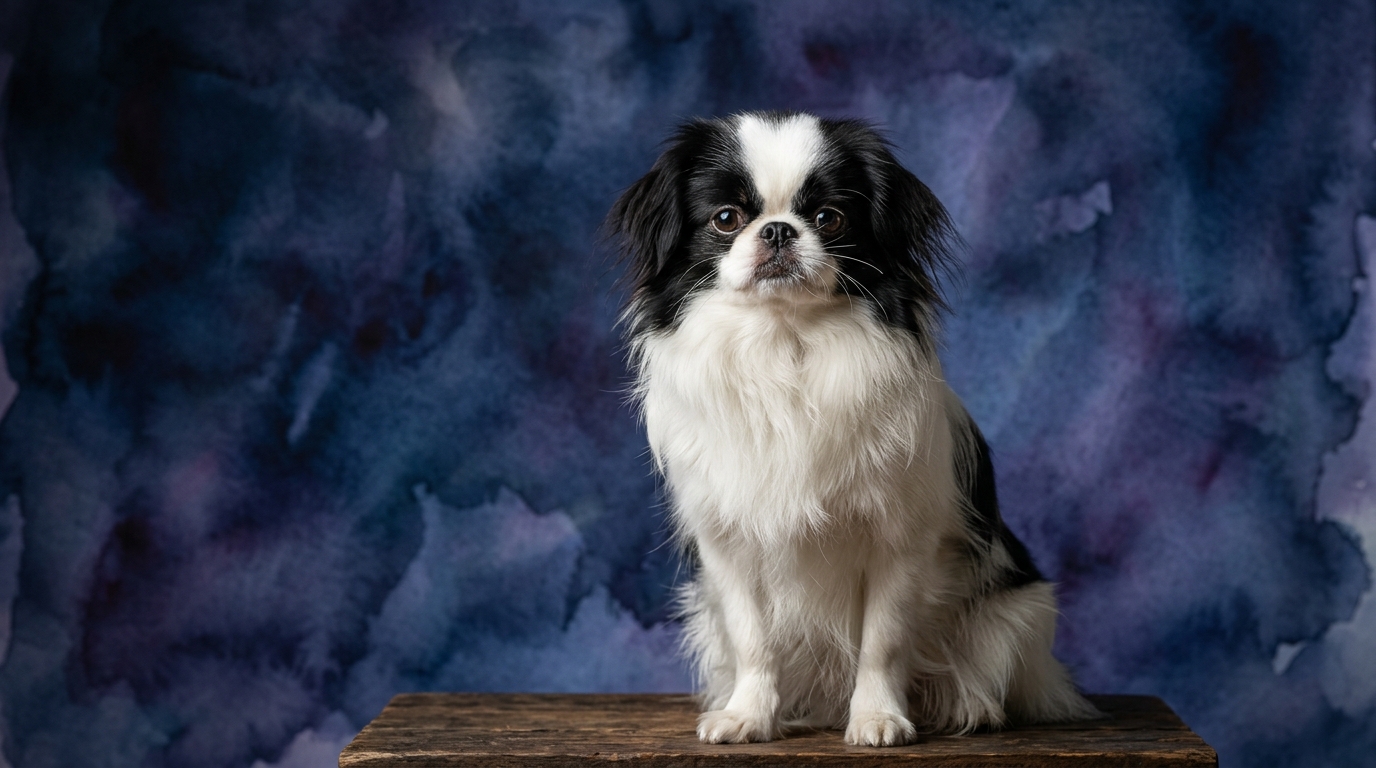
Side-by-Side IQ Profile: Japanese Chin
The Japanese Chin, a breed cherished for companionship, displays a cleverness often applied to its domestic environment. Their Problem Solving is rated 3/5; they might not excel at intricate puzzle toys designed for larger breeds, but they are adept at figuring out how to gain attention, find the most comfortable sunbeam, or navigate household dynamics. Their problem-solving leans towards social manipulation and comfort-seeking, rather than physical challenges. Regarding Training Speed (3/5), while capable of learning new commands and house rules, Japanese Chins learn at an average pace, often requiring patience and high-value rewards. They can exhibit a charming independence, sometimes choosing when and if to comply. Consistency is key, and training sessions are most effective when kept short, positive, and engaging, leveraging their desire for attention.
For Social Intelligence (3/5), this breed truly shines in its social acumen, demonstrating a profound understanding of human emotions and household dynamics. They are highly attuned to their owners' moods, often offering comfort or seeking interaction at opportune moments. Their social intelligence is expressed through their ability to integrate seamlessly into family life and communicate their needs subtly. The Japanese Chin's Instinctive Drive (3/5) is primarily rooted in companionship and comfort. They possess a moderate desire for close proximity to their humans, enjoying lap time and being part of family activities. While they may have a playful side, their drives are generally low-impact, focused on social interaction and a cozy existence rather than vigorous physical pursuits. Their Memory (3/5) is good for routines, favored people, and the locations of their cherished resting spots or treat stashes, contributing to their predictable and endearing companionship.
Where Field Spaniel Wins Cognitively
Despite the identical numerical scores, the Field Spaniel's cognitive strengths manifest differently, often excelling in areas tied to their sporting heritage. Their problem-solving, while rated 3/5, is particularly effective in practical, task-oriented scenarios, such as navigating varied terrain to locate a hidden object or following a complex scent trail. This breed demonstrates a sustained focus and persistence when engaged in activities that mimic their natural drives, allowing them to apply learned strategies over longer periods and in more dynamic outdoor environments than their Toy counterpart. Their memory, also 3/5, is particularly robust for recalling sequences of actions and specific outdoor locations, which is invaluable for field work or advanced obedience tasks.
Where Japanese Chin Wins Cognitively
The Japanese Chin, with its 3/5 cognitive scores, truly shines in the realm of social and emotional intelligence, aspects vital for a dedicated companion. While their social intelligence is rated similarly, its *application* is distinct; they possess an exceptional ability to read and respond to subtle human cues, often anticipating their owner's needs or moods with remarkable accuracy. This breed's problem-solving, though not geared towards physical puzzles, is acutely focused on navigating social situations within the home, finding ingenious ways to gain attention or secure a comfortable spot. Their memory, also 3/5, is particularly strong for social routines and the preferences of their human companions, making them wonderfully intuitive housemates.
Which is Easier to Train and Why
Evaluating training ease when both breeds score 3/5 for training speed requires looking beyond the raw learning rate to their behavioral inclinations. The Field Spaniel, driven by a desire to work and please its handler, often approaches training with enthusiasm. While their moderate instinctive drives (like scenting) can sometimes lead to distraction in certain environments, their inherent cooperation makes them responsive to consistent, positive reinforcement. They thrive on having a 'job' and benefit from training that channels their energy and intelligence, making them generally willing participants in structured lessons.
In contrast, the Japanese Chin's training experience is often characterized by its charming independence. While they are fully capable of learning, their motivation is often rooted in personal comfort or immediate reward. They may require more creative engagement and shorter, game-like sessions to maintain interest, and can sometimes exhibit a 'what's in it for me?' attitude. Their sensitivity means harsh corrections are counterproductive; positive reinforcement and making training a fun, bonding experience are paramount. Therefore, while both learn at an average pace, the Field Spaniel typically presents a more straightforward training path for task-oriented obedience due to its working dog mindset, whereas the Japanese Chin requires a more nuanced, relationship-focused approach to achieve similar results in domestic manners or tricks.
Which Suits Active Owners vs. Relaxed Owners
For owners seeking an active, engaged canine partner, the Field Spaniel is generally the more suitable choice. With their sporting background and moderate instinctive drives, they thrive on regular physical exercise such as long walks, hiking, or retrieving games. Their cognitive abilities are best stimulated through activities like scent work, agility, or advanced obedience, which provide both mental and physical challenges. They are happiest when they have a purpose and ample opportunity to explore their environment.
Conversely, the Japanese Chin is an ideal match for more relaxed owners who appreciate a devoted, calm companion. While they enjoy daily strolls and playtime, their exercise needs are modest, and their preference leans towards indoor comfort and close human companionship. Their intellectual engagement often comes from observing household dynamics, interacting with their family, and perhaps learning a few charming tricks, rather than strenuous outdoor activities. They are content to be a loving presence on the couch or in a lap, offering quiet affection.
The Verdict
For those who enjoy an active outdoor lifestyle and want a capable, biddable partner for activities like hiking, scent work, or field trials, the Field Spaniel offers a fulfilling companionship rooted in shared purpose.
For individuals or families who prefer a serene indoor life and desire a sensitive, charming companion deeply attuned to human emotions and household comforts, the Japanese Chin provides an unparalleled bond focused on quiet devotion and gentle interaction.
🧠 Find Your Pet's IQ Score
Our Pet IQ Lab assessment covers 25+ tests across 5 cognitive dimensions — personalized to your breed.
Take the Full IQ Test →Frequently Asked Questions
Do Field Spaniels and Japanese Chins struggle with learning because their training speed is 3/5?
A 3/5 training speed indicates they learn at an average pace, not that they struggle. They require consistent, positive reinforcement and repetition to master commands, but are fully capable of becoming well-trained companions. Patience and appropriate training methods are key for both breeds.
How does a 3/5 problem-solving score manifest differently in these two breeds?
For the Field Spaniel, 3/5 problem-solving often involves practical tasks like navigating outdoor environments or figuring out how to retrieve an object. The Japanese Chin's 3/5 problem-solving is typically applied to social situations, like getting attention or finding the best napping spot, rather than physical puzzles.
Can a Japanese Chin be trained for more active pursuits, given its 3/5 instinctive drive?
While a Japanese Chin has a 3/5 instinctive drive, it's primarily geared towards companionship and comfort. You can certainly train them for basic agility or trick training, but they generally won't have the sustained physical drive or desire for strenuous tasks seen in breeds like the Field Spaniel. Their engagement will be more about fun and interaction than intense competition.