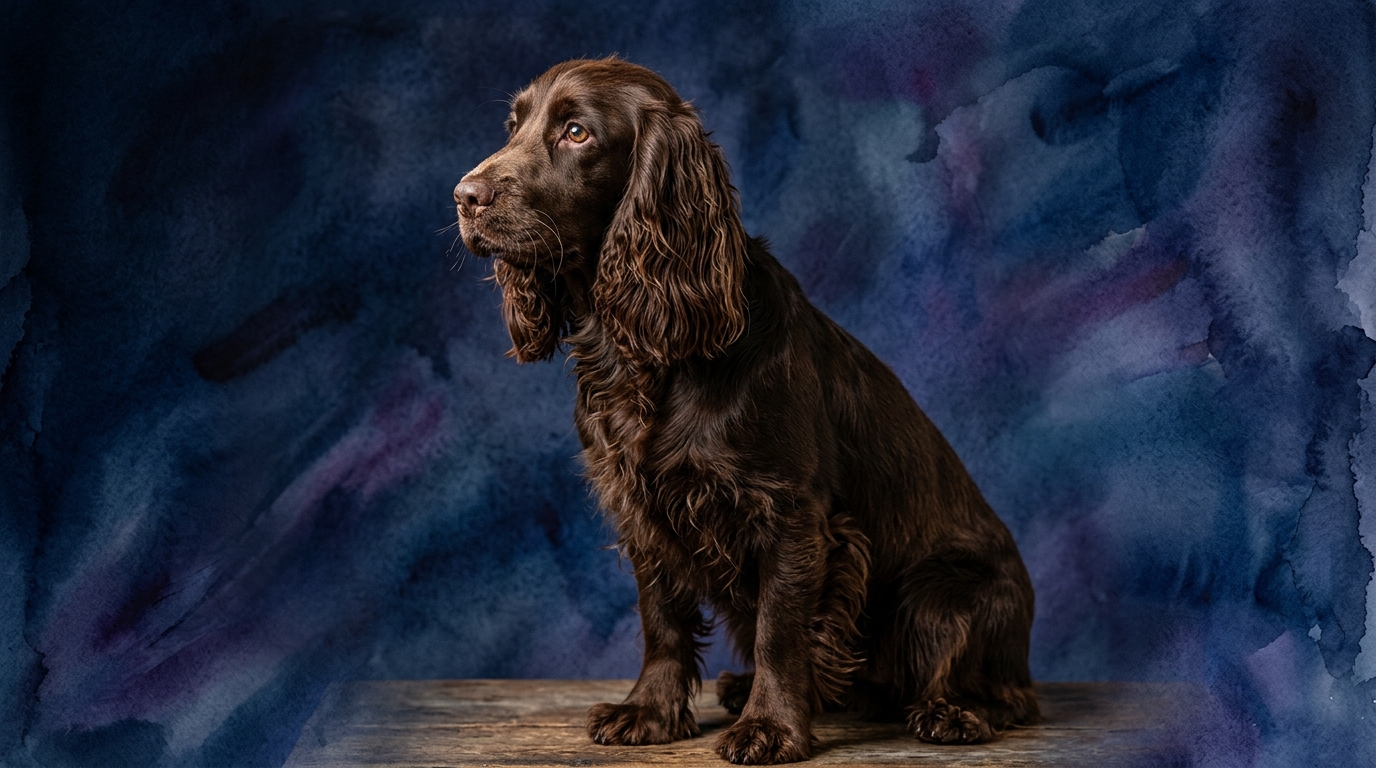
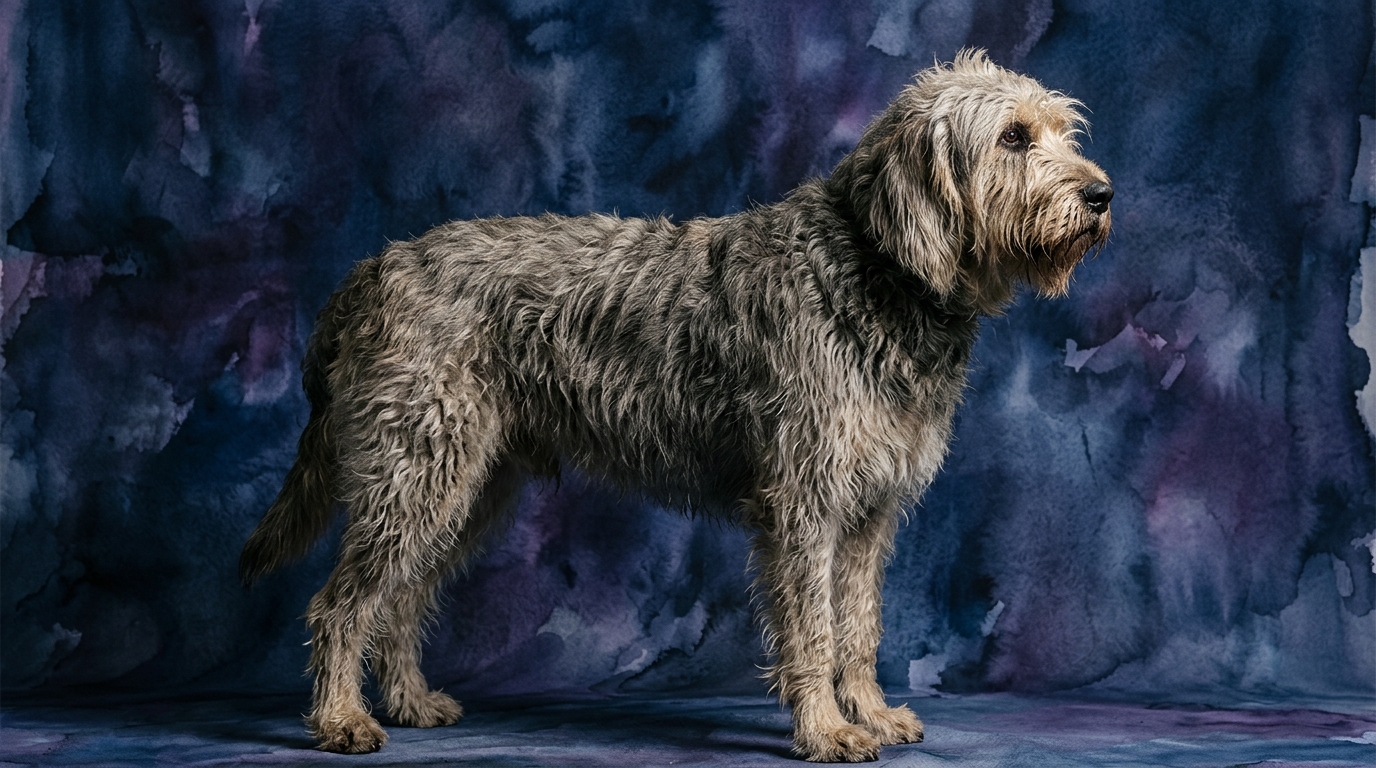
Side-by-Side IQ Profile: Unpacking Identical Scores
On paper, both the Field Spaniel and the Otterhound score a consistent 3 out of 5 across all five measured intelligence dimensions. This numerical parity suggests a baseline of moderate cognitive ability, but the practical application of these scores differs significantly based on their inherent breed characteristics. Understanding these nuances requires looking beyond the digits and into the behavioral patterns each breed typically exhibits.
For Problem Solving (3/5), the Field Spaniel often demonstrates its moderate ability in tasks requiring coordination and memory, such as navigating a complex retrieve or figuring out how to access a favored toy. Their solutions tend to be practical and direct, often involving physical manipulation. The Otterhound, conversely, applies its 3/5 in problem-solving predominantly to scent-based challenges. This might involve deciphering a convoluted scent trail or finding a hidden object purely by smell, relying less on visual cues and more on its olfactory prowess and persistent focus.
Training Speed (3/5) for the Field Spaniel indicates a moderate pace for learning new commands, particularly when motivated by positive reinforcement and a desire to engage with their handler. They absorb routines and basic obedience at a reasonable rate. The Otterhound's 3/5 in training speed, while numerically the same, often translates to a different training experience. They learn, but their independent nature and powerful scent drive mean they might learn what they *want* to learn, or what directly benefits their primary instincts, rather than being inherently eager to please with generalized obedience. This can make the *process* of training feel slower for an owner not attuned to hound motivations.
In Social Intelligence (3/5), the Field Spaniel typically shows a moderate awareness of human moods and social cues within their family unit, often seeking interaction and companionship. They are generally responsive to their people's emotional states. The Otterhound’s 3/5 in social intelligence manifests as a friendly, amiable disposition towards both family and strangers, but often with a more independent streak. They enjoy companionship but might be less overtly people-focused, sometimes appearing more absorbed in their environment or interesting smells than in subtle human social signals.
Instinctive Drive (3/5) is where the breeds diverge most distinctly in expression. The Field Spaniel's drive centers on its sporting heritage: a moderate urge to flush, retrieve, and work cooperatively in the field, often with a keen interest in birds. This drive is typically channeled into active play and engagement with their owner. The Otterhound's 3/5 drive is almost entirely dedicated to its scenting capabilities. Their moderate drive means they are persistent, but not obsessive, in following a trail, driven by an inherent need to hunt by scent, often to the exclusion of other stimuli.
Finally, Memory (3/5) for the Field Spaniel means they can recall learned commands, routines, and familiar people or places with moderate accuracy. They remember positive experiences and effective strategies. The Otterhound’s 3/5 memory is strong for scent associations and the location of interesting smells, as well as routes they've previously explored. They remember specific tasks or commands tied to their hunting instincts, often recalling complex scent patterns over time.
Where the Field Spaniel Excels Cognitively
The Field Spaniel's cognitive strengths lie in its cooperative spirit and contextual adaptability, especially within a family setting. Their sporting background means they are often more attuned to working *with* a human partner. This translates into an advantage in tasks requiring shared focus and responsiveness to direction. For instance, while both score 3/5 in Problem Solving, a Field Spaniel is more likely to use its moderate problem-solving skills to figure out how to retrieve a dropped item or navigate a simple agility course, valuing the interaction and reward from their owner. Their social intelligence, though also a 3/5, often manifests as a more direct desire to please, making them quicker to pick up on subtle cues from their primary caregivers and adjust their behavior accordingly.
Where the Otterhound Shows Cognitive Prowess
The Otterhound’s cognitive edge is undeniably rooted in its powerful olfactory capabilities and independent problem-solving. While both breeds score 3/5 in Instinctive Drive, the Otterhound's focus on scent work gives it a unique cognitive advantage in tasks that demand relentless tracking and sensory discrimination. Their moderate problem-solving capacity, when applied to scent puzzles, allows them to methodically follow complex trails, ignoring distractions that might deter other breeds. Their memory, also a 3/5, is particularly robust for recalling specific scent patterns and the locations of previous discoveries, making them adept at revisiting fruitful areas or remembering intricate scent routes over time. This specialized intelligence makes them exceptionally capable in environments where scent is the primary form of information.
Which is Easier to Train and Why
Despite both breeds scoring 3/5 in Training Speed, the Field Spaniel generally presents an easier training experience for the average owner. This is primarily due to their Sporting group heritage, which imbues them with a greater inherent desire to work cooperatively with humans. Their moderate social intelligence often translates into a genuine eagerness to please their handler, making them more receptive to traditional obedience methods and positive reinforcement. They are typically more focused on the trainer during sessions and less prone to independent excursions.
The Otterhound, while capable of learning, can be more challenging to train due to its strong, independent scent drive and hound group characteristics. Their 3/5 training speed is often overshadowed by their powerful instinctive drive to follow a compelling scent. This means that during training, an Otterhound might become engrossed in an interesting smell, making it difficult to hold their attention. Training an Otterhound requires immense patience, creativity, and a willingness to incorporate scent work into their learning, leveraging their natural inclinations rather than fighting against them. While they learn, their learning is often on their own terms, making the process feel less straightforward than with a Field Spaniel.
Which Suits Active Owners vs. Relaxed Owners
For owners seeking an active companion, both breeds offer a moderate energy level, but their ideal activities diverge. The Field Spaniel thrives with owners who enjoy structured activities like retrieving games, agility, or long walks and hikes where they can engage directly with their human companion. Their cooperative nature makes them excellent partners for active pursuits that involve shared goals. They adapt well to a moderately active household where their physical and mental stimulation comes from interactive play and training sessions.
The Otterhound also requires an active owner, but one who understands and respects their need for scent-driven exploration. They are not content with just a simple walk; they need opportunities to sniff and follow trails, making them ideal for owners interested in activities like scent work, tracking, or long, meandering hikes in varied terrain. While they can be relaxed indoors, their outdoor activity needs are significant and often involve independent exploration, making them less suitable for owners who prefer highly structured, purely human-led exercise without allowing for their natural sniffing behaviors. A relaxed owner might find the Otterhound's independent outdoor drive overwhelming, whereas a Field Spaniel could adapt more readily to a consistent, moderate exercise routine.
The Verdict
Choose the Field Spaniel if you desire a moderately active, cooperative companion eager to engage in shared activities and responsive to traditional training methods within a family setting.
Opt for the Otterhound if you are a patient, active owner who appreciates an independent, amiable companion with a profound drive for scent work and enjoys incorporating extensive scent exploration into their daily routine.
🧠 Find Your Pet's IQ Score
Our Pet IQ Lab assessment covers 25+ tests across 5 cognitive dimensions — personalized to your breed.
Take the Full IQ Test →Frequently Asked Questions
Do identical IQ scores mean Field Spaniels and Otterhounds are equally 'smart' in every way?
No, identical scores like 3/5 across the board indicate a similar *level* of cognitive ability but don't specify *how* that intelligence is expressed. Their breed-specific instincts and historical roles mean their problem-solving or training speed manifests differently in practice, making their overall cognitive profiles distinct.
How does a Field Spaniel's 'Instinctive Drive' differ from an Otterhound's, given both are 3/5?
The Field Spaniel's 3/5 instinctive drive is geared towards cooperative retrieving and flushing, often focusing on birds, making them keen participants in sporting activities alongside their handler. The Otterhound's 3/5 drive is almost exclusively dedicated to independent scent tracking, particularly for aquatic prey, leading them to follow compelling smells with great focus and persistence.
Can an Otterhound be trained for agility or other non-scent sports?
Yes, an Otterhound can be trained for agility or other sports, but it may require more patience and creative motivation. While they have a 3/5 training speed, their strong scent drive means they might be more easily distracted by smells, and their motivation might need to be specifically tailored to their interests rather than relying on a general desire to please.