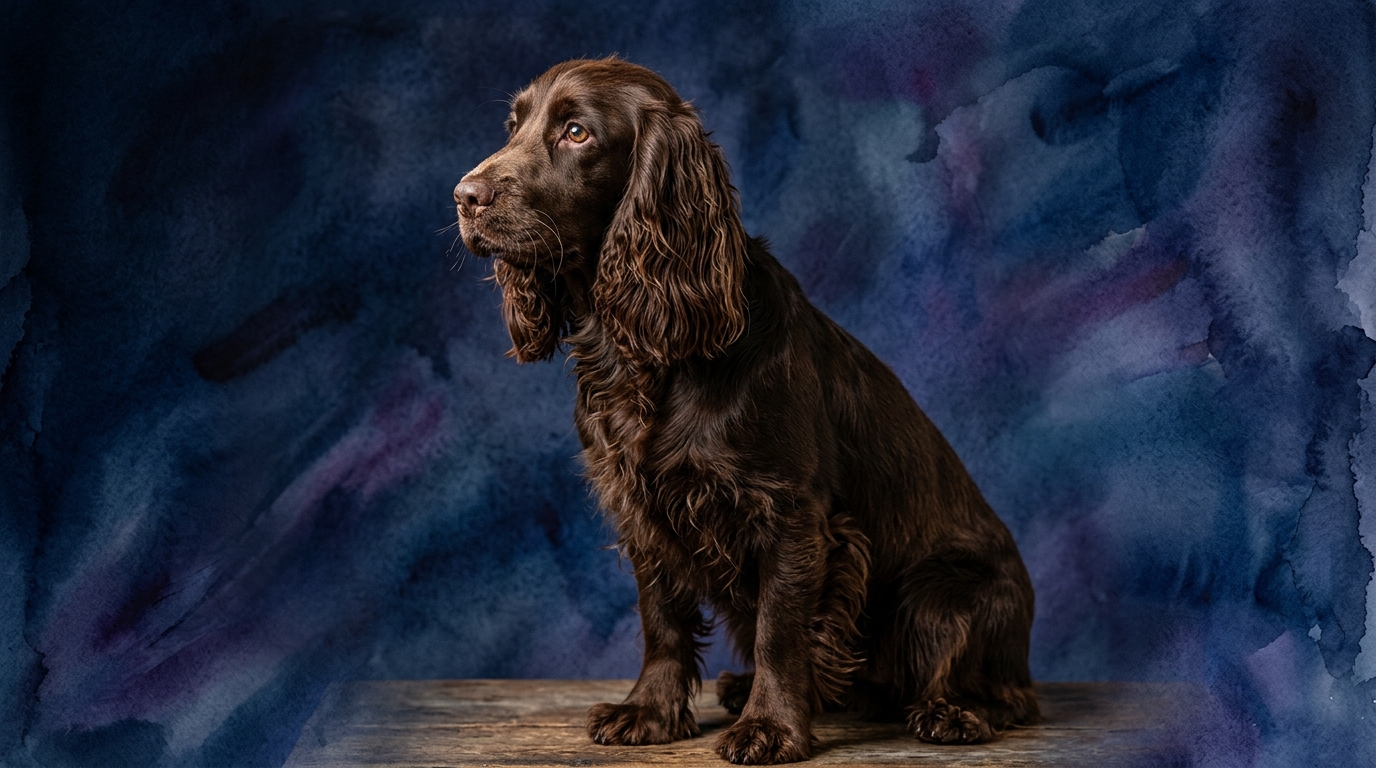
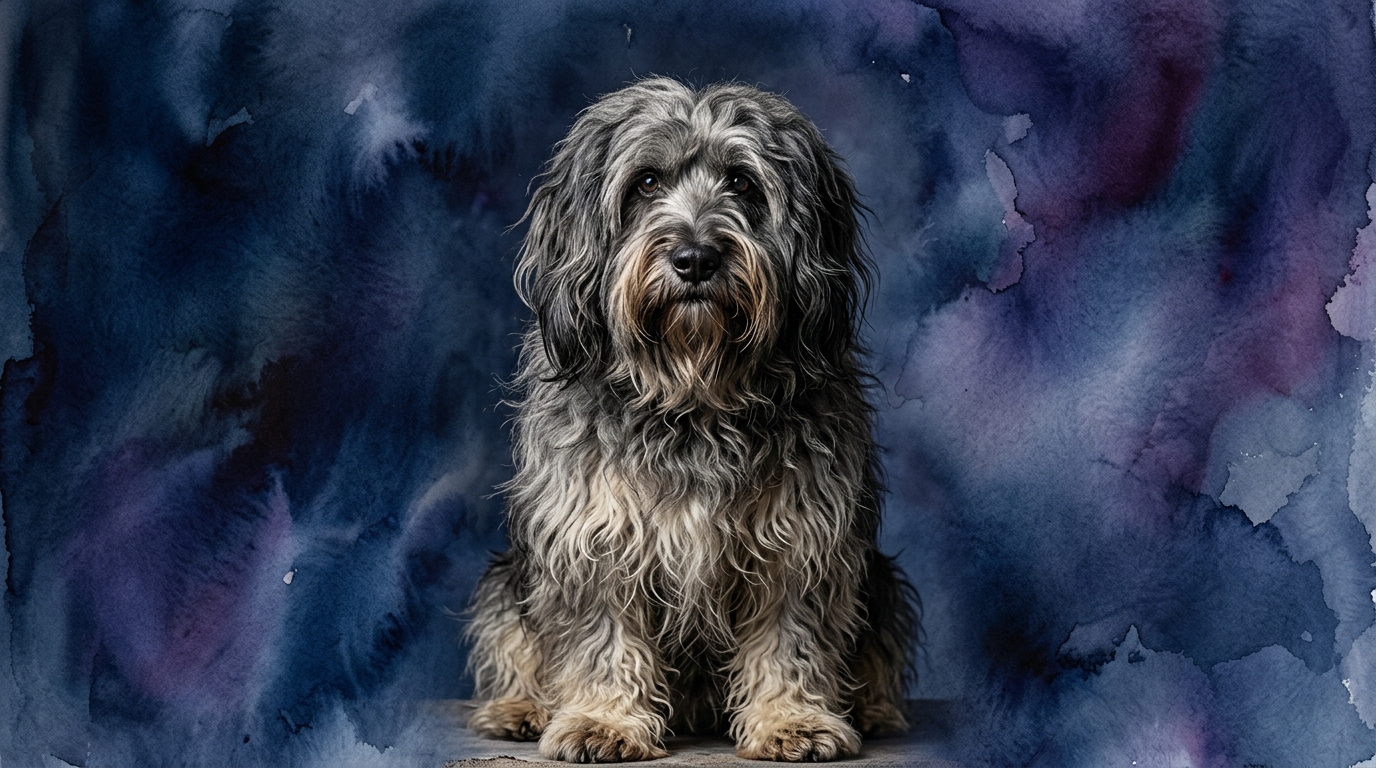
Side-by-Side IQ Profile
The Cosmic Pet Pet IQ Lab assesses five crucial dimensions of canine cognition, providing a nuanced look beyond simple obedience. For both the Field Spaniel and the Polish Lowland Sheepdog, each dimension registers a solid 3 out of 5, indicating capable and balanced mental abilities, but with different underlying expressions.
For the **Field Spaniel**, a Sporting breed, their **Problem Solving (3/5)** often relates to practical tasks like locating hidden game, navigating dense cover, or retrieving objects, demonstrating a moderate ability to figure out solutions within a cooperative hunting context. Their **Training Speed (3/5)** reflects an eagerness to please coupled with a typical spaniel's independent streak, meaning they absorb new commands at a steady pace with consistent positive reinforcement. **Social Intelligence (3/5)** in a Field Spaniel is typically expressed as a strong connection to their human companions, reading subtle cues and thriving on partnership. Their **Instinctive Drive (3/5)** is primarily focused on scent work, flushing, and retrieving, showcasing a moderate but focused natural inclination. Finally, **Memory (3/5)** for a Field Spaniel is practical, enabling them to recall learned commands, scent trails, and the location of objects or familiar places.
The **Polish Lowland Sheepdog**, a Herding breed, interprets these same scores through the lens of their working heritage. Their **Problem Solving (3/5)** manifests as a moderate capacity for independent decision-making, such as assessing a perceived threat to their flock or figuring out how to re-route straying animals. **Training Speed (3/5)** for a Polish Lowland Sheepdog means they are capable learners, but their independent nature often requires a handler to be patient, consistent, and creative in motivating them. Their **Social Intelligence (3/5)** often leans towards astute observation and assessment of their environment and the intentions of strangers, rather than immediate effusive connection. The **Instinctive Drive (3/5)** in a Polish Lowland Sheepdog is rooted in herding, guarding, and territorial defense, a moderate but potent force that needs appropriate channeling. Their **Memory (3/5)** is strong for spatial awareness, remembering flock members, patrol routes, and recognizing past experiences with perceived dangers.
Where the Field Spaniel Excels Cognitively
Despite identical numerical scores, the Field Spaniel's cognitive strengths shine in areas demanding close human collaboration and adaptability within a domestic setting. Their 3/5 in Social Intelligence, for instance, often translates into a superior ability to anticipate a handler's next move during a training session or a walk, making them incredibly intuitive partners in shared activities. This isn't about being 'smarter,' but about a specific type of social attunement honed over generations of working alongside people.
Furthermore, their Problem Solving at 3/5 often manifests as a more direct and less independent approach compared to a herding breed. A Field Spaniel is typically quicker to engage with a human to solve a puzzle, such as figuring out how to retrieve a toy from under furniture by looking at their owner for guidance, rather than trying multiple independent solutions first. This cooperative problem-solving can make them feel more 'in sync' with their human family. Their moderate instinctive drive, being focused on scent and retrieve, often makes them readily engaged in games that mimic their ancestral tasks, which provides a natural avenue for mental exercise and bonding without overwhelming the household with a constant need to 'work.'
Where the Polish Lowland Sheepdog Excels Cognitively
The Polish Lowland Sheepdog's cognitive advantages, while also rated 3/5 across the board, are distinctively geared towards independence, observation, and strategic thinking. Their Problem Solving at 3/5 often showcases a greater capacity for autonomous decision-making in novel situations, particularly those involving territory or perceived threats. For example, a Polish Lowland Sheepdog might be more inclined to independently assess a new sound or visitor, and then decide on an appropriate response, without constantly looking to their owner for direction. This stems from their history of needing to make quick judgments to protect flocks without immediate human command.
Their Social Intelligence, also 3/5, manifests as a keen observational capacity, allowing them to quickly discern patterns in their environment and the behavior of others. This translates into an exceptional ability to learn by watching, especially concerning boundaries or household routines. A Polish Lowland Sheepdog might quickly understand which family members are 'in charge' or which areas are off-limits simply by observing reactions and consequences. Their moderate instinctive drive, focused on herding and guarding, also means they possess a natural aptitude for tasks requiring vigilance and subtle control, making them excel in activities like agility or advanced obedience where strategic thinking is key.
Training Dynamics: Which is Easier to Train?
When considering ease of training, the Field Spaniel generally presents a more straightforward experience for the average owner. Their 3/5 Training Speed is augmented by a strong desire to please and a natural inclination towards cooperation. They typically respond well to positive reinforcement and clear, consistent commands, often eager to engage in training as a shared activity. While they can have moments of spaniel 'selective hearing' when a compelling scent takes precedence, their fundamental motivation is to work with their handler, making initial obedience and trick training a relatively smooth process.
The Polish Lowland Sheepdog, while equally capable with a 3/5 Training Speed, often requires a more nuanced approach. Their herding background fosters an independent streak; they are thinkers who might question the 'why' behind a command. This means training needs to be engaging, varied, and clearly demonstrate a purpose from the dog's perspective. Owners will find success by channeling their innate drives into structured activities, turning training into a collaborative problem-solving exercise rather than rote memorization. They are not 'stubborn' in a negative sense, but rather possess a strong will and a preference for making their own decisions, which requires a confident and patient handler who understands how to motivate a working breed.
Matching Breeds to Lifestyles: Active vs. Relaxed Owners
Choosing between these two breeds also hinges significantly on an owner's lifestyle and their capacity to provide appropriate mental and physical engagement. The Field Spaniel, with its moderate instinctive drive and cooperative nature, suits owners who are active but not necessarily seeking a full-time 'project.' They thrive on regular walks, scent games, retrieving sessions, and family participation in activities like hiking or dog sports. While they enjoy being active outdoors, they are generally content to relax indoors with their family after their exercise needs are met. They are a good fit for individuals or families who want an engaged companion for shared adventures, but who also appreciate a calm presence in the home.
The Polish Lowland Sheepdog, on the other hand, is best suited for highly active owners who are prepared to provide significant, consistent mental and physical stimulation. Their herding and guarding instincts, even at a 3/5 drive level, mean they need a 'job' or structured activities to keep their minds engaged. This could involve advanced obedience, agility, herding trials, or even complex puzzle toys and trick training. Without adequate outlets for their cognitive and physical energy, they can become bored and potentially develop undesirable behaviors. Owners who enjoy challenging their dogs with complex tasks, who are committed to extensive training, and who lead a very active, structured lifestyle will find a rewarding partnership with a Polish Lowland Sheepdog.
The Verdict
Choose the Field Spaniel if you desire a warm, cooperative companion who thrives on shared activities and positive reinforcement, and who will happily integrate into an active family life with moderate exercise needs.
Opt for the Polish Lowland Sheepdog if you are an experienced, very active owner ready to channel a keen, independent mind into consistent training and structured activities, appreciating a protective and observant partner.
🧠 Find Your Pet's IQ Score
Our Pet IQ Lab assessment covers 25+ tests across 5 cognitive dimensions — personalized to your breed.
Take the Full IQ Test →Frequently Asked Questions
Are Field Spaniels good with children?
Field Spaniels are generally known for their gentle and patient temperament, making them suitable companions for families with children. Early socialization and proper training are crucial to ensure they interact politely and safely with young ones.
Do Polish Lowland Sheepdogs bark a lot?
Due to their guarding instincts, Polish Lowland Sheepdogs can be prone to barking, especially when alerting their family to perceived threats or strangers. Consistent training and socialization from a young age can help manage this tendency, teaching them appropriate times to vocalize.
How do their instinctive drives manifest in a home environment?
A Field Spaniel's instinctive drive might lead them to eagerly retrieve toys or follow interesting scents in the yard, making them good partners for games. A Polish Lowland Sheepdog's drive might manifest as 'herding' family members, particularly children, or being vigilant about who approaches the home, requiring consistent direction to channel these behaviors positively.