Side-by-Side IQ Profile: Unpacking the Scores
The Cosmic Pet Pet IQ Lab evaluates canine intelligence across five critical dimensions, each rated on a scale of 1 to 5. Both the Finnish Lapphund and the Tibetan Mastiff remarkably score 3/5 in every category: Problem Solving, Training Speed, Social Intelligence, Instinctive Drive, and Memory. However, these identical scores belie significant practical differences in how these breeds manifest their cognitive abilities, shaped by thousands of years of specialized work.
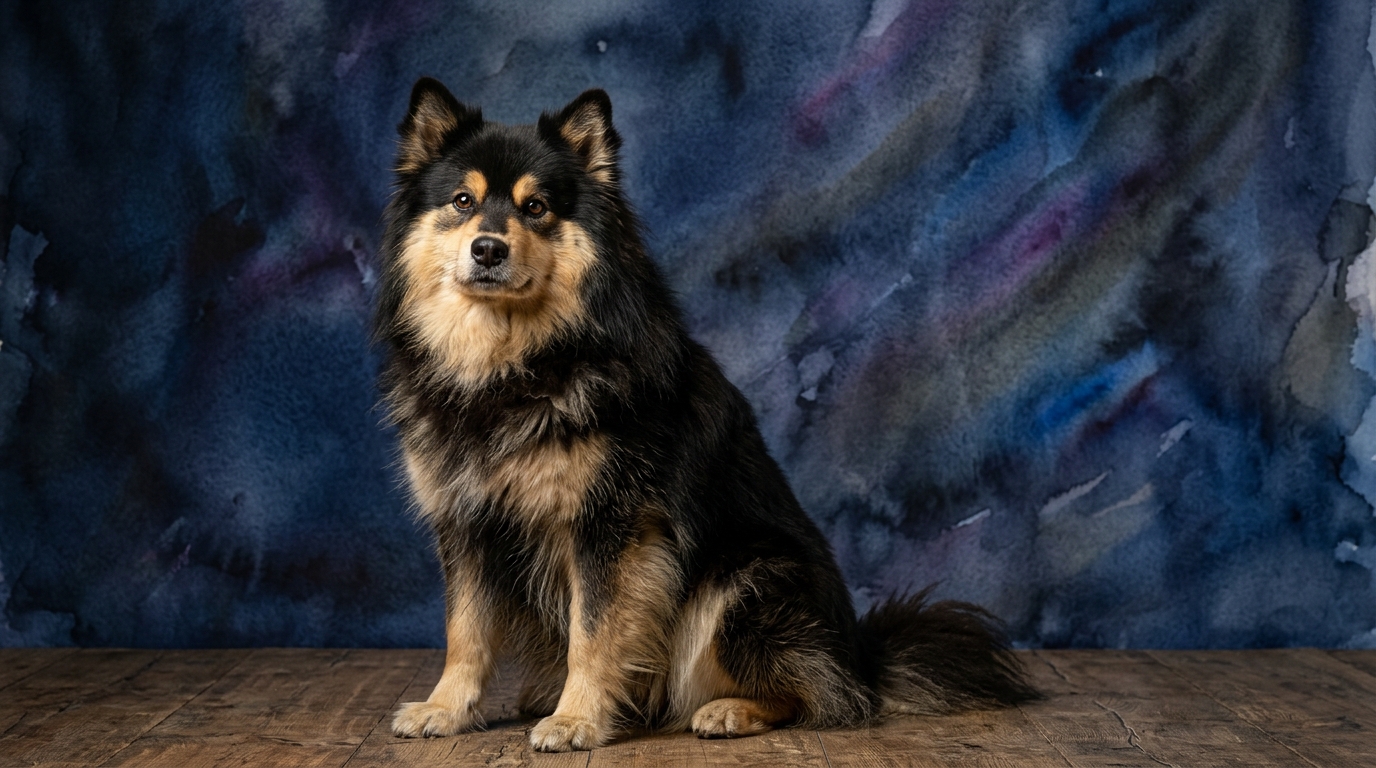
For the **Finnish Lapphund**, a dog rooted in herding reindeer in the Arctic, a Problem Solving score of 3/5 reflects an innate ability to navigate and manage complex, dynamic situations. Their intelligence here is practical and adaptive, allowing them to make quick decisions on the fly, such as anticipating herd movements or finding solutions to re-gather straying animals. They excel at spatial reasoning within a working context, rather than abstract puzzle-solving. Their Training Speed of 3/5 indicates they learn commands at a moderate pace, often demonstrating a willingness to please their handler. While their intelligence allows them to grasp concepts, their independent spirit, a remnant of their herding autonomy, means they aren't always immediate in their responses, thriving on consistent, positive reinforcement. Social Intelligence at 3/5 is characterized by a deep understanding of their family unit and an ability to read human emotions and intentions; they form strong bonds and are attuned to their household's dynamics. While generally reserved with strangers, this is a discerning social intelligence, allowing them to assess new individuals rather than being indiscriminately friendly. Their Instinctive Drive, also 3/5, is primarily rooted in their herding heritage, manifesting as an innate desire to gather, control, and protect their 'flock' – often their human family or other pets. This drive, while present, is typically manageable and can be channeled into constructive activities. Finally, their Memory score of 3/5 means Lapphunds possess a solid memory, enabling them to retain a wide array of commands, routines, and experiences, contributing to their reliability as companions and working dogs.
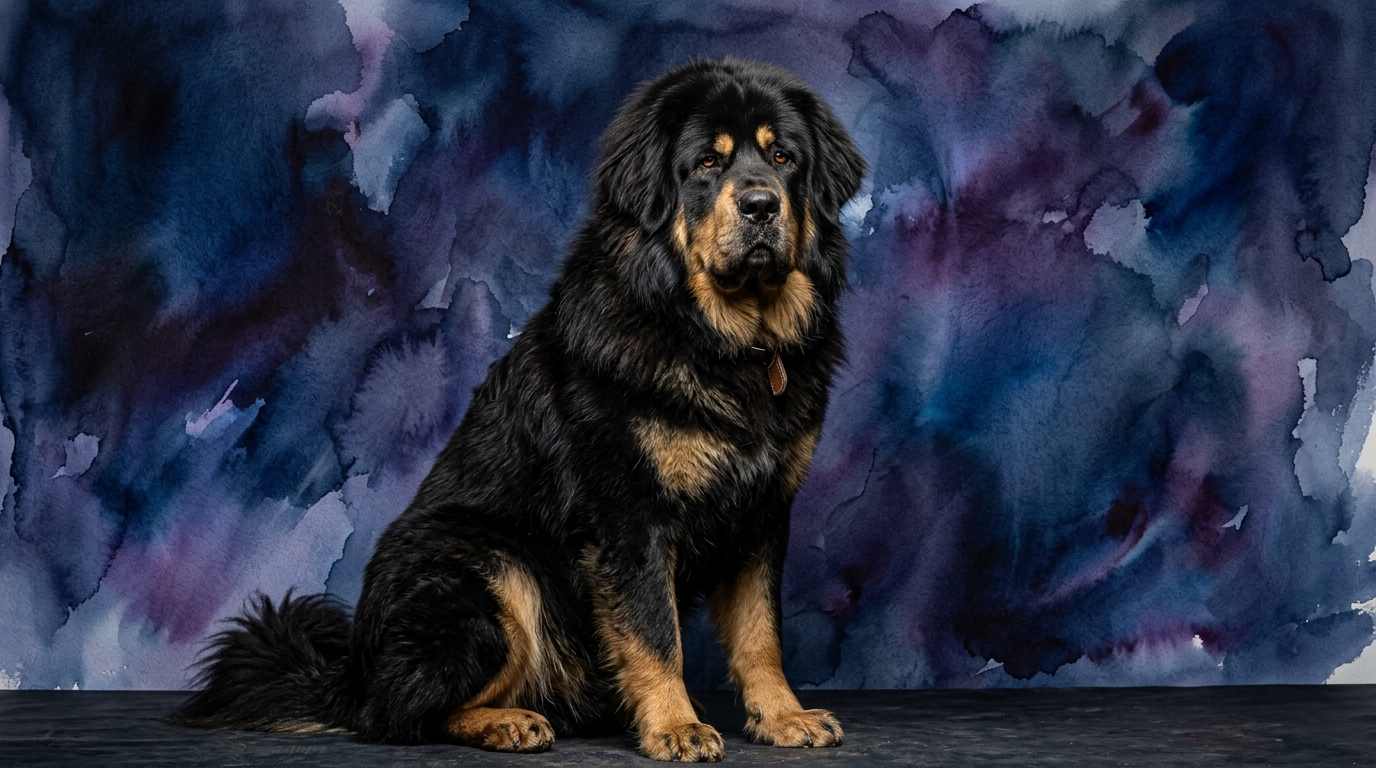
The **Tibetan Mastiff**, a formidable guardian from the Himalayas, approaches these same cognitive dimensions from a vastly different perspective. Their Problem Solving score of 3/5 is intrinsically linked to their ancient guardian role. This represents their profound ability to assess environmental factors, identify potential threats, and independently strategize defensive actions without direct human intervention. Their intelligence is focused on security, territorial awareness, and making autonomous decisions to protect their family and property, rather than performing complex, abstract tasks for entertainment. Training Speed at 3/5, while numerically similar, means that while capable of learning commands, the Tibetan Mastiff's progress is often deliberate and requires significant patience. Their independent nature and strong will mean they are not inherently driven by a desire to please in the same way some other breeds are; they often need to understand the 'purpose' behind a command. Their Social Intelligence of 3/5 is highly specialized; they form incredibly deep, discerning bonds with their immediate family, displaying an acute awareness of their loved ones' moods and needs. However, they are naturally aloof and wary of strangers, a hallmark of their guardian instinct, which is a highly developed capacity for discernment. The Tibetan Mastiff's Instinctive Drive, also 3/5, is overwhelmingly focused on protection and territoriality. This powerful inherent trait means they are perpetually vigilant, with an unwavering need to guard their family and home, fundamental to their identity. Their Memory score of 3/5 indicates an excellent memory, particularly for individuals and past experiences. They remember who is a friend and who is an outsider, recalling specific interactions over long periods, which is crucial for their role as guardians.
Where the Finnish Lapphund Demonstrates Cognitive Strengths
The Finnish Lapphund's cognitive strengths shine particularly in their nuanced approach to dynamic, collaborative tasks. Their herding background has honed an ability to process rapidly changing environmental cues and respond with agility, both physically and mentally. While their problem-solving score is 3/5, this manifests as a practical ingenuity, such as finding the most efficient path to gather a straying animal or anticipating the movement of a herd. They exhibit a subtle predictive intelligence, constantly adjusting their strategy based on the flock's behavior and the handler's signals. This breed also displays a particular aptitude for understanding and responding to human communication, not just rote commands but also subtle body language and vocal inflections, which makes them highly adaptable partners in shared activities. Their social intelligence, rated 3/5, translates into a capacity for forming strong, cooperative bonds, where they are attuned to their human's intentions and willing to work in concert. This cooperative spirit, combined with their moderate instinctive drive, allows their herding impulses to be channeled productively into various tasks beyond their original purpose, making them versatile companions.
Where the Tibetan Mastiff Demonstrates Cognitive Strengths
The Tibetan Mastiff's cognitive prowess is rooted in independent thought and an innate understanding of their environment as it pertains to security. Their problem-solving ability, also rated 3/5, is geared towards strategic defense and vigilance. This manifests not in solving puzzles for human amusement, but in assessing potential threats, understanding property boundaries, and making autonomous decisions about protection. A Tibetan Mastiff might 'solve' the problem of an unfamiliar person approaching by positioning themselves strategically, observing intently, and issuing a warning, without needing explicit human direction. Their instinctive drive, a 3/5, is profoundly tied to their guardian role, fostering an unwavering territoriality and a deep-seated need to protect their family and home. This drive is not easily overridden; it is a core component of their identity. Furthermore, their social intelligence, also 3/5, is marked by a deep, discerning loyalty to their immediate family, coupled with a natural wariness of outsiders. This isn't a deficiency in social understanding, but rather a highly specialized form of social processing designed for protection. They possess an exceptional memory for individuals, distinguishing between trusted visitors and those perceived as potential intrusions, often recalling past interactions with remarkable accuracy.
Training Dynamics: Finnish Lapphund vs. Tibetan Mastiff
Despite both breeds scoring 3/5 for training speed, the practical experience of training a Finnish Lapphund versus a Tibetan Mastiff differs significantly due to their underlying behavioral motivations and historical roles. The Finnish Lapphund, with its herding lineage, possesses a cooperative spirit and a desire to work alongside its human. While not instantly mastering every command, they are generally eager to engage in training sessions, viewing it as a shared activity. Their problem-solving (3/5) and social intelligence (3/5) often translate into an ability to anticipate their handler's wishes and adapt their responses. This means they are typically more responsive to positive reinforcement and consistent guidance, making the training process feel more like a collaborative endeavor. They learn well through repetition and enjoy the mental stimulation of new challenges, provided the training is engaging and fair.
In contrast, the Tibetan Mastiff approaches training with a strong sense of independence and self-preservation, reflecting its ancient role as a solitary guardian. Their 3/5 training speed is often tempered by a questioning nature; they need to understand the 'why' behind a command and may not see the inherent value in performing a task simply because a human requests it. Their problem-solving (3/5) is focused on their own objectives, not necessarily aligning with human expectations during training. This breed requires immense patience, consistency, and a deep understanding of their guardian mindset. While they are capable of learning, their progress can be slower and more deliberate, often requiring a highly experienced handler who can build trust and motivate them without resorting to force, which they will resist. Their powerful instinctive drive (3/5) to protect can sometimes overshadow compliance if they perceive a conflict between a command and their guardian duties.
Ideal Owner Profiles: Active vs. Relaxed Lifestyles
When considering lifestyle compatibility, the Finnish Lapphund and Tibetan Mastiff diverge considerably, even with similar IQ scores. The Finnish Lapphund, with its background in active herding, thrives with owners who can provide consistent engagement and opportunities for mental and physical activity. Their problem-solving (3/5) and social intelligence (3/5) mean they enjoy interactive games, learning new tricks, and participating in dog sports like agility or obedience. They are well-suited for active families or individuals who enjoy hiking, long walks, or simply spending quality time involving their dog in daily routines. They benefit from owners who understand their need for a 'job' and can channel their instinctive drive (3/5) into constructive outlets, preventing boredom or destructive behaviors. A relaxed owner who expects a passive companion will likely find a Lapphund's needs unmet, potentially leading to a restless and unfulfilled dog.
Conversely, the Tibetan Mastiff, while appearing imposing, often suits a different kind of 'relaxed' owner – one who is experienced, patient, and understands the nuances of a powerful, independent guardian breed. Their ideal owner isn't necessarily a marathon runner but someone who can provide ample secure space, consistent boundaries, and appreciate their contemplative, watchful nature. While they need exercise, it's often more about patrolling their territory or a leisurely walk, rather than high-intensity sports. Their deep instinctive drive (3/5) for protection means they are always 'on duty' mentally, even if physically relaxed. Their problem-solving (3/5) is constantly assessing their environment for security. Owners must be prepared for their independent decision-making and strong will, which requires a calm, confident leader who respects their inherent guardian traits. A highly active owner seeking a dog to constantly 'do things' with might find the Mastiff's reserved nature less compatible, while a relaxed owner unprepared for their protective instincts and independence will be overwhelmed.
The Verdict
Choose the Finnish Lapphund if you seek an engaged, cooperative partner for an active lifestyle, valuing a dog that thrives on shared activities and readily integrates into family life with its adaptable and responsive intelligence.
Opt for the Tibetan Mastiff if you are an experienced owner prepared for a deeply loyal, independent guardian, appreciating a dog whose profound protective instincts and discerning social intelligence require a confident, patient, and understanding approach.
🧠 Find Your Pet's IQ Score
Our Pet IQ Lab assessment covers 25+ tests across 5 cognitive dimensions — personalized to your breed.
Take the Full IQ Test →Frequently Asked Questions
Are Finnish Lapphunds good with children?
Finnish Lapphunds are generally patient and gentle with children, especially when raised with them. Their social intelligence (3/5) helps them understand family dynamics, but supervision is always recommended to ensure respectful interactions from both sides.
Do Tibetan Mastiffs bark a lot?
Tibetan Mastiffs are known for their deep, resonant bark, which they use primarily as a warning or to alert to perceived threats. Their instinctive drive (3/5) for guarding means they will vocalize when they deem it necessary, especially at night or when strangers approach their territory.
What kind of exercise do these breeds need?
Finnish Lapphunds require moderate to high exercise, enjoying varied activities like walks, hikes, and engaging play sessions to satisfy their herding drive. Tibetan Mastiffs need moderate exercise, often satisfied by patrolling a secure yard and daily walks, as their mental activity is often focused on vigilance rather than intense physical exertion.