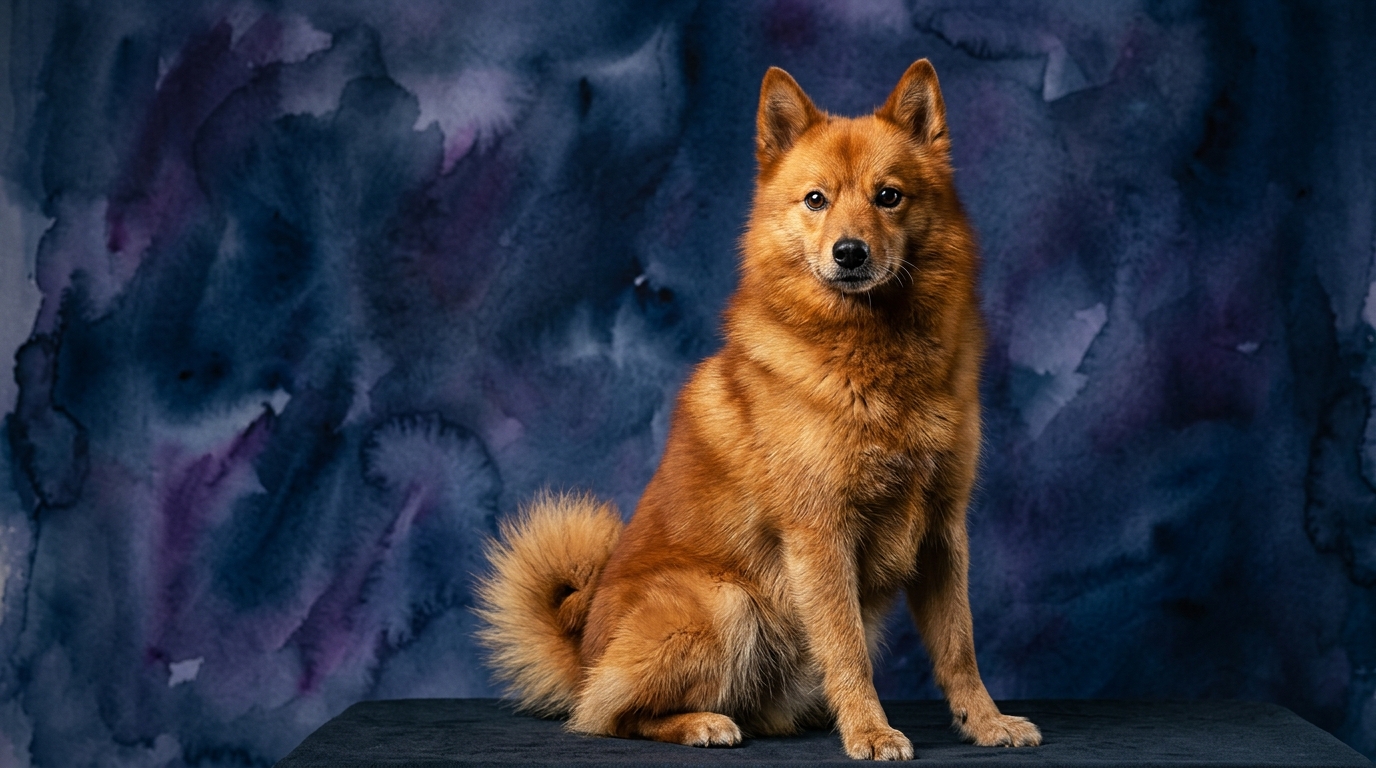
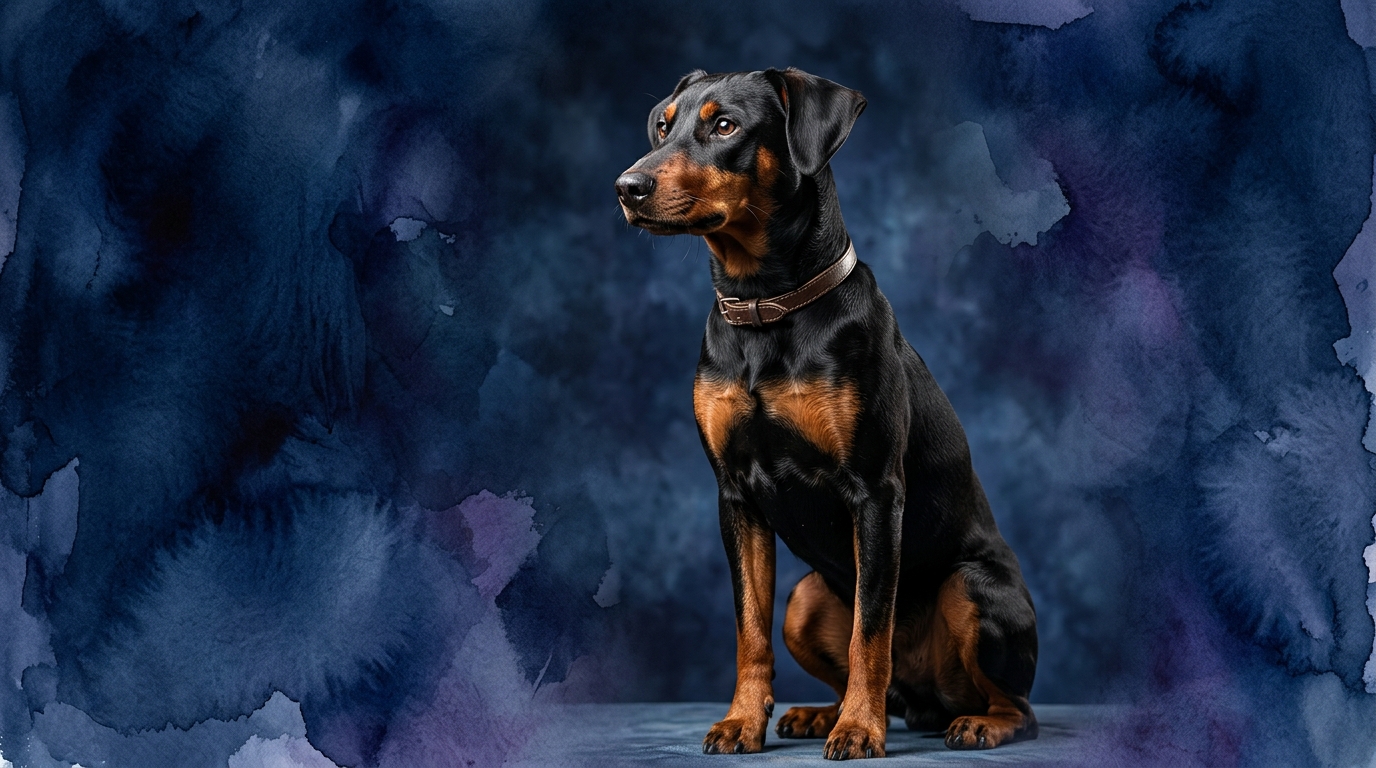
Side-by-Side Cognitive Profiles: Finnish Spitz vs. German Pinscher
Despite their matching scores, the interpretation of each cognitive dimension reveals how these breeds apply their mental capacities differently. The Finnish Spitz, a breed from the Non-Sporting Group, was historically bred for hunting birds by 'treeing' them and alerting the hunter with a distinctive bark. The German Pinscher, a member of the Working Group, served as a versatile farm dog, excelling at vermin control and guarding.
For **Problem Solving (3/5)**, the Finnish Spitz exhibits a resourceful independence honed by centuries of working alone in the forest; they are adept at figuring out how to achieve their goals, whether that's locating a bird or circumventing a baby gate to reach a desired treat. Their solutions are often self-directed and driven by instinct. The German Pinscher’s problem-solving skills, also rated 3/5, manifest in their ability to quickly assess and neutralize threats, whether a rodent in the barn or an unfamiliar person approaching their home; they apply practical intelligence to immediate environmental challenges and can learn complex sequences of actions to achieve a task, such as navigating an agility course.
Regarding **Training Speed (3/5)**, the Finnish Spitz can grasp new commands quickly when adequately motivated, especially if the training feels like a game or offers a clear reward; however, their independent spirit means they may choose to comply only if they perceive value in the action, leading some to describe them as opinionated rather than slow learners. The German Pinscher, also at 3/5, generally shows a keen eagerness to learn and please their primary handler, absorbing new instructions with good retention; their challenge often lies not in understanding but in maintaining focus amidst their high energy and drive, requiring consistent, engaging, and varied training sessions to prevent boredom.
In **Social Intelligence (3/5)**, the Finnish Spitz forms deep, affectionate bonds with their human family, often displaying a nuanced understanding of their owners' moods and intentions within their trusted circle; they can be reserved or aloof with strangers, preferring to observe before engaging, which is a hallmark of their self-reliant nature. The German Pinscher, similarly rated 3/5, is highly attuned to their family's dynamics and can be quite sensitive to their owner's emotional state, often acting as a protective shadow; they possess a discerning social intelligence that allows them to quickly evaluate new people or situations, deciding who is friend or foe with remarkable precision.
Their **Instinctive Drive (3/5)** is central to both breeds. The Finnish Spitz possesses a powerful prey drive, manifested in their characteristic 'barking bird dog' behavior, where they will excitedly alert to anything resembling prey, and a strong vocal instinct to communicate. This drive is deeply ingrained and influences much of their behavior. The German Pinscher's instinctive drive, also 3/5, is channeled into their historical roles of vermin control and guarding; they have a robust prey drive, a strong territorial instinct, and an innate desire to protect their family and property, often expressed through watchful vigilance and decisive action.
Finally, for **Memory (3/5)**, the Finnish Spitz demonstrates a good recall of familiar people, places, and routines, especially those associated with positive experiences or their hunting instincts; they remember specific training cues when consistently reinforced and can recall locations where they have found interesting scents or prey. The German Pinscher, also scoring 3/5, possesses an excellent memory for commands, learned behaviors, and social interactions, allowing them to build upon past training and recognize individuals, distinguishing between welcomed guests and potential intruders over long periods; this memory contributes significantly to their reliability in working roles and as guardians.
Where the Finnish Spitz Excels Cognitively
The Finnish Spitz truly shines in scenarios demanding independent thought and self-reliance, a cognitive strength directly stemming from their role as a solitary hunting dog. Their ability to work without constant human direction, tracking and 'treeing' game while communicating effectively through their unique vocalizations, highlights a nuanced problem-solving capacity focused on natural environments. This breed's intelligence is less about strict obedience to human commands and more about initiative and making their own decisions in pursuit of a goal. Their social intelligence, while reserved with strangers, allows for incredibly deep and empathetic bonds with their immediate family, demonstrating a profound understanding of their inner circle's emotional landscape and routines. They exhibit a unique blend of observational learning and innate instinct, processing their environment with a curious, self-directed approach that allows them to adapt creatively to novel situations, often surprising owners with their cleverness in navigating household challenges.
Where the German Pinscher Excels Cognitively
The German Pinscher's cognitive strengths are rooted in their versatility and practical utility as a working farm dog. They excel in situations requiring quick assessment, decisive action, and a strong sense of purpose. Their problem-solving abilities are geared towards efficiency and effectiveness, whether it's outsmarting vermin or understanding complex multi-step commands in training. This breed demonstrates a superior capacity for structured learning and task execution, often thriving when given a 'job' to do. Their social intelligence is particularly acute in discerning intentions, making them exceptional guardians who can read situations and people with remarkable accuracy. The German Pinscher's memory and drive combine to produce a dog that is not only capable of learning a vast repertoire of commands but also remembering and applying them consistently, making them highly reliable in scenarios demanding precision and discipline. They possess a robust, adaptable intelligence that allows them to perform diverse roles with confidence and competence.
Training Dynamics: Which Breed Offers an Easier Path?
When considering ease of training, the German Pinscher generally presents a more straightforward path for handlers experienced with working breeds, primarily due to their intrinsic desire to partner with and please their owner. Their eagerness to learn and strong focus on their handler means they often respond well to consistent, positive reinforcement methods and thrive on structure. However, their high energy levels and need for constant mental engagement mean training sessions must be dynamic and challenging; a bored German Pinscher can quickly become a destructive one, channeling their intelligence into undesirable behaviors.
The Finnish Spitz, while perfectly capable of learning, can be perceived as more challenging due to their independent nature and often selective hearing. Their intelligence is less about biddability and more about self-determination. Training a Finnish Spitz requires immense patience, creativity, and making the process feel like a collaborative game rather than a series of demands. Their strong prey drive and propensity for vocalization also require dedicated training to manage. While both breeds score 3/5 in training speed, the German Pinscher's inherent biddability and focus on working with a human often make the *process* of formal obedience training feel more fluid and rewarding for many owners, provided their needs for stimulation are met. The Finnish Spitz demands a handler who appreciates and can navigate a truly independent mind.
Suitability for Lifestyles: Active vs. Relaxed Owners
For owners with a relaxed lifestyle, neither the Finnish Spitz nor the German Pinscher would be an ideal fit, as both possess a significant need for physical activity and mental engagement. However, their specific requirements diverge. The Finnish Spitz, while active, often enjoys outdoor adventures that cater to their independent spirit, such as hiking, exploring, or long walks where they can follow scents and observe their surroundings. Owners who appreciate a companion that is content to self-entertain for periods, yet thrives on shared outdoor experiences, might find the Finnish Spitz a delightful match. They require consistent outdoor exercise to prevent boredom but may not demand the same level of structured, high-intensity dog sports as the Pinscher.
The German Pinscher is unequivocally suited for highly active owners who are prepared to integrate their dog into a bustling, stimulating lifestyle. This breed thrives on vigorous physical exercise like long runs, intense play sessions, and participation in dog sports such as agility, obedience, or flyball. Their powerful working drive means they also require significant mental stimulation through training, puzzle toys, and engaging activities to prevent destructive behaviors. A German Pinscher needs a job, whether formal or informal, to truly flourish. Owners seeking a constant, energetic companion for all their adventures, who are committed to daily rigorous exercise and mental challenges, will find an unmatched partner in the German Pinscher.
The Verdict
Choose the Finnish Spitz if you seek an independent, charmingly vocal companion for outdoor adventures, appreciating a dog that thinks for itself and fostering a deep bond within your immediate family.
Opt for the German Pinscher if you desire a highly engaged, energetic, and protective partner for active pursuits, committed to consistent training and providing ample mental and physical stimulation.
🧠 Find Your Pet's IQ Score
Our Pet IQ Lab assessment covers 25+ tests across 5 cognitive dimensions — personalized to your breed.
Take the Full IQ Test →Frequently Asked Questions
Are Finnish Spitz good apartment dogs?
While adaptable to smaller spaces if their exercise and mental stimulation needs are rigorously met, their strong vocal instincts and high prey drive can make apartment living challenging, especially if neighbors are close. They generally prefer a home with a yard for sniffing and exploring.
Do German Pinschers get along with other pets?
German Pinschers can coexist with other pets, especially if raised with them from a young age and properly socialized. However, their strong prey drive means careful introductions and supervision are necessary with smaller animals, and their dominant tendencies may require management with other dogs.
What kind of mental exercise do these breeds need?
Both breeds benefit from consistent mental stimulation. Finnish Spitz enjoy puzzle toys, scent work, and training that taps into their problem-solving independence. German Pinschers thrive on advanced obedience, agility, trick training, and any activity that gives them a 'job' to perform, challenging their adaptable intelligence and focus.