
Side-by-Side Cognitive Profiles
The Cosmic Pet Pet IQ Lab provides a nuanced framework for understanding canine cognition, breaking down intelligence into five key dimensions. For the Flat-Coated Retriever, a breed recognized by Coren's rankings at a notable #17, its cognitive profile reflects its heritage as a capable working dog. It earns a robust 4/5 in Problem Solving, indicating an aptitude for navigating complex situations and figuring out solutions independently. Its Training Speed also stands at an impressive 4/5, suggesting a quick grasp of new commands and routines. Social Intelligence is rated at 3/5, demonstrating a solid ability to interpret human cues and interact appropriately. Instictive Drive, crucial for its retrieving tasks, is a balanced 3/5, providing motivation without overwhelming intensity. Perhaps its most striking cognitive attribute is Memory, scoring a perfect 5/5, which underpins its ability to recall complex sequences and past experiences with exceptional clarity.
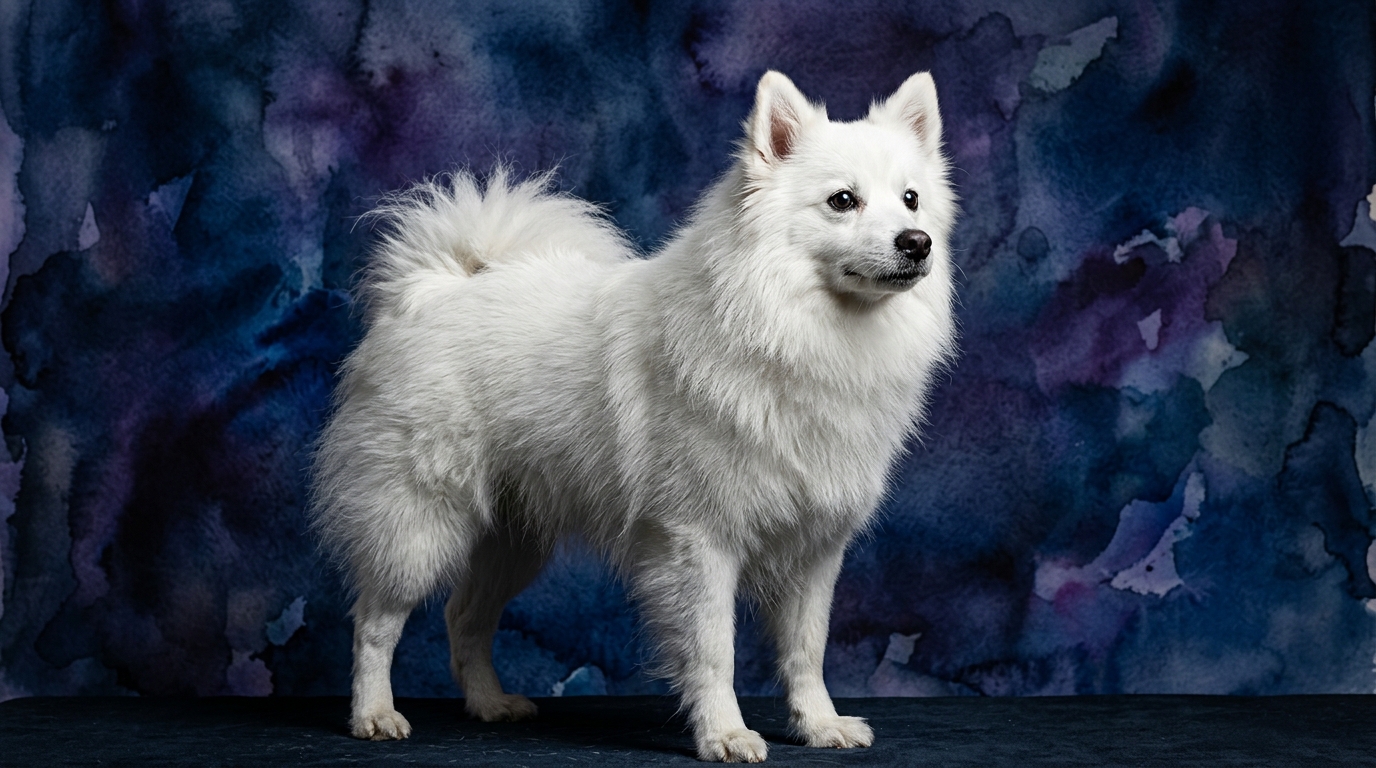
In contrast, the American Eskimo Dog, while not appearing on Coren's traditional ranking, presents a more uniformly balanced cognitive profile. Its Problem Solving ability is rated at 3/5, showing a capacity for logical thought but perhaps less inclination for independent, complex strategizing compared to the Retriever. Training Speed is also at 3/5, meaning it learns at a steady pace, requiring consistent reinforcement. Its Social Intelligence aligns with the Flat-Coated Retriever at 3/5, indicating a similar level of understanding and interaction with its human companions. Instinctive Drive is likewise a 3/5, suggesting a moderate internal motivation that can be channeled effectively. Finally, its Memory is rated at 3/5, a respectable score that allows for good retention of learned behaviors and experiences, though not with the same vividness as the Retriever.
Where the Flat-Coated Retriever Excels Cognitively
The Flat-Coated Retriever's cognitive strengths are particularly evident in its superior problem-solving capabilities and exceptional memory. A 4/5 in Problem Solving means these dogs are often adept at figuring out how to open gates, retrieve toys from challenging spots, or even untangle themselves from tricky situations. This cognitive agility allows them to adapt quickly to new environments or novel tasks, often experimenting with different approaches until a solution is found. Owners might observe them strategizing during play, such as anticipating the trajectory of a thrown object or finding the quickest path to a desired item.
Furthermore, the Flat-Coated Retriever's perfect 5/5 Memory score is a significant advantage. This means they retain learned commands, routines, and even specific positive or negative experiences with remarkable detail. For a working dog, remembering complex scent trails, the location of multiple retrieves, or intricate obedience sequences is paramount. In a home environment, this translates to remembering house rules, where specific toys are kept, or the precise route for a walk, making them highly consistent once a behavior is established. This powerful recall can be a tremendous asset in both formal training and daily life, ensuring that lessons learned are lessons remembered.
Where the American Eskimo Dog Shows Unique Strengths
While the American Eskimo Dog's individual cognitive scores may not exceed the Flat-Coated Retriever's in raw numbers, its unique strength lies in the consistency and balance of its cognitive profile, which aligns perfectly with its role as an attentive companion and alert watchdog. With uniform 3/5 scores across problem-solving, training speed, instinctive drive, and memory, the American Eskimo Dog offers a predictable and reliable mental landscape. This consistency can be a distinct advantage for owners who appreciate a dog that is engaged and capable without exhibiting extreme tendencies in any single cognitive domain.
Its balanced 3/5 in Social Intelligence and Instinctive Drive means the American Eskimo Dog possesses sufficient awareness to form strong bonds and a natural motivation to interact with its family, often manifesting as a keen sense of loyalty and a protective vocalization when strangers approach. This combination, rather than high scores in problem-solving or memory, makes them excellent at their historical role of guarding property and being alert companions. Their cognitive setup ensures they are receptive to their owner's needs and capable of fulfilling their duties without the higher mental demands or complex internal drives that might necessitate constant, highly varied cognitive challenges. This inherent balance makes them consistently good-natured and attentive partners.
Training Aptitude: Flat-Coated Retriever vs. American Eskimo Dog
When it comes to ease of training, the Flat-Coated Retriever generally offers a smoother experience due to its higher scores in Training Speed (4/5) and Memory (5/5). Their quicker acquisition of new commands means fewer repetitions are typically needed for them to grasp a concept, allowing for faster progression through training stages. For instance, teaching a new trick or a complex multi-step retrieve might take significantly less time with a Flat-Coat because they process and internalize the instructions more rapidly. Their exceptional memory ensures that once a lesson is learned, it's rarely forgotten, leading to greater reliability in performance over time, even with gaps between practice sessions.
The American Eskimo Dog, with its 3/5 scores in both Training Speed and Memory, requires a more patient and consistent approach. They will learn, but at a slightly slower pace, meaning owners should be prepared for more repetitions and shorter, more frequent training sessions to maintain engagement. While they retain information adequately, their memory isn't as indelible as the Flat-Coat's, necessitating regular refreshers to solidify commands and behaviors. This isn't a deficit, but rather a difference in cognitive processing; owners should focus on positive reinforcement and clear, consistent cues to build a strong behavioral foundation without expecting instant mastery.
Matching Cognitive Profiles to Lifestyles
For owners with an active lifestyle who are prepared to provide substantial mental and physical engagement, the Flat-Coated Retriever is an excellent match. Its 4/5 Problem Solving and 3/5 Instinctive Drive mean this breed thrives on having a 'job' to do, whether it's participating in dog sports like agility or obedience, engaging in complex retrieving games, or accompanying owners on adventurous hikes. They are not content to be merely decorative; their cognitive makeup demands challenges that stimulate their intellect and allow them to apply their problem-solving skills. An owner who enjoys teaching new tricks, exploring varied environments, and providing consistent mental enrichment will find the Flat-Coat a highly responsive and fulfilling companion.
The American Eskimo Dog, with its more balanced 3/5 scores across the board, suits owners who appreciate a dog that is engaged and attentive, yet perhaps less demanding of constant, novel cognitive challenges. While still requiring regular exercise and mental stimulation to prevent boredom, their cognitive profile suggests they are well-suited to a lifestyle that includes daily walks, interactive play, and consistent training, without necessarily needing to excel in high-level competitive dog sports. They thrive on companionship and being involved in family activities, often content with being present and observing. Owners seeking a loyal, alert, and consistently affectionate partner who enjoys moderate activity and mental engagement will find the American Eskimo Dog a delightful fit.
The Verdict
Choose the Flat-Coated Retriever if you seek a highly engaged companion with exceptional memory and problem-solving skills, eager for complex training and a job to do.
Opt for the American Eskimo Dog if you desire a consistently attentive and loyal companion with a balanced cognitive profile, thriving on moderate engagement and family interaction.
🧠 Find Your Pet's IQ Score
Our Pet IQ Lab assessment covers 25+ tests across 5 cognitive dimensions — personalized to your breed.
Take the Full IQ Test →Frequently Asked Questions
Does the Flat-Coated Retriever's high memory score make training harder?
On the contrary, its 5/5 memory makes training generally easier as they quickly retain commands and routines, leading to more reliable performance. However, this also means they remember negative experiences vividly, so positive reinforcement is crucial for effective learning.
Are American Eskimo Dogs difficult to train because they are not Coren-ranked?
Not at all; while not Coren-ranked, their 3/5 training speed means they are capable learners. They simply require more consistency and patience than some higher-ranked breeds, benefiting from clear cues and positive reinforcement in training.
Which breed is better for a first-time dog owner?
Both breeds can be suitable, but the American Eskimo Dog's consistent 3/5 scores across most cognitive dimensions might offer a slightly more predictable learning curve for a novice owner. The Flat-Coated Retriever's higher problem-solving and drive require an owner prepared for more intensive mental and physical engagement from the outset.