
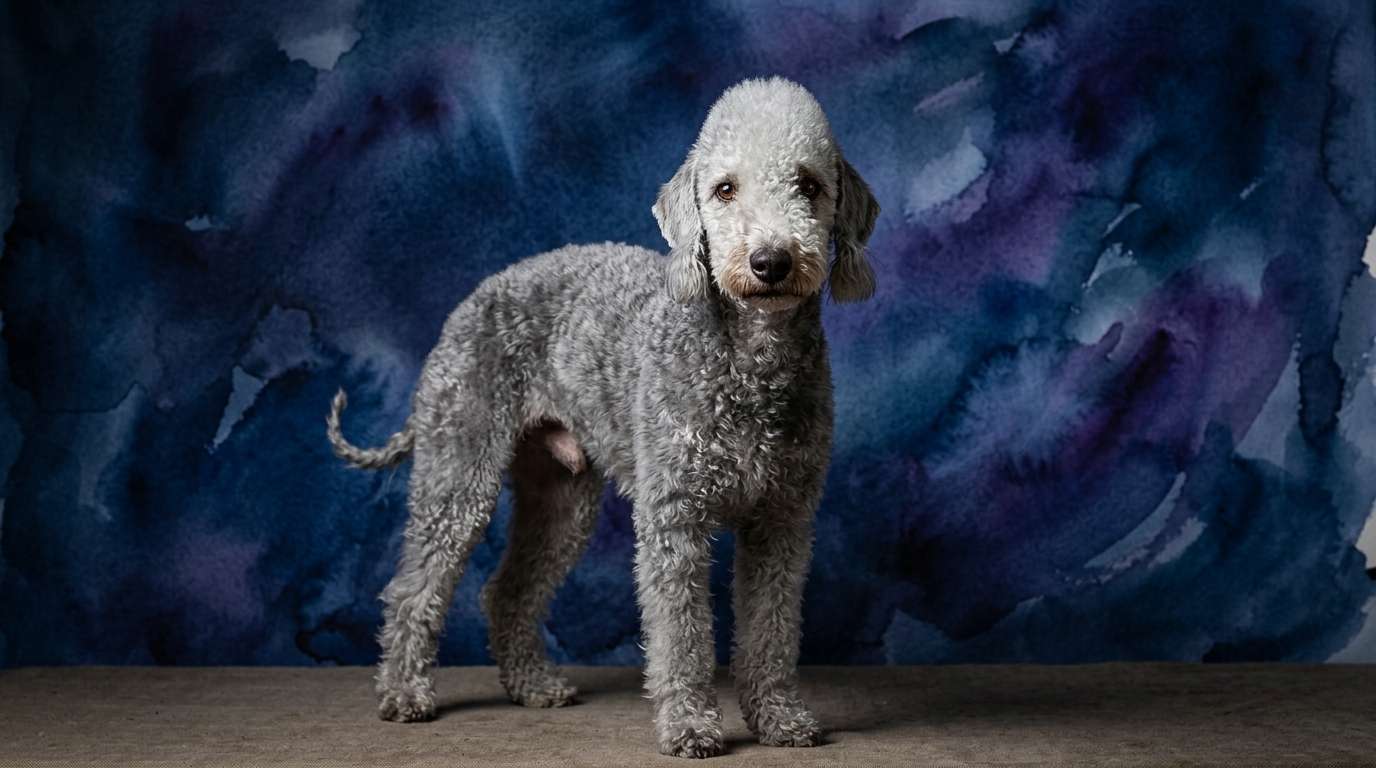
Side-by-Side IQ Profile: Flat-Coated Retriever vs. Bedlington Terrier
**Flat-Coated Retriever:** These retrievers, recognized with a Coren rank of #17, present a comprehensive cognitive profile.
**Problem Solving (4/5):** Flat-Coats exhibit a commendable capacity for figuring out novel situations, whether it’s navigating a complex obedience course or understanding how to manipulate a puzzle toy to extract a treat. Their approach to challenges is often thoughtful and persistent.
**Training Speed (4/5):** Flat-Coats typically absorb new commands and routines with impressive alacrity, making them a joy to teach for those who appreciate a responsive learner. They generally enjoy the process of structured education, eager for the next lesson.
**Social Intelligence (3/5):** While certainly attuned to their human companions, Flat-Coats possess a solid, rather than exceptional, ability to interpret subtle human cues. They form strong bonds and understand basic emotional states, but might not display the profound nuance seen in some other breeds.
**Instinctive Drive (3/5):** Possessing a moderate yet defined retrieving instinct, these dogs are driven to carry and fetch, a characteristic deeply embedded in their lineage. This drive is purposeful and manageable, a valuable asset in many activities.
**Memory (5/5):** The Flat-Coated Retriever truly shines in this domain, demonstrating an outstanding ability to recall learned tasks, remember routines, and recognize people and places over extended periods. Their long-term retention is a significant cognitive asset.
**Bedlington Terrier:** This terrier breed, though not Coren-ranked, possesses a distinct and balanced set of cognitive strengths.
**Problem Solving (3/5):** Bedlington Terriers approach problem-solving with a steady, pragmatic mindset. They are capable of untangling moderate challenges, though they might require more deliberate guidance or repeated exposure to master complex sequences.
**Training Speed (3/5):** These terriers learn at a consistent pace, absorbing new information without the rapid-fire acquisition seen in some breeds. Their training often benefits from patience and positive reinforcement, acknowledging their independent spirit.
**Social Intelligence (3/5):** Bedlington Terriers hold a similar score to the Flat-Coat in social intelligence, capably understanding their owner's intentions and emotions. They connect deeply with their families, demonstrating a reliable grasp of interpersonal dynamics within their trusted circle.
**Instinctive Drive (3/5):** True to their terrier heritage, Bedlingtons possess a moderate instinctive drive, particularly a zest for chasing and exploring. This drive is present and contributes to their lively nature, but is generally manageable within a structured environment.
**Memory (3/5):** Bedlington Terriers exhibit a dependable memory, retaining commands and experiences adequately. While they may not boast the same exceptional recall as some breeds, they hold onto information sufficiently, benefiting from periodic refreshers to keep skills sharp.
Where the Flat-Coated Retriever Wins Cognitively
Examining the specific cognitive dimensions, the Flat-Coated Retriever consistently demonstrates an edge in several key areas. Their exceptional Memory score of 5/5 stands out prominently; these dogs can recall intricate sequences of commands and routines with remarkable fidelity, making them incredibly reliable for tasks requiring long-term retention. This superior recall means less reteaching and more consistent performance over time, whether it's remembering a complex agility course or the location of a specific toy. Furthermore, their Problem Solving ability at 4/5 indicates a more adaptable and resourceful mind. Flat-Coats are quicker to assess novel situations and devise effective strategies, whether it's navigating an unfamiliar environment or figuring out a new puzzle toy. This cognitive flexibility allows them to excel in dynamic activities where quick thinking is paramount. Coupled with their faster Training Speed (4/5), the Flat-Coated Retriever is inherently more efficient at acquiring new skills, absorbing lessons with enthusiasm and making rapid progress through their educational journey. Their Coren ranking of #17 further underscores their general aptitude for learning and working intelligence, placing them among breeds that readily engage with and process human instruction.
Where the Bedlington Terrier Wins Cognitively
While the Bedlington Terrier might not outscore the Flat-Coat in direct comparison of individual IQ metrics, their cognitive strengths lie in a distinct character and application. Their consistent scores across Problem Solving, Training Speed, Social Intelligence, and Instinctive Drive (all 3/5) speak to a balanced, steady cognitive profile rather than a specialized one. This balanced nature means they are less prone to the intense mental demands that might overwhelm a dog with higher scores in specific areas; they don't necessarily *need* constant, complex mental stimulation to thrive. Their independence, a hallmark of many terriers, can be viewed as a cognitive advantage in specific scenarios. This allows them to operate with a degree of self-sufficiency, making their own judgments in certain situations rather than constantly looking for human direction. For owners who appreciate a dog with a clear sense of self and a pragmatic approach to daily life, the Bedlington's cognitive makeup provides a resilient and less demanding mental companion. They are content with a reliable routine and can independently manage their environment, a form of cognitive self-reliance that benefits certain lifestyles.
Which is Easier to Train and Why
When considering ease of training, the Flat-Coated Retriever holds a distinct advantage, primarily due to its higher scores in Training Speed (4/5), Problem Solving (4/5), and especially Memory (5/5). These combined attributes create a dog that is not only quick to grasp new concepts but also retains them reliably over time. Flat-Coats typically possess a strong desire to please and a natural enthusiasm for engaging with their human partners, making them highly responsive to positive reinforcement. They thrive on structured learning and can master complex, multi-step commands and sequences with relative ease, remembering them even after long breaks. For instance, teaching a Flat-Coat an intricate retrieve pattern or a multi-stage agility course would likely progress efficiently. In contrast, the Bedlington Terrier, with its 3/5 scores across the board for Problem Solving, Training Speed, and Memory, presents a more moderate training experience. While certainly capable of learning, they may require more patience, repetition, and a consistent approach. Their characteristic terrier independence can sometimes manifest as a charming stubbornness or a preference for their own agenda, meaning owners might need to employ more creative and highly motivating training techniques to maintain engagement. A Bedlington might take longer to generalize a command to new environments or require more frequent refreshers to keep a skill sharp, reflecting their steady memory rather than the Flat-Coat's exceptional recall. Therefore, for an owner seeking a canine eager to learn quickly and retain vast amounts of information, the Flat-Coated Retriever is the more straightforward choice.
Which Suits Active Owners vs. Relaxed Owners
The Flat-Coated Retriever is undeniably suited for active owners who are prepared to provide consistent mental and physical engagement. Their superior problem-solving skills and exceptional memory mean they thrive when given 'jobs' to do, whether it's participating in dog sports like agility, obedience, or field trials, or simply learning a vast repertoire of tricks. These dogs possess a joyful exuberance and a need for purpose that demands regular, stimulating activities to prevent boredom and channel their energy constructively. A Flat-Coat without adequate mental challenge might invent its own, potentially less desirable, forms of entertainment. For example, a Flat-Coat would relish a daily session involving complex scent work or retrieving multiple items on command, followed by a vigorous run. Conversely, the Bedlington Terrier, while certainly an active and playful breed, can be a more suitable companion for moderately active or even somewhat relaxed owners. Their consistent 3/5 scores across most cognitive dimensions suggest a dog that appreciates engagement but doesn't necessarily require the same intense, complex mental workouts as the Flat-Coat. They enjoy walks, playtime, and learning new things, but their independence means they are often content to entertain themselves or simply relax by their owner's side once their basic needs are met. A Bedlington might be perfectly content with a brisk daily walk and a few short training sessions, followed by quiet time, without feeling under-stimulated. They adapt well to a comfortable routine, making them a good fit for owners who appreciate a dog with a manageable zest for life that doesn't demand constant, intricate mental gymnastics.
The Verdict
Choose the Flat-Coated Retriever if you seek a highly trainable, effervescent companion for complex activities, dog sports, or a working role, valuing their exceptional memory and quick learning.
Opt for the Bedlington Terrier if you appreciate a steady, independent, and charming companion who thrives on consistent, positive training and whose cognitive needs are met with moderate, regular engagement.
🧠 Find Your Pet's IQ Score
Our Pet IQ Lab assessment covers 25+ tests across 5 cognitive dimensions — personalized to your breed.
Take the Full IQ Test →Frequently Asked Questions
How do their memory capabilities compare?
Flat-Coated Retrievers possess superior memory (5/5), retaining complex routines and commands with remarkable consistency over long periods. Bedlington Terriers have a solid but more average memory (3/5), holding onto information well but benefiting from more frequent refreshers for learned tasks.
Is a Flat-Coated Retriever better for first-time dog owners due to its intelligence?
A Flat-Coated Retriever's quicker training speed and problem-solving can certainly make the initial training process smoother for a novice. However, their need for consistent mental engagement and physical activity means a first-time owner must be prepared for an active, involved commitment to channel their substantial cognitive and physical energy.
Does the Bedlington Terrier's unranked status mean it's not intelligent?
Not at all; the Coren ranking primarily measures working and obedience intelligence, not overall cognitive capacity or suitability as a companion. Bedlington Terriers are capable problem-solvers and trainable, simply exhibiting a different learning style and a characteristic terrier independence that makes them excellent companions for the right owner.