Side-by-Side IQ Profile: Flat-Coated Retriever vs Japanese Chin
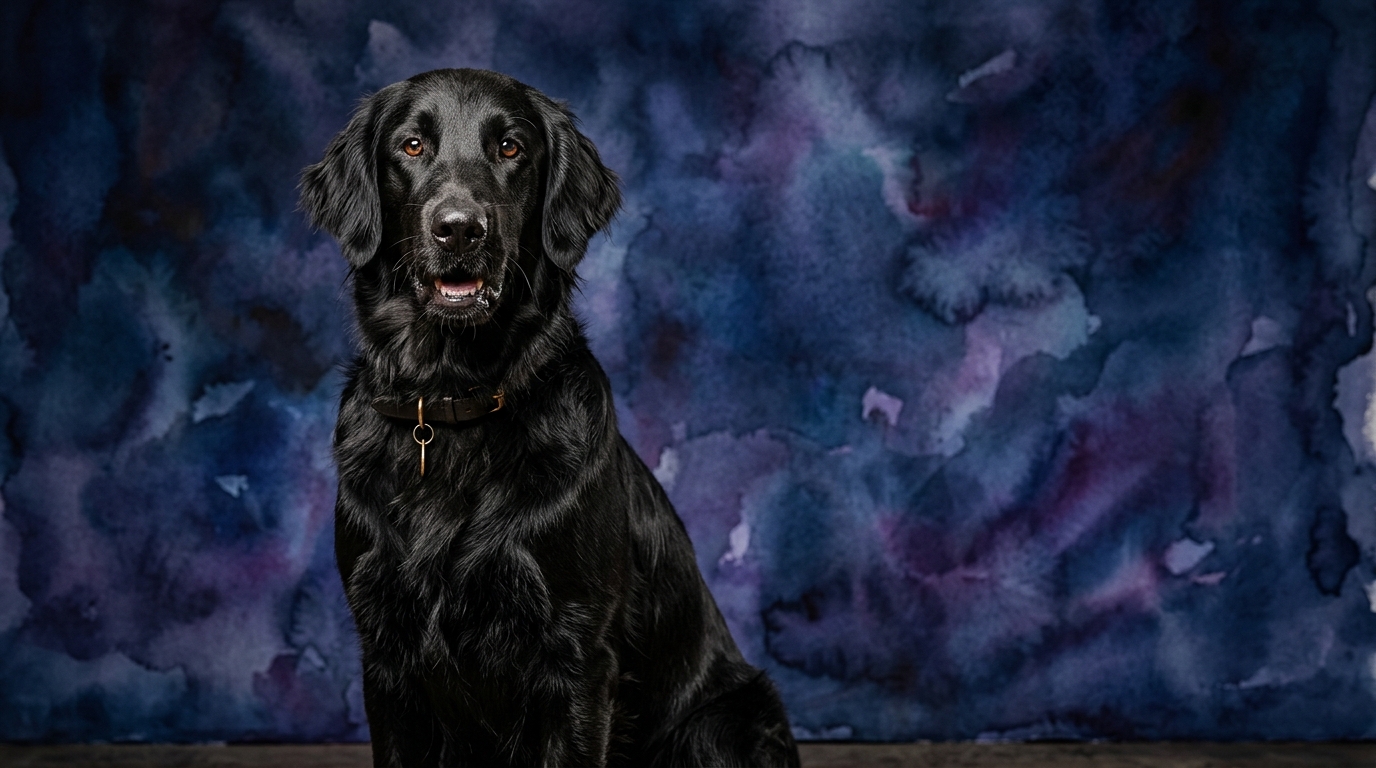
The Cosmic Pet Pet IQ Lab employs a comprehensive five-dimensional framework to assess canine intelligence, offering a nuanced view beyond simple rankings. For the Flat-Coated Retriever, a breed historically developed for retrieving game, their cognitive profile reflects their working heritage. They score 4 out of 5 for Problem Solving, indicating an aptitude for navigating novel situations and figuring out solutions independently. Their Training Speed is also a solid 4 out of 5, suggesting they grasp new commands and routines with relative quickness. Social Intelligence stands at 3 out of 5, meaning they are generally attuned to human cues and social dynamics but perhaps not as acutely as some specialized companion breeds. Instinctive Drive, reflecting their inherent urges for tasks like chasing or retrieving, is rated 3 out of 5, a moderate but present force. A standout trait is their Memory, earning a perfect 5 out of 5, highlighting their exceptional ability to recall learned behaviors, places, and experiences over time.
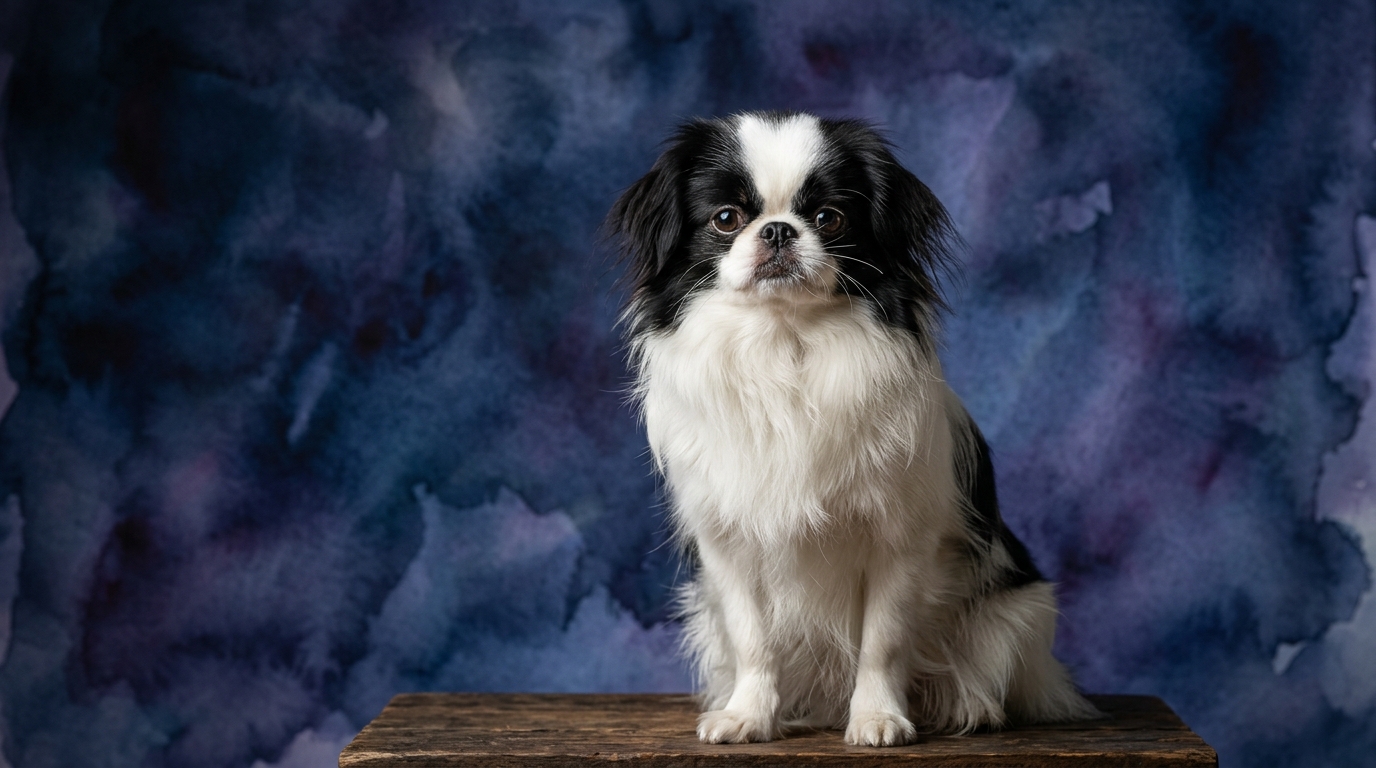
In contrast, the Japanese Chin, a breed traditionally cherished as a companion to royalty, presents a cognitive profile optimized for close human interaction rather than demanding fieldwork. This breed is not Coren-ranked, suggesting a different set of cognitive priorities. Across the board, the Japanese Chin consistently scores 3 out of 5 for Problem Solving, Training Speed, Social Intelligence, Instinctive Drive, and Memory. This indicates a moderate capacity in all these areas: they can solve straightforward problems, learn at a steady pace, understand human social cues, possess a mild inherent drive, and retain information adequately. Their consistent scores suggest a balanced, less specialized cognitive makeup, perfectly suited to their role as an affectionate and adaptable indoor companion.
Where the Flat-Coated Retriever Wins Cognitively
The Flat-Coated Retriever’s cognitive advantages are most evident in areas requiring sustained mental engagement and retention, directly stemming from their role as a hunting companion. Their superior Problem Solving (4/5 versus 3/5) means they are more adept at navigating complex environments, figuring out how to retrieve an item from a tricky spot, or understanding multi-step tasks. This breed exhibits a notable capacity for independent thought when faced with a challenge, a valuable trait in a working dog.
Furthermore, their exceptional Memory (5/5 versus 3/5) is a significant cognitive asset. A Flat-Coat can recall a vast array of commands, retrieve locations, and learned routines with remarkable accuracy, making them highly reliable in repetitive tasks or sport activities. This strong memory, coupled with their faster Training Speed (4/5 versus 3/5), allows them to master advanced obedience, agility courses, and intricate retrieving patterns more quickly and retain that knowledge over longer periods than the Japanese Chin. Their cognitive architecture is built for purpose and sustained mental effort, making them excel in structured learning and operational roles.
Where the Japanese Chin Wins Cognitively
While the Flat-Coated Retriever excels in complex problem-solving and retention for working tasks, the Japanese Chin's cognitive strengths lie in its refined suitability for companion life. Its moderate Problem Solving (3/5) and Memory (3/5) mean it requires less intense mental stimulation to thrive, making it an ideal choice for owners seeking a less demanding intellectual engagement. This cognitive profile translates into a dog that is typically content with indoor activities and does not constantly seek out complex challenges, which can be a significant 'win' for a relaxed household.
The Chin's Social Intelligence, while rated equally (3/5) with the Flat-Coat, often manifests as a keen sensitivity to human emotions and routines within a household, a specific cognitive strength for its close companion role. They are adept at observing and adapting to their owner's moods and schedules, fostering a deep, intuitive bond. Furthermore, their 3/5 Instinctive Drive is also a cognitive 'win' for a calm home, as it translates to a reduced urge for vigorous hunting or retrieving tasks, aligning perfectly with a tranquil, indoor-oriented lifestyle. This breed's entire cognitive makeup is finely tuned for intimate companionship rather than demanding physical or mental labor.
Which is Easier to Train and Why
When it comes to ease of training, the Flat-Coated Retriever generally presents a more straightforward experience for owners seeking a highly responsive and versatile companion. Their higher Training Speed (4/5) means they grasp new commands and concepts more rapidly. This inherent quickness is often coupled with a strong desire to please their handlers, a characteristic that makes them eager participants in training sessions. Their exceptional Memory (5/5) ensures that once a command or behavior is learned, it is retained effectively, reducing the need for constant re-teaching. Flat-Coats thrive on structure and purpose, making them receptive to consistent, positive reinforcement training methods for a wide range of tasks, from basic obedience to advanced field work.
The Japanese Chin, with its moderate Training Speed (3/5) and Memory (3/5), can certainly be trained, but the approach might need to be more patient and creative. They may require more repetition to solidify new behaviors and might not retain complex sequences as readily as a Flat-Coat. Their primary motivation often stems from their bond with their owner and the desire for affection, rather than an inherent drive to perform tasks. This means training needs to be highly engaging and rewarding, focusing on positive reinforcement and keeping sessions short and fun to maintain their interest. While capable of mastering basic commands and house-training, their focus might be more on human interaction than task completion, requiring an owner to understand and work with their companion-oriented mindset rather than expecting the drive of a working breed.
Which Suits Active Owners vs Relaxed Owners
The Flat-Coated Retriever is an ideal match for active owners who relish outdoor adventures and enjoy engaging their dogs in various activities. Their moderate Instinctive Drive (3/5) and high Problem Solving (4/5) mean they thrive on mental and physical challenges, from long hikes and runs to participating in dog sports like agility, obedience, or retrieving trials. These dogs possess considerable stamina and a joyful enthusiasm for life that demands an outlet. Owners who can provide consistent exercise, structured training, and opportunities for their Flat-Coat to use its keen memory and problem-solving skills will find a devoted and fulfilled companion. They are not dogs content to simply lounge; their cognitive and physical energy needs regular, purposeful engagement.
Conversely, the Japanese Chin is perfectly suited for more relaxed owners who appreciate a calm, affectionate presence in their home. Their consistent 3/5 ratings across all cognitive dimensions, including a moderate Instinctive Drive, translate to a dog that is generally content with moderate indoor play and shorter, leisurely strolls outdoors. While they do enjoy interaction, their mental and physical exercise requirements are significantly lower than a Flat-Coated Retriever's. Owners who prioritize close companionship, quiet evenings, and a dog whose primary joy comes from human presence will find the Japanese Chin to be an exquisite fit. Their moderate social intelligence makes them highly adaptable to family life, observing and enjoying the rhythm of the household without demanding constant strenuous activity.
The Verdict
Choose the Flat-Coated Retriever if you are an active individual or family seeking a highly trainable, energetic companion for outdoor activities and dog sports, valuing strong memory and problem-solving skills.
Opt for the Japanese Chin if you prefer a serene, affectionate lap companion who thrives on close human interaction, requires moderate mental and physical stimulation, and is content with a more relaxed indoor lifestyle.
🧠 Find Your Pet's IQ Score
Our Pet IQ Lab assessment covers 25+ tests across 5 cognitive dimensions — personalized to your breed.
Take the Full IQ Test →Frequently Asked Questions
Are Flat-Coated Retrievers good family dogs?
Yes, Flat-Coated Retrievers are generally excellent family dogs, known for their cheerful disposition and patience with children. Their social intelligence allows them to integrate well into family dynamics, provided they receive sufficient exercise and mental engagement to prevent boredom.
Do Japanese Chins need a lot of exercise?
No, Japanese Chins do not require extensive exercise; their needs are moderate. Short daily walks and indoor play are typically sufficient to keep them content and healthy, aligning with their role as a cherished companion dog.
What are the biggest training differences between the two breeds?
The Flat-Coated Retriever typically learns faster and retains commands better due to higher training speed and exceptional memory, often driven by a desire to please. The Japanese Chin, while trainable, may require more patience, repetition, and motivation rooted in affection, due to moderate training speed and memory.