The Cosmic Pet IQ Profile: Flat-Coated Retriever
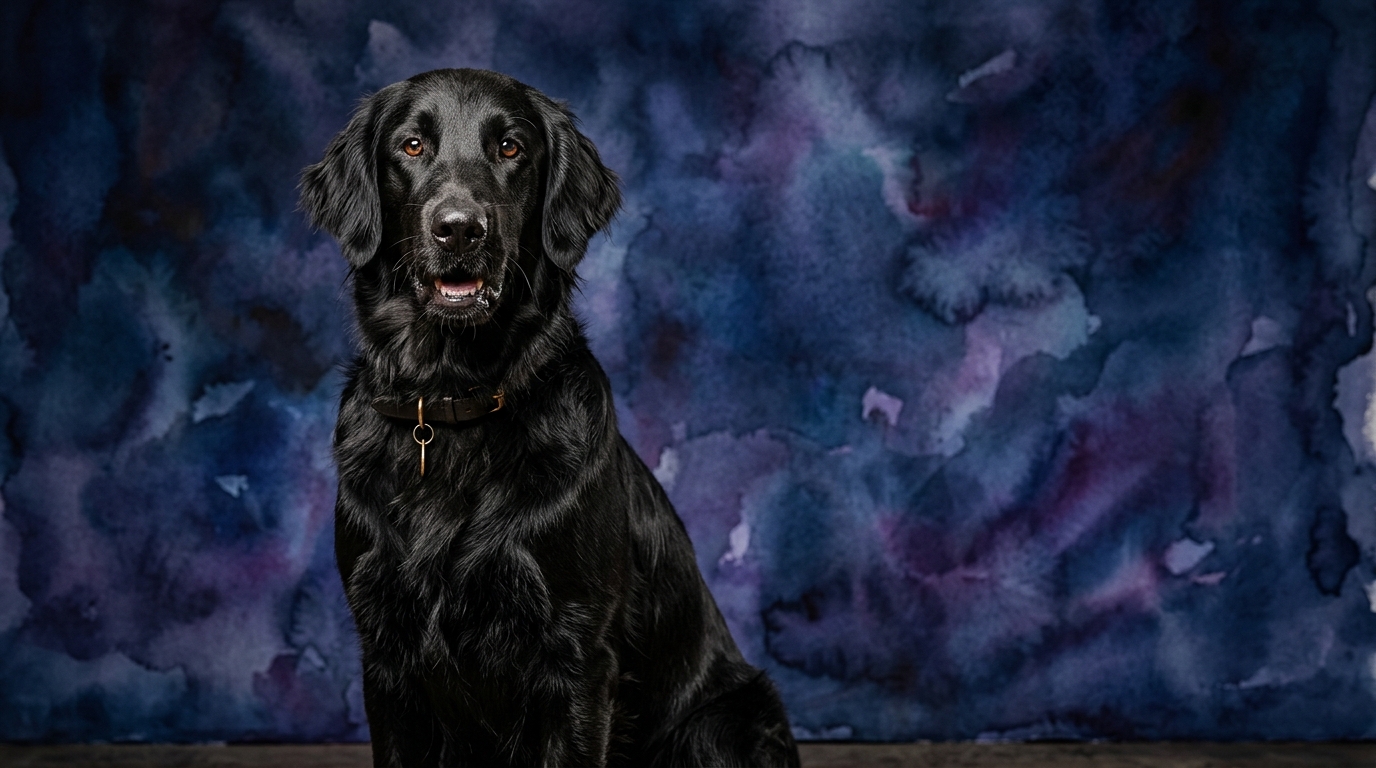
With a Coren rank of #17, the Flat-Coated Retriever presents a compelling cognitive profile. Their Problem Solving is rated 4/5, indicating a strong capacity for figuring out novel situations and navigating complex environments with agility. This aptitude for assessing and resolving challenges quickly reflects their historical role in retrieving game from varied terrains, where adaptability is key.
Their Training Speed, also at 4/5, means Flat-Coats grasp new commands and routines with impressive alacrity, often requiring fewer repetitions than many other breeds. This rapid acquisition of knowledge is a hallmark of their Sporting group lineage, bred to work cooperatively and follow instructions precisely. Social Intelligence stands at 3/5, showing a solid aptitude for forming strong bonds with their human companions and generally interacting well within a family unit, attuned to human cues. The Instinctive Drive, rated 3/5, manifests primarily as a desire to retrieve and a general enthusiasm for activity, channeled towards cooperative tasks. Finally, an exceptional Memory of 5/5 ensures Flat-Coated Retrievers retain learned behaviors, complex routes, and specific commands over long periods, invaluable for consistent training outcomes and intricate sequences.
The Cosmic Pet IQ Profile: Scottish Terrier
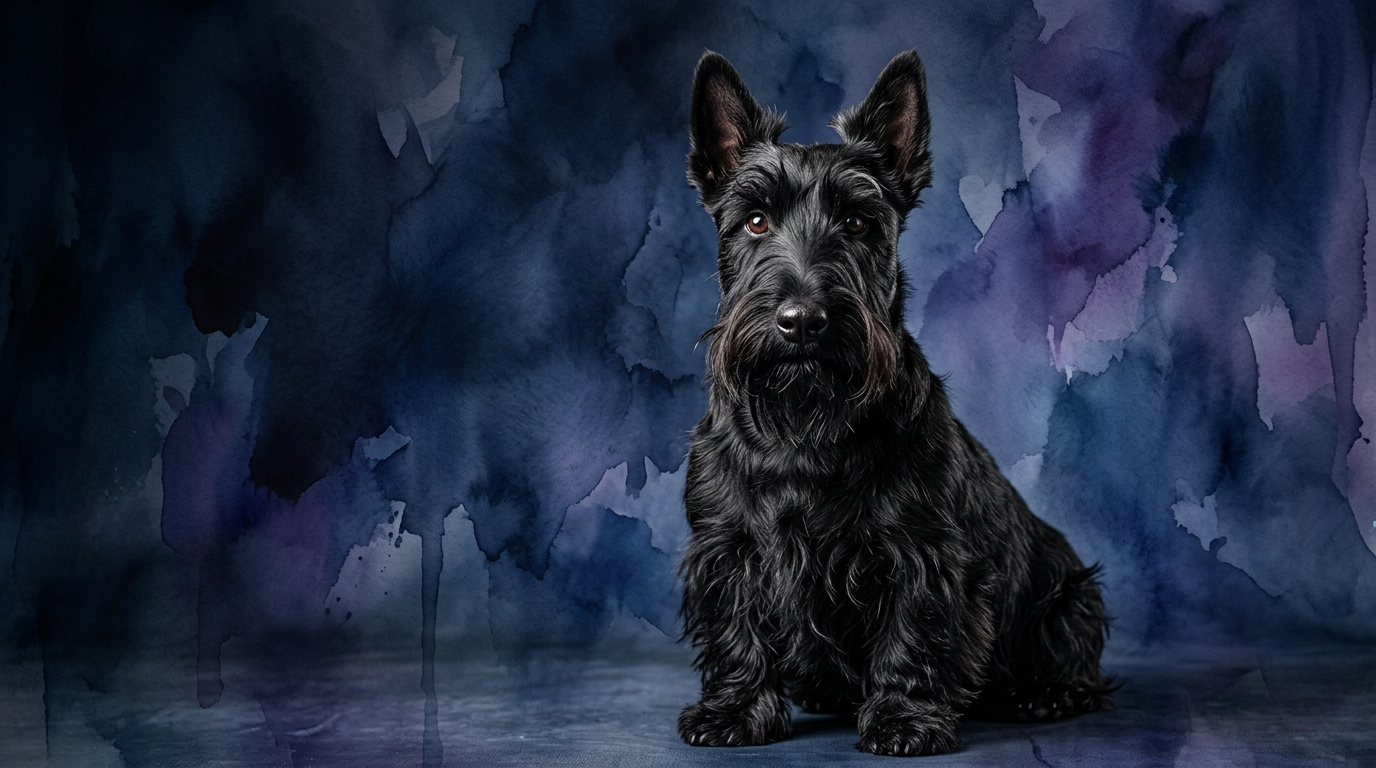
The Scottish Terrier, with a Coren rank of #65, offers a distinct cognitive makeup. Their Problem Solving capacity is 3/5, meaning they possess a moderate ability to figure out solutions, often approaching challenges with a methodical, sometimes independent, strategy. They are particularly adept at problems related to their terrier instincts, such as navigating tight spaces or pursuing small game, though perhaps not with the same speed as a Flat-Coat.
Training Speed for the Scottish Terrier is 3/5; these terriers learn at a steady pace, capable of mastering commands with consistent reinforcement. However, their independent nature often means they might require more patience and creative motivation during training sessions, as their focus can sometimes be directed internally rather than solely on the handler. Their Social Intelligence is also 3/5, indicating an ability to form deep, loyal bonds with their chosen humans, observing their environment and family dynamics, though their expressions of connection might be more reserved. A potent Instinctive Drive of 3/5 is deeply rooted in their heritage of hunting vermin, translating into a strong desire to dig, explore, and pursue, often with singular focus. Lastly, their Memory is 3/5, reliable for routines, commands, and experiences, though it may not be as expansive or long-lasting as a Flat-Coat's, potentially requiring occasional refreshers.
Where Flat-Coated Retriever Wins Cognitively
The Flat-Coated Retriever shines brightest in cognitive domains centered around rapid assimilation and retention of information, coupled with agile problem-solving. Their Problem Solving score of 4/5 indicates a natural aptitude for assessing new situations and devising effective solutions quickly, whether it's navigating a complex agility course or figuring out how to retrieve a toy from an unusual spot. This is distinct from the Scottish Terrier's more measured approach, making the Flat-Coat a quicker study in novel challenges.
Furthermore, the Flat-Coat's superior Training Speed (4/5) and exceptional Memory (5/5) create a powerful synergy for learning. They not only grasp new commands and concepts with remarkable speed but also retain that knowledge with impressive longevity. This means fewer repetitions are needed during initial training and skills are less likely to fade over time, a significant advantage for owners aiming for advanced obedience or specialized tasks. For instance, a Flat-Coat will likely recall a multi-step retrieve sequence after fewer practice sessions and over a longer interval than a Scottish Terrier.
Where Scottish Terrier Wins Cognitively
While the Scottish Terrier doesn't quantitatively 'win' in a head-to-head score comparison for cognitive dimensions, its unique strengths lie in the application and nature of its cognitive traits, particularly its instinctive drive. Both breeds score 3/5 for Instinctive Drive, but for the Scottish Terrier, this drive is intrinsically tied to independent action and persistent pursuit, reflecting centuries of selective breeding for vermin control. This manifests as a tenacious focus on a self-assigned task, even if it's not handler-directed, which can be a form of problem-solving in itself – albeit a very specific and self-motivated one.
Their Social Intelligence, also rated 3/5, combined with their instinctive independence, fosters a deep, discerning loyalty rather than an eager-to-please temperament. A Scottish Terrier forms strong bonds but often expresses affection on its own terms, demonstrating a subtle understanding of its human companions without necessarily seeking constant external validation. This self-reliance, while sometimes perceived as stubbornness in training contexts, is a cognitive strength for a dog bred to work autonomously, making them resilient and determined in their endeavors.
Which is Easier to Train and Why
Based on their cognitive profiles, the Flat-Coated Retriever is unequivocally the easier breed to train. Their 4/5 Training Speed means they absorb new commands and behaviors much faster, requiring fewer repetitions and less time spent on initial instruction. This rapid learning is synergistically supported by their outstanding 5/5 Memory, ensuring that once a lesson is learned, it's remembered for the long haul. A Flat-Coat is predisposed to cooperative learning, eager to engage with their handler and execute tasks with precision, a trait honed by their gundog heritage.
In contrast, the Scottish Terrier's 3/5 Training Speed and 3/5 Memory, combined with their strong independent instinctive drive, present a different training dynamic. While capable of learning, they often require more patience, consistent methods, and creative motivation to maintain engagement. Their terrier nature means they are less inclined to blindly follow commands if a more interesting 'terrier' activity (like digging or scent tracking) presents itself. Training a Scottish Terrier often becomes an exercise in convincing them that your agenda is more rewarding than their own, necessitating a deep understanding of positive reinforcement and managing their inherent independence.
Suitability for Active vs. Relaxed Owners
For owners who embrace an active lifestyle and desire a canine partner eager for shared adventures and structured activities, the Flat-Coated Retriever is an ideal match. Their robust problem-solving skills, rapid training acquisition, and exceptional memory mean they thrive on mental stimulation alongside physical exercise. They excel in dog sports like agility, obedience, and retrieving, and are genuinely happiest when engaged in purposeful work with their human. A Flat-Coat needs consistent outlets for its energy and intellect to prevent boredom and ensure well-adjusted behavior.
The Scottish Terrier, while not a couch potato, is generally better suited for owners who appreciate a more independent companion and a different rhythm of activity. Their instinctive drive (3/5) means they still require daily walks and opportunities to explore, sniff, and engage their terrier instincts, perhaps in a securely fenced yard. However, they may not demand the same level of intense, structured, cooperative engagement as a Flat-Coat. A Scottish Terrier can be content with a more relaxed home life, provided their foundational needs for exercise and mental engagement are met on their own terms, making them a fit for owners who enjoy quiet companionship but can still provide consistent, moderate activity.
The Verdict
Choose the Flat-Coated Retriever if you seek a highly trainable, cooperative companion eager to learn and excel in structured activities, thriving on consistent mental and physical engagement.
Opt for the Scottish Terrier if you appreciate an independent, loyal companion with a distinct personality, understanding that their training requires patience and their activity needs are rooted in their unique terrier drives.
🧠 Find Your Pet's IQ Score
Our Pet IQ Lab assessment covers 25+ tests across 5 cognitive dimensions — personalized to your breed.
Take the Full IQ Test →Frequently Asked Questions
Does a higher Coren rank mean a dog is 'smarter'?
Coren rank primarily measures 'working and obedience intelligence,' reflecting how quickly a dog learns and obeys commands. It doesn't encompass all aspects of canine cognition, such as problem-solving for survival or independent decision-making, where breeds with lower ranks might excel in different ways.
Can a Scottish Terrier learn advanced commands like a Flat-Coated Retriever?
Yes, a Scottish Terrier is certainly capable of learning advanced commands, but it will typically require more time, patience, and consistent, positive reinforcement compared to a Flat-Coated Retriever due to their differing training speeds and memory retention. Their independent nature means motivation is key.
How do the breeds' instinctive drives differ despite the same 3/5 score?
While both score 3/5, the Flat-Coated Retriever's drive is primarily cooperative for retrieving, eager to work with a handler. The Scottish Terrier's drive, however, is more independent, focused on hunting and digging, often leading to self-directed pursuits that can be challenging to redirect.