Side-by-Side Cognitive Profiles
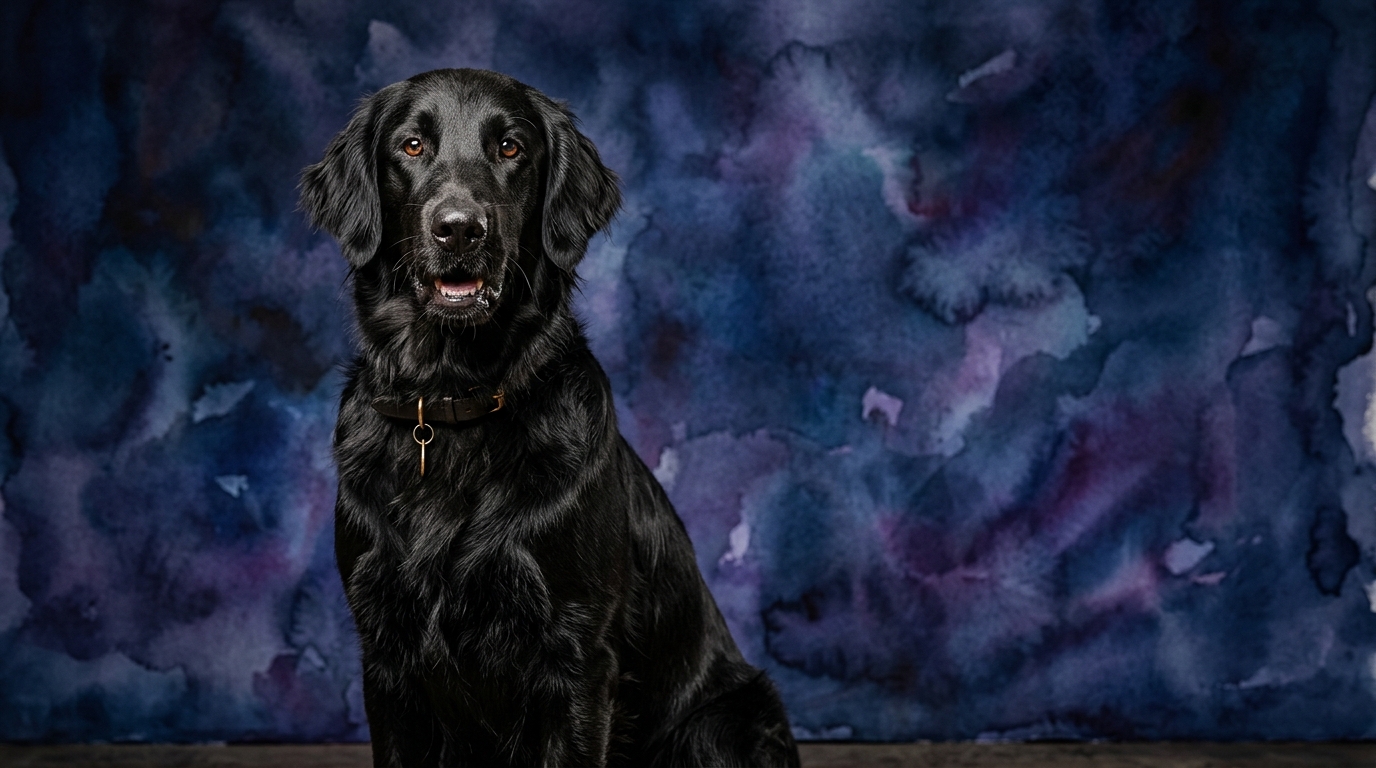
The Flat-Coated Retriever, ranked #17 by Coren for working intelligence, demonstrates a strong cognitive aptitude across several dimensions. Their problem-solving ability scores a robust 4/5, indicating a capacity to navigate novel situations and figure out solutions beyond simple trial and error, often with human guidance in mind. Training speed is also high at 4/5, reflecting their quick grasp of new commands and routines, a trait crucial for their retrieving tasks. Memory stands out at an exceptional 5/5, allowing them to retain complex sequences, locations, and learned behaviors over long periods, essential for remembering where fallen game landed or intricate agility courses. Social intelligence, at 3/5, suggests they are attuned to human cues and interactions but perhaps not as nuanced in reading subtle social dynamics as some herding breeds. Instinctive drive, also 3/5, is geared towards their retrieving heritage—a strong desire to find and bring back objects, but less about independent hunting or territoriality.
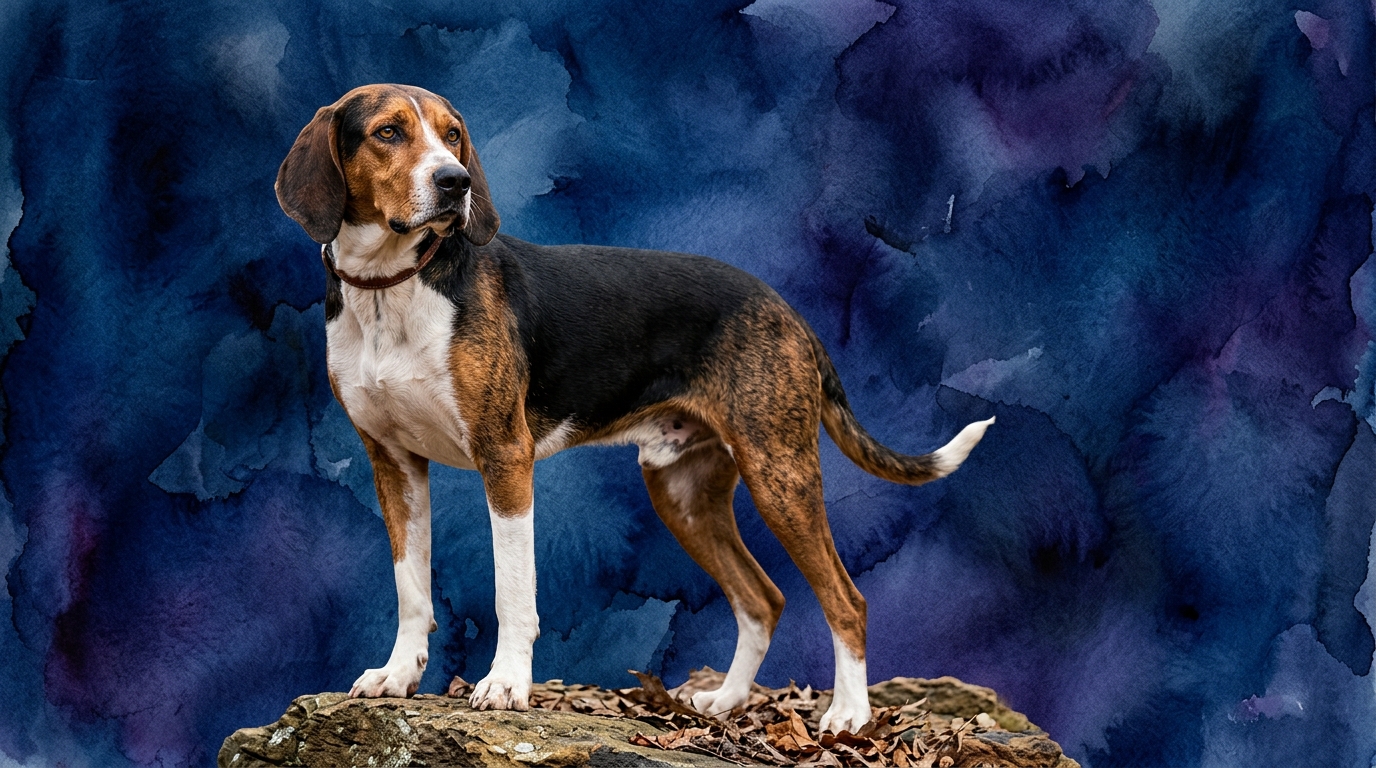
The Treeing Walker Coonhound, a member of the Hound group, is not ranked on Coren's scale, which primarily assesses obedience and working intelligence, a framework that doesn't fully capture the specialized cognitive strengths of scent hounds. Their problem-solving registers at 3/5; this isn't a lack of cognitive capacity, but rather a focus on solving problems related to scent trails and tracking, often independently, rather than human-directed tasks. Training speed is 3/5, indicating they can learn, but often require more repetition and motivation tailored to their natural drives. Social intelligence matches the Flat-Coat at 3/5, meaning they are generally amenable to human companionship and interaction, though their independent nature can sometimes overshadow a desire for constant human direction. Instinctive drive, also 3/5, is profoundly concentrated on their scenting ability and pursuit of game, a powerful, unwavering focus that defines their cognitive landscape. Memory scores 3/5, suggesting they retain information adequately for their tasks but perhaps not with the same breadth or detail as a Flat-Coated Retriever, particularly for abstract commands.
Where Flat-Coated Retriever Excels Cognitively
The Flat-Coated Retriever shines in areas demanding collaboration, rapid learning, and precise recall. Their 4/5 problem-solving ability, coupled with a 4/5 training speed, means they can quickly adapt to new training exercises and extrapolate solutions from previous experiences. This makes them adept at diverse canine sports like obedience, rally, and agility, where understanding complex sequences and executing them promptly is paramount. The Flat-Coat's stellar 5/5 memory is a significant advantage, allowing them to recall a vast repertoire of commands, remember the location of items (even after distractions), and maintain learned behaviors with minimal refresher training. This cognitive strength translates into a dog that is not only trainable but also retains that training effectively, making them highly reliable companions in structured environments. Their social intelligence, while rated 3/5, is particularly effective in a collaborative context, as they are generally eager to please and receptive to human communication, which enhances their learning process.
Where Treeing Walker Coonhound Excels Cognitively
The Treeing Walker Coonhound's cognitive strengths are profoundly rooted in their ancestral purpose: tracking and treeing game. Their 3/5 problem-solving ability, while numerically lower than the Flat-Coat's, manifests differently; it's a sophisticated aptitude for deciphering complex scent trails, navigating varied terrain, and persisting until a conclusion is reached. This involves intricate spatial reasoning and an ability to filter out irrelevant sensory information, a form of problem-solving that is highly specialized and autonomous. Their instinctive drive, rated 3/5, is an unwavering focus on scent, a deep, persistent cognitive engagement that allows them to work tirelessly on a trail for hours. This isn't just physical endurance; it's a mental tenacity. While their memory is 3/5, it is highly effective for remembering specific scents and the successful strategies used in past hunts. Their social intelligence (3/5) allows them to form strong bonds, but their cognitive priority often remains with their nose, making them excellent, dedicated workers in their chosen field, rather than general-purpose problem solvers.
Which is Easier to Train and Why
Without question, the Flat-Coated Retriever presents as the easier breed to train for general obedience and modern companion tasks. Their 4/5 training speed and 5/5 memory mean they absorb new commands quickly and retain them remarkably well. They typically possess a strong “desire to please” their human, which acts as a powerful motivator in training sessions. This eagerness, combined with their ability to generalize learned behaviors to new situations, makes them responsive and adaptable students. For instance, a Flat-Coat learning to fetch a specific toy can often be quickly taught to fetch other items with minor adjustments.
In contrast, the Treeing Walker Coonhound, with a 3/5 training speed and 3/5 memory, requires a more patient and nuanced approach. While capable of learning, their primary cognitive motivation is often scent-driven, and their independent nature can make them less inclined to follow human directives when a compelling scent is present. Training a Coonhound often involves harnessing their innate drive, making scent games and tracking activities highly effective motivators. A Treeing Walker Coonhound might struggle with consistent recall if their nose is engaged, not because they don't understand the command, but because their powerful instinctive drive overrides other considerations. Consistency, positive reinforcement, and understanding their hound mindset are crucial for success.
Which Suits Active Owners vs. Relaxed Owners
Neither the Flat-Coated Retriever nor the Treeing Walker Coonhound can be accurately described as suitable for “relaxed” owners in the traditional sense, as both breeds possess significant energy and cognitive needs. However, the type of activity they require differs.
The Flat-Coated Retriever is an excellent fit for active owners who enjoy structured activities and mental engagement. They thrive on interactive play, obedience training, agility, flyball, and retrieving games that challenge both their bodies and their minds. Their desire for companionship means they want to be involved in family activities and can become destructive if bored or under-exercised. Owners who enjoy teaching new tricks and participating in dog sports will find a Flat-Coat a willing and capable partner.
The Treeing Walker Coonhound is also for active owners, but ones who appreciate long, meandering walks, off-leash exploration in safe, fenced areas, and opportunities for scent work. Their activity needs are less about structured, rapid-fire commands and more about sustained physical exertion combined with mental stimulation through their nose. They are less concerned with performing perfectly choreographed routines and more interested in following a compelling trail. Owners who enjoy hiking, exploring nature, and who understand the independent, sometimes single-minded nature of a scent hound will find a fulfilling companion in the Treeing Walker Coonhound, even if they aren't looking for a dog to compete in formal obedience.
The Verdict
Opt for a Flat-Coated Retriever if you seek a highly trainable, eager-to-please companion for diverse dog sports, structured activities, and a strong desire for collaborative engagement. Their exceptional memory and problem-solving make them adaptable and reliable in various human-directed tasks.
Select a Treeing Walker Coonhound if you appreciate an independent, scent-driven partner for long outdoor adventures and specialized scent work, understanding that their cognitive strengths lie in persistent tracking rather than rapid obedience. Be prepared for a training approach that respects their deep instinctive drives and requires patience.
🧠 Find Your Pet's IQ Score
Our Pet IQ Lab assessment covers 25+ tests across 5 cognitive dimensions — personalized to your breed.
Take the Full IQ Test →Frequently Asked Questions
Do Treeing Walker Coonhounds learn quickly?
Treeing Walker Coonhounds have a training speed rating of 3/5, meaning they are capable learners but often require more repetition and motivation tailored to their strong scent drive compared to breeds like the Flat-Coated Retriever. Their learning is often most effective when integrated with activities that engage their natural instincts.
Is a Flat-Coated Retriever good at solving new problems?
Yes, Flat-Coated Retrievers excel at solving new problems, rated 4/5 in problem-solving. They demonstrate a strong capacity to understand new situations and figure out solutions, often looking to their human for guidance, making them versatile and adaptable in varied environments.
How does memory differ between these two breeds?
The Flat-Coated Retriever boasts an exceptional 5/5 memory, allowing them to retain complex information and commands over long periods. The Treeing Walker Coonhound has a 3/5 memory, sufficient for their specialized tasks but less broad or detailed for abstract human-directed learning, particularly when their powerful nose is engaged.