
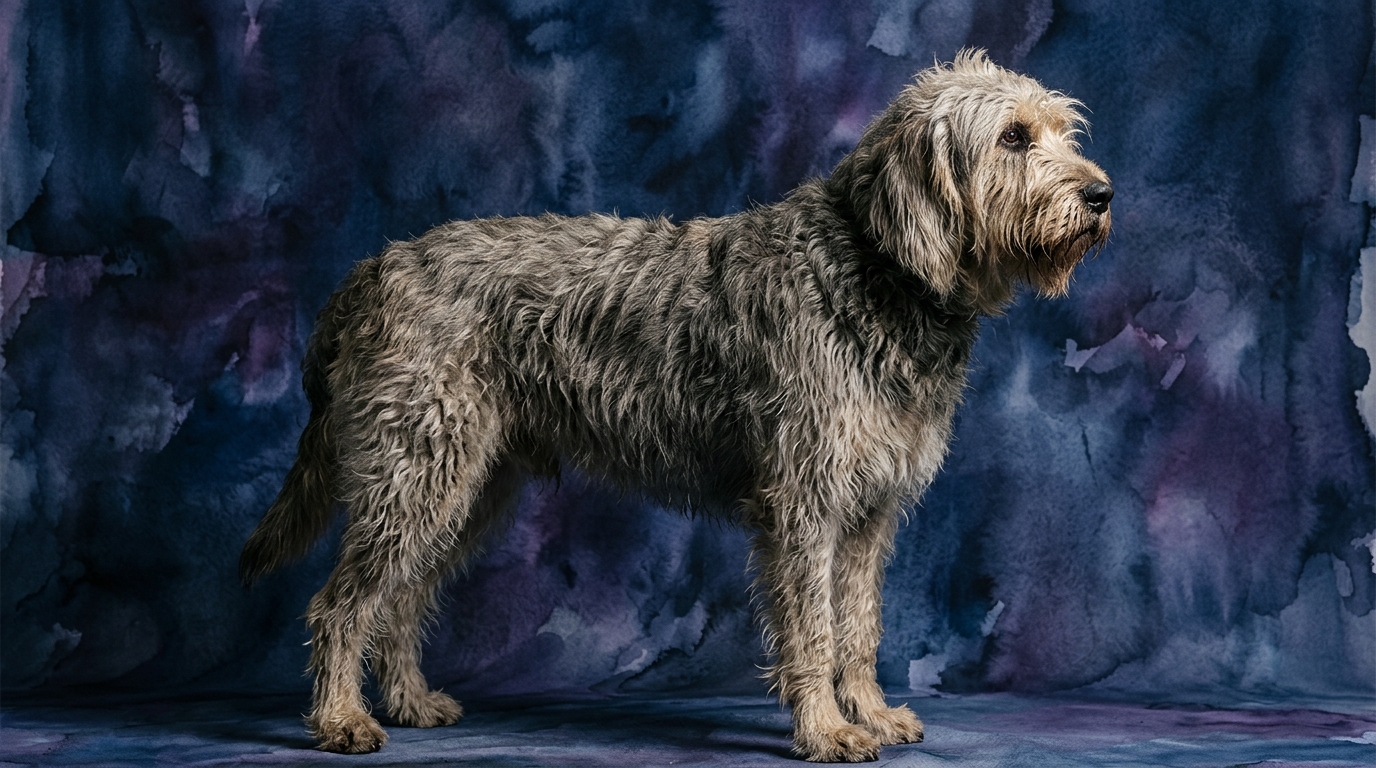
Side-by-Side IQ Profile: French Bulldog vs. Otterhound
The Cosmic Pet Pet IQ Lab provides a nuanced look at canine cognition across five distinct dimensions. For the French Bulldog, a member of the Non-Sporting group, their profile highlights a balanced intellectual approach with a standout social capacity. They achieve a Problem Solving score of 3/5, indicating an ability to navigate familiar challenges and learn routine solutions, though complex abstract reasoning isn't their primary strength. Their Training Speed is also 3/5; they grasp commands with consistent effort, often motivated by positive interaction. Where they truly excel is Social Intelligence, earning a perfect 5/5, reflecting their profound attunement to human emotions and social dynamics. Instictive Drive is low at 2/5, meaning they are less driven by primal urges like hunting or ranging, preferring human company. Finally, their Memory is solid at 3/5, allowing them to retain routines, learned behaviors, and social associations effectively.
In contrast, the Otterhound, a robust Hound breed, presents a cognitive profile shaped by their working heritage. Their Problem Solving score is 3/5, much like the French Bulldog, but often applied to environmental navigation and resource acquisition, particularly when scent is involved. Training Speed is also 3/5, suggesting a moderate learning pace, though this can be influenced by their independent nature. Their Social Intelligence stands at 3/5; while affectionate and good-natured, they are less overtly perceptive of subtle human emotional shifts compared to the French Bulldog. The Otterhound's Instictive Drive is a more pronounced 3/5, primarily centered around their powerful scenting ability and desire to track. Their Memory, rated 3/5, is particularly strong for scents, locations, and experiences related to their primary drive, helping them recall complex trails and environmental details.
Where the French Bulldog Shines Cognitively
The French Bulldog’s undeniable cognitive advantage lies in their exceptional Social Intelligence, scoring a rare 5/5. This isn't merely about being friendly; it reflects a deep capacity to understand and respond to human emotions, intentions, and social cues. A French Bulldog often seems to 'read the room,' offering comfort when sensing distress or adapting their behavior to fit the household mood without explicit commands. This acute social perception allows them to integrate seamlessly into family life, anticipating needs and forming incredibly strong, empathetic bonds with their people. Their ability to interpret subtle human body language and vocal inflections is a cognitive skill that makes them highly responsive and adaptable companions, setting them apart in their understanding of the human-canine relationship.
Where the Otterhound Excels Cognitively
The Otterhound's cognitive strength is rooted in their robust Instinctive Drive, which, at 3/5, is a defining aspect of their intelligence. While this score might seem moderate, it represents a powerful, specialized cognitive aptitude far more developed than in the French Bulldog. This drive manifests as an unparalleled ability to process and follow complex scent trails, requiring significant focus, persistence, and environmental problem-solving. An Otterhound's mind is constantly analyzing olfactory information, reconstructing narratives from scent molecules, and navigating varied terrains to pursue a trail. This specialized form of intelligence means they excel at tasks requiring sustained focus on a sensory input, demonstrating a unique cognitive persistence and an impressive capacity for environmental recall related to scent. Their problem-solving often involves strategizing how to overcome obstacles to continue a scent-based mission.
Trainability: French Bulldog vs. Otterhound
Both breeds register a 3/5 for Training Speed, but the underlying cognitive mechanisms and challenges differ significantly. The French Bulldog's high social intelligence often translates into a strong desire to please their human companions. While they can exhibit a stubborn streak, their attunement to human feedback and their joy in shared activities make them generally receptive to positive reinforcement training. They learn routines quickly and remember commands well, especially when training is consistent and engaging, leveraging their social bond for motivation. Their cognitive focus is largely on their human, making them more pliable in a structured training environment.
The Otterhound, despite the same training speed score, presents a different set of considerations. Their powerful instinctive drive, particularly their nose, is a constant, compelling distraction. Training an Otterhound often means competing with a fascinating world of scents, requiring more patience, creativity, and highly rewarding methods to capture and maintain their focus. While intelligent, their independence and drive to follow a trail can sometimes override their willingness to comply with commands. Effective Otterhound training often involves channeling their natural instincts into constructive activities, such as scent work or tracking, rather than trying to suppress them. Therefore, while both learn at a moderate pace, the French Bulldog's social motivation makes them an easier prospect for a novice trainer, whereas the Otterhound requires a more experienced hand adept at managing strong drives.
Lifestyle Match: Active vs. Relaxed Owners
When considering lifestyle, the cognitive profiles of these two breeds point to distinct preferences. The French Bulldog, with its low instinctive drive and high social intelligence, is an ideal match for relaxed owners or those living in urban environments. They thrive on companionship and comfort, requiring only moderate exercise – short daily walks and indoor play are typically sufficient. Their contentment with a less active lifestyle and their preference for being close to their people make them excellent apartment dwellers or companions for individuals seeking a more sedentary furry friend. Their cognitive energy is directed towards social interaction rather than extensive physical exploration.
Conversely, the Otterhound's higher instinctive drive and robust build demand a more active and engaged owner. They are not suited for a sedentary lifestyle; their powerful nose and desire to explore require significant daily exercise, including long walks, hikes, or opportunities for scent work. Owners prepared for regular outdoor adventures and willing to engage their dog's tracking instincts will find a fulfilling partnership. Their cognitive curiosity is deeply tied to their environment, making them happiest when they have ample opportunity to investigate the world through their senses. An Otterhound thrives with owners who embrace an active, outdoor-oriented life and can provide consistent mental stimulation.
The Verdict
Choose the French Bulldog if you seek a highly empathetic, socially attuned companion content with a relaxed indoor lifestyle, and who will deeply integrate into your emotional world.
Choose the Otterhound if you are an active, outdoor-loving owner prepared to engage a powerful scent drive, and appreciate a dog with an independent spirit and a love for robust exploration.
🧠 Find Your Pet's IQ Score
Our Pet IQ Lab assessment covers 25+ tests across 5 cognitive dimensions — personalized to your breed.
Take the Full IQ Test →Frequently Asked Questions
Do French Bulldogs need a lot of exercise?
No, French Bulldogs have moderate exercise needs, typically satisfied with short daily walks and indoor play. Their brachycephalic structure means they can overheat easily, making strenuous activity risky, so owners should be mindful of temperature.
Are Otterhounds good family dogs?
Yes, Otterhounds are generally good-natured and affectionate with their families, including children. However, their size, boisterous nature, and strong scent drive mean supervision is essential with very young kids, and they thrive with consistent training.
How do French Bulldogs show their social intelligence?
French Bulldogs exhibit their high social intelligence by being exceptionally attuned to human moods, offering comfort without prompting, and quickly adapting their behavior to fit household routines and dynamics. They often anticipate their owner's needs or emotional state, demonstrating deep empathy.