
Side-by-Side Pet IQ Lab Profile: French Bulldog vs. Petit Basset Griffon Vendéen
The Pet IQ Lab provides a nuanced view of canine intelligence, moving beyond simple 'smart' labels to evaluate five distinct cognitive dimensions. For the French Bulldog, a member of the Non-Sporting Group, our data highlights a Problem Solving score of 3/5, indicating a moderate ability to navigate routine daily challenges and learn from experience without necessarily excelling at complex, abstract puzzles. Their Training Speed is also 3/5, meaning they can acquire new commands at a reasonable pace, though their occasional independent streak might require consistent motivation. The French Bulldog's standout strength is undeniably Social Intelligence, earning a perfect 5/5. This reflects an exceptional capacity to read human emotions, understand social cues, and integrate deeply into family dynamics, making them highly attuned companions. Their Instinctive Drive is a low 2/5, indicating minimal innate urges for traditional working roles, as they were primarily bred for companionship. Memory is moderate at 3/5, allowing them to consistently recall learned behaviors and familiar faces.
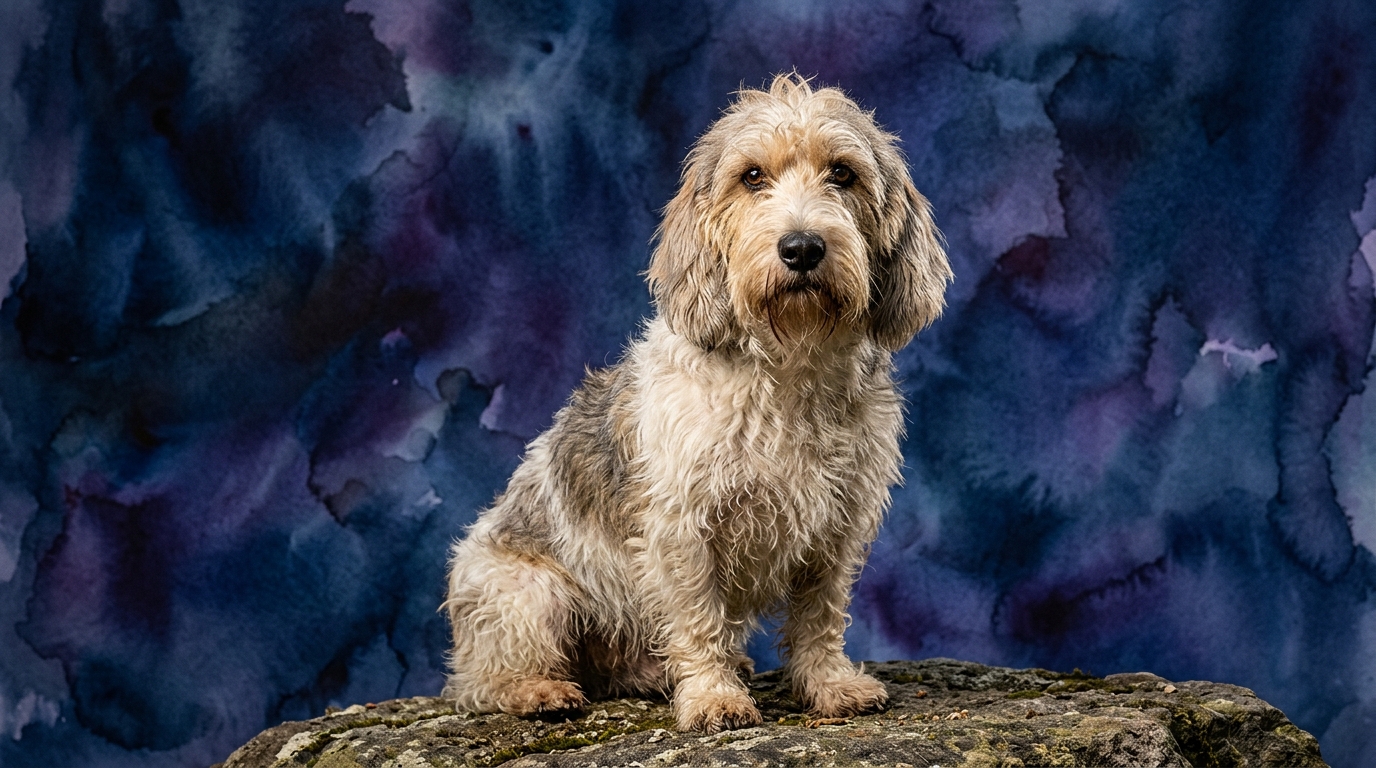
In contrast, the Petit Basset Griffon Vendéen (PBGV), a spirited member of the Hound Group, presents a profile shaped by its scenting heritage. Their Problem Solving is rated 3/5, similar to the French Bulldog, but often applied to environmental challenges like navigating terrain or deciphering complex scent trails rather than human-centric puzzles. Training Speed also sits at 3/5; PBGVs are capable learners, yet their independent hound nature and strong environmental focus can make consistent obedience a more engaging endeavor. Their Social Intelligence is 3/5, signifying that while they are friendly and enjoy family interaction, they don't possess the same intense focus on human emotional states as a dedicated companion breed. Where the PBGV distinguishes itself is in its Instinctive Drive, scoring 3/5, which reflects a moderate yet potent innate urge for scenting and tracking, a core part of their ancestral purpose. Memory, like the French Bulldog, is 3/5, enabling them to recall specific scent patterns and learned hunting strategies, alongside household routines.
Where the French Bulldog Wins Cognitively
The French Bulldog’s undeniable cognitive advantage lies in its exceptional Social Intelligence, scoring a full 5/5 compared to the PBGV’s 3/5. This isn't merely about being friendly; it signifies a profound capacity to interpret human non-verbal cues, emotional states, and intentions. A French Bulldog is remarkably adept at reading a person's mood, often responding with comforting proximity or playful attempts to lighten spirits. They are masters of adapting their behavior to fit household dynamics, understanding routines not just as a sequence of events, but as part of the human-centric social structure. This heightened social awareness means they are often more responsive to subtle human feedback during interactions, making them deeply intuitive companions who seem to understand what their people need almost before they do. Their world revolves around their human family, and their cognitive strengths are finely tuned to excel within this intimate social sphere, fostering an unparalleled bond built on mutual understanding.
Where the Petit Basset Griffon Vendéen Wins Cognitively
The PBGV's cognitive edge, while not a stark numerical difference, is rooted in its Instinctive Drive, rated 3/5 compared to the French Bulldog’s 2/5. This moderate, yet distinct, drive is almost entirely dedicated to their highly developed sense of smell and their intrinsic desire to follow a scent trail. While both breeds share a 3/5 for Problem Solving, the PBGV's problem-solving is often applied to environmental challenges – how to navigate terrain, overcome obstacles, or persist in finding the source of an intriguing odor. Their memory, also 3/5, plays a crucial role here, allowing them to recall specific scent patterns and successful tracking strategies. This isn’t about winning a human game; it's about solving the complex, ever-changing puzzles presented by the natural world. A PBGV demonstrates a tenacity and focus when on a scent that is largely absent in the French Bulldog, reflecting a cognitive architecture optimized for independent, sensory-driven exploration and pursuit. This innate drive provides a rich internal world of olfactory information and a robust problem-solving approach tailored to their ancestral hunting purpose.
Which Is Easier to Train and Why?
When it comes to ease of training, both breeds share a 3/5 rating for Training Speed, suggesting they can learn at a comparable basic pace. However, the *experience* of training these two breeds differs significantly due to their other cognitive dimensions. The French Bulldog, with its superior Social Intelligence (5/5), tends to be more eager to please and more attuned to human approval. This strong desire for connection and understanding makes them highly responsive to positive reinforcement and praise. Their low Instinctive Drive (2/5) means they are less likely to be distracted by external stimuli like scents or the urge to explore independently, allowing for more focused training sessions. They thrive on collaborative learning, viewing training as another form of engaging interaction with their beloved humans. In contrast, the PBGV, while capable of learning, possesses a moderate Social Intelligence (3/5) and a moderate Instinctive Drive (3/5), specifically a powerful scent drive. This means a PBGV might be more independent-minded during training; a compelling scent can easily override a human command, causing them to "tune out" and follow their nose. While they can learn, their motivation is often less about pleasing an owner and more about satisfying their own innate curiosities. Training a PBGV requires immense patience, consistency, and often needs to incorporate elements that engage their scent drive, such as scent games, to make learning more appealing and to manage their environmental focus. Therefore, for most owners seeking a straightforward and responsive training experience, the French Bulldog generally presents fewer behavioral hurdles due to its intrinsic motivation for human connection.
Which Suits Active Owners vs. Relaxed Owners?
The Pet IQ Lab profiles clearly delineate which type of owner might find a better match. The French Bulldog, with its low Instinctive Drive (2/5) and moderate Problem Solving (3/5), coupled with its paramount Social Intelligence (5/5), is an ideal companion for relaxed owners. They are content with a comfortable indoor lifestyle, preferring short, leisurely walks and ample cuddle time over strenuous physical activity. Their mental stimulation comes primarily from interacting with their human family, observing household activities, and engaging in gentle play. They are excellent "velcro dogs" who thrive on proximity and emotional exchange, making them perfect for individuals or families whose primary desire is a deeply connected, low-maintenance companion. Their cognitive strengths are geared towards understanding and fitting seamlessly into a human-centric domestic environment, requiring minimal independent exploration or intense physical outlets.
The Petit Basset Griffon Vendéen, on the other hand, with its moderate Instinctive Drive (3/5) and moderate Problem Solving (3/5), is better suited for moderately active owners. While not requiring marathon-level exercise, their ingrained scent drive means they have a genuine need for outdoor exploration and opportunities to engage their nose. They enjoy walks where they can investigate interesting smells, explore new environments, and perhaps even participate in scent work or tracking games. Their more independent nature, stemming from their hound heritage, means they appreciate their own pursuits and might not demand the same constant human attention as a French Bulldog. Owners who enjoy regular walks, have a securely fenced yard where a PBGV can safely sniff around, and are prepared for a dog with a curious, sometimes single-minded, approach to the world will find the PBGV a rewarding companion. They offer a blend of affectionate companionship with a spirited, exploratory streak, making them a good fit for those seeking a dog with a bit more zest for outdoor adventures.
The Verdict
For owners seeking a deeply connected, emotionally responsive companion that thrives on social interaction and indoor life, valuing a dog that effortlessly integrates into their daily routines and offers profound emotional support, the French Bulldog is an ideal choice.
For owners who appreciate an independent, curious, scent-driven dog that enjoys exploring and requires moderate outdoor activity, and who can embrace a spirited companion with a mind of its own and a strong connection to the natural world, the Petit Basset Griffon Vendéen is an excellent match.
🧠 Find Your Pet's IQ Score
Our Pet IQ Lab assessment covers 25+ tests across 5 cognitive dimensions — personalized to your breed.
Take the Full IQ Test →Frequently Asked Questions
Are French Bulldogs difficult to train despite their moderate training speed?
While their training speed is moderate, French Bulldogs' exceptional social intelligence often translates into an eagerness to please and high responsiveness to positive reinforcement, making them generally enjoyable to train for owners who prioritize a strong bond and consistent, positive methods.
Do Petit Basset Griffon Vendéens require extensive outdoor activity?
PBGVs possess a moderate instinctive drive, particularly for scenting, which means they benefit from regular walks and opportunities to safely explore in a securely fenced area. However, they don't typically require extreme endurance activities, preferring consistent, engaging outdoor sessions over intense bursts.
Which breed is generally better suited for families with young children?
French Bulldogs, with their exceptional social intelligence and low instinctive drive, often adapt very well to family life and are typically patient and gentle with children. Their desire for close companionship makes them a strong choice for families seeking a highly integrated and emotionally attuned canine member.