
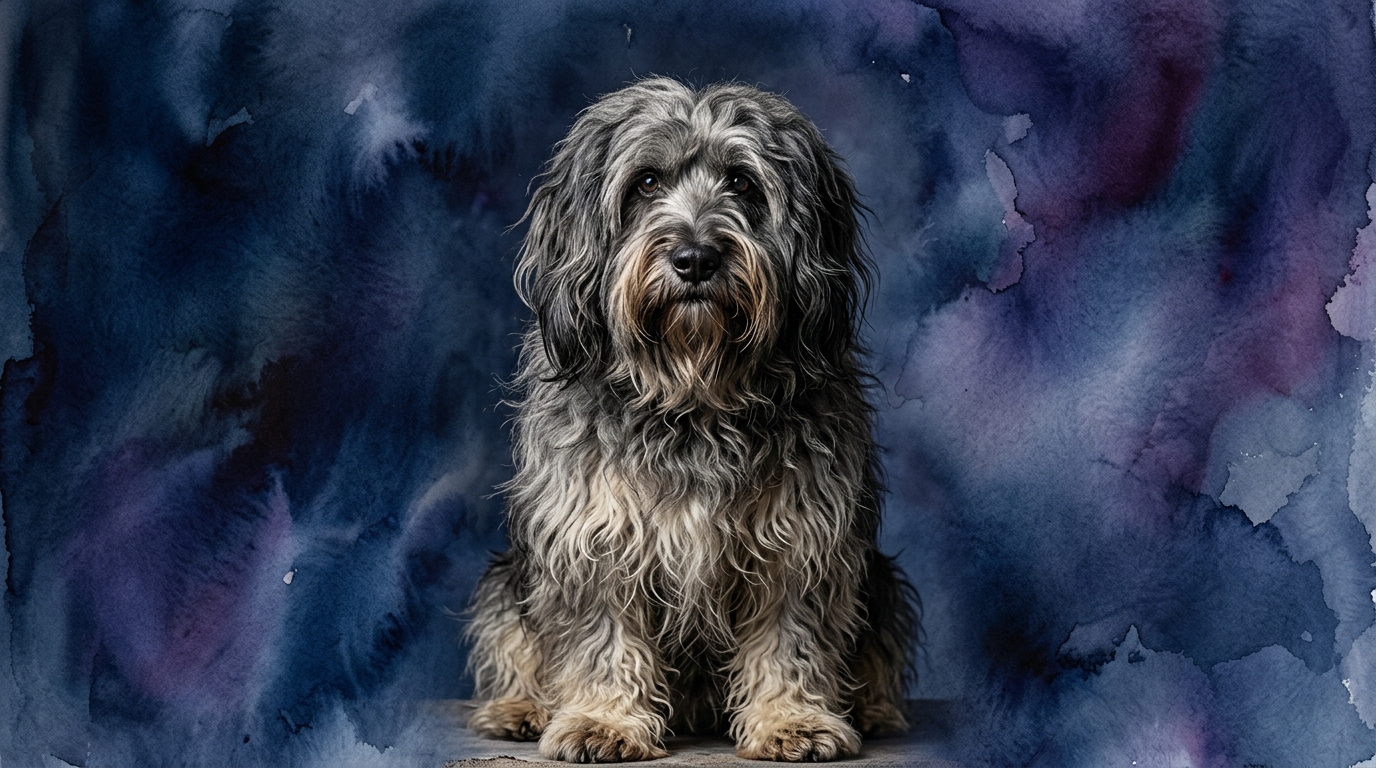
Side-by-Side Cognitive Profile: French Bulldog vs. Polish Lowland Sheepdog
To truly understand the cognitive landscape of these two breeds, The Cosmic Pet Pet IQ Lab employs a multi-dimensional framework, assessing problem-solving, training speed, social intelligence, instinctive drive, and memory. This offers a nuanced view beyond a single 'smartness' score.
The **French Bulldog** presents a unique cognitive blueprint. Their Problem Solving is rated at 3/5, indicating a moderate ability to navigate simple environmental puzzles or figure out how to access desired items, often relying on learned patterns rather than complex strategic thought. Training Speed also sits at 3/5; they can grasp commands with consistent, positive reinforcement, though a degree of individual motivation is always at play. Where they truly shine is their Social Intelligence, scoring an exceptional 5/5, reflecting a profound attunement to human emotions and social cues. Their Instinctive Drive is lower at 2/5, meaning minimal inherent predisposition for traditional working roles or intense predatory behaviors. Finally, their Memory is rated 3/5, allowing them to retain routines, commands, and familiar faces effectively.
In contrast, the **Polish Lowland Sheepdog (PON)**, while sharing some scores, applies its cognitive abilities in distinct ways. Their Problem Solving is also 3/5, but this often manifests as resourcefulness and adaptability within their environment, characteristic of a herding background where independent decisions are sometimes necessary. Their Training Speed is similarly 3/5; they are capable learners, but their independent nature often means they require engaging and varied methods to maintain focus and compliance. The PON’s Social Intelligence is 3/5, indicating a strong connection to their core family but less of the universal people-pleasing demeanor seen in the French Bulldog. Their Instinctive Drive is 3/5, reflecting a moderate, inherent inclination towards herding behaviors like patrolling, gathering, and watchful vigilance. Their Memory, like the French Bulldog, is 3/5, allowing them to recall tasks, boundaries, and learned sequences relevant to their activities.
Where the French Bulldog Cognitively Excels
The French Bulldog’s standout cognitive strength lies unequivocally in its Social Intelligence, scoring a remarkable 5/5 compared to the Polish Lowland Sheepdog's 3/5. This isn't merely about being friendly; it's a deep-seated capacity to interpret and respond to human emotions, body language, and subtle social cues with exceptional precision. A French Bulldog often seems to 'read' its owner's mood, offering comfort or initiating play at just the right moment. Their ability to form profoundly strong emotional bonds and adapt seamlessly to family dynamics stems directly from this acute social awareness. They are masters of non-verbal communication, often using eye contact, vocalizations, and subtle shifts in posture to convey their desires and understand human intentions, making them incredibly intuitive companions. This cognitive strength enables them to excel in roles requiring emotional sensitivity, such as companion animals or even therapy dogs, where understanding and responding to human emotional states is paramount.
Where the Polish Lowland Sheepdog Cognitively Excels
While both breeds share several 3/5 scores, the Polish Lowland Sheepdog demonstrates a cognitive edge in its Instinctive Drive, rated 3/5 compared to the French Bulldog's 2/5. This isn't just about physical energy; it represents a fundamental difference in how they perceive and interact with their environment. The PON’s moderate instinctive drive is a direct legacy of its herding heritage, imbuing it with an innate predisposition for observation, patrolling, and managing space. Cognitively, this translates into a heightened awareness of surroundings, a desire for order, and a natural vigilance. They often exhibit a subtle 'gathering' instinct, keeping family members within sight or gently guiding them, demonstrating a proactive engagement with their social unit. This intrinsic drive provides a cognitive framework for understanding boundaries and movement that is less pronounced in the purely companion-bred French Bulldog, allowing the PON to excel in activities that tap into these inherent organizational and protective instincts.
Training Dynamics: Which is Easier and Why?
Both the French Bulldog and the Polish Lowland Sheepdog share a 3/5 rating for Training Speed, yet their behavioral differences create distinct training experiences. The French Bulldog’s exceptional Social Intelligence (5/5) plays a pivotal role here. They are generally eager to please their human companions and thrive on positive reinforcement, particularly when it strengthens their cherished social bond. Their motivation often stems from the desire for affection and connection, making them responsive to basic obedience and house manners. However, their moderate problem-solving and memory mean that while they learn, complex multi-step tasks might require more repetition and patience, and they can display stubbornness if they perceive a task as unrewarding or tedious. Their lower instinctive drive means fewer innate distractions from working impulses, allowing for a more focused, albeit sometimes leisurely, learning pace.
The Polish Lowland Sheepdog, despite the same 3/5 training speed, presents a different challenge due to its moderate Social Intelligence (3/5) and higher Instinctive Drive (3/5). While intelligent and capable of learning, the PON is often more of an independent thinker. They may question the necessity of a command, especially if it doesn’t align with their perceived purpose or if they aren't convinced it’s worthwhile. Training a PON requires consistency, creativity, and a trainer who understands how to make tasks engaging and relevant to their resourceful nature. They respond well to methods that tap into their problem-solving and observational skills, and their herding independence can sometimes be misinterpreted as stubbornness. For a PON, training is less about simple compliance and more about building a collaborative partnership, where the dog understands the 'why' behind the command. Therefore, for foundational obedience and a generally compliant attitude, the French Bulldog might appear 'easier' due to their strong human focus, while the PON demands a more nuanced, patient, and stimulating approach to unlock its full learning potential.
Tailoring to Lifestyles: Active vs. Relaxed Owners
Understanding the cognitive profiles of these breeds is crucial for matching them with the right owner lifestyle. The French Bulldog, with its lower Instinctive Drive (2/5) and naturally moderate energy levels, is an ideal fit for relaxed owners. Their primary cognitive need is intense social interaction and companionship, which their 5/5 Social Intelligence allows them to fulfill with remarkable grace. They are content with short, regular walks, indoor playtime, and ample cuddle time on the couch. Their adaptability to apartment living and preference for comfort align perfectly with a less physically demanding routine, as long as their need for human attention is consistently met. A French Bulldog thrives in an environment where emotional connection and social harmony are prioritized over vigorous physical activity.
Conversely, the Polish Lowland Sheepdog’s moderate Instinctive Drive (3/5), coupled with its inherent resourcefulness and observational skills, makes it better suited for active owners. While their problem-solving and training speed are moderate, their herding heritage means they possess a cognitive predisposition for activity and engagement that goes beyond simple physical exercise. They need consistent mental stimulation and physical outlets to satisfy their innate drives. Owners who enjoy dog sports like agility, obedience, or even casual hiking will find a willing and capable partner in a PON. Their cognitive profile benefits immensely from structured activities that engage their mind, challenging their problem-solving abilities and allowing them to exercise their natural vigilance. A relaxed owner might find a PON's unmet cognitive and physical needs manifesting as boredom or undesirable behaviors, making an active, engaged lifestyle a prerequisite for a well-adjusted Polish Lowland Sheepdog.
The Verdict
Choose a French Bulldog if you prioritize a deeply emotionally connected, sensitive companion who thrives on social harmony and fits a more relaxed daily pace.
Opt for a Polish Lowland Sheepdog if you seek an independent, resourceful partner committed to consistent mental and physical challenges, and appreciate a watchful, active canine companion.
🧠 Find Your Pet's IQ Score
Our Pet IQ Lab assessment covers 25+ tests across 5 cognitive dimensions — personalized to your breed.
Take the Full IQ Test →Frequently Asked Questions
Do French Bulldogs need a lot of mental stimulation?
While not requiring complex problem-solving tasks like some working breeds, French Bulldogs thrive on social interaction and gentle training, which provides sufficient mental engagement for their cognitive profile. Their mental needs are largely met through companionship, interactive play, and consistent routines rather than demanding intellectual challenges.
Can Polish Lowland Sheepdogs live in apartments?
Polish Lowland Sheepdogs can adapt to apartment living if their significant exercise and mental stimulation needs are consistently met through daily walks, training, and engaging activities. Without sufficient outlets for their moderate instinctive drive and resourcefulness, they can become bored and potentially exhibit undesirable behaviors, so a dedicated owner is key.
Are French Bulldogs good with children?
French Bulldogs, with their exceptional social intelligence, are generally patient and affectionate with children, making them suitable family companions. Their ability to read social cues and their gentle nature often make them tolerant playmates, though all interactions between dogs and young children should always be supervised to ensure safety for both.