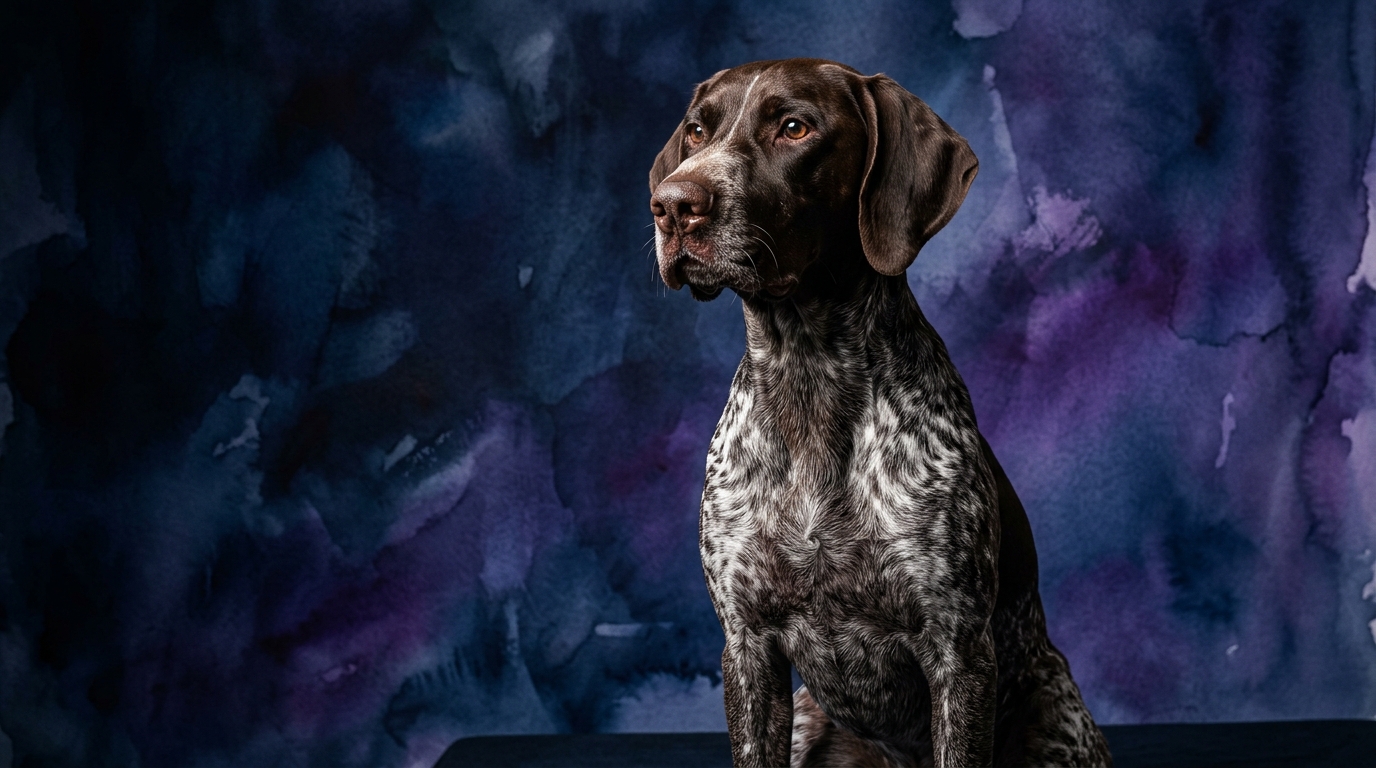
Side-by-Side IQ Profile: German Shorthaired Pointer
The German Shorthaired Pointer (GSP), Coren-ranked at #17, demonstrates an impressive cognitive toolkit tailored for its demanding sporting role. Their Problem Solving score of 5/5 signifies an exceptional capacity to analyze situations, adapt strategies, and independently figure out solutions to novel challenges, often seen in their ability to work through complex scent trails or retrieve obstacles. Training Speed is rated 4/5, indicating they are quick learners, grasping new commands and routines with impressive efficiency, though their intense drive can sometimes require focused redirection. Social Intelligence at 4/5 means they are adept at reading human cues and social dynamics, forming strong bonds, and understanding emotional states, making them highly attuned partners. Their Instinctive Drive is a profound 5/5, reflecting a powerful innate urge for hunting, tracking, and retrieving; they are highly motivated by tasks that engage their natural predatory sequence. Finally, their Memory at 4/5 ensures they retain learned commands, complex sequences, experiences, and spatial information effectively over time, aiding in consistent, high-level performance.
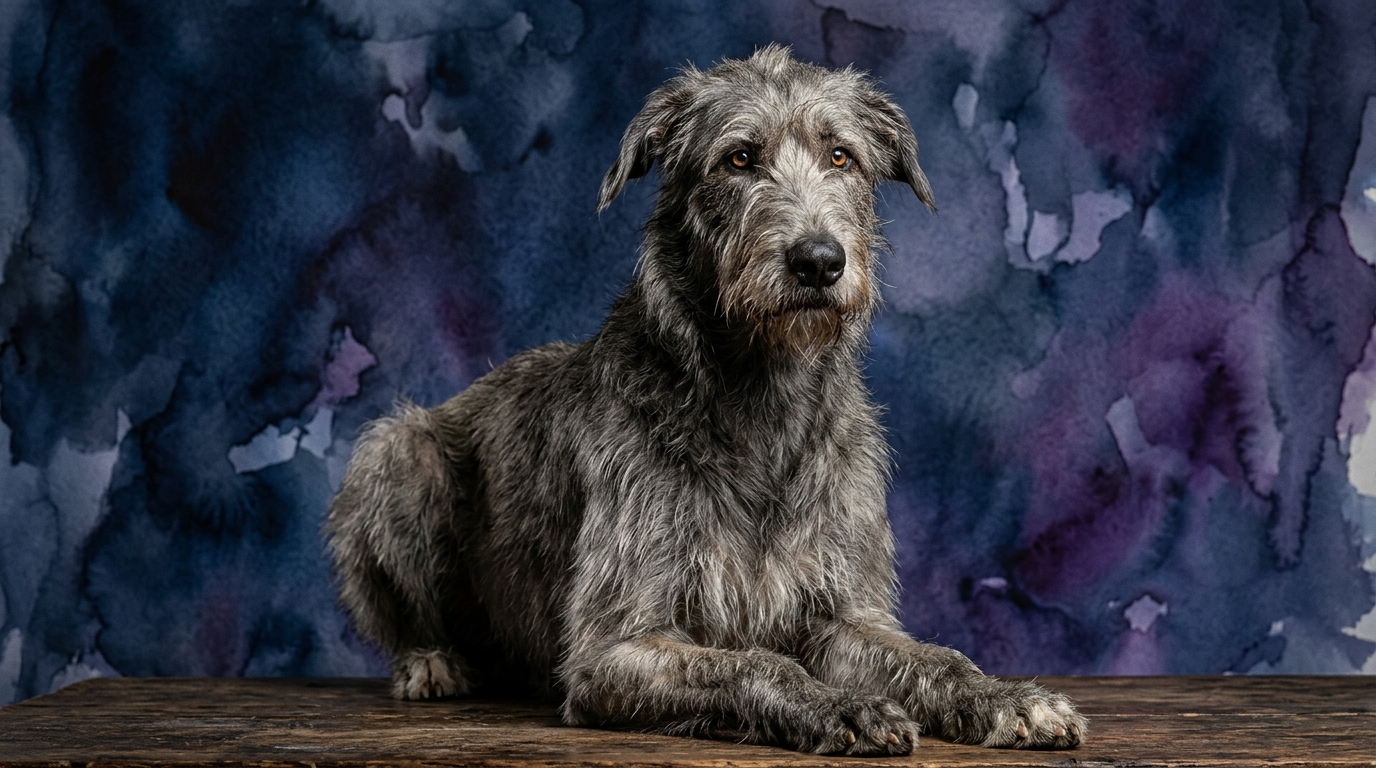
Side-by-Side IQ Profile: Irish Wolfhound
The Irish Wolfhound, not represented on Coren's ranking, presents a different cognitive landscape, fitting for a sighthound developed for pursuing large game. Their Problem Solving score of 3/5 suggests they are capable of basic problem-solving, but may require more guidance or repetition to navigate complex or abstract challenges, often preferring a direct approach over intricate strategizing. Training Speed is rated 3/5, indicating they learn at a moderate pace, necessitating patience and consistent positive reinforcement to solidify new behaviors without undue pressure. Social Intelligence at 3/5 means they form deep bonds with their family and can understand basic social cues, though they might be less acutely attuned to subtle human emotions or complex social interactions than more highly ranked breeds. Their Instinctive Drive is a moderate 3/5, possessing a sighthound's pursuit drive, but generally with lower intensity and a less varied expression compared to a pointing breed's multifaceted hunting instincts. Memory also scores 3/5, meaning they retain familiar routines and learned behaviors, but may not recall specific, less frequently reinforced information with the same precision, often relying on established patterns.
Where the German Shorthaired Pointer Wins Cognitively
The German Shorthaired Pointer clearly shines in areas demanding active engagement and independent thought, a direct reflection of their demanding working heritage. Their superior Problem Solving (5/5 vs. 3/5) allows them to navigate complex environments and overcome obstacles with impressive ingenuity, whether it's locating a hidden retrieve in dense cover or figuring out a puzzle toy. This contrasts with the Wolfhound's more straightforward approach, which might see them waiting for guidance rather than actively strategizing. The GSP's Instinctive Drive, a powerful 5/5, isn't just about raw energy; it signifies a highly complex cognitive program for hunting, involving scent discrimination, pointing, flushing, and retrieving. This multifaceted engagement requires constant processing of sensory information and decision-making, far more intricate than the Wolfhound's primarily visual chase drive. Their higher Training Speed (4/5 vs. 3/5) means GSPs absorb new commands and skills with greater efficiency, making them faster to progress through advanced obedience or field training. Furthermore, their enhanced Social Intelligence (4/5 vs. 3/5) enables a more nuanced understanding of human intentions and cues, fostering a tighter, more collaborative partnership crucial for intricate teamwork. Lastly, the GSP's stronger Memory (4/5 vs. 3/5) supports their ability to retain extensive repertoires of commands and recall complex sequences of tasks, essential for a working dog.
Where the Irish Wolfhound Wins Cognitively
While the Irish Wolfhound's cognitive scores are generally lower than the GSP's, their profile presents distinct advantages for specific lifestyles and owner preferences, emphasizing a different kind of cognitive strength. Their more moderate Instinctive Drive (3/5 vs. 5/5) means they are less likely to be overwhelmed by an incessant need to hunt or work, translating into a calmer presence in a domestic setting. This lower intensity drive can be a cognitive 'win' for owners who prefer a dog less prone to acting solely on powerful impulses, requiring less constant redirection from ingrained, high-energy behaviors. The Wolfhound's Problem Solving at 3/5, while not as agile as the GSP's, often manifests as a deliberate and less impulsive approach to novel situations, which can mean fewer hasty decisions or destructive explorations driven by intense curiosity. Their Social Intelligence (3/5) supports a profoundly gentle and affectionate nature, fostering deep, quiet bonds with their family without the demanding intensity of a highly-tuned working partner. This thoughtful, often reserved demeanor, combined with a moderate Memory (3/5) for established routines, contributes to a stable and predictable companion, a cognitive advantage for those seeking tranquility over constant mental challenge.
Trainability: GSP vs. Irish Wolfhound
When it comes to ease of training, the German Shorthaired Pointer generally presents a more straightforward path for owners seeking a responsive and adaptable partner. Their Training Speed of 4/5 means GSPs grasp new commands and concepts quickly, often requiring fewer repetitions than the average dog. This efficiency is amplified by their high Problem Solving (5/5) and Social Intelligence (4/5), allowing them to understand complex instructions and anticipate their handler's desires, making them excellent candidates for advanced obedience, agility, or field trials. However, their profound Instinctive Drive (5/5) means this intelligence must be actively channeled; without consistent mental and physical engagement, a bored GSP can become creatively destructive or develop undesirable behaviors born from their need to 'work.' In contrast, the Irish Wolfhound's training journey requires a different approach. With a Training Speed of 3/5 and Problem Solving at 3/5, Wolfhounds learn at a more deliberate pace. They respond best to patient, positive reinforcement and may not see the inherent value in performing complex tasks simply for the sake of it, often needing a compelling 'what's in it for me?' Their moderate Instinctive Drive (3/5), while present for chasing, means they are less likely to be driven by an all-consuming urge to perform tasks, which can sometimes be interpreted as stubbornness. Owners must understand their independent hound nature and make training engaging and rewarding to overcome their tendency towards disinterest in repetitive drills.
Matching Canine IQ to Owner Lifestyle
The German Shorthaired Pointer is an ideal match for highly active owners who are prepared to integrate their dog into a dynamic lifestyle, almost as a co-pilot. Their 5/5 Instinctive Drive and 5/5 Problem Solving mean these dogs require significant daily outlets for both their physical energy and their sharp minds. Owners must be committed to providing vigorous exercise, such as long runs, hikes, or swimming, combined with consistent mental challenges like advanced obedience, scent work, or participation in dog sports. A GSP thrives when given a 'job' to do, and an owner who can provide this structured engagement will find an incredibly devoted and fulfilled companion. Conversely, the Irish Wolfhound, despite its imposing size, is surprisingly well-suited for more relaxed owners who appreciate a calm, gentle giant. Their moderate 3/5 Instinctive Drive and 3/5 Problem Solving scores mean they are generally less demanding in terms of constant, high-intensity mental stimulation or strenuous physical activity once past their boisterous puppy phase. While they still require regular, moderate exercise to maintain health, such as leashed walks or time in a securely fenced yard, they are content to be a quiet presence in the home, often enjoying long naps and calm companionship. Owners should be prepared for their size and ensure their living space accommodates a large dog, but their cognitive profile doesn't necessitate the relentless 'go-go-go' of a GSP.
The Verdict
Choose a German Shorthaired Pointer if you are an active, experienced owner eager for a highly intelligent, driven partner for hunting, dog sports, or a demanding outdoor lifestyle, prepared to provide extensive mental and physical engagement. Their exceptional problem-solving and training speed make them incredibly versatile for those who enjoy structured activity and continuous learning.
Opt for an Irish Wolfhound if you seek a calm, gentle, and affectionate giant companion who thrives on relaxed companionship and moderate activity, appreciating a more deliberate pace in life. Their lower instinctive drive and moderate problem-solving suit owners seeking a less demanding cognitive partner, valuing their serene presence over intense working drive.
🧠 Find Your Pet's IQ Score
Our Pet IQ Lab assessment covers 25+ tests across 5 cognitive dimensions — personalized to your breed.
Take the Full IQ Test →Frequently Asked Questions
Are Irish Wolfhounds inherently difficult to train because their IQ scores are lower than many breeds?
No, 'difficult' is a mischaracterization; it's more about a different pace and motivation. Irish Wolfhounds learn at a moderate speed and may require more patience and compelling rewards, but they are certainly trainable. Their independent nature means they respond best to positive, engaging methods rather than repetitive drills, and they need a clear reason to comply.
How does the German Shorthaired Pointer's high instinctive drive manifest in daily life and what does it mean for owners?
The GSP's 5/5 instinctive drive means they are profoundly motivated by activities like tracking, pointing, and retrieving. In daily life, this translates to a constant desire for engagement, strong scenting abilities, and a need for vigorous exercise. Owners must provide structured outlets for these instincts through training, field work, or dog sports to prevent boredom-induced behaviors like excessive chewing or destructive exploration.
Can an Irish Wolfhound participate in dog sports, given their moderate training speed and drive?
Yes, Irish Wolfhounds can certainly participate in dog sports, particularly those that align with their natural abilities and temperament, such as lure coursing, obedience, or even therapy work. While they may not achieve the same speed or precision as a GSP in every discipline, their gentle nature, moderate drive, and capability for learning allow them to enjoy and excel in activities that are fun and rewarding for them.