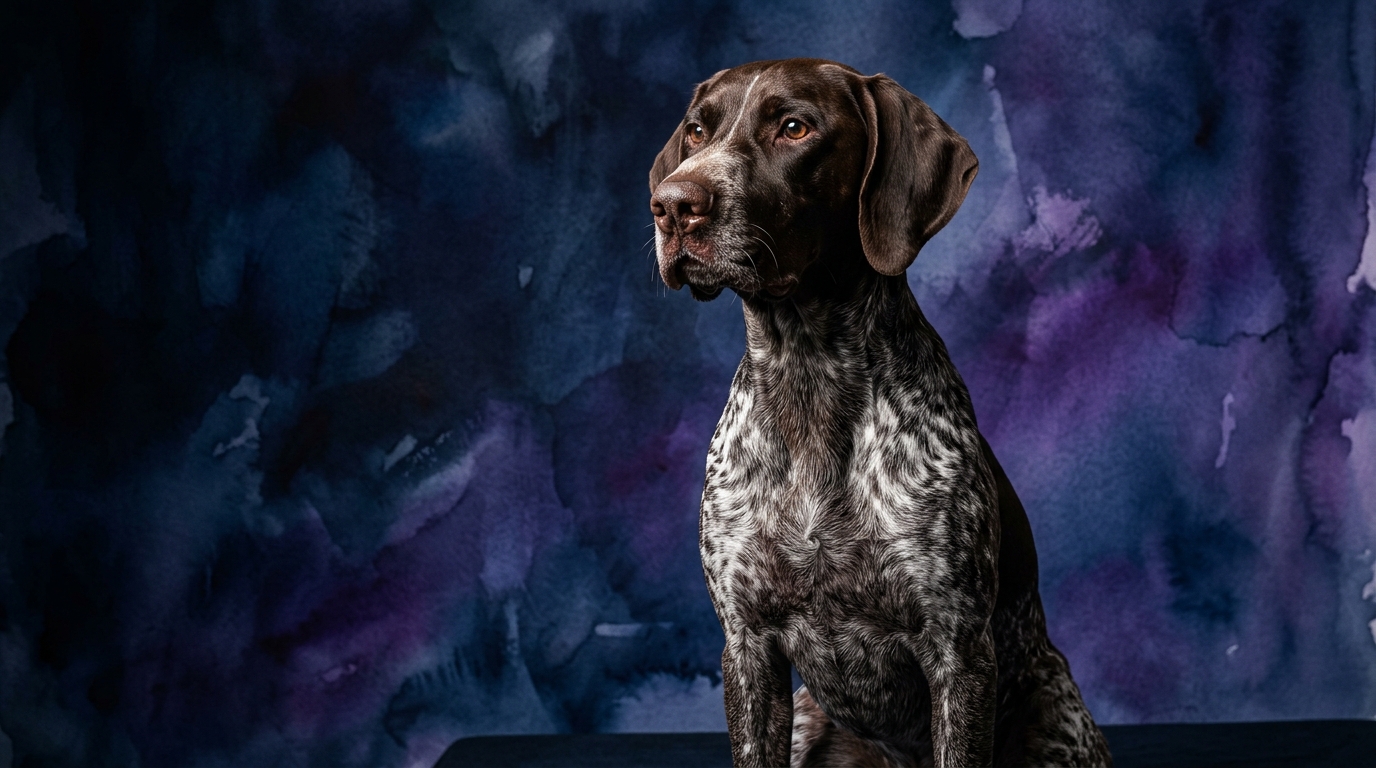
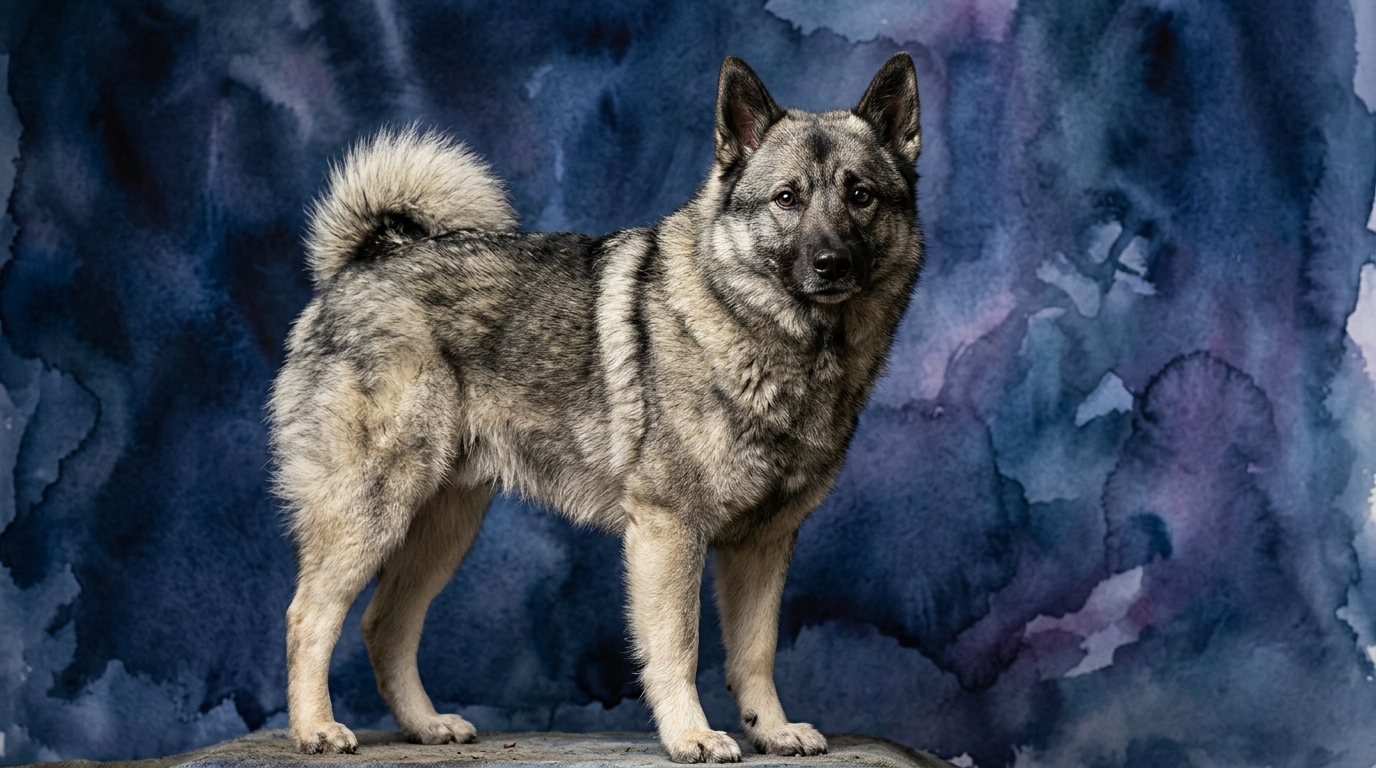
Side-by-Side IQ Profile
The Cosmic Pet Pet IQ Lab provides a unique lens through which to compare the German Shorthaired Pointer (GSP) and the Norwegian Elkhound, two breeds with distinct cognitive blueprints. The GSP, ranking #17 on the Coren scale, demonstrates a highly specialized intelligence adapted for its role as a versatile hunting companion. Its Problem Solving is rated 5/5, indicating an exceptional capacity for navigating complex scenarios and strategizing in dynamic environments, particularly in the field. Training Speed is 4/5, reflecting a quick grasp of new commands, albeit requiring consistent, engaging methods. Social Intelligence, at 4/5, highlights their attunement to human cues and desire for partnership. Their Instinctive Drive is a perfect 5/5, underpinning their intense focus on scent and game. Finally, a Memory score of 4/5 suggests strong retention of learned behaviors and spatial information.
In contrast, the Norwegian Elkhound, placed at #36 on the Coren scale, presents a different set of cognitive strengths, shaped by its history as a robust, independent big-game hunter. Its Problem Solving is rated 4/5, showcasing resourcefulness and the ability to find solutions, though perhaps with less abstract strategic thinking than the GSP. Training Speed is also 4/5, meaning they learn efficiently, but this learning is often filtered through a strong independent will. Social Intelligence is 3/5, indicating a more reserved nature; while they form deep bonds with their immediate family, they are less universally gregarious or overtly people-pleasing. Their Instinctive Drive, at 3/5, is geared towards sustained tracking of large quarry, rather than the intense, quick-response pointing of the GSP. A Memory score of 4/5 suggests a reliable recall of familiar environments, routines, and complex routes, crucial for their self-sufficient hunting style.
Where German Shorthaired Pointer Wins Cognitively
The GSP's cognitive profile reveals distinct advantages, particularly in areas requiring adaptive strategy and unwavering focus. Their 5/5 Problem Solving score positions them as exceptional at navigating novel and rapidly changing situations. This isn't just about learning tricks; it encompasses their ability to assess a dynamic hunting field, adjust their approach based on scent trails, wind direction, and game movement, and make split-second decisions that lead to success. This superior cognitive flexibility allows them to excel in complex dog sports like agility or field trials, where quick thinking and strategic execution are paramount.
Furthermore, the GSP's perfect 5/5 Instinctive Drive translates into a cognitive framework built for intense, sustained engagement with a task. While this is rooted in hunting, it manifests as an incredible capacity for focus and determination in any activity that captures their interest. Their minds are wired to pursue and resolve, making them highly effective partners in tasks requiring precision and persistence. This drive, coupled with their 4/5 Social Intelligence, means they are not only driven but also highly receptive to human direction, eager to collaborate and understand what is expected of them, leading to a more seamless partnership in goal-oriented activities.
Where Norwegian Elkhound Wins Cognitively
The Norwegian Elkhound's cognitive strengths lie in areas demanding resilience, self-reliance, and practical navigation. While their Problem Solving is rated 4/5, it reflects a different kind of intelligence: one honed by centuries of tracking large game, often independently, through challenging Nordic terrains. This breed excels at resourcefulness, figuring out how to overcome obstacles or track a scent over long distances without constant human intervention. Their cognitive processes are geared towards sustained, independent exploration and problem-solving in a real-world, often solitary, context. This isn't about rapid, dynamic adaptation in a confined space, but rather methodical, persistent, and self-directed strategic thinking over vast areas.
Their strong Memory (4/5) combined with their independent spirit allows them to recall complex routes, scent patterns, and environmental cues with remarkable accuracy, essential for a dog expected to navigate and return from lengthy hunts. This practical spatial and procedural memory is a cornerstone of their hunting prowess. Moreover, their 3/5 Social Intelligence, while lower than the GSP's, is not a cognitive deficit but a reflection of their wiring for independent action. It means they rely less on subtle human cues and more on consistent, clear communication. This can be a cognitive advantage for owners who appreciate a companion capable of making sound decisions autonomously and who thrive on direct, unambiguous interactions rather than constant nuanced feedback. Their cognitive independence allows them to maintain focus on a task even when human direction is intermittent, a valuable trait for a long-distance tracker.
Which is Easier to Train and Why
When considering ease of training, the German Shorthaired Pointer generally presents a more straightforward experience for most owners, particularly those new to dog training. The GSP's 4/5 Training Speed is augmented by their 4/5 Social Intelligence and profound 5/5 Instinctive Drive. They are intrinsically motivated to work alongside their human companions, often displaying an eagerness to please and a high degree of responsiveness. Their minds are wired for partnership and task resolution, meaning they absorb commands rapidly and enjoy the interactive process of learning. They thrive on positive reinforcement and consistent engagement, readily offering behaviors that lead to desired outcomes. Their intense focus, when channeled appropriately, makes them highly attentive students who can quickly generalize learned concepts to new situations.
The Norwegian Elkhound, while also boasting a 4/5 Training Speed, presents a different training dynamic due to its 3/5 Social Intelligence and strong independent streak. Elkhounds learn efficiently, but their cognitive makeup often leads them to question the necessity of a command or to prioritize their own assessment of a situation. They are not as inherently driven to "please" in the traditional sense; rather, they are motivated by logic, consistency, and what they perceive as beneficial to themselves or their pack. Training an Elkhound requires exceptional patience, unwavering consistency, and a deep understanding of their self-sufficient nature. They might understand 'what' you want them to do, but their independent cognitive process allows them to decide 'if' they will comply at that moment. This isn't a lack of intelligence, but a different kind of willfulness that demands a more experienced and nuanced training approach, often focusing on building trust and demonstrating the value of cooperation.
Which Suits Active Owners vs. Relaxed Owners
Neither the German Shorthaired Pointer nor the Norwegian Elkhound is a suitable match for a truly "relaxed" owner, as both breeds demand significant commitment to their physical and mental well-being. However, the type of activity and engagement they require differs, making them suitable for different kinds of active owners.
The German Shorthaired Pointer is the quintessential companion for an owner whose life is defined by high-energy, goal-oriented pursuits. Their boundless energy, coupled with their 5/5 Instinctive Drive and 5/5 Problem Solving, means they require constant mental and physical stimulation. Owners who engage in daily vigorous exercise, such as long runs, intense hikes, cycling with their dog, or participation in dog sports like agility, flyball, or field trials, will find a GSP to be an unparalleled partner. A GSP thrives when given a job to do, whether it's retrieving, tracking, or competing. An owner who cannot provide this level of structured activity and purpose risks owning a GSP that develops undesirable behaviors born of boredom and unspent energy. They need an owner who is not just active, but proactive in structuring their dog's day.
The Norwegian Elkhound also requires a highly active owner, but their needs lean more towards sustained endurance and independent exploration rather than frantic, high-speed bursts. Their 3/5 Instinctive Drive and 4/5 Problem Solving are geared towards long-distance tracking and navigating challenging environments. Owners who enjoy lengthy, perhaps solitary, hikes in varied terrain, snowshoeing, or cross-country skiing will find a capable and enthusiastic companion in an Elkhound. While they need regular exercise, it doesn't always need to be as intensely structured as with a GSP. After sufficient exercise, Elkhounds can be calm and reserved indoors, but their independent nature means they still require consistent mental engagement and boundaries. They suit an owner who respects their self-sufficient spirit and provides opportunities for them to use their brains for exploration and problem-solving on their own terms, rather than constantly seeking human direction.
The Verdict
Choose the German Shorthaired Pointer if you are an intensely active individual or family seeking a highly trainable, enthusiastic partner for structured sports, hunting, or complex tasks, valuing a dog that thrives on collaboration and constant engagement.
Choose the Norwegian Elkhound if you are an active, independent individual who enjoys long, self-directed outdoor adventures and appreciates a resilient, resourceful companion capable of making its own sound decisions, provided you can establish clear, consistent leadership.
🧠 Find Your Pet's IQ Score
Our Pet IQ Lab assessment covers 25+ tests across 5 cognitive dimensions — personalized to your breed.
Take the Full IQ Test →Frequently Asked Questions
Are German Shorthaired Pointers better at problem-solving than Norwegian Elkhounds?
Based on the IQ Lab scores, German Shorthaired Pointers rate 5/5 for Problem Solving compared to the Norwegian Elkhound's 4/5. This suggests GSPs generally excel at more dynamic, adaptive, and strategic problem-solving, particularly in human-directed tasks or varied environments.
Which breed is more independent, impacting training?
The Norwegian Elkhound generally exhibits higher independence, reflected in its 3/5 Social Intelligence score compared to the GSP's 4/5. While both breeds learn quickly (4/5 Training Speed), the Elkhound's independent nature means it often requires more consistent, patient training to ensure compliance.
Can either breed adapt to apartment living with enough exercise?
Neither breed is ideally suited for apartment living without significant commitment. Both require extensive daily exercise, but a GSP's intense drive and need for space to run freely make apartment living particularly challenging. An Elkhound might tolerate it if their extensive exercise needs are met with long, vigorous outdoor excursions daily.