
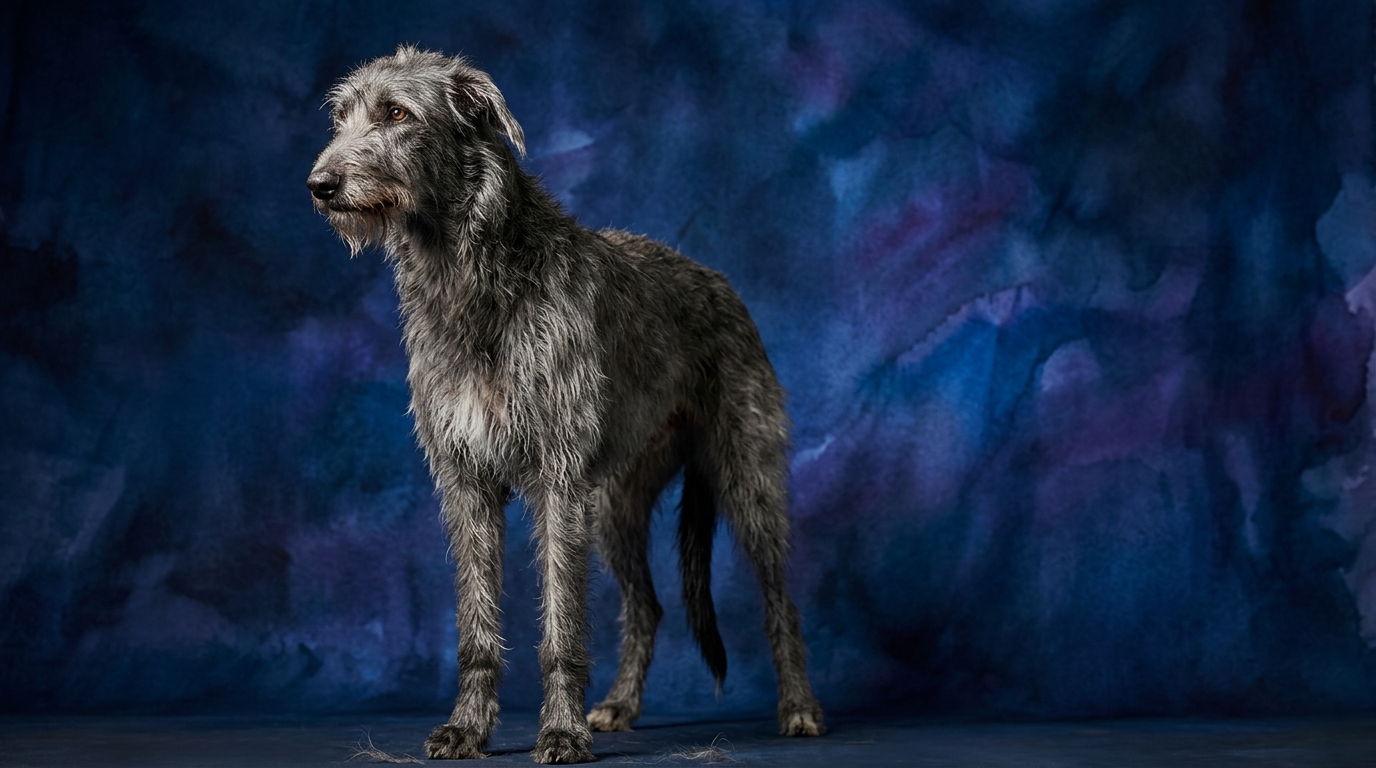
Side-by-Side IQ Profile: GSP vs. Scottish Deerhound
The Cosmic Pet Pet IQ Lab provides a detailed framework for understanding canine intelligence across five key dimensions. For the German Shorthaired Pointer (GSP), a Sporting group member with a Coren ranking of #17, their profile reflects a highly capable and adaptable working dog. They excel with a Problem Solving score of 5/5, indicating a quick ability to navigate novel situations and figure out solutions. Their Training Speed is rated 4/5, suggesting they grasp new commands and routines with relative ease. Social Intelligence, at 4/5, highlights their responsiveness to human cues and their aptitude for cooperative tasks. An Instinctive Drive of 5/5 underscores their powerful genetic inclination for hunting and sustained activity, while their Memory, at 4/5, ensures they retain learned information effectively.
In contrast, the Scottish Deerhound, a majestic Hound breed not specifically ranked by Coren, presents a different cognitive blueprint, tailored to its historical role as a sighthound pursuing large game. Their Problem Solving is rated 3/5, meaning they can find solutions but might take a more deliberate or independent approach compared to a GSP. Training Speed also sits at 3/5, indicating that patience and consistent, positive reinforcement are often needed for them to master new behaviors. Their Social Intelligence, at 3/5, suggests a more independent nature; while affectionate, they might be less inclined to constantly seek human direction. An Instinctive Drive of 3/5 for the Deerhound speaks to a specialized, focused drive, primarily centered on the chase, rather than a broad, biddable work ethic. Finally, their Memory is also rated 3/5, meaning they retain information but may benefit from periodic refreshers or varied training approaches to keep concepts solid.
Where the German Shorthaired Pointer Excels Cognitively
The German Shorthaired Pointer's cognitive profile positions it as a highly versatile and responsive companion, particularly in environments demanding quick thinking and active engagement. Their 5/5 Problem Solving score means they are adept at navigating complex tasks, whether it's figuring out how to retrieve a toy from a tricky spot or understanding the nuances of an agility course. This cognitive strength allows them to adapt rapidly to new situations and learn from environmental feedback, making them excellent partners for varied activities.
Furthermore, the GSP's combined scores of 4/5 for Training Speed and 4/5 for Social Intelligence, alongside a powerful 5/5 Instinctive Drive, create a dog that is exceptionally eager to engage and work alongside humans. They are keen observers of human body language and vocal cues, often anticipating requests. Their robust instinctive drive is not just about prey pursuit; it translates into a strong desire to have a job and to apply themselves with sustained focus, making them proficient in scent work, field trials, and obedience competitions. Their memory, at 4/5, further reinforces their capacity to build on past experiences and commands, establishing a reliable behavioral repertoire.
Distinct Cognitive Strengths of the Scottish Deerhound
While the Scottish Deerhound's scores appear lower across the board when compared directly to the GSP, it's crucial to understand these numbers within the context of their breed's historical purpose. The Deerhound's cognitive strengths are not about broad versatility but rather about a specialized focus and endurance essential for a sighthound. Their 3/5 Instinctive Drive, for example, is profoundly effective for its specific function: the independent pursuit of game over vast, open landscapes. This drive is characterized by keen visual tracking and explosive speed, demanding a cognitive process that prioritizes autonomous action over constant human interaction.
The Deerhound's Problem Solving and Memory, both rated 3/5, are perfectly adequate for their original role, where the primary 'problem' was catching a deer and memory involved navigating familiar territories or remembering the scent of quarry. Their Social Intelligence, also 3/5, contributes to their dignified, often reserved demeanor. This independence, rather than being a deficit, is a cognitive trait that allowed them to make quick, critical decisions in the field without waiting for human command. For owners who appreciate a dog with a contemplative and less overtly 'eager-to-please' disposition, these traits are not drawbacks but defining characteristics of the breed's unique intellectual charm.
Training Dynamics: GSP vs. Scottish Deerhound
When it comes to training, the differences in IQ profiles between these two breeds become particularly apparent. The German Shorthaired Pointer, with its 4/5 Training Speed and 4/5 Social Intelligence, generally learns commands quickly and responds enthusiastically to cues. They are often highly motivated by praise, play, and food, and their strong desire to work cooperatively with their human partners makes them receptive students. Owners can expect GSPs to pick up basic obedience commands within a few repetitions and to be eager to advance to more complex tasks, such as retrieving, tracking, or agility.
The Scottish Deerhound, with a 3/5 for both Training Speed and Social Intelligence, presents a different training experience. They are not less capable of learning, but they often require more repetition, greater patience, and a nuanced approach that respects their independent nature. Deerhounds can be sensitive and may shut down with harsh methods, responding best to positive reinforcement and clear, consistent communication. Their attention might be more easily diverted by visual stimuli, reflecting their sighthound heritage, meaning training sessions need to be engaging and often shorter. While they can achieve high levels of obedience, it typically takes more time and dedication to solidify behaviors, and owners should anticipate a dog that may, at times, prioritize its own instincts over immediate compliance.
Lifestyle Suitability: Active vs. Relaxed Owners
The cognitive profiles of these breeds strongly dictate their suitability for different lifestyles. The German Shorthaired Pointer, with its 5/5 Instinctive Drive, 5/5 Problem Solving, and 4/5 Training Speed, thrives with active, engaged owners who can provide ample physical and mental stimulation. They are ideal companions for individuals or families who enjoy hiking, running, cycling, or participating in dog sports like agility, dock diving, or field trials. Their need for a 'job' means they excel when challenged with training, puzzle toys, and consistent interaction. A GSP in a relaxed, sedentary home without sufficient outlets for its considerable energy and cognitive capacity is likely to become bored and potentially develop undesirable behaviors.
Conversely, the Scottish Deerhound's more independent cognitive makeup, characterized by 3/5 scores across most dimensions, lends itself to a different kind of owner. While they possess bursts of incredible speed and require regular opportunities to gallop in a secure area, their daily energy needs are often more moderate than a GSP's. They are well-suited for owners who appreciate a calm, dignified presence indoors and are prepared for short, intense exercise sessions rather than sustained, high-impact activities. Owners who understand and respect a sighthound's independence, who are patient with training, and who can provide a quiet, comfortable home environment for their often reserved companion will find a Deerhound a rewarding match. They are less about constant interaction and more about a serene, shared presence.
The Verdict
Choose a German Shorthaired Pointer if you seek a highly trainable, versatile, and energetic partner eager for complex tasks and extensive outdoor adventures, thriving on cooperative engagement.
Opt for a Scottish Deerhound if you desire a calm, independent companion with a dignified presence, appreciating their specialized athletic needs and requiring patience with their distinct, often reserved, cognitive approach.
🧠 Find Your Pet's IQ Score
Our Pet IQ Lab assessment covers 25+ tests across 5 cognitive dimensions — personalized to your breed.
Take the Full IQ Test →Frequently Asked Questions
How does a GSP's high instinctive drive impact daily life?
A GSP's 5/5 instinctive drive translates into a persistent need for physical activity and mental engagement. They require structured exercise, consistent training, and often benefit from having a 'job' to prevent boredom and channel their energy productively, making them unsuitable for sedentary lifestyles.
Are Scottish Deerhounds difficult to train due to their lower scores?
Scottish Deerhounds are not difficult to train, but their 3/5 training speed and social intelligence mean they require more patience, consistency, and positive reinforcement than some other breeds. They are independent thinkers, so owners should focus on making training fun and motivating, respecting their sighthound nature.
Which breed is better for first-time dog owners?
Generally, the German Shorthaired Pointer's higher training speed and social intelligence might make them a more straightforward choice for a first-time owner willing to commit to their significant exercise and training needs. Scottish Deerhounds, while affectionate, require an owner who understands and appreciates their independent nature and specialized sighthound instincts, which can be more challenging for novices.