Side-by-Side IQ Profile: Sporting vs. Terrier Minds
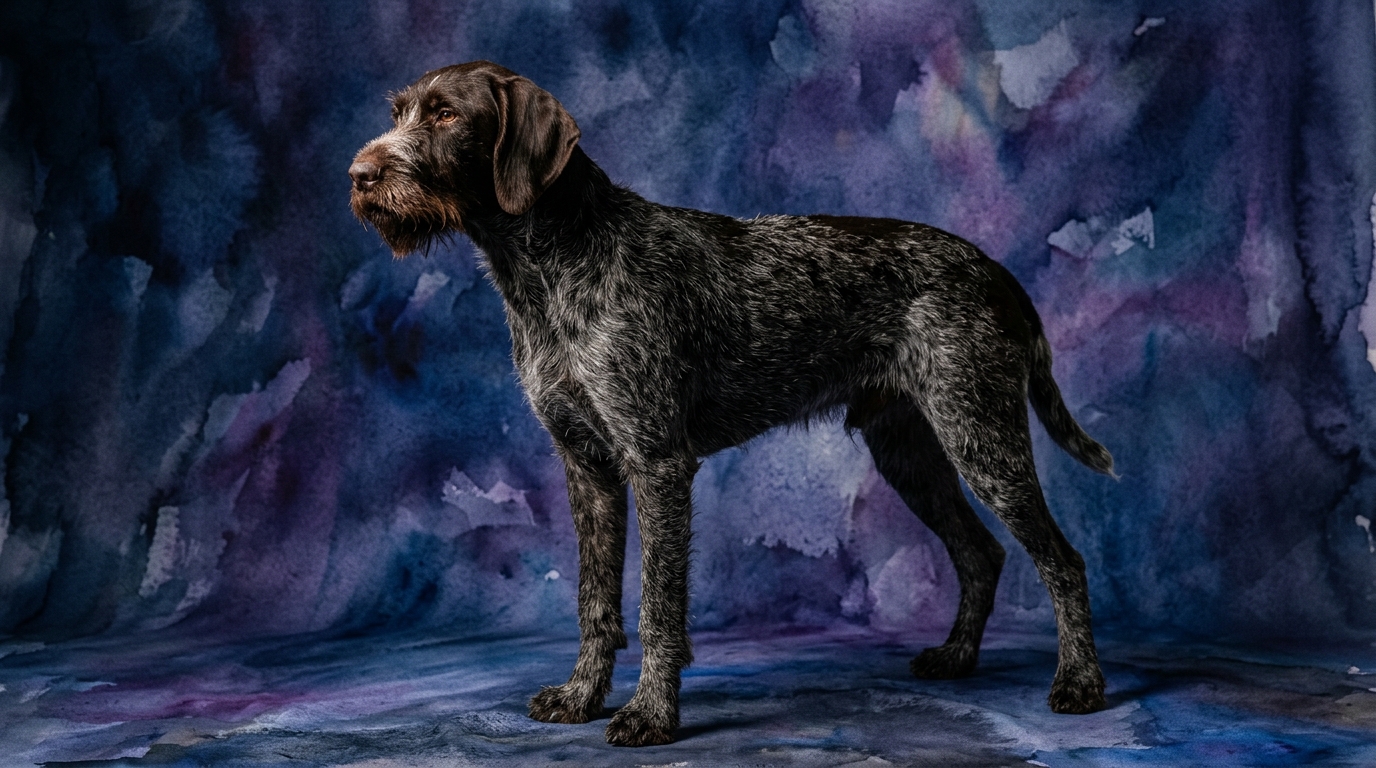
The Cosmic Pet Pet IQ Lab's framework provides a granular look at canine intelligence, moving beyond simple 'smart' labels. The German Wirehaired Pointer, a distinguished Sporting breed, holds a Coren rank of #28, reflecting its capacity for understanding and executing commands. Its cognitive scores are impressive: Problem Solving at 4/5, Training Speed at 4/5, Social Intelligence at 3/5, Instinctive Drive at 3/5, and Memory at 4/5. These metrics paint a picture of a dog built for complex, cooperative work in the field, requiring keen observation, rapid learning, and robust recall.
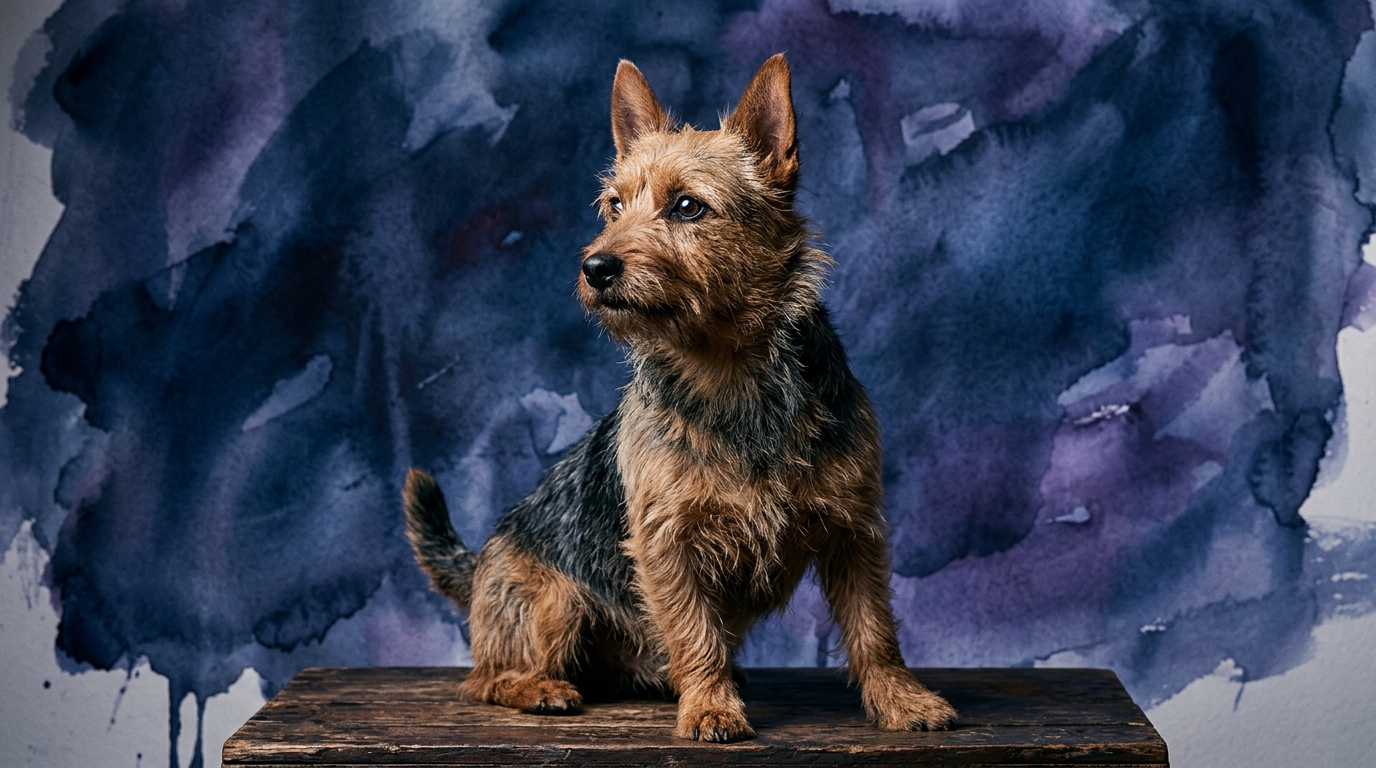
In contrast, the Australian Terrier, a spirited member of the Terrier group, is not currently ranked on Coren's list, which often favors breeds with strong obedience aptitudes. Its scores reflect a different set of priorities: Problem Solving at 3/5, Training Speed at 3/5, Social Intelligence at 3/5, Instinctive Drive at 3/5, and Memory at 3/5. While these scores are consistent, they suggest an intelligence geared towards independent action and tenacity, typical of its vermin-hunting heritage, rather than the cooperative precision of a bird dog.
Where the German Wirehaired Pointer Wins Cognitively
The German Wirehaired Pointer's cognitive profile showcases a clear advantage in areas demanding structured learning and multi-faceted task execution. Its Problem Solving score of 4/5 means it adeptly navigates complex scenarios, such as tracking game through varied terrain or discerning patterns in scent work. This isn't just about brute force; it's about applying learned information and adapting strategies on the fly, a critical skill for a versatile hunting companion.
Furthermore, the GWP's superior Training Speed (4/5) and Memory (4/5) are direct indicators of its capacity for rapid assimilation of new commands and reliable recall over time. This cognitive pairing allows the GWP to master extensive repertoires of signals, hand gestures, and verbal cues, making it exceptionally responsive and consistent in obedience, field trials, or any activity requiring a deep understanding of human directives and consistent execution.
Where the Australian Terrier Excels Cognitively
While the Australian Terrier's raw scores might appear modest compared to the Pointer, its cognitive strengths shine brightly within its specialized domain. Its Problem Solving at 3/5, combined with a tenacious Instinctive Drive (3/5), equips it with a determined approach to overcoming obstacles, particularly when pursuing a perceived 'quarry.' This isn't about complex, multi-step obedience routines, but rather an acute ability to independently assess and navigate tight spaces or persistent challenges to achieve a self-directed goal, a cognitive trait invaluable for a vermin hunter.
Furthermore, its Social Intelligence (3/5) manifests as a deep, discerning connection with its immediate human family. Rather than broad cooperative intelligence with multiple handlers or large groups, the Australian Terrier excels at reading the subtle cues of its chosen people, demonstrating a focused loyalty and an understanding of household dynamics. Its Memory (3/5) supports this, allowing it to recall specific routines, preferred interactions, and the boundaries set by its inner circle, contributing to its role as an alert and devoted companion.
Training Dynamics: GWP's Eagerness vs. Aussie Terrier's Independence
Training ease is a significant differentiator between these two breeds, largely stemming from their historical roles and inherent behavioral patterns. The German Wirehaired Pointer, with a Training Speed of 4/5, is typically more straightforward to train. They possess a strong desire to please their handler, stemming from centuries of working collaboratively with humans. This eagerness translates into a focused attention during training sessions and a quicker grasp of new concepts, making them highly receptive to positive reinforcement methods.
In contrast, the Australian Terrier's Training Speed of 3/5, coupled with its strong independent streak and instinctive drive, often presents a different set of training challenges. While capable of learning, their terrier tenacity means they might question commands or prioritize their own perceived 'tasks' (like chasing a squirrel) over immediate obedience. Successful training with an Australian Terrier requires patience, consistency, and a deep understanding of their self-directed nature, often employing highly motivating rewards to capture and maintain their attention against competing environmental stimuli.
Lifestyle Match: Active Owners vs. Engaged Companionship
The German Wirehaired Pointer is undeniably suited for active owners. Its high energy levels, combined with its cognitive aptitude for complex tasks, demand significant daily physical exercise and mental engagement. Owners who enjoy hunting, hiking, running, or dog sports like agility and field trials will find a GWP to be an enthusiastic and capable partner. Their cognitive needs are best met when given 'jobs' that tap into their problem-solving and memory skills, preventing boredom and potential destructive behaviors.
The Australian Terrier, while a lively breed, can adapt to a somewhat less intensely active lifestyle, though it still requires consistent engagement. They are excellent for owners who enjoy regular walks, playtime, and interactive games, but perhaps aren't looking for a dog to join them on extreme endurance activities. Their cognitive needs are fulfilled through varied routines, opportunities for independent exploration in a secure yard, and puzzle toys that challenge their tenacious problem-solving, making them suitable for owners who value an alert and engaged companion without needing a full-time field partner.
The Verdict
Choose the German Wirehaired Pointer if you seek a highly trainable, cooperative partner for demanding outdoor activities and intellectual challenges.
Opt for the Australian Terrier if you appreciate a tenacious, independent companion who thrives on engaged family life and enjoys solving its own unique 'terrier' puzzles.
🧠 Find Your Pet's IQ Score
Our Pet IQ Lab assessment covers 25+ tests across 5 cognitive dimensions — personalized to your breed.
Take the Full IQ Test →Frequently Asked Questions
Is the German Wirehaired Pointer difficult to live with due to its high IQ?
The GWP's cognitive strengths mean it requires significant mental and physical stimulation to prevent boredom, which can manifest as destructive behavior. With adequate engagement, they are highly rewarding and well-behaved companions.
Do Australian Terriers need less training than German Wirehaired Pointers?
No, Australian Terriers still require consistent and early training, but their independent nature means the approach might differ. Training should be engaging, positive, and acknowledge their strong terrier drives.
Which breed is better for a first-time dog owner?
Neither breed is typically recommended for entirely novice owners without prior research, due to their specific needs. However, a GWP might be more forgiving in basic obedience due to its eagerness to please, while an Australian Terrier requires an owner confident in managing terrier independence.