A Tale of Two German Breeds: IQ Profiles Defined
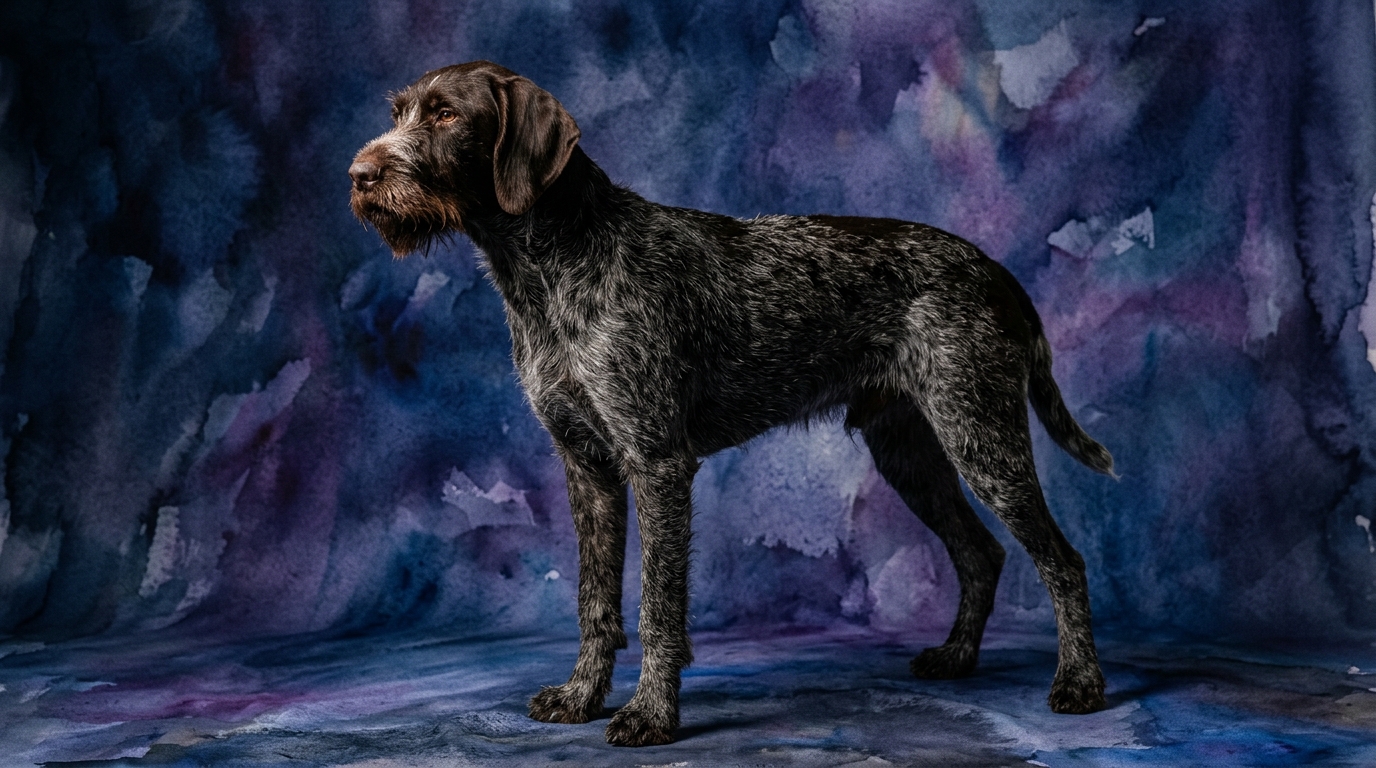
The German Wirehaired Pointer (GWP), a Sporting group member and Coren rank #28, presents a robust cognitive profile tailored for its demanding field work. It excels with a Problem Solving score of 4/5, reflecting its capacity for navigating complex hunting scenarios, and a Training Speed of 4/5, indicating rapid comprehension of new commands. Its memory is also impressive at 4/5, crucial for recalling intricate scent trails and multiple retrieve locations, while its Social Intelligence and Instinctive Drive stand at a functional 3/5, balancing cooperation with a strong desire to hunt.
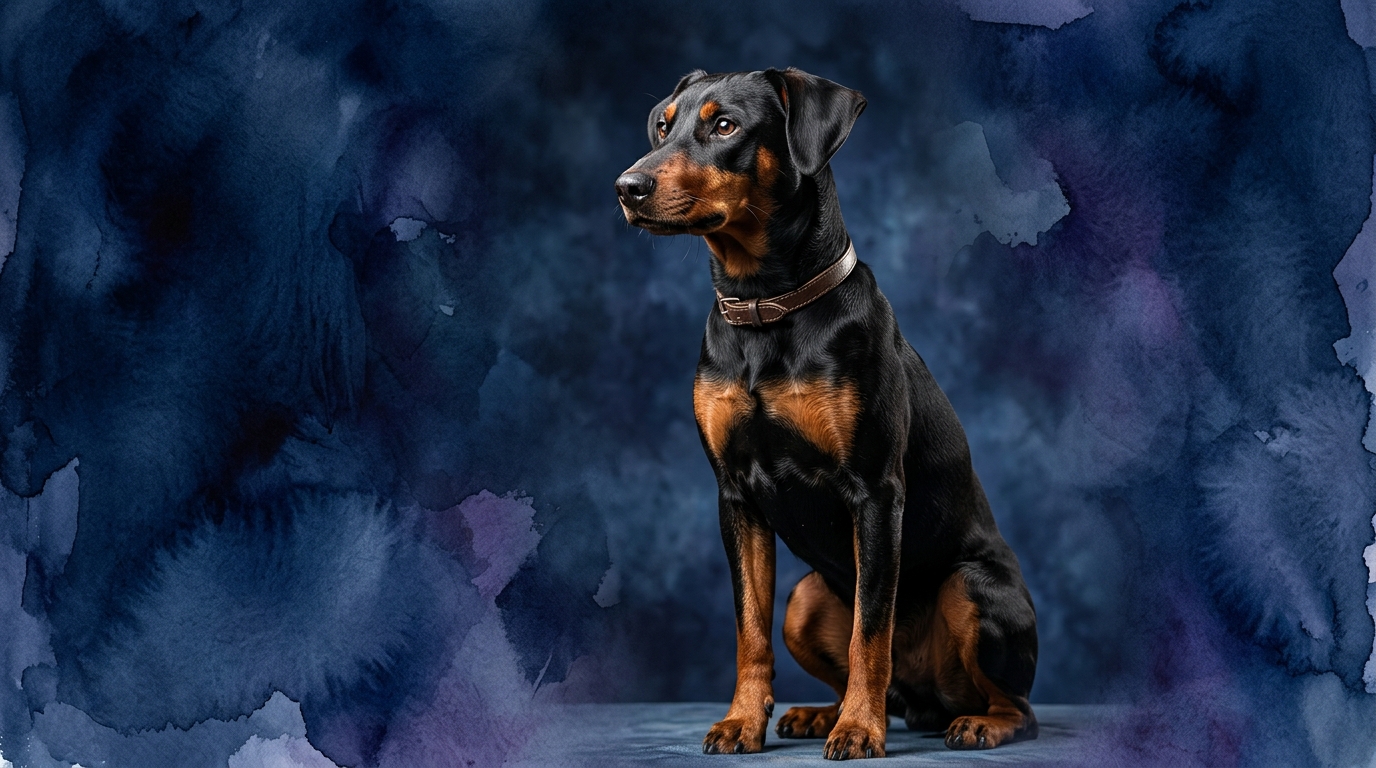
In contrast, the German Pinscher (GP), a Working group member not listed on Coren's ranking, demonstrates a more generalized, self-sufficient intelligence. Its scores across the board are 3/5 for Problem Solving, Training Speed, Social Intelligence, Instinctive Drive, and Memory. This consistent mid-range performance speaks to a breed developed for diverse farm duties: vermin control, guarding, and general utility, tasks that demand practical intelligence and independent decision-making rather than specialized, high-speed learning or complex sequential problem-solving.
Where the German Wirehaired Pointer Excels Cognitively
The German Wirehaired Pointer’s cognitive strengths are deeply rooted in its heritage as a versatile hunting companion, particularly evident in its Problem Solving (4/5) and Memory (4/5) scores. Its role requires not just finding game but navigating diverse terrain, marking the fall of birds, and executing complex, multi-stage retrieves, often requiring it to remember specific locations over varied distances. This necessitates a sophisticated ability to assess environments, adapt strategies on the fly, and recall learned behaviors, such as ignoring distractions while on a retrieve or holding a staunch point until commanded. An owner can observe this in a GWP's ability to methodically search a field, adjust its pace to wind conditions, and remember where a downed bird landed even after a long chase.
Furthermore, its Training Speed (4/5) is a standout attribute. GWP's process new information quickly, making them highly receptive to intricate obedience commands and field training. They grasp concepts rapidly, moving from basic cues to complex chain behaviors with fewer repetitions than many other breeds. This speed of learning is invaluable for a dog that needs to understand and execute a wide array of commands in high-pressure hunting situations, from 'whoa' to 'fetch dead' to navigating complex blind retrieves. This means less frustration for the handler and quicker progression through training stages, allowing for more advanced work earlier in the dog's life.
Where the German Pinscher Holds Its Own Cognitively
While the German Pinscher’s scores are consistently 3/5, this reflects a practical, self-reliant intelligence rather than a deficit. Its Problem Solving (3/5) is geared towards independent, functional decision-making: how to best dispatch vermin, how to alert its family to an unfamiliar presence, or how to navigate its home territory effectively. It's less about executing complex human-designed sequences and more about assessing a situation and acting decisively based on its own judgment. Its Instinctive Drive (3/5) is focused on vigilance and assertive action, making it a natural guardian that will independently evaluate threats and respond with appropriate protective behaviors, rather than waiting for explicit commands.
The German Pinscher's Social Intelligence (3/5) is functional, allowing it to discern between trusted family members and strangers, a crucial trait for a guard dog. It forms deep bonds with its core family but often maintains a reserved or wary demeanor with outsiders, prioritizing protection over broad social engagement. Similarly, its Training Speed (3/5) means it is capable of learning, but often requires more consistent, motivational training, and may not absorb new information with the same alacrity as a GWP. However, once a Pinscher understands a command and its purpose, it is likely to retain it, demonstrating a robust, if not lightning-fast, memory (3/5) for practical applications.
Training Dynamics: GWP's Receptiveness vs. GP's Independence
The German Wirehaired Pointer's training journey is often characterized by its inherent desire to cooperate and its capacity for rapid learning, stemming from its 4/5 scores in Training Speed, Problem Solving, and Memory. This breed typically approaches training as a collaborative effort, eager to engage with its handler and quickly process new information. Its ability to absorb complex commands and link behaviors together makes it a rewarding student for advanced obedience, field trials, or dog sports like agility. While consistency and positive reinforcement are still paramount, the GWP's intrinsic drive to work alongside its human partner means it often seeks to understand and comply, making the training process feel more like a shared venture than a directive.
Conversely, training a German Pinscher, with its consistent 3/5 scores, often requires a different approach due to its pronounced independence and self-assured nature. The Pinscher is capable of learning, but it often operates with a mindset of 'what's in it for me?' or 'is this truly necessary?' rather than automatic compliance. Owners might find that while the GP picks up basic commands, it may require more consistent motivation, clearer boundaries, and a firmer hand to ensure reliability, especially if the command conflicts with its own perceived best interest or instinctive drive. This isn't a lack of ability, but a cognitive priority for self-reliance; therefore, patience, consistency, and making training a rewarding experience are critical to overcoming its independent streak and fostering a strong working relationship.
Lifestyle Match: Active Engagement vs. Focused Vigilance
For owners with an active lifestyle and a desire for a highly engaged canine partner, the German Wirehaired Pointer is an exceptional match. Its high Problem Solving (4/5), Training Speed (4/5), and Memory (4/5) mean it thrives on consistent mental and physical challenges. This breed is not content with simply a walk around the block; it needs a 'job' that engages its sharp mind and athletic body. Owners who enjoy extensive outdoor activities such as hiking, running, hunting, or participate in dog sports like agility, obedience, or tracking will find a GWP to be an enthusiastic and capable companion. They require an owner who can consistently provide intellectual stimulation and avenues for their natural hunting instincts, otherwise, their considerable cognitive capacity can lead to boredom and undesired behaviors.
The German Pinscher, while also an active breed, suits owners who appreciate a dog with focused vigilance, a strong protective instinct, and a self-assured demeanor. Its consistent 3/5 scores across the IQ dimensions mean it requires regular exercise and mental engagement, but its needs are often geared towards practical application rather than complex sport. Owners who value a dog that is keenly aware of its surroundings, acts as a natural alarm system, and forms a deep, loyal bond with its immediate family will find the GP appealing. They need clear leadership and early, consistent socialization to channel their innate watchfulness and independence, thriving in a home where boundaries are clear and their protective instincts are managed rather than suppressed. A GP is a companion for those who appreciate a dog that thinks for itself and is a constant, alert presence.
The Verdict
Choose the German Wirehaired Pointer if you seek a highly cooperative, versatile working partner for complex tasks, field sports, or extensive obedience, valuing a dog that quickly grasps new concepts and retains them with impressive memory.
Opt for the German Pinscher if you desire a self-assured, vigilant companion with a strong protective instinct, prepared for a more independent training journey and appreciating a dog that makes its own functional decisions.
🧠 Find Your Pet's IQ Score
Our Pet IQ Lab assessment covers 25+ tests across 5 cognitive dimensions — personalized to your breed.
Take the Full IQ Test →Frequently Asked Questions
Which breed is generally quicker to pick up new commands?
The German Wirehaired Pointer, with a Training Speed of 4/5, typically grasps new commands and concepts more rapidly than the German Pinscher, which has a Training Speed of 3/5. This difference stems from the GWP's cooperative hunting heritage, fostering a strong desire to work in tandem with its handler.
How do their problem-solving abilities differ in practical terms?
The German Wirehaired Pointer's 4/5 problem-solving manifests in its ability to execute complex, multi-stage tasks like intricate retrieves or scent tracking. The German Pinscher's 3/5 problem-solving is more about independent, on-the-spot decision-making for tasks like vermin control or assessing immediate environmental threats.
Which breed might be more suitable for a first-time dog owner?
While both breeds require experienced ownership, the German Wirehaired Pointer's higher Training Speed and cooperative nature might make it a more manageable choice for a dedicated first-time owner willing to commit to consistent training. The German Pinscher's independence and vigilant nature often benefit from an owner with prior experience in establishing clear leadership and boundaries.